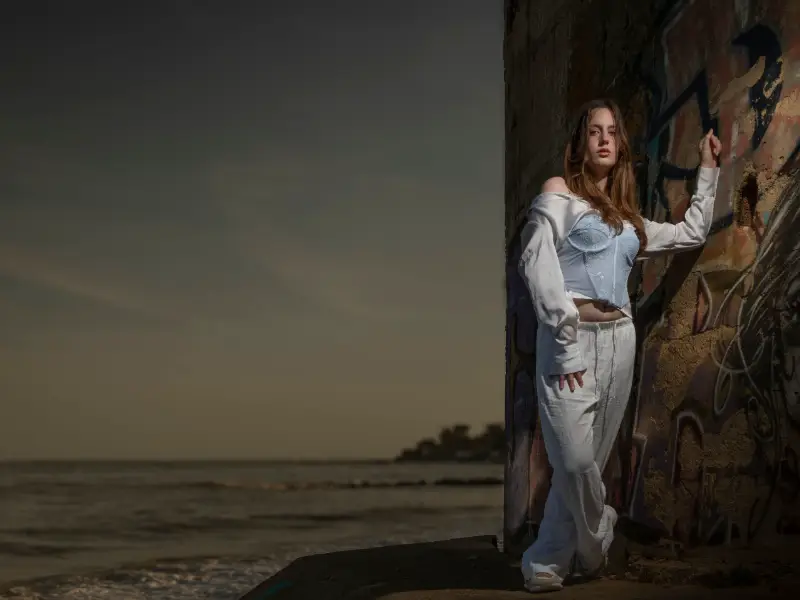
Choosing a new lens can seem quite complicated when you are a beginner. There are dozens of focal lengths, different maximum apertures, and a whole series of abbreviations for each manufacturer. But you do not need to understand all the technical details to make a good choice. Do not start with the specifications; start with a much simpler question: what do you want to photograph?
A landscape photographer has different requirements for a lens than someone who photographs birds, portraits, or concerts. If you mainly travel, you may prefer a single lens that can handle many situations. Once you understand a few key lens characteristics and know what you expect from a lens, the options become much easier to navigate.
Start with your subject
Focal length largely determines how much fits in the frame and how large a subject appears. A short focal length provides a wide angle of view, while a long focal length brings subjects closer.
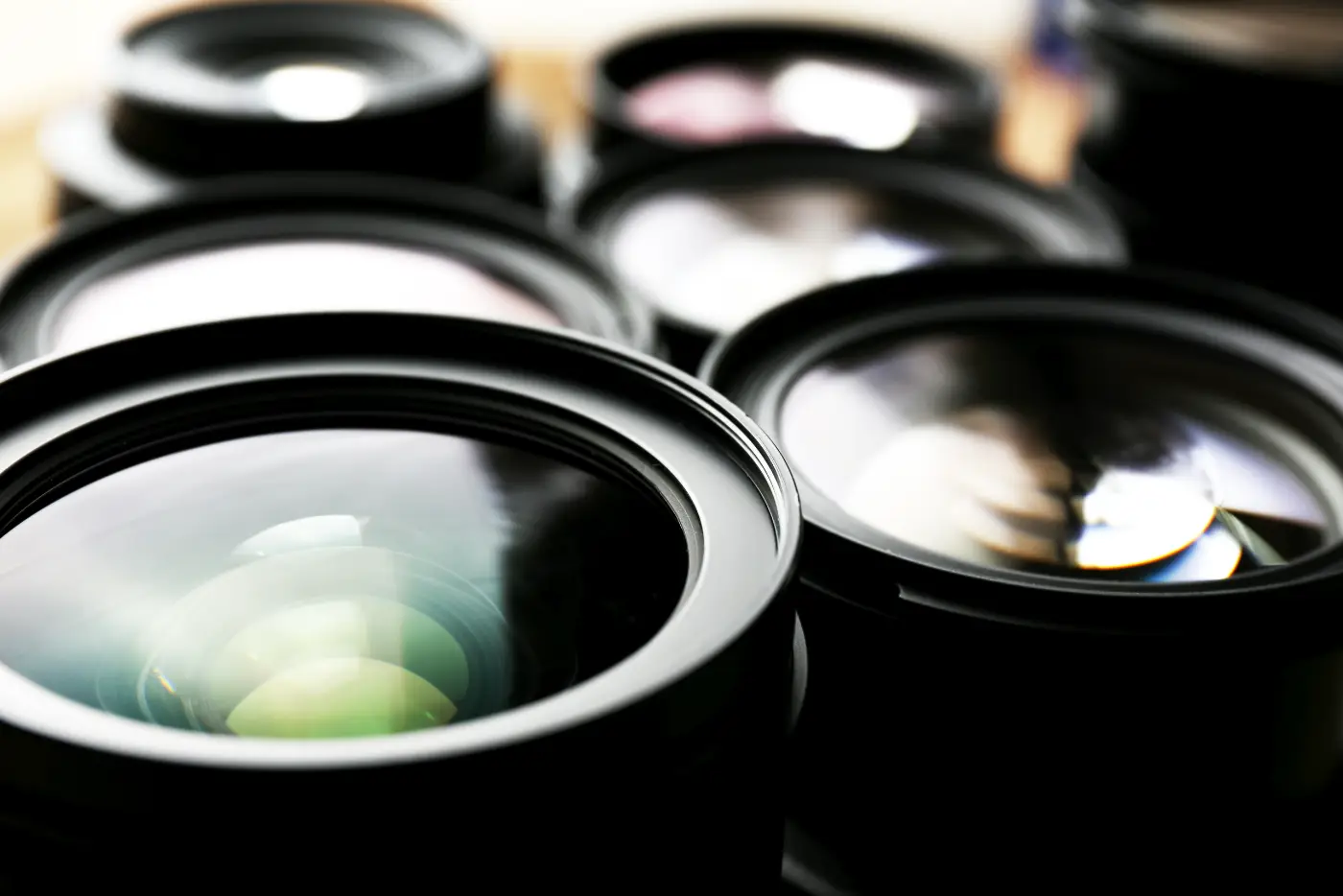
A wide-angle lens is the obvious choice for landscapes, architecture, and interiors. For everyday use, travel, and documentary photography, a standard prime or standard zoom is usually the most practical. Portrait photographers often choose a fast normal or short telephoto lens, while sports and wildlife photography benefit most from greater telephoto reach.
For small subjects such as flowers, insects, and products, another characteristic matters: the maximum reproduction ratio. A true macro lens generally reaches 1:1, which means the subject can be rendered life-size on the sensor.
That is really the first round of selection. Only then do the other specifications become meaningful.
Focal length
Every lens lists a focal length in millimeters. A zoom lens shows two values, such as 24-70mm. A prime lens shows one value, such as 50mm.
The smaller the number, the wider the angle of view. A 16mm lens shows a large portion of the surroundings, while a 300mm lens captures a much smaller section of them.
Sensor size also plays a role. A 50mm lens provides a different angle of view on a full-frame camera than on an APS-C camera. On APS-C, the angle of view is narrower, so that same 50mm behaves more like a short telephoto lens.
When comparing focal lengths, always consider the combination of the lens and sensor size.
Zoom or prime?
A zoom lens covers multiple focal lengths. That is practical: you can move from a wide view to a detail without changing lenses. This is why a standard zoom is a logical starting point for many photographers.
A prime lens cannot zoom. In return, it often offers a wider maximum aperture and a relatively compact design. A prime can also encourage you to choose your position more deliberately: instead of turning a zoom ring, you have to move forward or backward yourself.

The old idea that a prime lens is automatically much sharper than a zoom does not always hold true with modern high-quality lenses. Good zooms can also deliver extremely strong optical performance. The choice between a zoom lens and a prime lens therefore is not only about image quality, but also convenience, maximum aperture, size, and weight.
A superzoom is a category of its own. This type of lens covers everything from wide angle to telephoto and is especially convenient for travel. The trade-offs can include a smaller maximum aperture and more optical compromises to fit such a broad range into one lens.
Maximum aperture
Along with the focal length, a lens lists its maximum aperture, such as f/1.4, f/2.8, or f/4.
The lower the number, the wider the opening and the more light the lens can let in. This is especially useful when photographing in low light. You can then use a faster shutter speed or a lower ISO setting. A wide aperture also makes it easier to render a subject sharply against a blurred background.
On zoom lenses, the maximum aperture is not always the same throughout the range. A 24-70mm f/2.8 can be opened at both 24mm and 70mm to f/2.8. If a lens is marked f/3.5-6.3, for example, the widest available aperture becomes smaller as you zoom in.
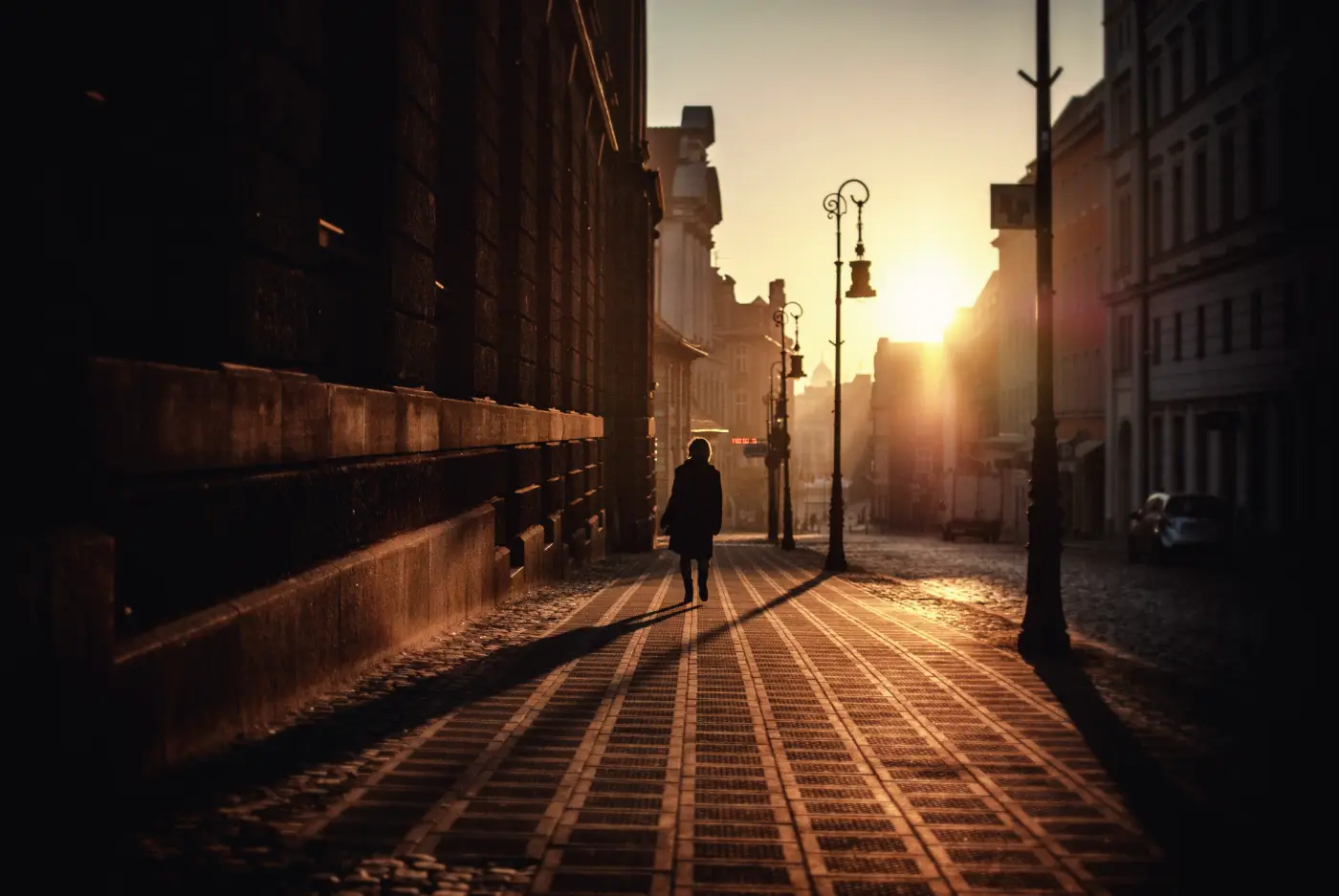
That is not automatically a disadvantage. A variable maximum aperture makes it possible to build a zoom that is smaller, lighter, and more affordable. Photographers who often work in low light or regularly need fast shutter speeds will benefit more from a constant f/2.8 or f/4 aperture.
A wide aperture does not automatically mean the lens delivers its best optical performance at that setting. Many lenses become slightly sharper and more even across the frame when stopped down by one or two stops.
The lens aperture plays a role in smartphones, too. The iPhone 18 Pro demonstrates what a variable aperture adds to portraits, group photos, and low-light photography.
Sensor and mount
A lens naturally has to fit the camera. Canon RF, Nikon Z, Sony E, Fujifilm X, Micro Four Thirds, L-Mount, and Pentax K are different lens systems. Older DSLR mounts such as Canon EF and Nikon F also exist.
The mount is not the only thing you need to consider, however. Lenses are also designed for a specific sensor size.
Within the same system, a full-frame lens can generally also be used on an APS-C camera. The reverse is different. An APS-C lens usually projects a smaller image circle. A full-frame camera may then switch automatically to crop mode, or dark edges may appear in the image.
If you still have good DSLR lenses, you do not necessarily need to retire them. With a suitable adapter, many older lenses can also be used on modern mirrorless cameras. Check whether functions such as autofocus, aperture control, and image stabilization will still work.
Image quality
Sharpness is important, but it does not tell the whole story. A lens can be very sharp in the center while lagging in the corners. Distortion, vignetting, and chromatic aberration may also be visible. Bright backlighting can also produce flare and reflections.

Distortion is visible, for example, when straight lines bow outward or inward. Barrel distortion is relatively common with wide-angle lenses, while pincushion distortion can occur at the telephoto end. Vignetting is a loss of brightness toward the corners of the image.
Chromatic aberration can appear as colored fringes along high-contrast edges.
Modern cameras and RAW software now correct various lens aberrations automatically. As a result, distortion, vignetting, and certain color aberrations are less problematic than they once were. Optical quality still matters, however. Detail that a lens fails to capture properly cannot be fully restored afterward.
Image stabilization
Image stabilization can make a major difference, especially at longer focal lengths and slower shutter speeds. Depending on the brand, you may encounter designations such as IS, VR, OS, and OIS.
Many modern cameras also have in-body image stabilization, often called IBIS. With certain combinations, stabilization in the camera and lens can work together.
Stabilization mainly corrects movement by the photographer and camera, however. It does not freeze a moving subject. A sufficiently fast shutter speed is still essential for a flying bird, an athlete, or a running child.
Not every letter matters
Lens names can be quite long. Manufacturers use all kinds of abbreviations for autofocus motors, special types of glass, weather sealing, stabilization, and more. Do not let them distract you during your initial selection.
Start with four things: focal length, maximum aperture, mount, and sensor size. Then consider features such as stabilization, weather sealing, autofocus, minimum focusing distance, and weight.
The designation Macro also deserves attention. Not every lens labeled macro actually achieves a 1:1 reproduction ratio.
Which lens is best for what?
For landscapes, architecture, and interiors, a wide-angle lens is usually the starting point. On full frame, you might consider approximately 16-35mm. On APS-C, comparable angles of view are achieved at shorter focal lengths.
The Sony FE 16-25mm F2.8 G clearly demonstrates what a modern wide-angle zoom can offer: a wide angle of view, a relatively large maximum aperture, and still-modest dimensions.
With ultra-wide-angle lenses, pay extra attention to distortion near the edges and to where people are positioned in the frame. The closer someone is to the edge, the more unnatural their proportions can become.
For travel, street photography, family photos, and everyday use, a standard zoom is especially versatile. A range of about 24-70mm on full frame or roughly 16-55mm on APS-C takes you from moderate wide angle to short telephoto.
The Sony FE 24-50mm F2.8 G, for example, is compact and fast, while the Fujifilm XF16-55mm F2.8 R LM WR II combines a broader zoom range on Fujifilm X with a constant maximum aperture of f/2.8.

Photographers who want to travel as light as possible can also choose a compact prime. A Nikon Z 26mm f/2.8 takes up hardly any space, making it well suited to street and travel photography.
For portraits, 50mm and 85mm are classic focal lengths on full frame. The Sony FE 85mm F1.4 GM II is a prime example.
On APS-C, a comparable angle of view is more likely to fall between about 35mm and 56mm. A Fujifilm XF56mm F1.2 R WR provides roughly the angle of view on a Fujifilm X camera that you would expect from an 85mm on full frame.
A fast standard lens such as the Nikkor Z 50mm f/1.4 is more versatile. Manufacturers such as Sigma also offer many fast prime lenses for various mirrorless systems.
For sports, birds, and wildlife, telephoto reach is especially important. A 70-200mm is versatile, but for birds and animals at greater distances, you will soon be looking at 300, 400, or 500mm.
A Canon RF 75-300mm F4-5.6 can be a relatively straightforward way to get started with telephoto photography. Photographers who often shoot birds or wildlife are more likely to consider a longer telephoto zoom such as the Tamron 150-500mm for Fujifilm X or a comparable lens.

Some telephoto lenses can also be used with a 1.4× or 2× teleconverter for extra reach. You lose some maximum aperture, and not every lens supports such a converter, so always check which combinations are officially compatible.
For macro and close-up photography, focus primarily on the reproduction ratio and working distance. A longer macro lens gives you more distance from the subject, which can be helpful with insects, for example.
One example for Fujifilm X is the Fujifilm XF30mm F2.8 R LM WR Macro. Other brands offer macro lenses with a variety of focal lengths and working distances.
More expensive is not always better
A more expensive lens may be better built, have a wider maximum aperture, focus faster, offer better sealing, and deliver stronger optical performance. But that does not automatically mean every photographer will benefit from those advantages.
A heavy professional 24-70mm f/2.8 can be fantastic, but if you mainly take photos on vacation and leave it at home because it is too large and heavy, you are better off with a more compact lens that you will actually bring.
The best lens is not necessarily the one with the highest test score. It is the lens whose characteristics suit the way you photograph.
Try it out
Specifications tell you a lot, but not how a lens feels on your camera. Whenever possible, try a lens before buying it.
Take a photo wide open and another stopped down by one or two stops. Test a zoom at both its shortest and longest focal lengths, and also shoot into the light. Pay attention to the speed and reliability of the autofocus, and especially to the weight, balance, and controls on your own camera.
When buying a used lens, also check for scratches, fungus, play, and stiff zoom or focusing rings. A short hands-on test like this often tells you more than another half hour spent comparing specifications.
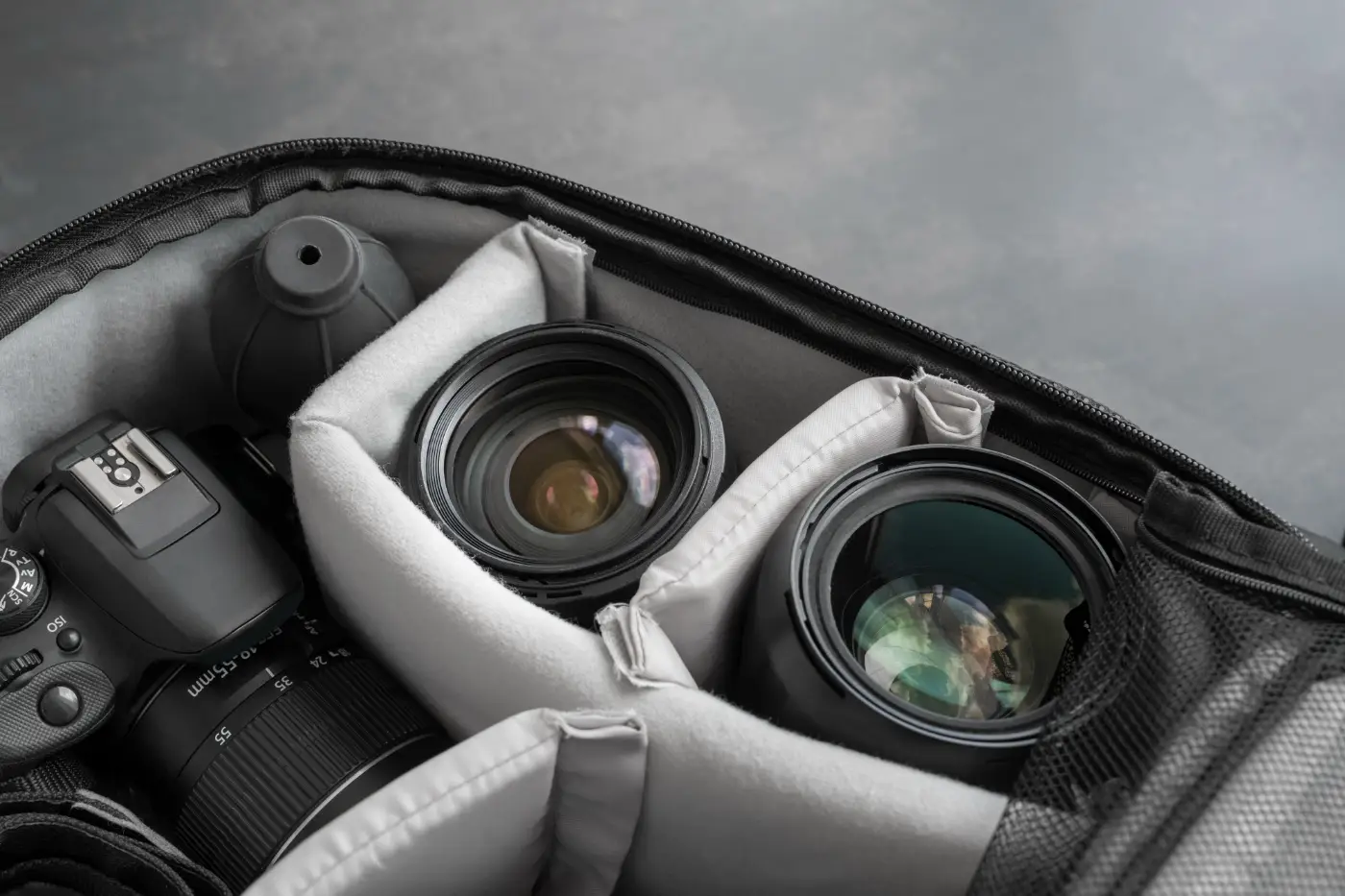
If you want one lens for as many situations as possible, a good standard zoom is often the answer. If you want to shoot more in low light or experiment with depth of field, a fast prime can be an excellent next step.
For sports, wildlife, and birds, you mainly need more reach. For small subjects, you need a true macro lens. And if you repeatedly notice while shooting that your current lens is not quite wide enough, fast enough, or long enough, you already know what your next lens needs to offer.
That is also the most logical way to build a lens kit: not because a particular lens exists, but because you discover while photographing that you need it.