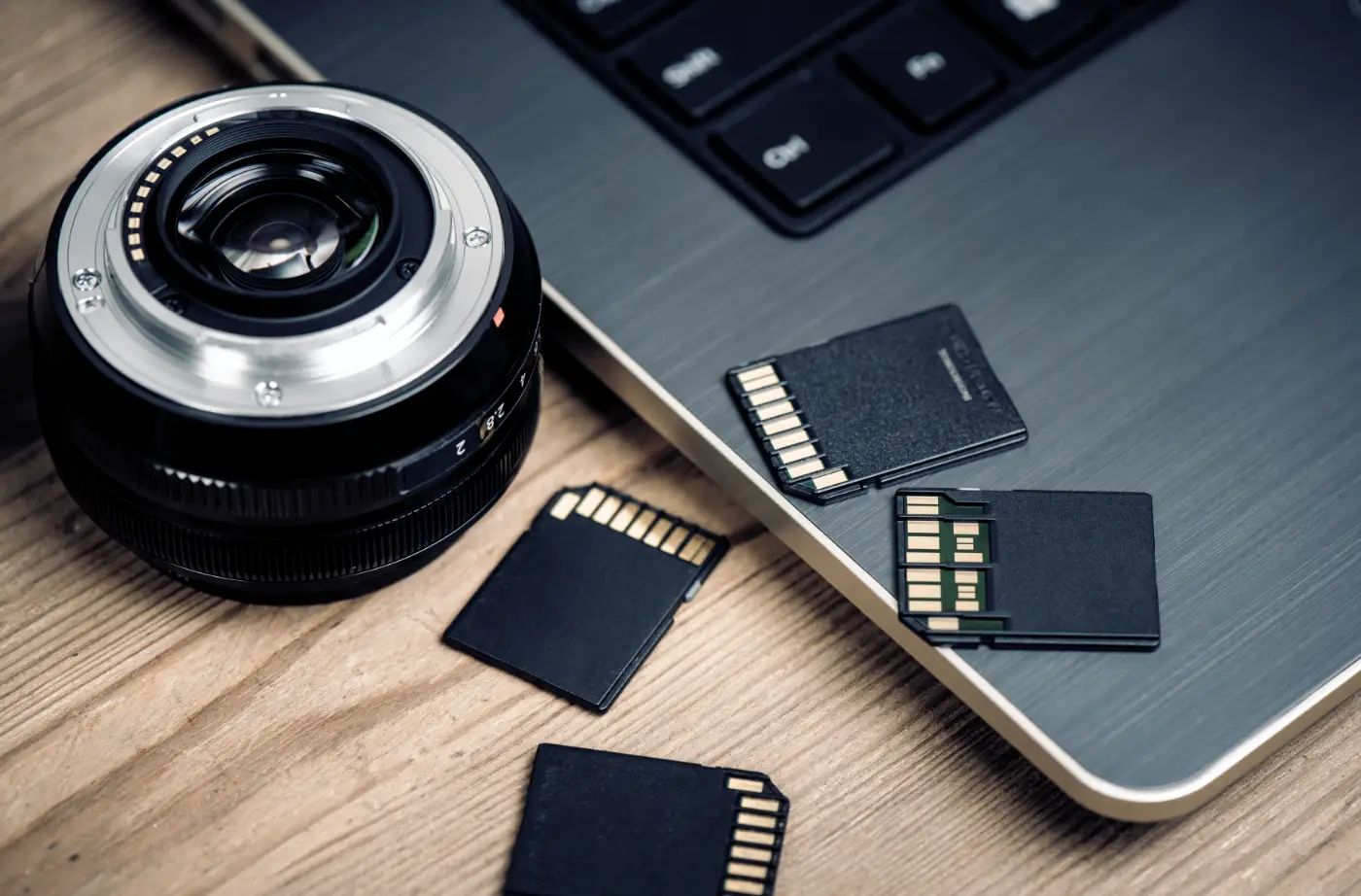
Smartphones are taking better and better photos, yet separate lenses, grips, and other phone camera accessories are making a comeback. Not because your phone has suddenly become inadequate, but because some photographers want more control over perspective, handling, and the look of their images. A telephoto add-on lens can be especially interesting, as long as you know when an accessory like this truly adds something.
For many people, the smartphone is the camera that is always with them. It is fast, light, smart, and often surprisingly good. Yet one limitation keeps coming up: most phone cameras largely determine how you see. The standard camera is often fairly wide-angle, digital zoom reduces quality, and the small body encourages quick snapshots rather than careful framing.
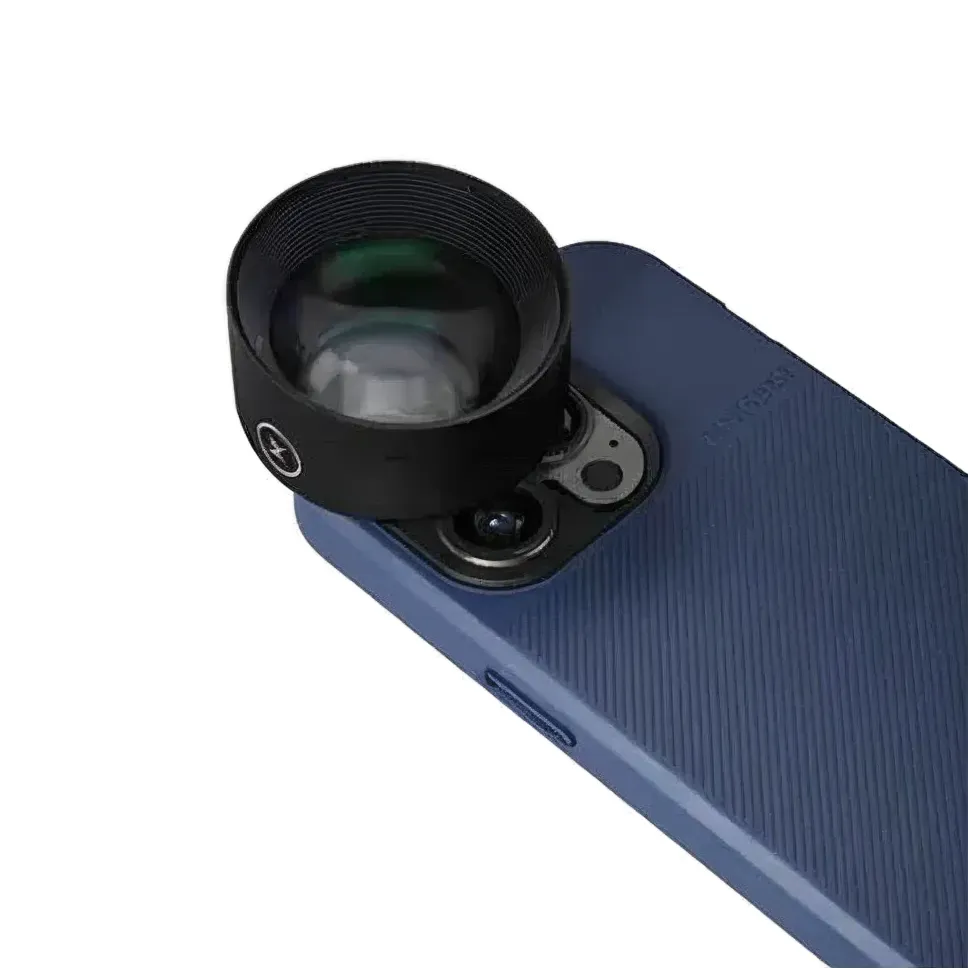
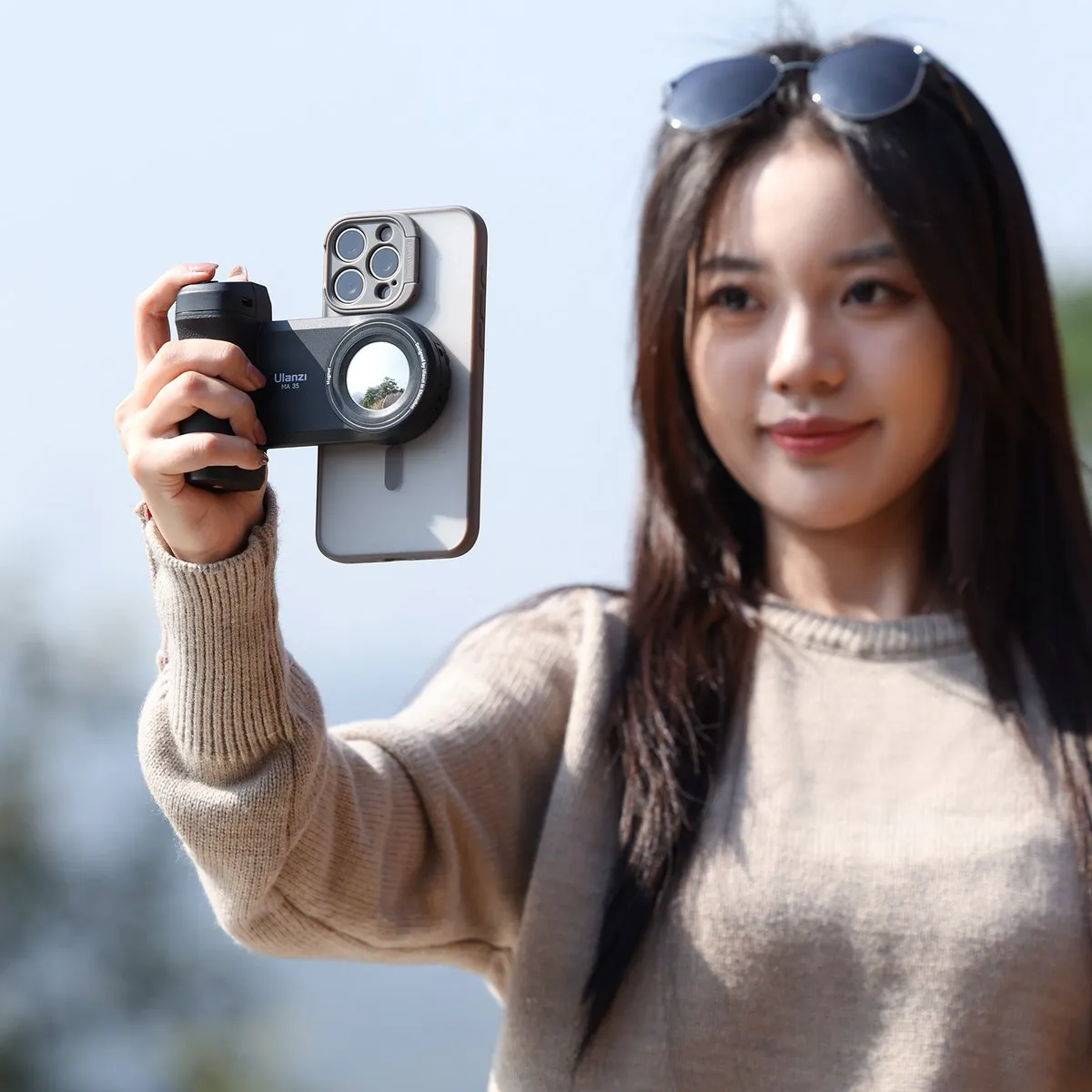
That is why accessories designed to turn the phone into more of a small camera are reappearing. Think add-on lenses and other smartphone accessories, MagSafe grips, filter holders, and handles with physical buttons.
One current example is Moment’s Tele 58mm II, an add-on lens that narrows the angle of view and forces you to frame more deliberately. Accessories like these do not solve everything, but they can add exactly what a phone sometimes lacks: a secure grip, distance, and a calmer way of seeing. With the Master Grip, Telesin focuses specifically on grip and controls: your phone is meant to feel more like a camera in your hand.
With add-on lenses, be sure to check the exact version and compatibility with your phone.
What Does a Telephoto Add-On Lens Actually Do?
A telephoto add-on lens sits in front of your smartphone camera. This changes the angle of view. You get a tighter frame and bring your subject optically closer without relying solely on digital zoom.
The principle is similar to what a regular telephoto lens does: it does not just magnify, but also lets you frame differently and put more distance between you and your subject.
That difference matters. Digital zoom is essentially a crop of the image. The smartphone enlarges part of the shot and uses software to try to recover detail. It may look fine on a small screen, but in more challenging light, with fine textures, or at larger display sizes, the loss of detail becomes apparent sooner.

A good add-on lens tries to shape the image differently before it reaches the sensor. In other words, you use additional glass to obtain a different angle of view. In theory, that is better than cropping alone, although quality depends heavily on the lens, the mount, and the camera you use it with.
Moment, for example, positions the Tele 58mm II as a lens for more natural-looking portraits, street photography, and telephoto shots with a smartphone. The 58mm designation refers to a more classic, narrower angle of view than the standard wide-angle camera on many phones.
Incidentally, a separate add-on lens is no longer always necessary. The OPPO Find X9 Ultra demonstrates with its 230mm camera that a long telephoto camera can now also be built into a smartphone.
Why 58mm Is Interesting for Portraits
Many smartphone portraits are taken from too close. Not because the photographer wants that, but because the standard lens is fairly wide. You have to stand close to someone to make their face large enough in the frame. This can make the perspective feel unsettled: noses may look slightly larger, faces can become distorted, and the background draws a lot of attention.
A telephoto add-on lens allows you to step back a little. That creates a calmer portrait perspective. The face is less distorted by the wide-angle view, and the background is often in a more pleasing proportion to the subject.
This is the same principle that makes photographers prefer a slightly longer focal length over a wide-angle lens for portraits. It is not just about “bringing the subject closer,” but primarily about the distance between photographer and subject. Being able to keep more distance often results in a more natural image.
.webp)
That can make a big difference for outdoor portraits. A child in a camping chair, someone at a café table, a portrait during a walk: you do not have to stand right in front of someone’s face. The photo is more likely to feel relaxed.
Street and Travel: A Little More Distance, a Little More Calm
A telephoto add-on lens can also be useful for street and travel photography. Not to spy on people unnoticed, but to keep a little more distance. On the street or while traveling, a lot happens a few meters away: gestures, patches of light, details in store windows, and people in their surroundings.
With a wide-angle camera, you quickly include a lot of the surroundings. That can be beautiful, but it can also make the image feel busy. A narrower angle of view helps you make choices. You isolate a detail from the scene and leave the rest out.
This fits with the idea of photographing with a calmer angle of view. In Smartphone Photos at 35mm: A Calmer Frame, we already discussed the difference between a broad standard view and a slightly more focused frame. A telephoto add-on lens goes one step further: it helps you see not only more calmly, but also more selectively.
That can be helpful when traveling. You photograph not only the entire square, but also someone’s hands at a market, a detail on a façade, a traveler in beautiful light, or a dog in a narrow street. Your phone becomes less of a quick note-taking device and more of a camera with which you deliberately choose what to leave outside the frame.
When Does an Add-On Lens Help More Than Digital Zoom?
A smartphone add-on lens is most useful in situations where you have enough light, can work carefully, and genuinely want a different angle of view. Examples include outdoor portraits, travel, street photography, detail shots, and small documentary projects.

In bright light, a good telephoto add-on lens can be surprisingly useful. The phone does not have to correct as aggressively, shutter speeds remain fast, and you immediately see how the lens changes the frame. It becomes more difficult at dusk. Additional glass can reduce the amount of light, autofocus can become less reliable, and small positioning errors become more noticeable.
The biggest benefit, then, is not spectacular zoom numbers. It is control. You choose a different perspective, step farther back, and prevent every photo from having that familiar smartphone wide-angle look.
A separate accessory can also help because it slows you down. You have to attach the lens, check that it is positioned correctly, and look more deliberately. That may sound like a hassle, but that very hassle can be useful photographically. You take fewer photos, but often with more intention.
The Drawbacks: Extra Glass, Extra Steps
An add-on lens is not a cure-all. It always adds something between the subject and the sensor, and that can work out well or poorly. A mediocre lens produces softer corners, reflections, a color cast, or reduced contrast. If the lens is not positioned precisely in front of the smartphone camera, the image can become blurry or skewed.
You also often need a special case, a lens mount, or a universal clamp. That makes the system less spontaneous. You have to remember to bring the lens, keep it clean, and mount it properly. For many people, this is exactly where the smartphone loses its greatest advantage: convenience.
Compatibility also remains a concern. New phones come with different camera modules, different lenses, and different software. What works well on one model may be less convincing on another device. Especially with smartphones that have multiple cameras, you need to know exactly which camera the add-on lens is intended for.
Grips have their own advantages and disadvantages. A handle such as the Telesin Master Grip makes an iPhone easier to use as a camera and can feel steadier when shooting photos or video. But it also makes your phone larger and heavier. That is helpful when you are heading out specifically to shoot, but less appealing if you just want something that fits in your jacket pocket.
When Is a Real Camera More Useful?
Anyone who often shoots with telephoto focal lengths, action, low light, or fast autofocus will still run into the smartphone’s limits. A good compact, mirrorless, or bridge camera has a larger sensor, a better grip, true optics, and usually more control over shutter speed, aperture, and autofocus. A Sony RX10 V also fits into this middle ground: it does not have an interchangeable telephoto lens, but it does offer a wide optical zoom range in a single camera.
For others, it is actually a sign that they are ready for a compact or mirrorless camera.
That does not mean a smartphone is inferior. It mainly means that every tool has its own rhythm. The phone is excellent for everyday moments, travel, quick observations, and sharing. A real camera is often stronger when you photograph with a more specific purpose, want to use longer focal lengths, or work under more difficult conditions.
This is also where the interesting middle ground lies. For some photographers, an add-on lens or grip is a way to use their smartphone a little more seriously without immediately carrying a separate camera. For others, it is actually a sign that they are ready for a compact or mirrorless camera. Anyone who finds that they need more and more accessories to make the phone feel like a camera might ask whether switching from a smartphone to a camera would make more sense.
Who Is a Lens Like This For?
A smartphone add-on lens is especially interesting for people who already enjoy taking photos with their phone and want to see more deliberately. It is not for someone who only takes quick vacation snapshots, but it can suit anyone who feels that the standard camera sometimes looks too wide or too flat.
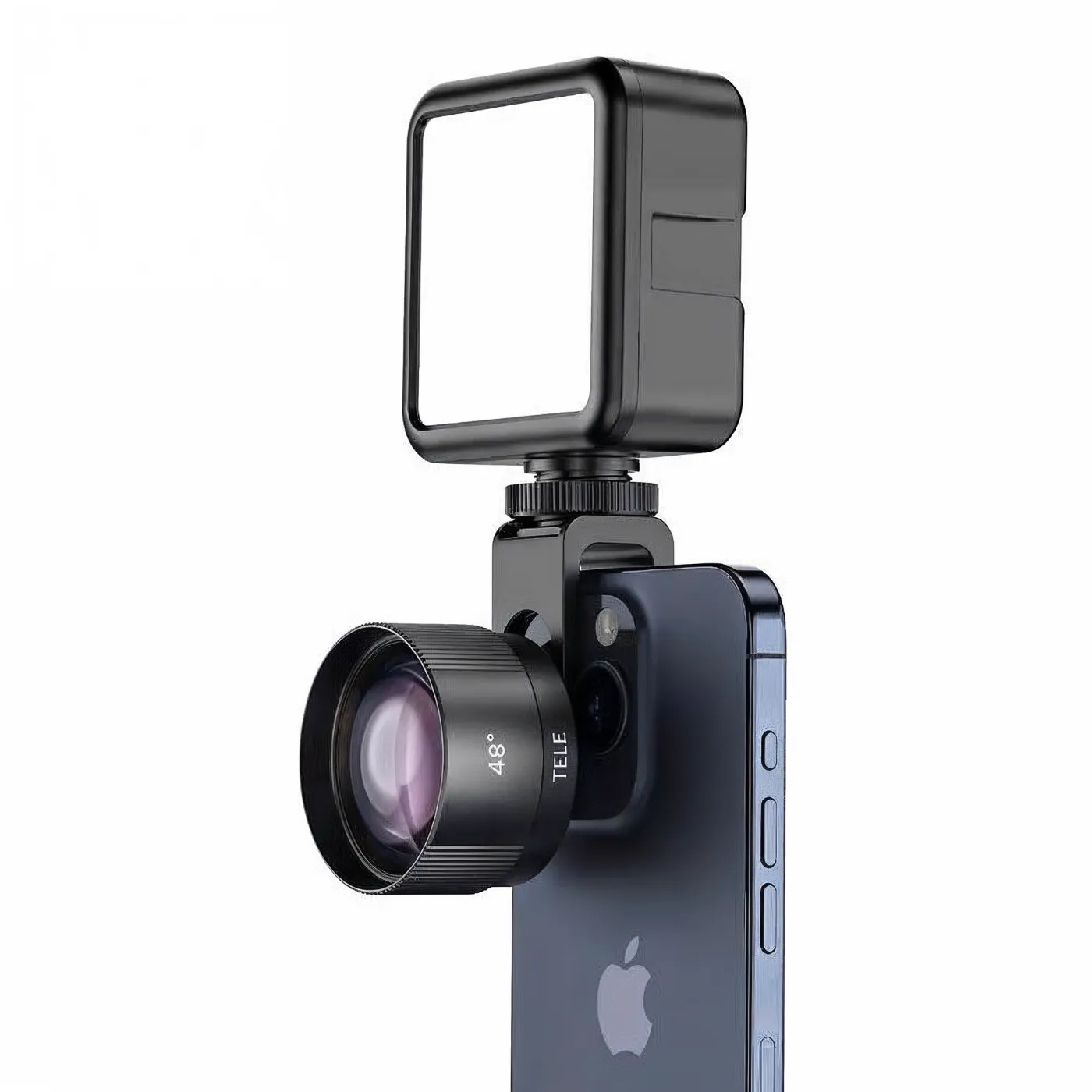
It suits photographers who take many portraits, enjoy shooting while traveling or on the street, and like small creative tools. A telephoto add-on lens can also be useful for creators who produce social content because it gives images a different look from the standard smartphone camera.
If convenience is your main priority, you are better off sticking with the built-in cameras. Modern phones often already have a portrait mode, a telephoto camera, or a usable 2x mode. That is faster and more reliable. If you enjoy experimenting, however, a good add-on lens can teach you about focal length, perspective, and distance from your subject. Those lessons will still apply if you later use a real camera.
If you experiment with a lens like this, you will often notice more quickly when extra flexibility in light and color would be useful. It is then worth looking into shooting RAW with your phone and the best photography apps for your smartphone, especially if you want more control over capture and post-processing.