For years, smartphone cameras have primarily been wide-angle cameras. That is useful for photographing town squares on vacation, group photos, and interiors, but it is not always very subtle. Anyone who photographs on the street with a phone knows the effect: you can fit a lot into the frame, but you often have to get very close to give a subject real impact.
The default camera on many smartphones is not set to a 35mm equivalent. The main camera is usually closer to a 24mm to 28mm equivalent. That is quite wide. This is exactly why it can be interesting to deliberately work with a narrower angle of view, around 35mm, for example. You can do that with a dedicated camera mode, a camera app, a slight crop, or sometimes with an add-on lens.
The point is not that 35mm is the standard on smartphones. The point is that 35mm can feel calmer and more photographic than the default wide angle for many subjects. The difference can be especially significant for street photography, travel, and environmental portraits.
What do we mean by 35mm on a smartphone?
When photographers talk about 35mm, they usually mean the angle of view of a 35mm lens on a full-frame camera. On a smartphone, it does not literally mean a 35-millimeter lens, but a field of view that produces roughly the same framing.
Many phones use an angle of view around a 24mm to 28mm equivalent for their default main camera. That is ideal when you want to include a lot of the surroundings. Think of an interior, a landscape, or a broad street. A 35mm equivalent is narrower. You capture less of the surroundings, but often also get less distortion and a calmer composition.
Where 24mm quickly takes in a lot of context, 35mm selects a subject more readily. You still see enough of the surroundings, but the image feels less stretched and less busy.

Why the default wide angle is not always ideal
The default wide-angle camera on smartphones has many advantages. You do not need to step far back, landscapes fit easily into the frame, and it is a safe choice for quick snapshots. But those same qualities can also work against you.
In street photography, you often want tension between the subject and the surroundings. At 24mm, you need to stand close to your subject to give the image impact. That can be uncomfortable, especially when photographing people. If you stay farther away, the person becomes small and the background takes over the frame.
Wide angle can also be tricky for portraits. A face that comes just a little too close to the camera can look unnaturally distorted. Noses, hands, and shoulders can appear larger than they are. That is not a problem for playful snapshots, but it does not always work for a quiet portrait.
So do not look only at the number in the camera app; look at the final file too.
With architecture and city scenes, a wide angle can also bring a lot of information into the frame at once: traffic signs, facades, sky, sidewalk, and passersby. Sometimes that is exactly the intention. Often, it simply makes the image busier.
Why 35mm can feel more natural
A 35mm view is close to a classic way of photographing. Not because it exactly matches the human eye—that is a persistent oversimplification—but because the angle of view shows enough context without trying to encompass everything.
That is helpful for street photography. You can place someone in their surroundings without practically standing on top of the situation. A cyclist on a street, a patio in evening light, a traveler at a station: at 35mm, the surroundings remain legible while the subject gains more visual weight.

It works for travel photography for the same reason. Instead of capturing every square from facade to facade, you are more likely to make images with a clear choice: a market stall, a person in a doorway, or a street detail with just enough context around it.
For portraits, 35mm often feels more flattering than the default wide angle as well. It is still not a classic portrait telephoto, but faces are less likely to look exaggerated. For environmental portraits—someone in their studio, store, kitchen, or street, for example—35mm is an appealing middle ground.
Street photography: less spectacle, more observation
A wide-angle camera invites dramatic images: low viewpoints, strong lines, and plenty of foreground. That can be wonderful, but it can quickly become a gimmick. A 35mm view is more restrained. You have to pay a little more attention to timing, the background, and the edges of the frame.
That makes it interesting for street photography. The photo depends less on an effect and more on observation. Where does the light fall? How is someone moving? What is happening in the background? What small clash of form, color, and gesture makes the scene worth photographing?
With a smartphone, that is especially valuable because your camera is always with you. You do not need to set up a large kit. You can walk, look, wait for a moment, and respond. A 35mm angle of view helps because it does not automatically cram everything into the frame.
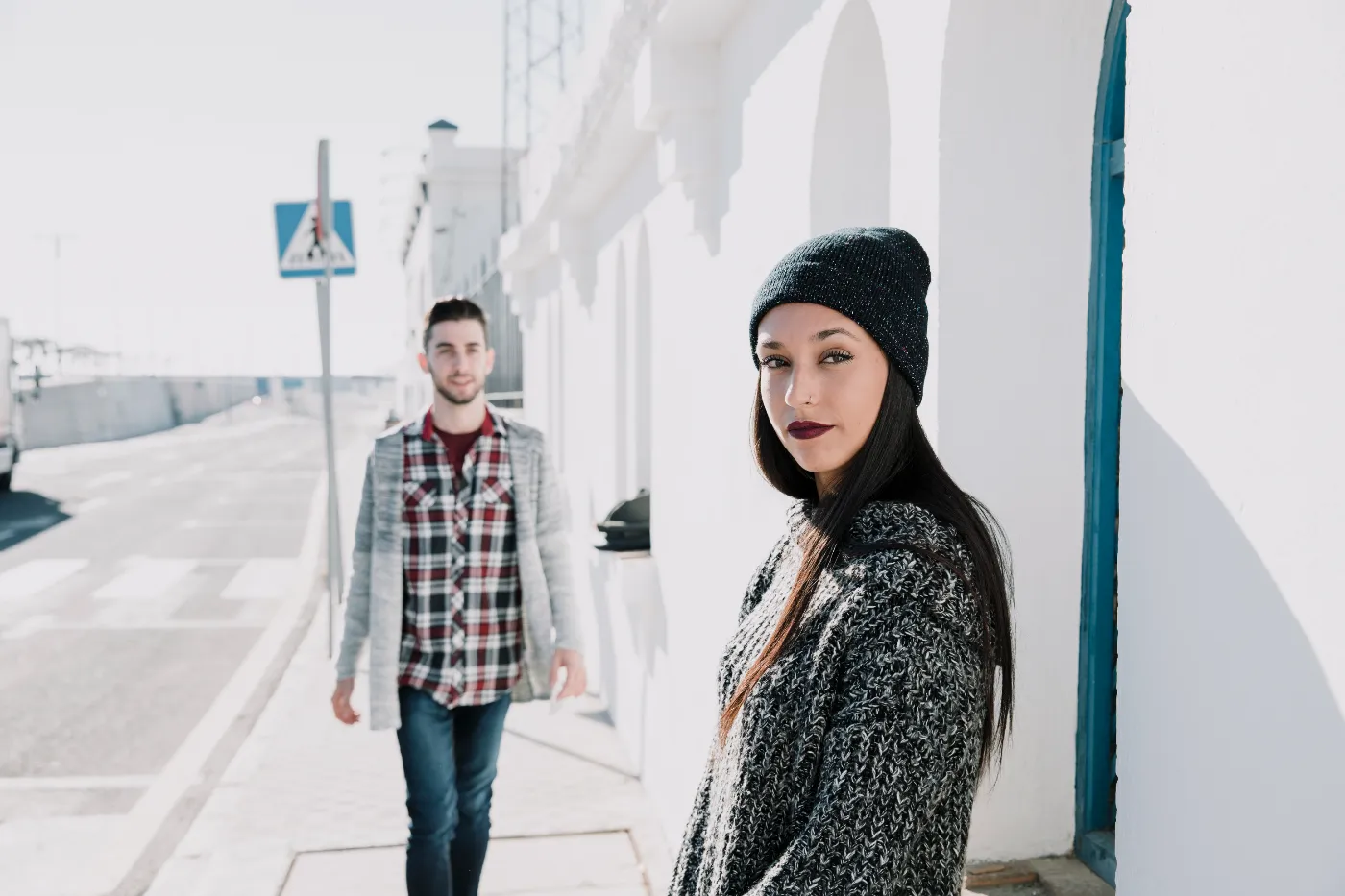
A practical tip: when shooting street photos at 35mm, do not focus only on getting closer; make clearer choices. What is the subject? What can be left out? Sometimes one step to the left is more effective than zooming in.
Phone portraits: more distance, less distortion
People who photograph others with a smartphone often use the default camera. That makes sense because it usually delivers the best image quality. But the broad angle of view can quickly introduce distortion, especially if you get too close to the face.
A 35mm mode, if your phone offers it optically or through a good crop, creates a little more calm. You can make a three-quarter shot without hands or faces immediately jumping toward the viewer. For environmental portraits, that often looks better than the default wide angle.
Keep in mind that digital zoom is not always the same as a real 35mm lens. Some phones simply crop the main camera’s image. With enough resolution, that can work well, especially in good light. Image quality can fall off more quickly at dusk or indoors. So do not look only at the number in the camera app; look at the final file too.
Travel photography: less postcard, more story
When traveling, the temptation to capture everything is strong: the entire bay, the entire cathedral, the entire market. A wide angle helps, but it does not always produce the most personal photos. You get plenty of overview, but little emphasis.
At 35mm, you make choices more quickly: the shadow on a wall, a waiter straightening tables, a row of scooters in front of a pastel-colored facade, a hand accepting a ticket at a window. Photos like these often say more about a place than yet another wide view.
That does not mean wide angle is unnecessary. For landscapes, interiors, and narrow streets, 24mm remains useful. But anyone who wants more variety in their travel photos can give themselves a simple assignment: photograph for one afternoon only at around 35mm. Do not switch and do not keep zooming back out. You will naturally begin to see differently.
How do you use 35mm if your phone does not have that mode?
Not every smartphone has a true 35mm camera. Still, you can often approximate the angle of view.
Some camera apps offer focal lengths such as 28mm, 35mm, or 50mm as quick-access buttons. Sometimes these are crops from the main sensor; sometimes the phone switches between lenses. Prefer the mode that gives you the best combination of image quality and framing.
Does your phone offer only 1x, 2x, and 0.5x? You can approximate 35mm by zooming in slightly from 1x, usually to around 1.3x to 1.5x, depending on the device. Test it in good light and check critically whether the detail holds up.
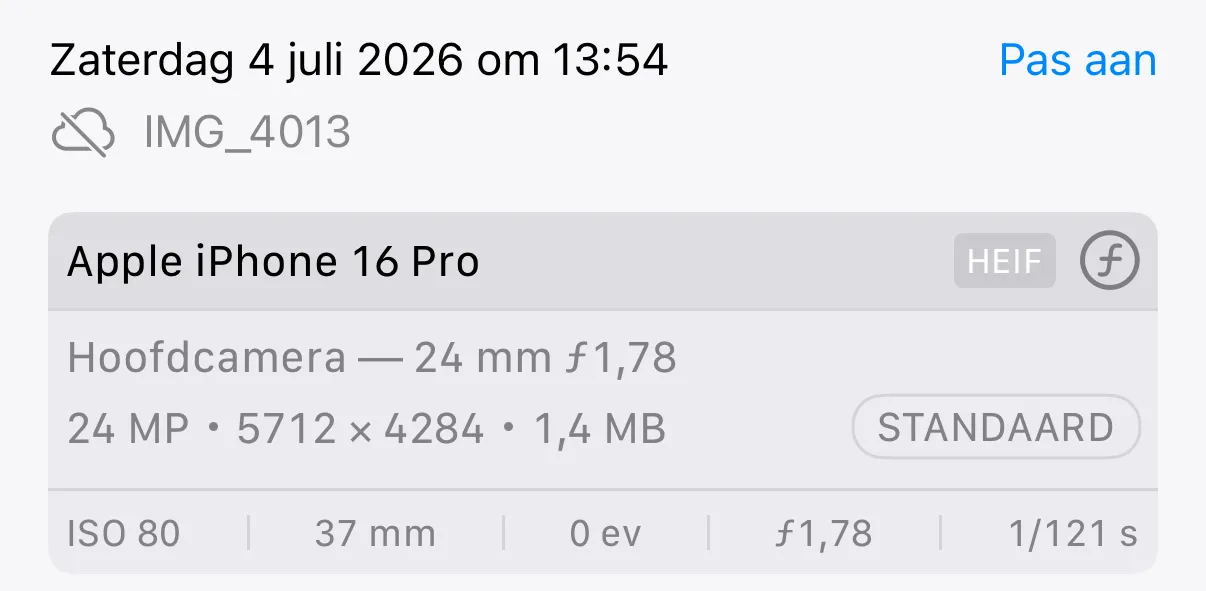
Another option is to crop afterward. Shoot with the main camera, then crop to a calmer composition later. It is less spontaneous, but instructive: you see what information you did not actually need.
If you want to frame even tighter than 35mm, a telephoto lens on your phone can help you create more distance and calm in the image.
Composition tips for 35mm smartphone photography
1. Watch the edges
Because you are shooting less wide, distracting elements stand out more quickly. Check for lampposts, half faces, and bright areas along the sides.
2. Use layers
A foreground, subject, and background create depth without a wide-angle trick. Think of a window, doorway, or shadow in the foreground.
3. Take one more step
At 35mm, you need to move physically more often. A step closer, sideways, or lower makes a bigger difference than you might think.
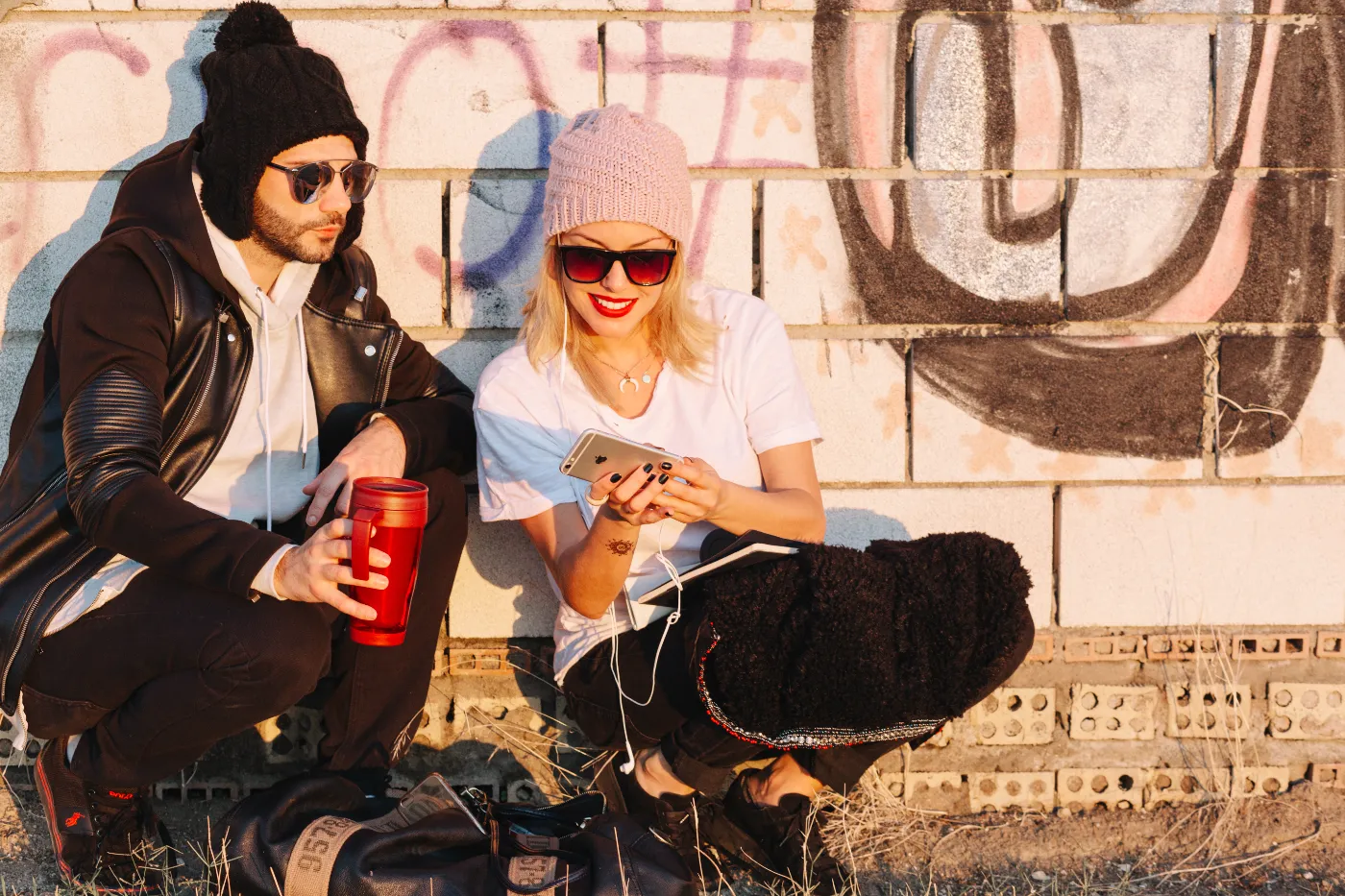
4. Look for calm backgrounds
The angle of view is not narrow enough to blur everything away, so your choice of background remains important.
5. Shoot at eye level
For street photography and portraits, 35mm often works well when you avoid shooting too much from extreme low or high angles.
The limitation is the strength
Perhaps the most interesting development in smartphone photography is not that phones can do more and more, but that photographers are choosing limitations again. One angle of view. One way of looking. Less switching, more attention.
A 35mm crop fits that movement. It does not turn a phone into a Leica or an interchangeable-lens camera. But it can make the phone feel more like a deliberate street camera: fast, quiet, present, and just a little less greedy than the default wide angle.
For anyone who photographs frequently with a phone, it is worth trying. Set your camera to around 35mm for a day, or crop consistently in that direction. Not to chase technical perfection, but to discover what happens when your phone does not see everything and you therefore have to look more carefully.