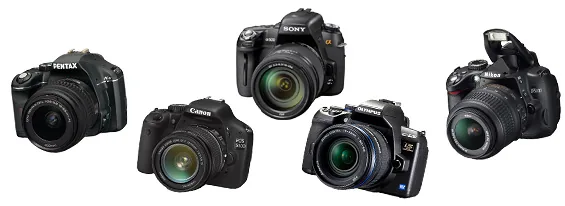
Choosing a DSLR is not easy. Yet you can reach a decision surprisingly quickly by simply comparing the brands side by side. Fotografie.nl outlines the main characteristics of Canon, Nikon, Olympus, Pentax, and Sony.
Will it be a Canon EOS 550D, a Nikon D5000, a Pentax K-x, a Sony A-550, or an Olympus E620? You have spent months browsing the internet and reading all the pros and cons—and you still do not know. Choosing a DSLR is often difficult. Here is what the brands offer amateur photographers.
The Best?
When choosing a DSLR, everyone looks for the best camera their budget can buy. That makes sense. But the focus is always on quality, even though it does not necessarily have to play such a major role.
Will it be a Pentax, Canon, Sony, Olympus or Nikon?
All brands make excellent DSLRs and lenses. The differences in quality are relatively small. Broad claims such as 'brand A is better than brand B' are no longer tenable.
Sometimes the choice is simple: only one DSLR runs on AA batteries, whether rechargeable or disposable—the Pentax K-x. AA batteries make it easy to find power anywhere. With Energizer Ultimate Lithium disposable batteries, you can travel without a charger and take 1,000 to 1,500 photos on one set.
What is always striking during those exhaustive camera tests is that it is all so very relative
Concerned
Of course, you can study every detail of tests on websites such as DPReview and become concerned. But you may end up worrying about things that matter little in practice. For most people, it is not important whether car A develops a slight steering-wheel vibration at 230 km/h and car B only at 235 km/h. How the car feels to drive matters much more.
Whether you understand and can find the controls. Whether it holds enough luggage, and so on. What stands out in those exhaustive camera tests is how relative everything is. Look at real-world photos from a camera that did not score especially well and they usually look beautiful. In other words, what is all the fuss about?
Each brand has its own characteristics. Once you know them, the choice often becomes clear.
The noise at high ISO values in particular is used as a strict criterion in tests. That makes sense, because it is easy for everyone to observe and compare. But don't let yourself be fooled here either. Better to have a camera with a little more noise that you enjoy working with, than a camera with minimal noise that you find too complicated, so that you miss moments or make mistakes.
Don't forget that those noise assessments often come down to standing with your nose right in front of a meter-sized photo. That no longer has anything to do with normal viewing conditions. If you view the image normally on a large screen, you often see no noise at all.
Tip: Quality is not the most important consideration. Look at the features and functions. Look through the viewfinder and assess the autofocus. See whether the camera feels comfortable in your hand—and whether you like how it looks, which really may count too!
Which Brand?
The most important question is which brand to choose. Once you have chosen a brand, your budget may automatically point to one model. If several models qualify, the lineup within a brand is usually organized logically enough to make the choice manageable. Each brand has its own characteristics; once you know them, the choice often becomes clear.
Professional Brands?
Almost all professionals use Canon or Nikon. Both brands spent decades consistently developing professional ranges of cameras and lenses. Crucially, they also offer professional photographers fast, expert service, including repair and loan services at major sporting events such as the Olympic Games.
Both brands offer a wide selection of professional lenses, including extremely expensive fast telephoto lenses. It is not economical for the other brands to maintain a comparable range, but they provide more than enough choice for 95 percent of photographers. A professional image is appealing, but says nothing about how well a brand understands recreational photographers.
Canon
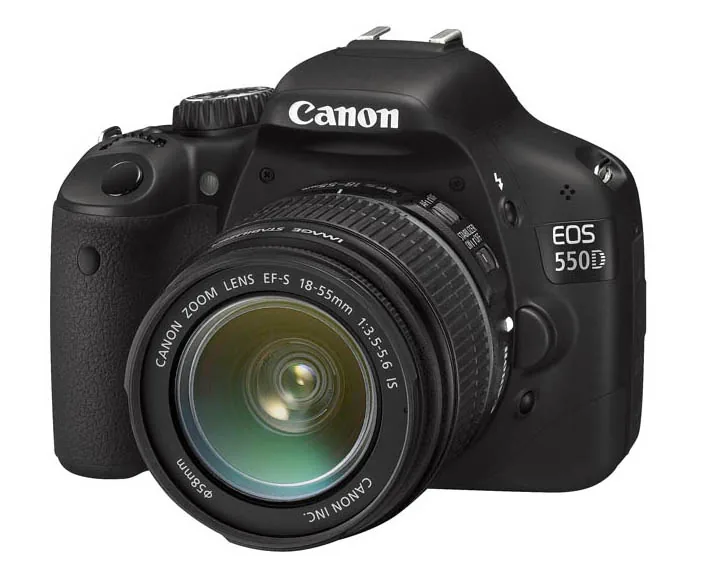
Lenses: an exceptionally wide selection for both amateurs and professionals, with particularly extensive choice in the telephoto range. There are no fewer than five high-quality professional 70-200 mm zooms, priced from 500 to 2,500 euros. Canon's 100-400 is especially interesting for nature photographers. Macro photographers can choose the extreme MP-E 65 mm, which reaches up to 5x life size for close-up portraits of subjects such as ladybugs. The focusing motor is always in the lens and operates quickly and quietly. Autofocus performance is very good across Canon's range.
Camera features: EOS cameras offer a complete set of capabilities in every class, but Canon does not add unusual extras. There is no articulating LCD screen, in-camera photo editing, or extended selection of scene modes. Canon's amateur EOS body lineup is divided into many closely spaced models. All have live view. Many Canon models have the unique Depth mode, which automatically controls depth of field. It is a very useful feature that receives too little attention.
- Image stabilization: Canon Canon never builds it into the body; some lenses include stabilization.
- Wireless flash control: amateur models cannot control external flashes from the built-in flash. You need a Speedlite 580 as the controller or the wireless ST-E2 Speedlite Transmitter. The two macro flashes can also control an additional flash, for example as an accent light.
Nikon
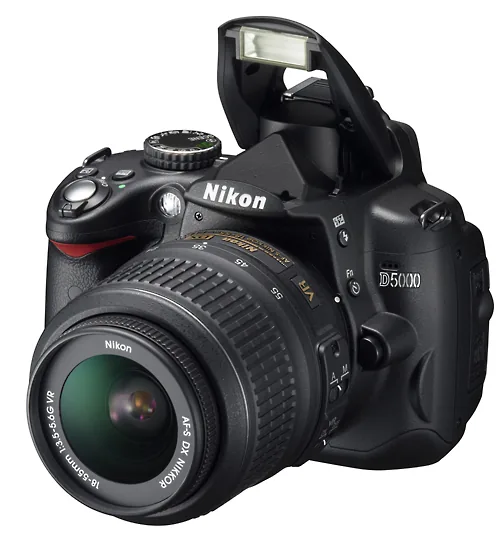
Lenses: an exceptionally wide selection for amateurs and professionals. The D3000 and D5000 require lenses with their own focusing motor; otherwise, you must focus manually. Almost all popular lenses now have their own motor, including lenses from independent manufacturers. To use Nikon lenses without a built-in focusing motor, a D90 or higher model is the better choice.
Camera features: amateur DSLRs have extensive guidance and assistance functions, support in-camera photo editing, and offer many settings for customizing camera operation. The D5000 has live view, an articulating screen, and numerous scene modes. The D3000 stands out for its Guide mode, which helps beginners navigate the settings. The D90 offers many capabilities from the professional and semiprofessional models, but its construction is tailored to amateur use.
- Image stabilization: Nikon never builds it into the body; some lenses include stabilization.
- Wireless flash control: available through the D90's built-in flash. Other models require an SB800 or SB900 flash to send control commands. For macro lighting, Nikon offers a special kit of wirelessly controlled flash heads that attach to the front of a lens.
Sony
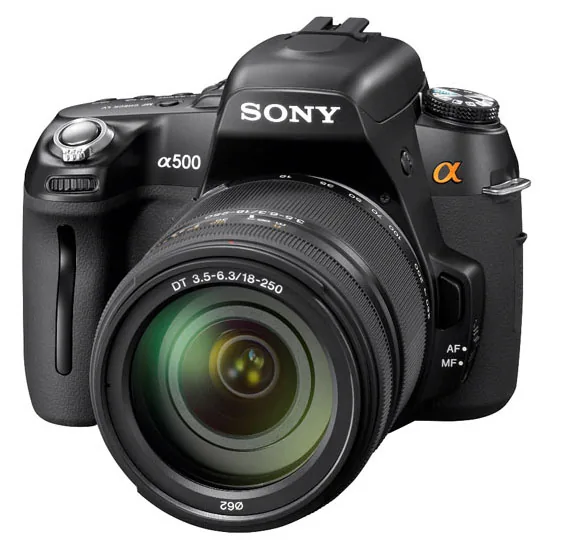
Lenses: all lenses with Minolta and Sony AF mounts fit Sony cameras. More and more Sony lenses have their own focusing motor, while every camera body also includes one, so any combination works. The in-body motors can produce a little extra noise. The range is strong and topped by excellent Carl Zeiss lenses.
Camera features: except for the entry-level model, Sony's cameras have live view. Sony is the only brand here that keeps the normal autofocus system active, providing fast focusing in live view. Other brands focus significantly more slowly in live view, making it mainly suitable for still or static subjects. Sony makes live view even more appealing with an articulating LCD screen. The A230 lacks live view and an articulating screen, while the A450 has only conventional live view (with slow autofocus) and no articulating screen. Top models in the amateur lineup also offer fast continuous shooting at 5 or even 7 frames per second. Beyond that, all essential features are present, but there are few options for fine-tuning the camera to individual preferences. The cameras include help information. Dedicated photo technicians may find Sony’s amateur DSLRs rather basic.
- Image stabilization: in the body, so you have stabilization with every lens you use.
- Wireless flash control: all cameras can control standard external flashes wirelessly.
Olympus
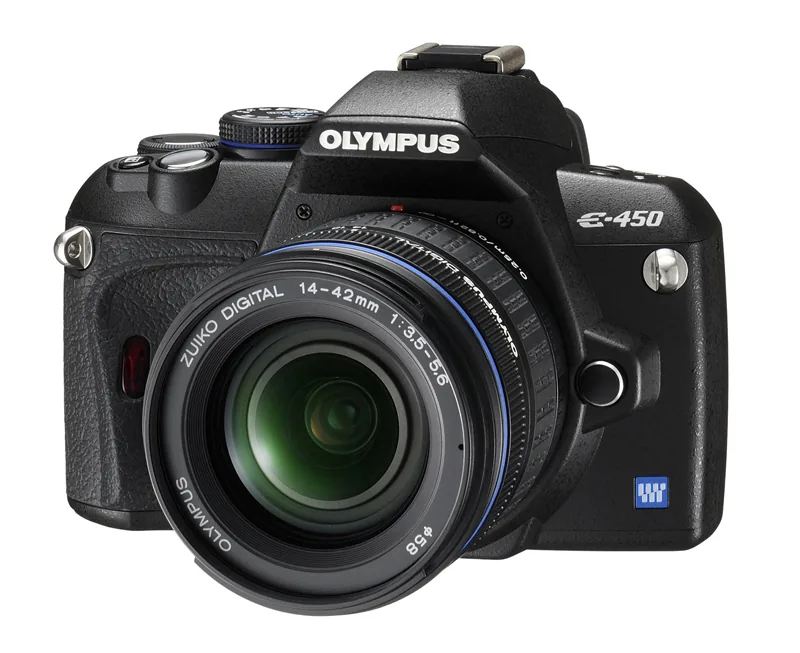
Lenses: compact, lightweight designs and a generous selection of professional and amateur lenses, mainly zooms with few primes. Professional lenses are often especially fast. Third-party choice is limited to Sigma, and it is currently uncertain whether Sigma will continue making Four Thirds lenses. Olympus has no equivalent to other brands’ 18-200 mm lenses—which would be a 14-150 mm—but does offer a compact 18-180 mm. All lenses have fast, quiet focusing motors whose direction can be set in the camera menu. An adapter permits use of lenses from the older Olympus OM system.
Camera features: Olympus uses the Four Thirds sensor, as does Panasonic. It is smaller than the APS-C sensors used by other brands, making cameras and especially telephoto lenses lighter and more compact. The smaller sensor reproduces fine detail slightly less well, although whether that is visible depends on image enlargement. Its somewhat greater depth of field can be advantageous, particularly in macro photography. Every Olympus camera has live view and numerous scene modes. Olympus models offer unusually extensive settings, including fine control over exposure, white balance, and other image characteristics. In-camera image editing is available, and most DSLR models have an articulating LCD screen. Their compact size makes Olympus cameras particularly suitable for hiking nature photographers and safari travelers. The lightweight 70-300 mm costs less than 350 euros, delivers excellent quality, and—with a 2x crop factor—provides the reach of a 140-600 mm lens on a film SLR.
- Image stabilization: Olympus Olympus builds it into the camera, except on the E-450.
- Wireless flash control: all Olympus DSLRs support wireless flash control as standard, with extensive configuration options.
Pentax
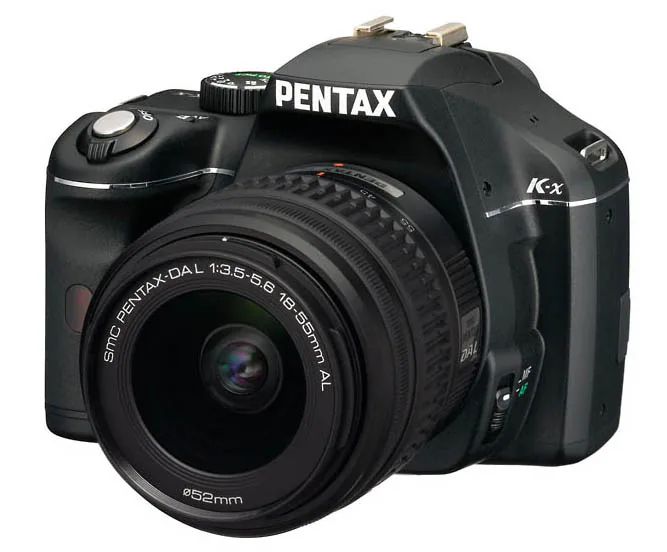
Lenses: a sufficiently comprehensive range, plus a group of Limited Edition prime lenses distinguished by attractive image rendering. Older Pentax lenses can be used on modern cameras.
Camera features: exceptionally comprehensive. There are many ways to choose a preferred workflow and customize the camera accordingly, including extensive bracketing and correction options. The cameras also offer exposure modes not found elsewhere, such as a useful ISO-priority automatic mode. Another unusual feature is live preview, which lets you try various settings before shooting. Numerous digital filters provide playful options, with adjustable strength and effect. In-camera photo editing is available, including the creative filters, and RAW files can also be processed in-camera.
- Image stabilization: in camera body.
- Wireless flash control: available through the built-in flash.