You have bought a new zoom lens that, for example, can zoom out to 70 mm and in to 300 mm. You can use it in all kinds of situations—from taking fun, candid photos of your children playing on the lawn to photographing birds in the trees in your backyard. That is very convenient. But you notice something about that brand-new lens: the aperture does not always stay where you want it. Why is that?
With a zoom lens featuring a variable maximum aperture, the largest lens opening decreases as you zoom in. The f-number represents the ratio between the focal length and the lens's effective aperture. If the focal length increases, the aperture must also increase to maintain the same f-number.
Compact and affordable zoom lenses often fail to do this sufficiently. Consequently, a lens might offer an aperture of f/3.5 at the wide-angle setting, for example, but only f/6.3 when fully zoomed in. Thus, the aperture does not become smaller because the light travels a longer distance, but rather because the ratio between the focal length and the effective lens opening changes.

This is clearly evident with the Sigma 20-60mm F2.8-4 DG Contemporary: F2.8 is available primarily at 20mm, after which the maximum aperture quickly drops to F4 as you zoom.
At that longer focal length, you still get background blur despite the higher f-number, which is usually why you would choose a wider aperture (lower f-number).
...because light has to travel farther at the longer focal length, less light reaches the camera sensor overall...
The only time this may be a problem is when you are shooting at maximum zoom in low light. In that situation, you may need a wider aperture to capture the image without slowing the shutter speed so much that motion blur or camera shake affects the shot.
In this situation, you have several options:
1. Turn on image stabilization if you do not have a tripod.
2. Mount the camera on a tripod (image stabilization should be turned off) to eliminate camera shake, or...
3. Zoom out and take advantage of your lens’s maximum aperture.
Whichever option you choose, it may be somewhat inconvenient. There are zoom lenses whose maximum aperture remains constant throughout the zoom range, but they are generally more expensive. For example, a constant-aperture lens covering 17 mm to 55 mm costs approximately €1,500 to €2,000, depending on where you buy it, while a variable-aperture lens covering 55 to 200 mm, which gives you considerably more zoom, costs only around €300.
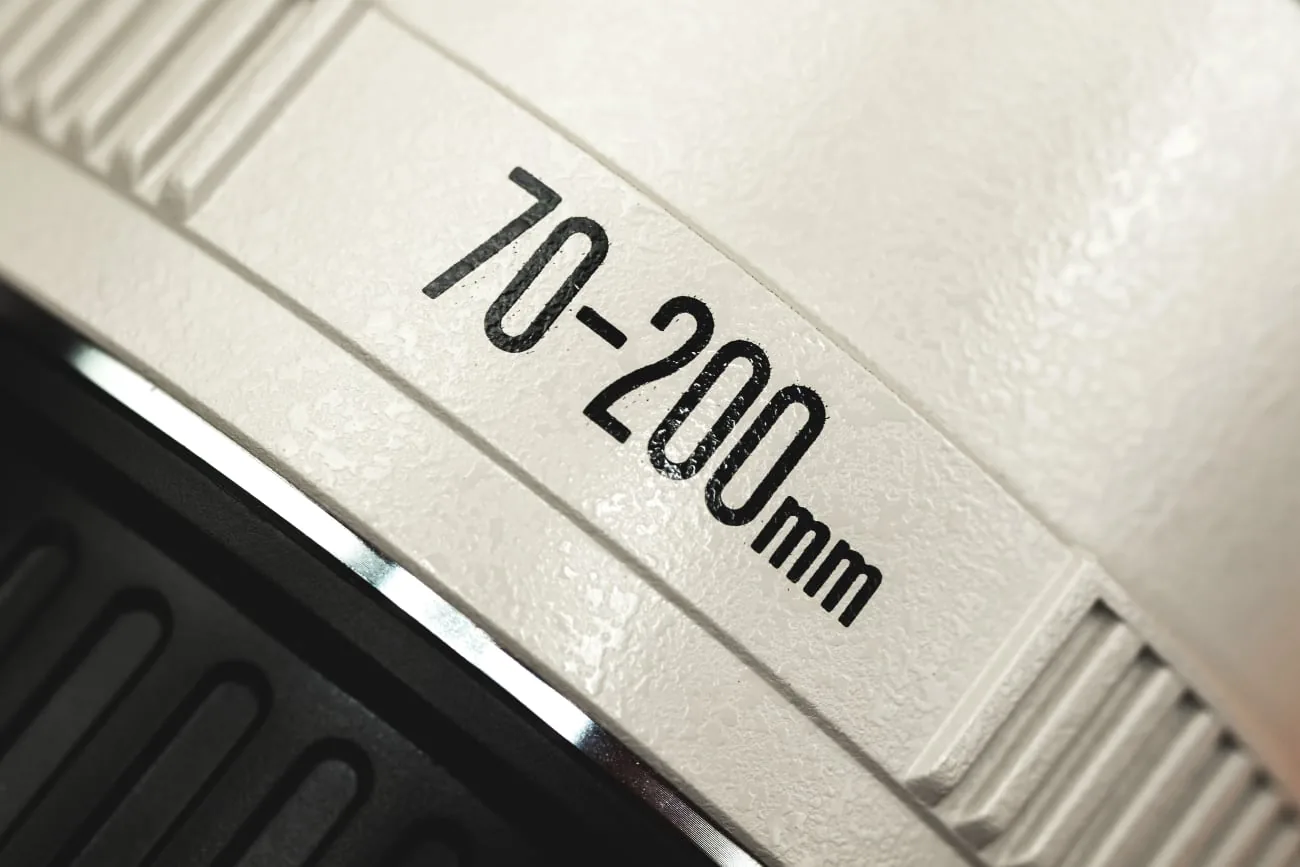
A constant maximum aperture requires an optical design that maintains a sufficiently large effective lens opening across the entire zoom range. This often necessitates larger glass elements and a more complex construction, making such lenses generally heavier and more expensive.
Whether or not the lens extends while zooming is not the deciding factor here. Furthermore, a constant aperture does not automatically imply superior glass quality or faster autofocus, although these characteristics often go hand in hand in professional lenses.
All of that, however, comes with a much higher price tag.
Do You Need a Constant-Aperture Lens?
That depends on many different factors. Constant-aperture lenses certainly have advantages. The main one is that you can shoot at that wide aperture without having to think about it changing as you zoom in and out.
You can also shoot in low light at the long end of the focal-length range, which can be very useful, especially when photographing wildlife early or late in the day. On the other hand, a constant-aperture zoom probably does not offer as much reach as a variable-aperture model, so you cannot get as close to your subject optically as you could with a longer variable-aperture lens.
Another reason to buy a constant-aperture zoom lens has to do with your shooting style. If you shoot exclusively in manual mode, you may find a variable aperture somewhat awkward.

Suppose you are photographing a person: you zoom out and set your camera to 1/500 at f/4, the maximum aperture at the widest setting. You then decide to zoom in but forget about the variable aperture. Your aperture changes to f/5.6, resulting in a shot that is underexposed by a full stop. To avoid this problem, you need to remember to adjust your shutter speed every time you zoom in, or switch to one of the priority modes so your camera does it for you.
This is only a problem when you are shooting in manual mode, of course. In one of the automatic or semi-automatic modes, your camera makes those adjustments behind the scenes to compensate for the change in aperture as you zoom.
...the extra weight of that constant-aperture lens does little for image quality and merely contributes to a sore back...
Another important consideration is lens weight. Photographers who carry their DSLRs or mirrorless cameras while traveling may find that the extra weight of a constant-aperture lens does little for image quality and merely contributes to a sore back. If you hike often or simply walk around a lot, weight is an important consideration when buying such a lens. If you find the load excessive or simply inconvenient, you may be better off considering a lighter variable-aperture lens.
Conclusion
The bottom line is that most photographers do not really need constant-aperture zoom lenses. For the average person photographing everyday subjects, the benefits simply do not outweigh the inconveniences.
If you often photograph fast-moving subjects, such as birds in flight, a fast telephoto zoom with quick autofocus and a constant maximum aperture can be beneficial. It maintains the same maximum light-gathering ability as you zoom, which is particularly useful in low light and when using fast shutter speeds. Such lenses are generally considerably more expensive, however, while the difference is not always immediately visible in your photos under good lighting conditions.