A lone passer-by in a strip of sunlight, surrounded by towering façades and deep shadow. British photographer Mark Fearnley often needs little more. Based in London, he seeks out urban scenes where architecture and human presence come together. His photobook The Art of Solitude shows how a busy city can seem completely still for a moment.
Fearnley does not photograph the city as a succession of events. He reduces his surroundings to clear shapes, dark areas and a single human figure. Buildings become almost abstract, while passers-by seem briefly detached from the bustle around them.
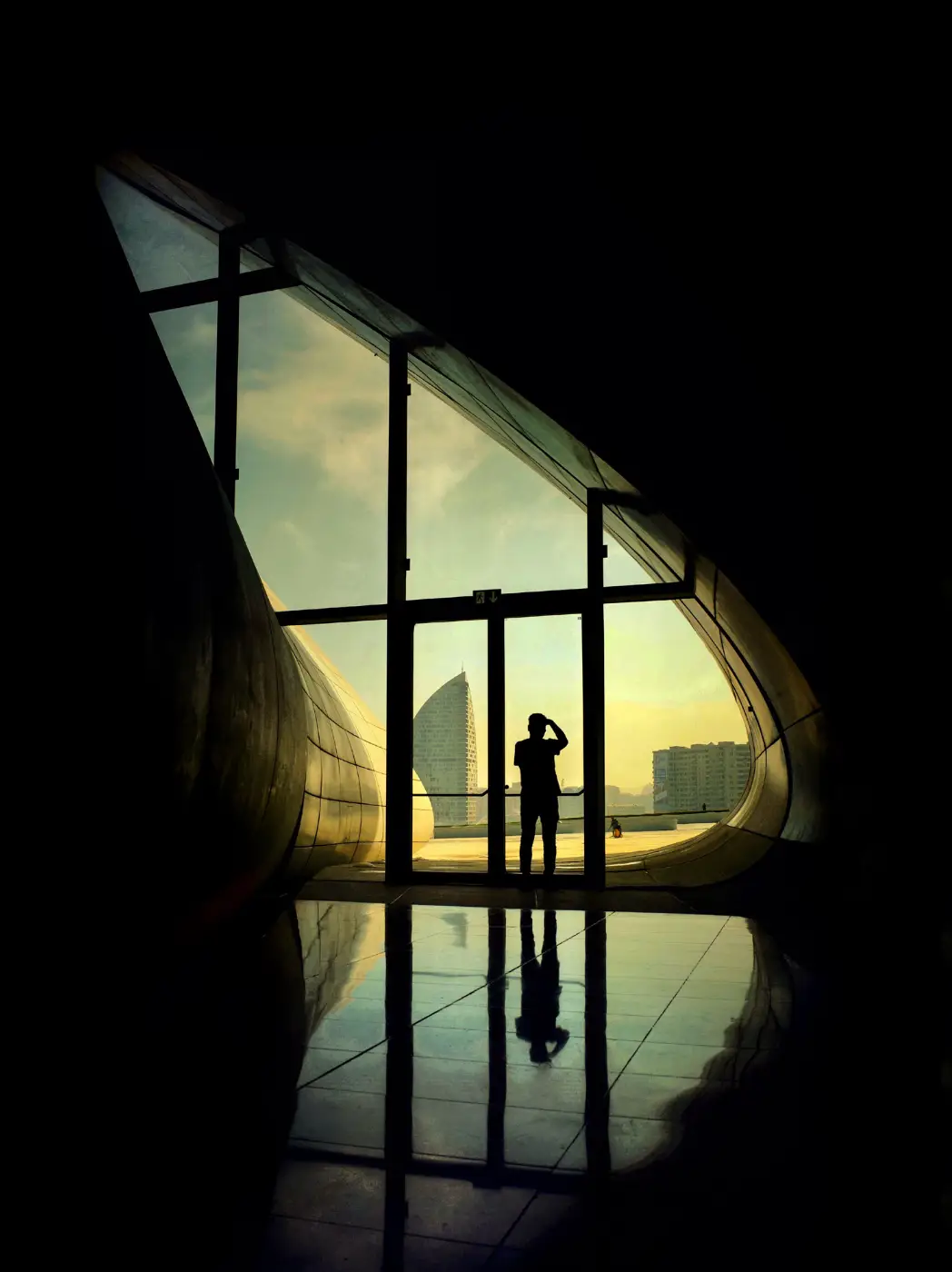
His work sits somewhere between street photography, architectural photography and fine art. Reality remains recognisable, but viewpoint, framing and timing transform it into a carefully composed visual world.
Alone among the buildings
The title The Art of Solitude refers to a recurring element in Fearnley’s photography. Many images feature just one person. Sometimes they walk through a brightly lit passage; sometimes they almost disappear among façades, stairways or shadows.
These passers-by are not traditional portrait subjects. Their faces often remain unseen, and we know nothing about who they are. Yet they give the photographs their emotional weight. Without people, the images would mainly be graphic studies of urban architecture. A single figure introduces a story about scale, distance and solitude.
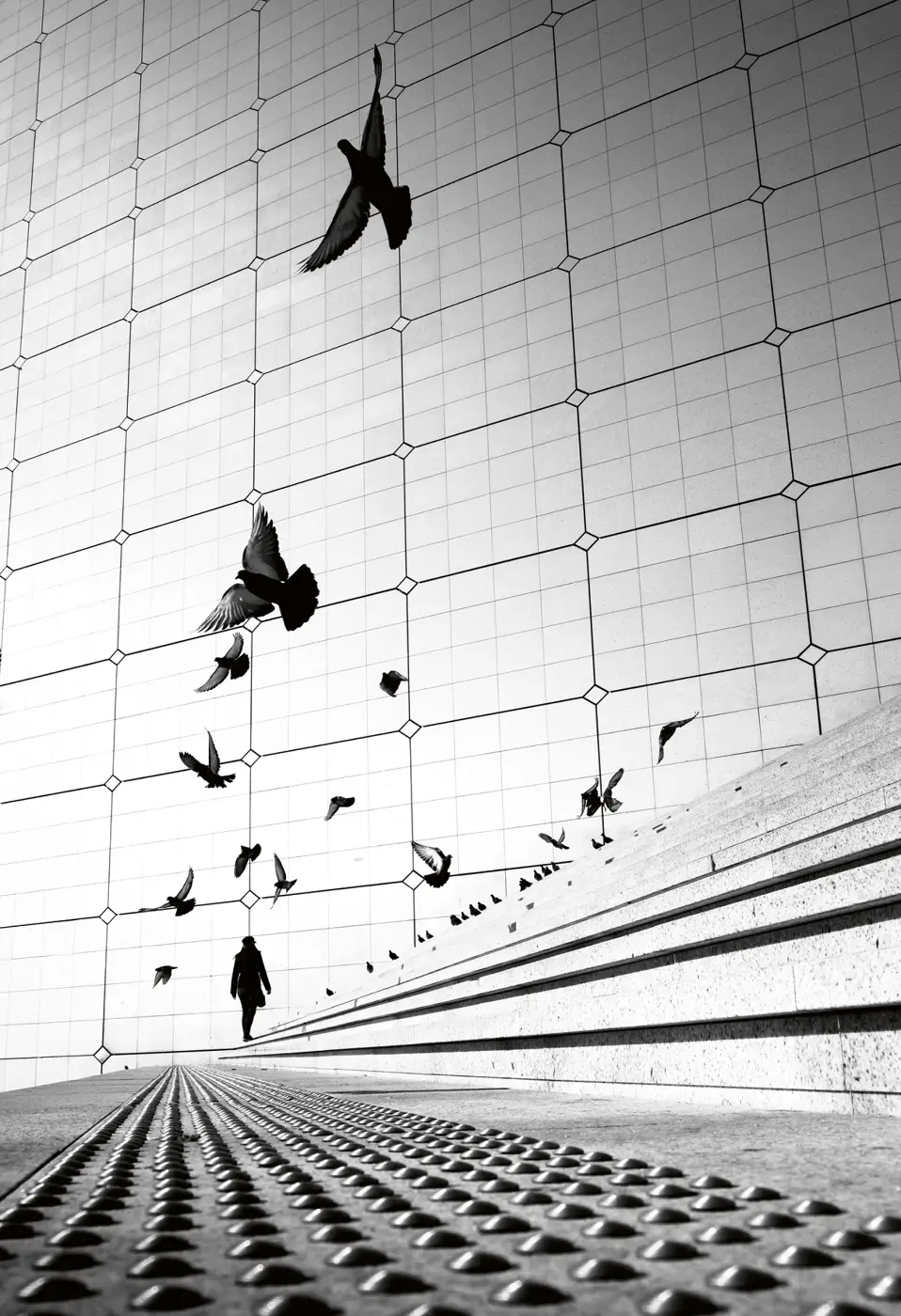
The empty space in these photographs does not mean that nothing is happening. With few elements competing for attention, a small movement or gesture carries greater meaning. A walker passing through the frame at just the right moment can be enough to turn an anonymous place into a story.
From painter to photographer
Fearnley originally worked as a painter. According to the book’s biographical information, he exchanged his paintbrush for a camera around ten years ago. His background in painting remains visible in the way he arranges subjects and guides the viewer’s eye through an image.
He recognised similarities between painting and photography early on. In both disciplines, the placement of the subject, the choice of framing and the balance of dark and light areas determine the final image.
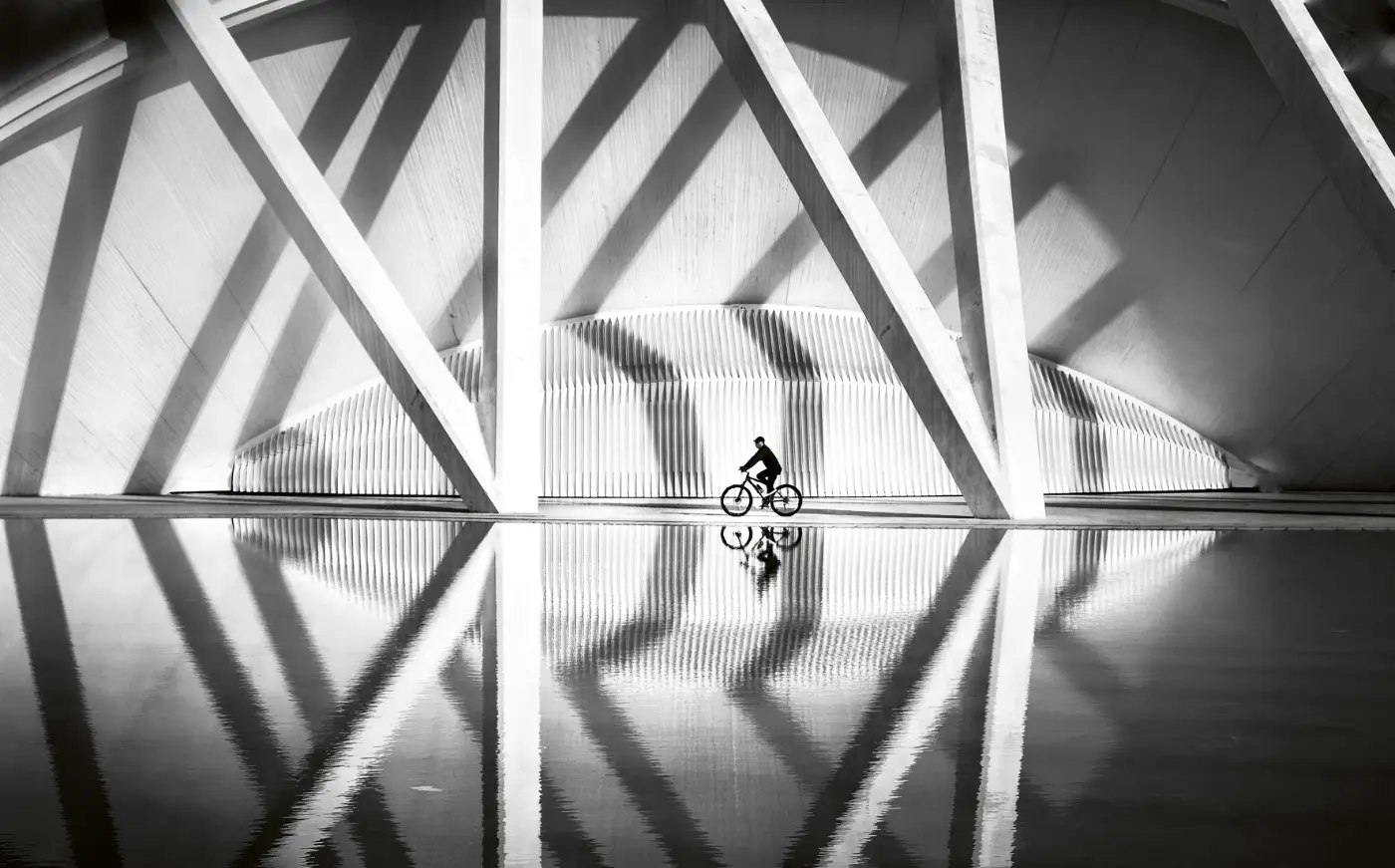
His photographs therefore rarely feel like casual records. Fearnley uses the city as visual material, looking for places where façades, windows, street surfaces and human movement work together. Sometimes all that remains is to wait for the right person to enter the frame.
The city as a collection of shapes
Fearnley is particularly drawn to the expressive power of black-and-white photography. When colour disappears, contrast, texture and geometry become more prominent. A wall set against deep shadow, a curved staircase between straight façades or a silhouette in an empty space can almost take on the character of a drawing.
Concrete, glass and metal sometimes become less immediately recognisable, turning into patterns. By choosing unexpected perspectives, Fearnley makes familiar urban places feel unfamiliar again. For him, the city is more than a location: it is a collection of shapes from which he builds his images.
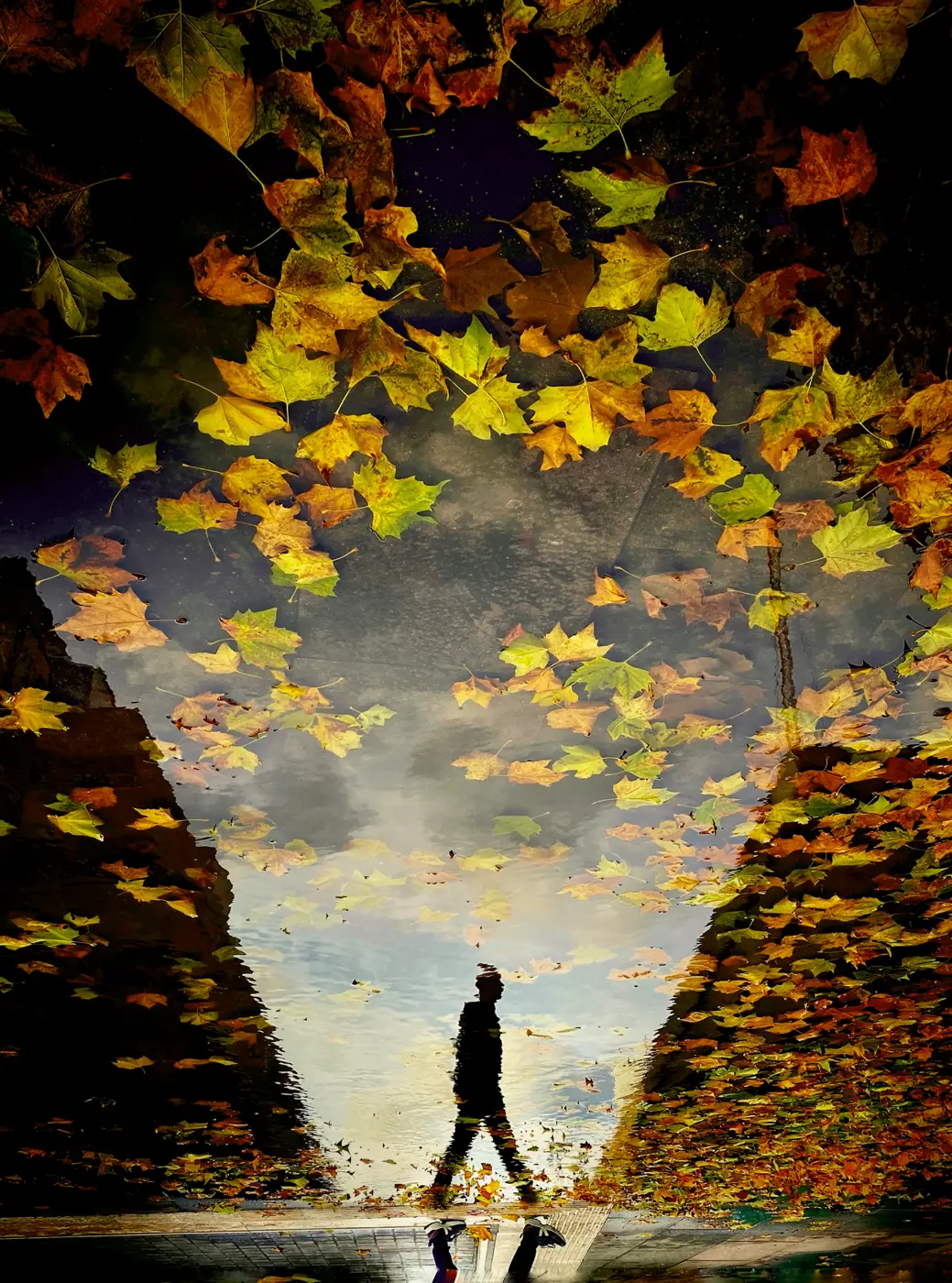
In this respect, his work has an affinity with the photography of Alan Schaller. In Schaller’s book Metropolis, people, architecture and bold black-and-white contrasts also merge. Fearnley’s photography is generally more restrained, giving the small, solitary human figure a leading role within the urban space.
The Art of Solitude invites us to look differently at places that initially seem unremarkable. A passageway, an office façade or a car park can become an image in its own right through unexpected framing and the right moment.
The generous format of 24.5 by 33 centimetres gives the graphic images and subtle human details plenty of room. Across 208 pages, the book becomes a quiet walk through the modern city. Thousands of people may be present, yet the photographer keeps returning his attention to that one passer-by.
The Art of Solitude: Street Photography by Mark Fearnley
Pages: 208
Format: hardcover
Dimensions: 24.5 × 33 cm
Language: English
Price: €70.00 (Europe)
Publisher: teNeues
Publication date: 6 October 2026 (Europe); 24 November 2026 (US)
ISBN: 9783961717941