photo: Jan Duker | Arctic fox on Spitsbergen, 300mm/F2.8 handheld, aperture F5.6, shutter speed 1/500 s
Super-telephoto lenses have fascinated photographers for many years. These long, fast telephoto lenses are widely used for sports and nature photography, but also by landscape, fashion and architectural photographers. This article explains how to use super-telephoto lenses, describes their characteristics and considers their advantages and disadvantages compared with lighter telephoto lenses.
What Is a Super-Telephoto Lens?
Many photographers work with telephoto lenses such as a 300mm/F4.0, 400mm/F5.6 or 500mm/F5.6. By comparison, super-telephoto lenses such as a 300 mm/F2.8 or 500mm/F4.0 are large and heavy, require practice to produce sharp photographs and, above all, are very expensive.
What are the advantages and disadvantages of these super-telephoto lenses compared with the lenses mentioned above?
Wide Maximum Apertures on Super-Telephoto Lenses
Super-telephoto lenses have a large front element that admits a great deal of light, making them exceptionally fast. Typical maximum apertures include F2.8 on a 300mm or 400mm lens and F4.0 on 500mm and 600mm lenses.
In poor light, photographers can shoot wide open, at F2.8 or F4.0, to obtain a sufficiently fast shutter speed and prevent motion blur. These lenses generally perform so well that shooting at maximum aperture causes little or no loss of image quality.
Editorial note: anyone specifically considering a fast Nikon super telephoto lens can read in our comparison of the Nikon 500mm and 600mm f/4 what an extra hundred millimeters of reach yields and costs in practice.
Super-Telephoto Lenses and Teleconverters
At the time of publication, all major brands offered teleconverters that could be paired with super-telephoto lenses. These teleconverters were specifically designed and optimized for use with these lenses.
This technique uses your body to absorb vibrations in the camera-and-lens combination...
Depending on the model, a teleconverter increases the focal length by a factor of 1.4 or 2.0. Some teleconverters use a factor of 1.7. For more on teleconverters, see the article Bird Photography – Part 2.
Shooting Handheld or from a Tripod?
Super-telephoto lenses are heavy. Depending on the focal length, they weigh from 2 to more than 5 kilograms. A 300 mm/F2.8, with or without a converter, can still be used handheld at fast shutter speeds. With longer telephoto lenses, however, shooting handheld without sacrificing sharpness is impractical.
A good tripod is very important, but it does not automatically guarantee good results. In strong wind, a super-telephoto lens presents a large surface area. This can easily create vibrations that cause blur in the photograph.
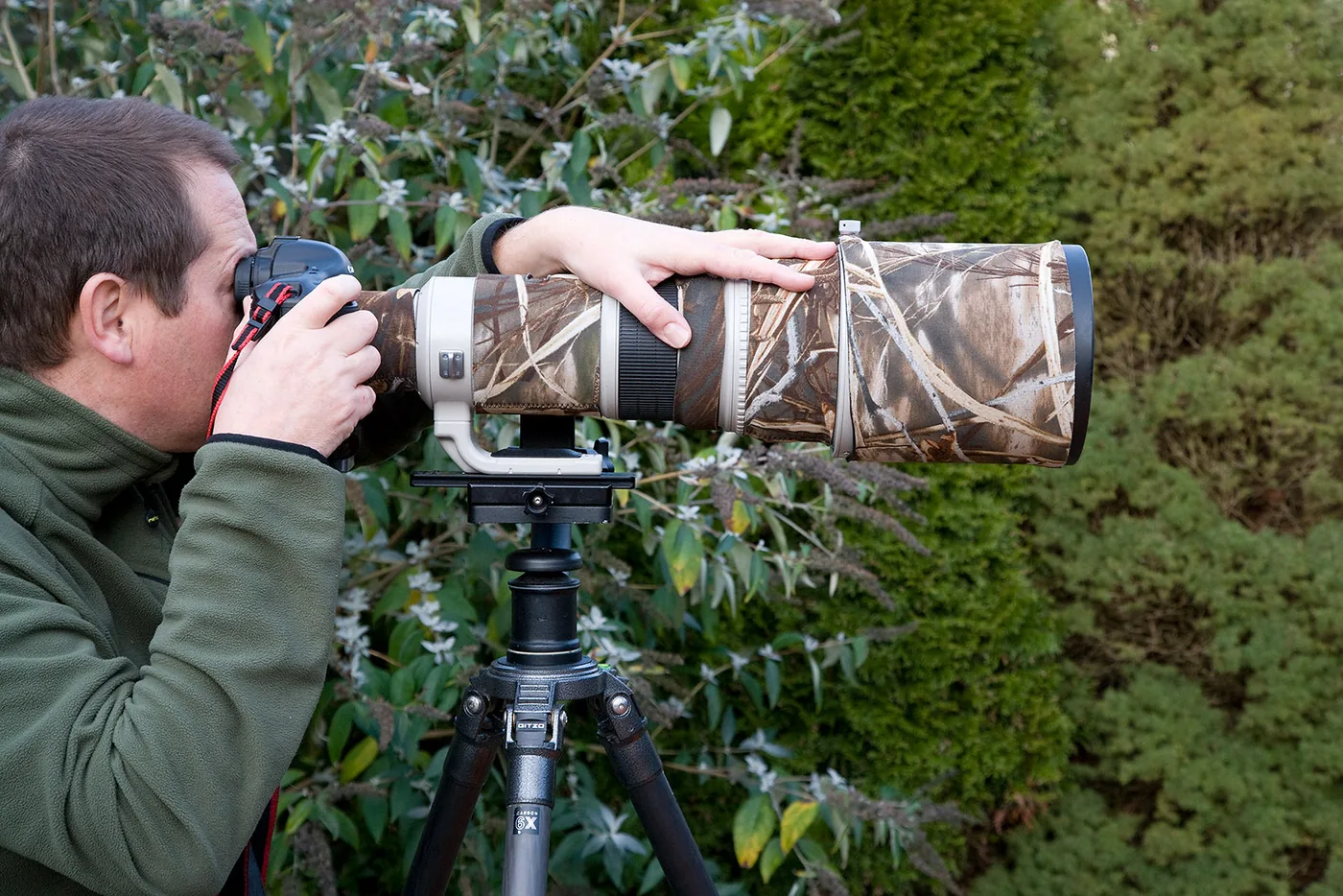
The way you handle the camera, lens and tripod combination is therefore important. Grip the camera firmly with one hand and place your other hand on top of the lens near its center of gravity. Press your face against the back of the camera and slowly press the shutter button. This technique uses your body to absorb vibrations in the camera-and-lens combination, helping stabilize the entire setup.
Another useful aid noted at the time of publication was the image stabilization built into newer super-telephoto lenses. The article describes this as using two moving lens elements to compensate for vibrations in the lens, increasing the likelihood of sharp images. The article Bird Photography – Part 2 also discusses the importance of a good tripod and image stabilization.
Extension tubes reduce the minimum focusing distance, allowing the subject to fill more of the frame
Mirror Lock-Up
When the shutter button is pressed, the mirror rises before the shutter curtain opens and light reaches the sensor. The mirror’s movement causes vibrations in the camera, which can produce blurred images, particularly at slow shutter speeds. Some cameras therefore allow the mirror to be raised and locked in advance before the photograph is taken.
You can then take the photograph with the self-timer or a cable release. This avoids touching the camera, which could otherwise introduce more vibration. Because the raised mirror prevents you from seeing the subject through the viewfinder, this method is suitable only for relatively static subjects.
Depth of Field with Long Telephoto Lenses
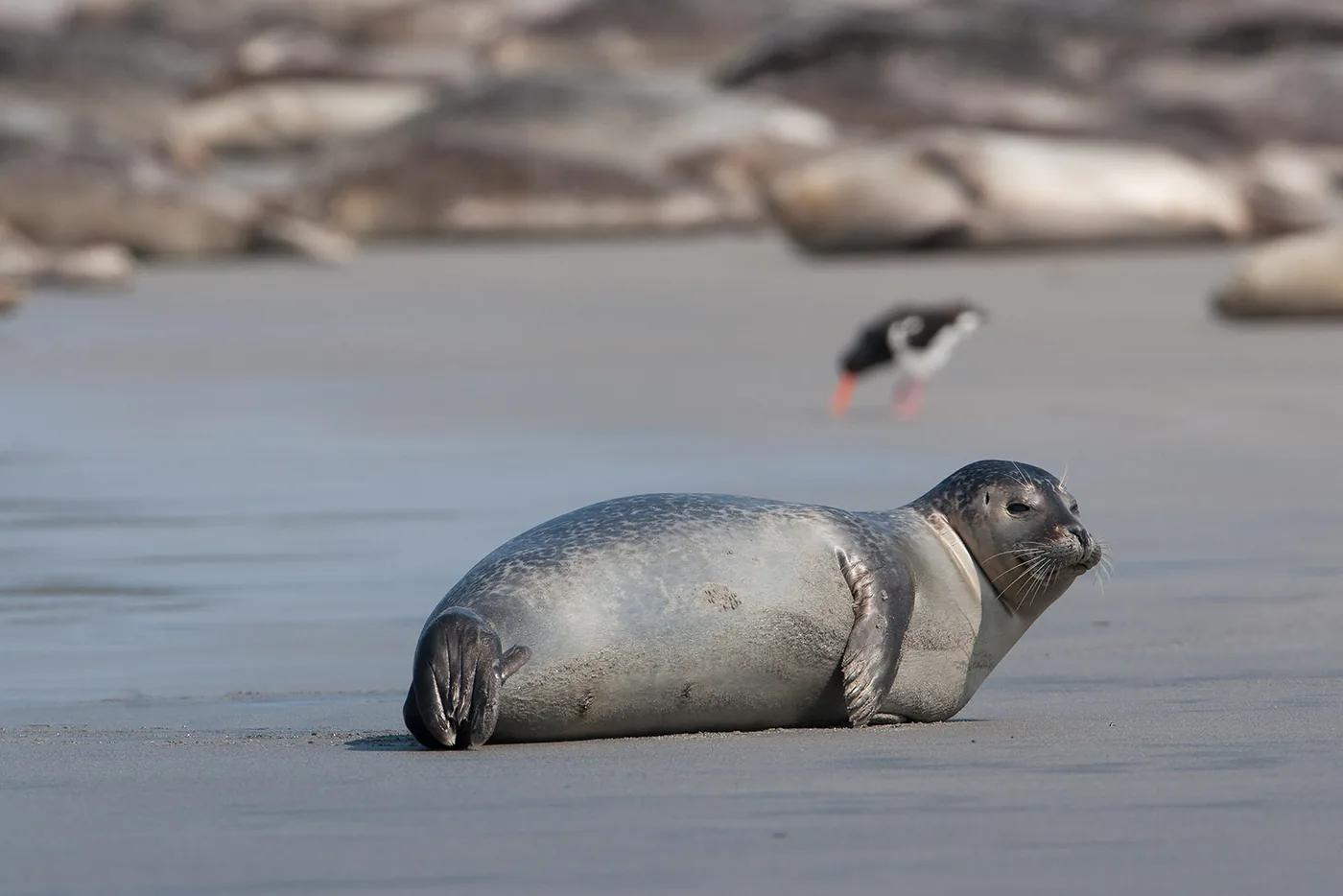
Super-telephoto lenses have a limited depth of field. The longer the focal length, the shallower the depth of field. At the same subject distance, a 300mm/F2.8 at F5.6 provides a depth of field of 2.5 meters, while a 500mm/F4.0 at F5.6 provides only 1 meter.
The longer the focal length, the shallower the depth of field
At the time of publication, www.dofmaster.com offered depth-of-field calculations and printable tables for different camera, lens and aperture combinations, which could be useful in the field.
Minimum Focusing Distance and Extension Tubes
A 500mm or 600mm super-telephoto lens can easily have a minimum focusing distance of 4 to 5 meters. The lens cannot focus on objects closer than this distance.
Extension tubes used in macro photography to photograph small subjects can serve the same purpose with super-telephoto lenses.
Extension tubes reduce the minimum focusing distance, allowing the subject to fill more of the frame.
Extension tubes were relatively inexpensive at the time of publication. Major camera brands offered them, while manufacturers such as Kenko often sold sets of 3 tubes in different lengths. Be aware that a lens fitted with an extension tube can no longer focus at infinity.