In October 2026, it will be thirty years since Ricoh introduced the GR1 compact film camera. The anniversary comes at a notable time: compact cameras are popular again, smartphones dominate everyday photography, and Ricoh has introduced the GR IV Monochrome, a new black-and-white version of its cult camera. Why does this small, understated pocket camera remain so appealing to photographers?
The Ricoh GR has never been a camera that tries to impress with outward show. No large viewfinder hump, no interchangeable lenses, no retro dials for decoration. The GR's strength lies in precisely the opposite: a small body, a fixed wide-angle lens, fast operation and a design intended above all to stay out of the way.
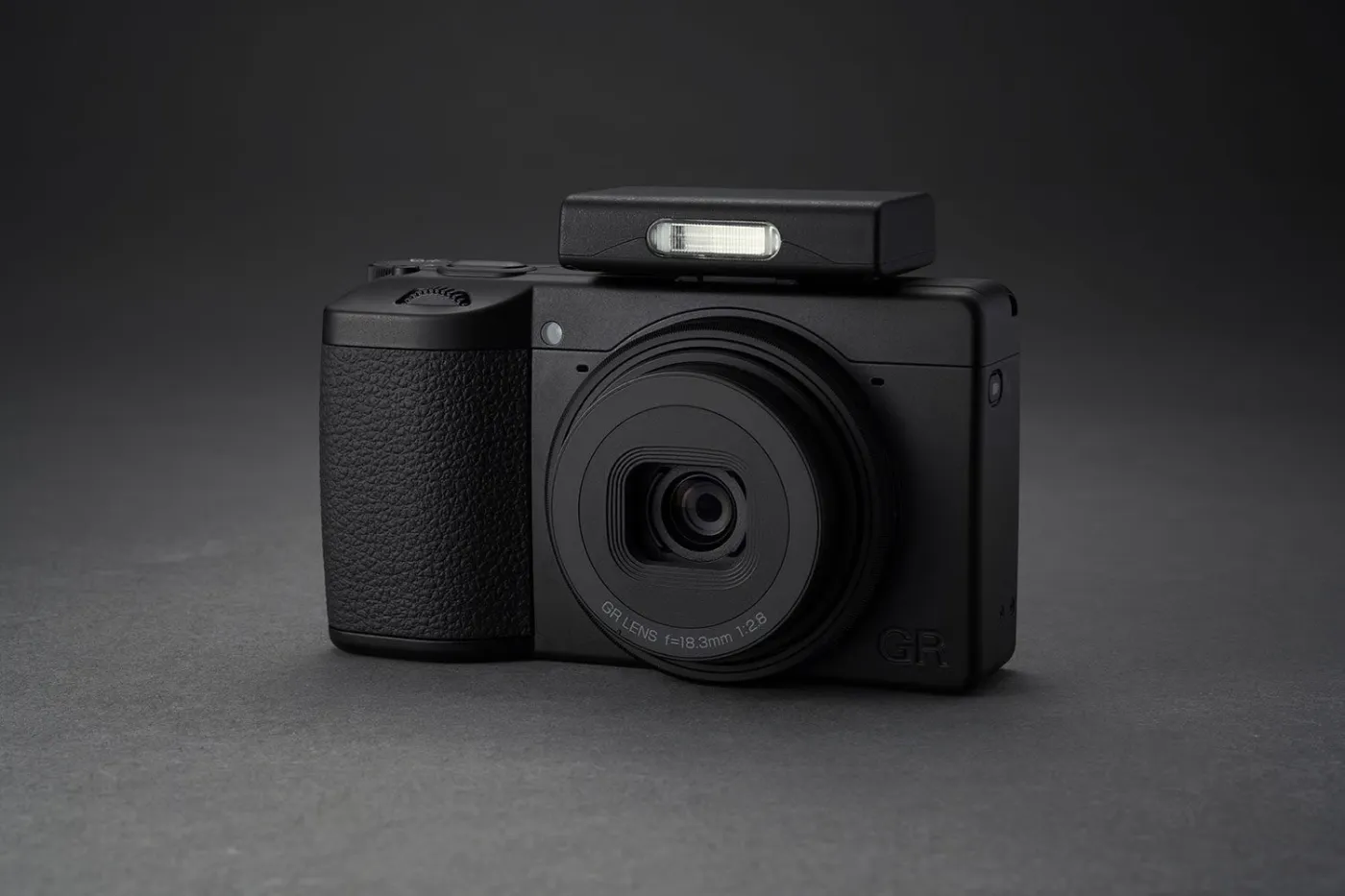
That has made the GR appealing to street photographers, travel photographers and anyone who likes to travel light for nearly thirty years. While many cameras acquired ever more features, menus and video capabilities, the GR remained remarkably faithful to one idea: a camera you can always carry with you and that responds quickly enough when something happens.
From the GR1 to a digital cult camera
The story begins with the Ricoh GR1 from 1996. It was a compact film camera with a fixed wide-angle lens, designed for photographers who wanted image quality without having to carry a large camera. In the years that followed, the GR series grew into a recognizable line, first on film and later in digital form.
Ricoh itself calls the GR the “ultimate snap shooter.” That may sound a little simplistic, but it says a great deal about the philosophy behind the camera. Here, a snapshot is not a thoughtless snap, but a quick, intuitive photograph in which timing, vision and presence matter more than equipment.
On its official anniversary page, Ricoh emphasizes four core values: high image quality, portability, quick response and continuous evolution. Those values explain the GR's longevity. The camera is compact enough to carry every day, yet capable enough that it never feels like merely a backup camera.
Why the GR is different from a smartphone
On paper, a camera like the GR may seem vulnerable. Nearly everyone now carries a good smartphone camera. Yet that is precisely part of the reason cameras like the GR are interesting again.
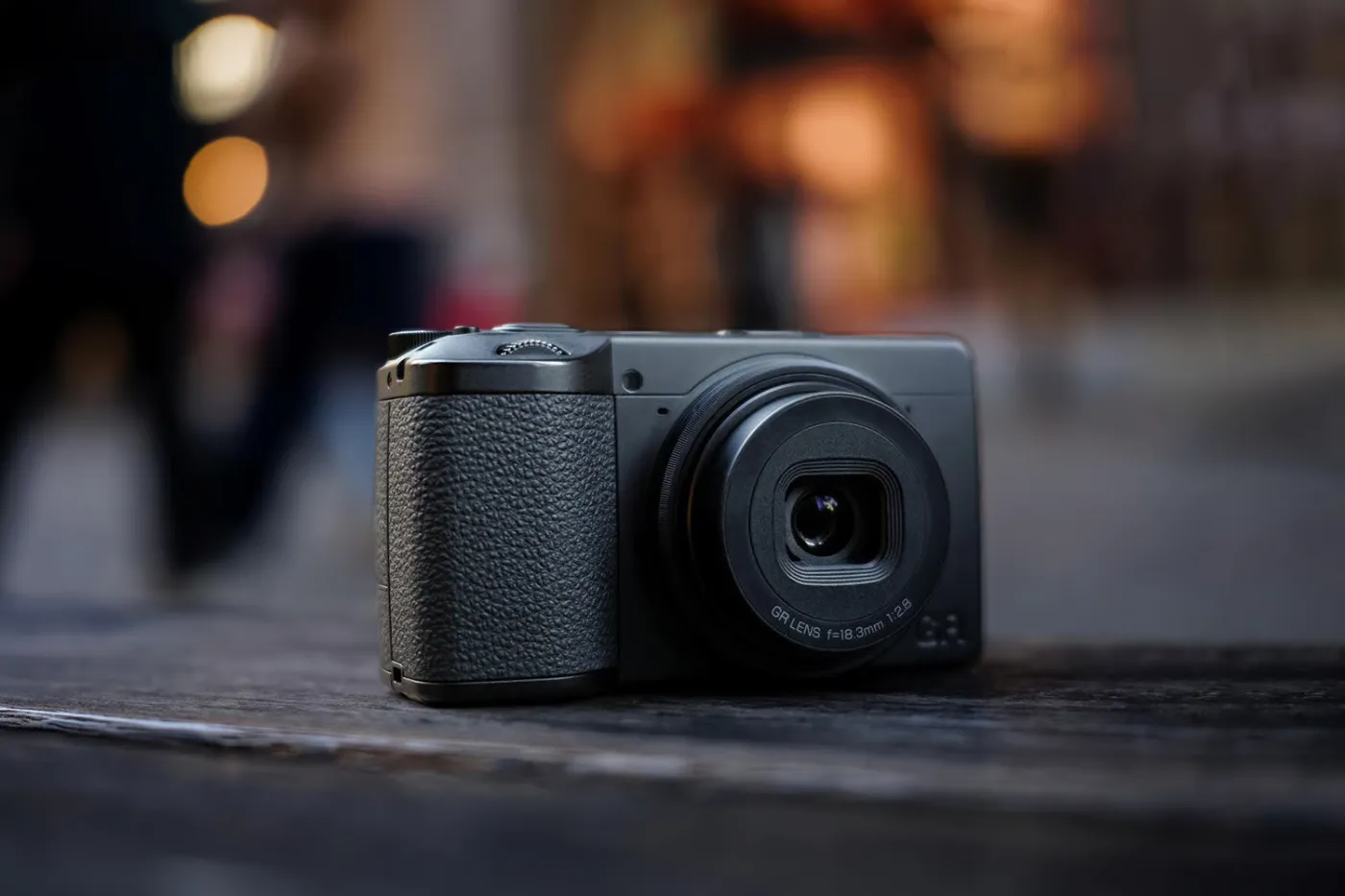
A smartphone is convenient, but also distracting. You take photos with the same device that receives messages, whose apps compete for your attention and on which images are immediately edited, shared or optimized. The GR does less, and that can offer a sense of calm. You choose a frame, respond quickly and keep your attention focused on seeing.
The GR's angle of view is also important. The GR IV Monochrome uses an 18,3 mm F2.8 lens, equivalent to approximately 28 mm on full frame. That is wide enough for street, environmental and travel photography, but less extreme than many smartphone wide-angle lenses. You can include context without making everything look immediately stretched or dramatic.
For street photography, that is precisely the balance: close enough to reality, but not so close that the camera becomes dominant. The GR is small and discreet, so people are less likely to react to it. That helps create photographs that are not entirely shaped by the photographer's presence.
The GR IV Monochrome as a timely new development
The new Ricoh GR IV Monochrome fits well within that tradition. It is not a standard color camera with a black-and-white mode, but a compact camera designed specifically for black-and-white photography. The camera uses a back-illuminated APS-C monochrome CMOS sensor with approximately 25,74 megapixels.
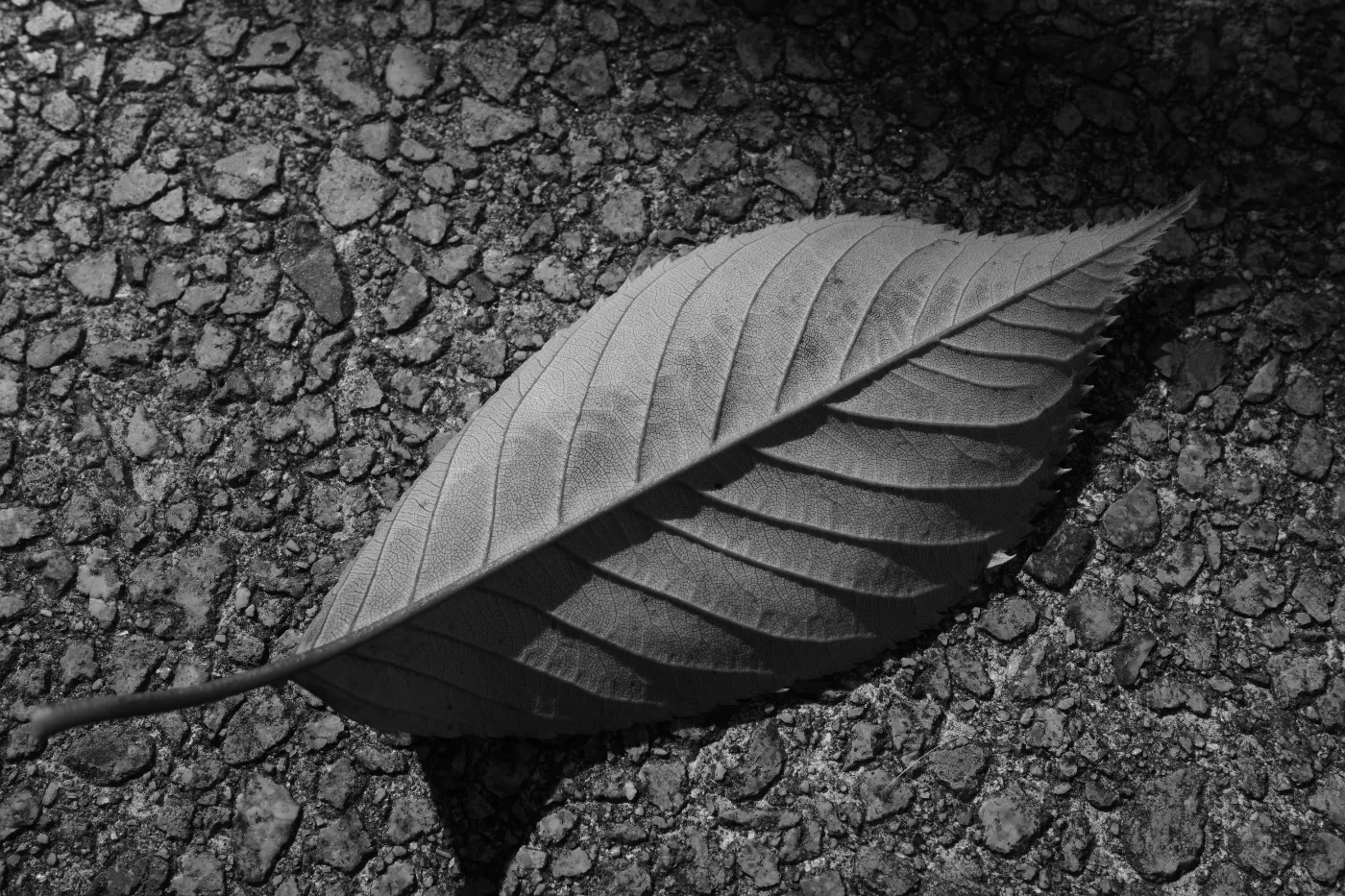
The key difference lies in the sensor. With a standard color sensor, each pixel receives light through a red, green or blue color filter. The color information is then interpolated, after which the image can optionally be converted to black and white. The GR IV Monochrome has no color filter. Each pixel records luminance information directly.
That may sound technical, but the effect is photographically relevant. Because no color information needs to be converted, the camera can focus entirely on tone, detail, contrast and gradation. Black and white is no longer a stylistic filter applied afterward, but the basis of the image.
Black and white as a constraint
A monochrome camera is, of course, restrictive. You cannot decide afterward that a photograph would work better in color. For many photographers, that is precisely the appeal. The camera forces you to see differently: not in terms of color contrast, but of light, shape, shadow, skin, sky, texture and timing.
Ricoh supports this with dedicated black-and-white settings. The GR IV Monochrome includes image options such as “Solid” and “Grainy,” designed for different types of tone and grain. One setting aims for greater clarity and harder edges, while the other more strongly evokes silver halide prints and printed materials.
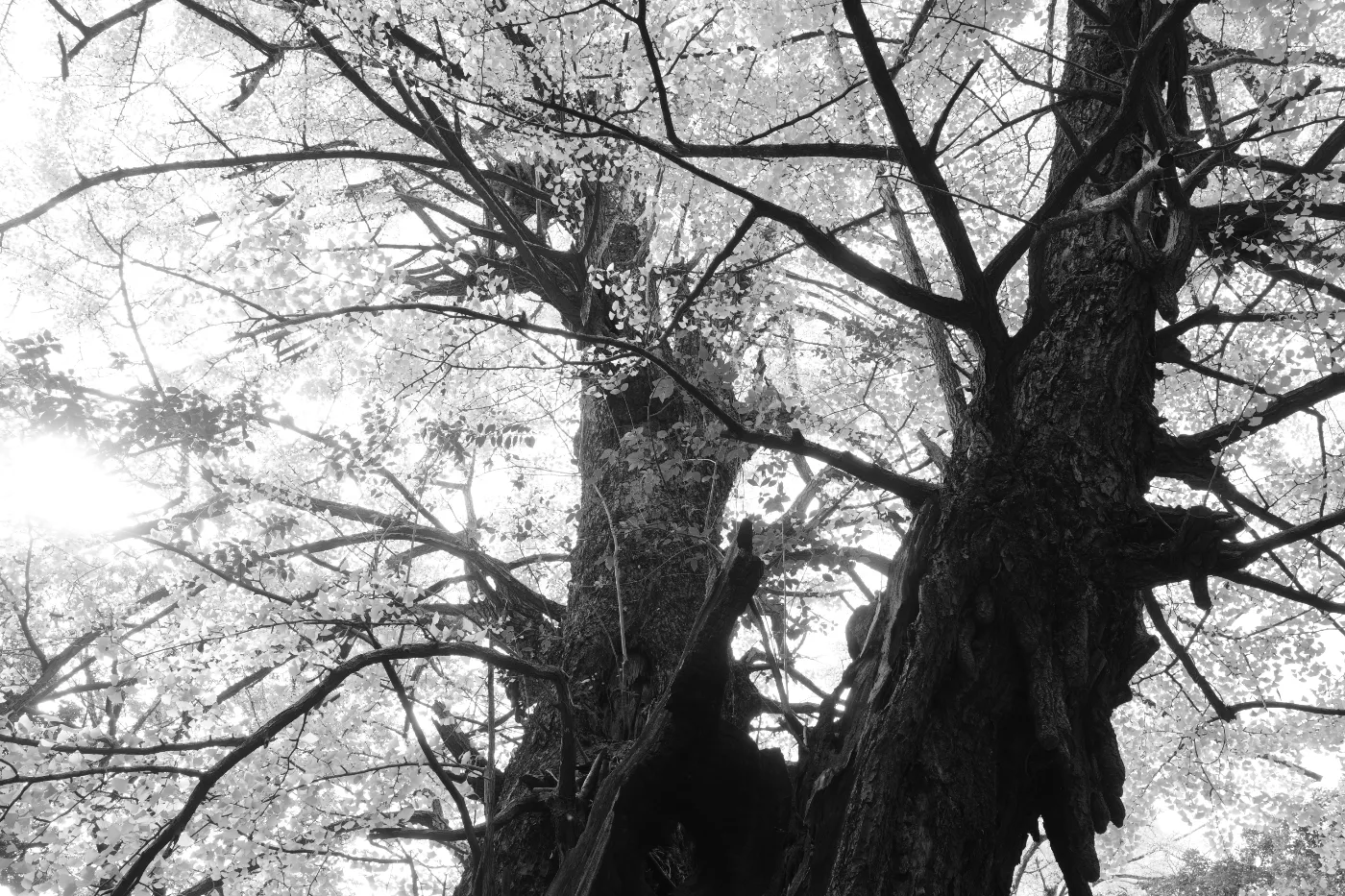
Another notable feature is the built-in red filter, which can be switched on and off with the Fn button. In black-and-white photography, a red filter is often used to darken blue skies and make clouds stand out more. In portraits, street scenes and landscapes, such a filter can clearly alter the tonal distribution without requiring heavy editing afterward.
A camera for moments, not spec sheets
Even so, the GR IV Monochrome should not be judged solely on its specifications. Yes, the camera has an F2.8 lens with 7 elements in 5 groups, ISO 160 to 409600, 5-axis image stabilization with 6 stops of compensation and a new GR ENGINE 7 for black-and-white processing. It also offers crop modes for 35mm and 50mm, hybrid autofocus with phase detection and contrast detection, approximately 53 GB of internal memory and support for microSD cards.
But the GR's appeal does not lie in checking off features. Above all, it is a camera that supports a particular way of taking photographs. You carry it without thinking about it. You do not need to change lenses. You do not first have to open a bag. You can respond to a gesture, a shadow, a cyclist in backlight or an unexpected encounter on the street.
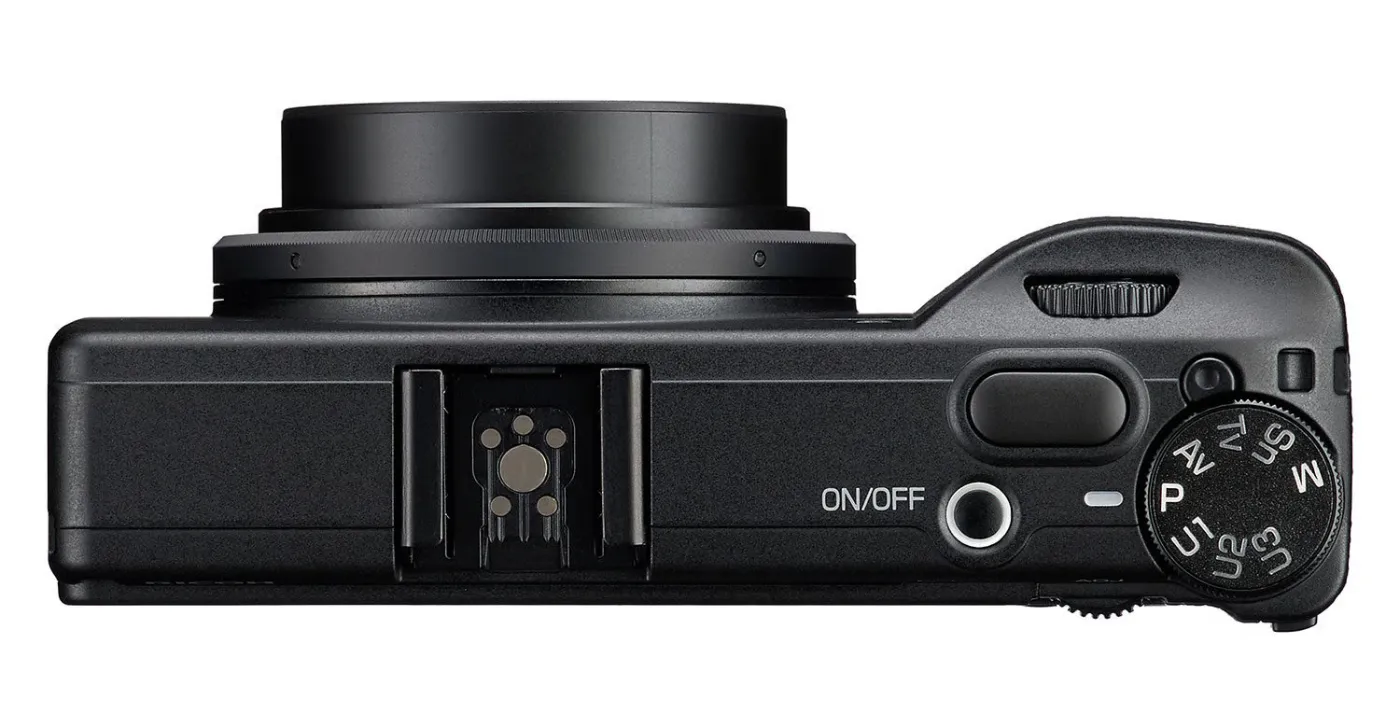
That is why the GR has such a strong following. Not because it can do everything, but because so little stands between seeing and taking a photograph.
Why the GR endures
To mark its 30-year anniversary, Ricoh has also announced a special GR IV anniversary edition. While few details are available, the announcement mainly reflects the series' status. The GR is not just another compact camera, but a recognizable line with a distinctive way of working: small, fast and discreet.
The Ricoh GR IV Monochrome fits naturally within that lineage. Because black and white is the starting point rather than a post-processing choice, the camera is less universal but more distinctive. Thirty years after the GR1, the GR remains relevant because it does not try to replace the smartphone, but brings attention back to seeing, timing and the moment.