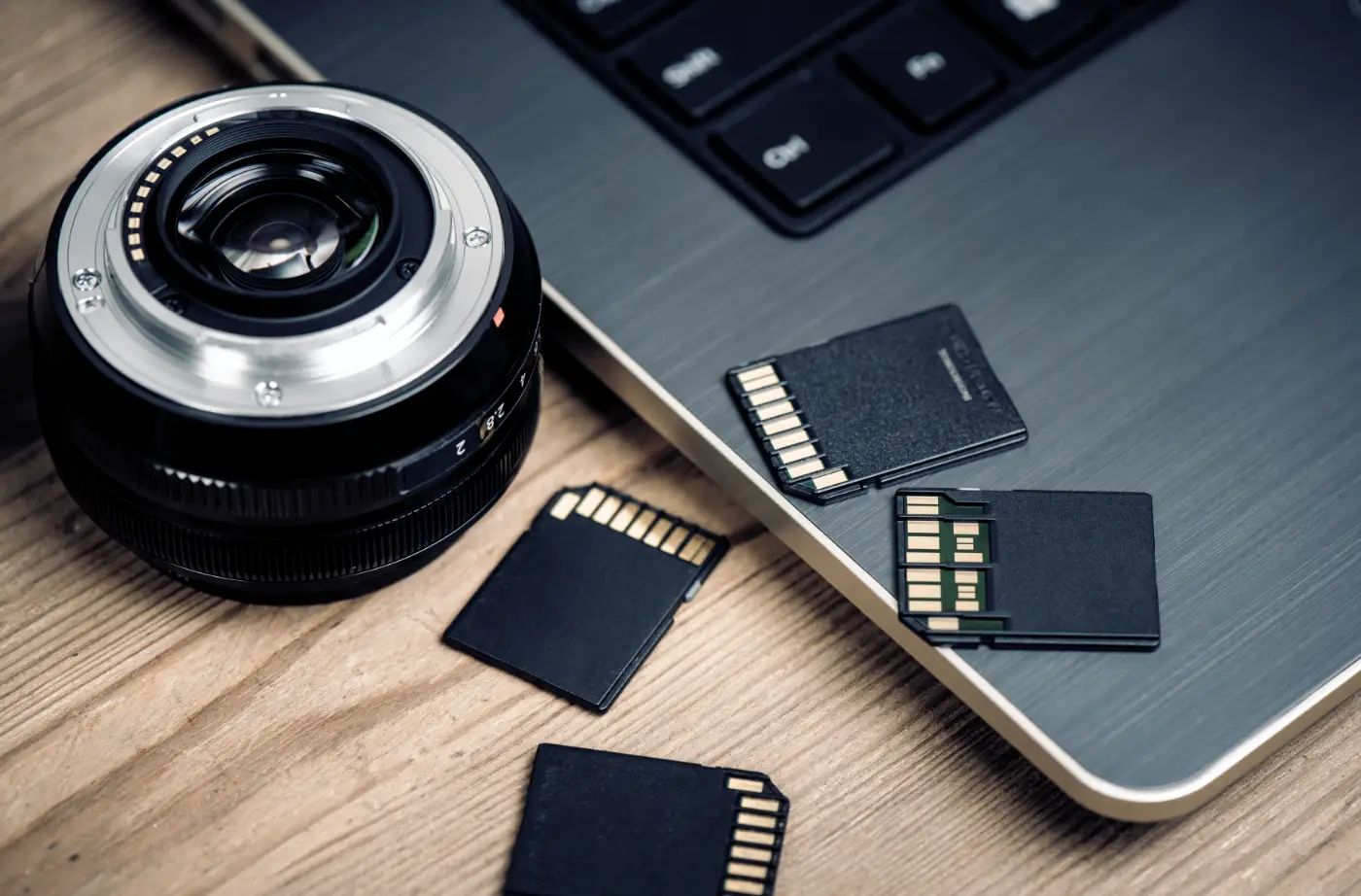
Fisheye lenses are cool. With a fisheye lens you can create fun, quirky images that you can't create with virtually any other lens. And they are also surprisingly affordable.
People often forget how useful a fisheye lens can be for capturing an extremely wide image, while in many cases it is better suited than the panorama function of a smartphone. With a fisheye lens you can capture an angle of view of up to 180 degrees in a single shot, without having to stitch multiple photos together as with a panorama. This prevents distortions or inaccuracies that can arise when automatically merging images.

In addition, a fisheye lens offers a unique spherical perspective that not only shows a larger field of view, but also gives a playful and dynamic effect. This makes it an ideal choice for creative photography, such as architecture, landscapes and sports, where a wide perspective and speed are crucial. Unlike a smartphone panorama, which is prone to motion blur and composition errors, a fisheye lens directly produces an impressive, fluid and artistic image.
Fisheye lenses differ from ultra-wide angle lenses because they capture non-rectilinear images. In other words, images taken with a fisheye lens do not retain those straight vertical lines that were in the original image. Instead you get buildings that bulge, walls that turn inward and straight lines that become completely round. That's where the name "fisheye" comes from: the images these lenses create are very similar to how we might imagine a fish would see the world.
Two variants
Fisheye lenses come in two variants: circular and diagonal. A circular fisheye lens captures an image that appears as a perfectly round projection in the center of the frame, surrounded by a black border. This creates the iconic, highly distorted perspective that makes these lenses so recognizable.
With the Sony FE 8-14mm F3.5 Fisheye G you don't have to choose between those two variants: the zoom lens ranges from a circular image at 8mm to a full-frame fisheye perspective at 14mm.

In contrast, a diagonal fisheye lens fills the entire image frame, so that no black edges are visible. This ensures higher pixel utilization and a less extreme spherical effect. This makes diagonal fisheye lenses particularly suitable for photography where both a wide perspective and detail retention are essential, such as cityscapes, interior photography and concert photography.
The amount of distortion you get in an image taken with a fisheye lens depends on where you place the elements in the frame. For example, if you place the horizon in the center of the frame, you will get an image that does not contain much distortion. As you move the horizon up or down, you start to see some curvature.
The specific focal lengths covered by this term vary depending on the camera system and the size of the sensor or film, but there are some general guidelines.

For full frame cameras:
- Circular fisheye: focal lengths around 8mm provide a fully circular image, with a field of view of approximately 180 degrees.
- Diagonal fisheye: focal lengths between 15mm and 16mm offer a diagonal field of view of approximately 180 degrees, where the image is not circular but completely covers the corners of the sensor.
For APS-C cameras (crop factor of approximately 1.5x):
- Circular fisheye: focal lengths around 5-6mm.
- Diagonal fisheye: focal lengths around 10-12mm.
For micro four thirds cameras (crop factor of 2x):
- Circular fisheye: around 4mm.
- Diagonal fisheye: around 7-8mm.

Applications
Fisheyes are highly versatile lenses. What unusual images can you make with one? Here are ten fun and unconventional things to try.
1. Use a fisheye lens as a frame
Fisheye lenses, depending on how you compose the shot, will turn the edges of whatever is at the edge of your photo inward. So use that to your advantage and try taking a photo through a natural frame, such as a doorway or an arch. Look through your viewfinder and see what happens to those vertical lines as they get closer to the edge of the frame. They will appear straight towards the center and become more and more curved as they move to the left or right.
2. To exaggerate the size or contents of something
A fisheye can make a dog's nose appear enormous. When used from a bird's eye view, it can also exaggerate the size of a place or the contents of a room.

For example, if you're standing on a ladder (be careful) and shooting at a construction site, all those tools, construction debris, half-built structures, tarps and other construction-related things look extra chaotic. The wide-angle lens covers more of the shot, making the number of objects in the frame appear more impressive.
3. Capture radial blur
Motion blur is always fun to play with and a fisheye lens can make it extra fun. Try capturing some radial blur - these can be completely abstract shots or you can use the flash to freeze the subject before adding the blur.
This is an experiment-based technique, but start by setting the shutter speed to about 1 second, then release the shutter and turn your camera around during exposure. You will get a cool spinning sensation in your photo. Some will look much cooler than others, so keep trying.
4. Exaggerate the curvature of the Earth
As noted, a fisheye can do remarkable things with a straight line, so why not exaggerate the effect? You can use the lens to make the Earth look as round as Columbus said it was. To do this, place the horizon either very low or very high in the viewfinder. The farther it is from the center, the stronger the curvature appears.

5. Capture large landscapes
Another thing you can do with a fisheye lens is capture large, expansive landscapes that don't look like they were shot with a fisheye lens. Instead, that enormous field of view you get from a fisheye can be used to create an image that appears almost panoramic. To achieve this, you also need to understand how to create fisheye distortion.
Start by placing the horizon in the center of the frame. Do this even if it goes against everything you've ever been told about landscape composition and the
rule of thirds. Try not to include elements with straight vertical lines - for example, trees still appear noticeably curved as they approach the sides of the frame.
Position the camera to avoid visible distortion. Your goal in camera should be to capture straight lines even if you have to crop later to get the horizon where you want it.

Don't forget that you can also correct fisheye distortion in post-processing if necessary, but it's always easier to get it right in camera.
6. Finding unique angles
Fisheye lenses are great tools for looking for interesting angles and perspectives. For example, try shooting from the ground to exaggerate feet and shoes, or place something else in the foreground to exaggerate the size of the entire shot.
Be sure to place important subjects in the corners of the frame: with a fisheye lens, centrally placed subjects will appear small and lost in that vast field of view unless you are physically quite close to them when you take the photo.

7. Comedy
Remember that you need to get quite close to your subject to avoid it looking very small in the frame. On the other hand, the closer you get, the more distortion you get.
If your subject wants to participate, try taking a series of humorous photos that emphasize the nose, eyes, ears, or some other feature. Of course, subjects who don't mind partaking in a little photographic self-mockery are probably in short supply, so if you can't find a suitable human subject, try photographing an animal instead.
You can even create potentially funny images of inanimate objects, provided you choose your subject well. How about photographing your car? See if you can make it look like a clown car. With a fisheye that won't be very difficult.

8. Underwater photography
Fisheye lenses are almost always used for underwater photography, because you are not bothered by straight lines that can distort. In addition, they deliver sharper images with more vibrant colors compared to a rectilinear lens.
9. Photograph the stars
Did you know the fisheye lens was originally developed for astrophotography? Before these lenses became popular and acquired the name “fisheye,” they were known as “whole-sky lenses.” Their characteristic spherical rendering is ideal for photographs that show the domed sky and all the stars within it.
So the next time you're marveling at the night sky, grab a fisheye lens and capture some star trails traveling across that big fisheye canvas.

10. Architecture
Let's not forget how good these lenses are in practical applications too. You can use a fisheye lens to capture very large subjects in their entirety, which you may not be able to do with other lenses.
Consider an ornate ceiling in a cathedral or another historic building. If the limitations of your lens allow you to capture only a fraction of it, a fisheye lens can be invaluable.
Just point the fisheye lens at the ceiling and you have the whole thing in one photo. Large buildings also look quite good when photographed with a fisheye.

You can use your lens to distort the spire of a church or make the doors of a courthouse look enormous. Your lens gives those buildings an otherworldly feel, which can be silly or dramatic depending on the other elements in the shot.
Conclusion
Fisheye lenses are fun. If you're looking for a reasonably priced toy to add to your gear bag, you should really consider one. Every photographer should have one. If you're stuck in a creative rut, nothing will get you out of it faster than a fun day out with your fisheye.