Rain can be dramatic or subtle, and in photography it creates unique opportunities that most people never consider until they see them in an image. People are often afraid of getting their gear—or themselves—wet. With the right precautions and equipment, however, the results are worth the effort. Besides staying dry, there are several things to consider when photographing rain and working in it.
Tip 1: Be Prepared
Of course, your main priority is protecting your camera from all that water. As for yourself, simply place some towels over your car seats and have a dry change of clothes ready when you get home. Dress in layers and make sure you can keep your gear in pockets beneath a high-quality rain jacket.
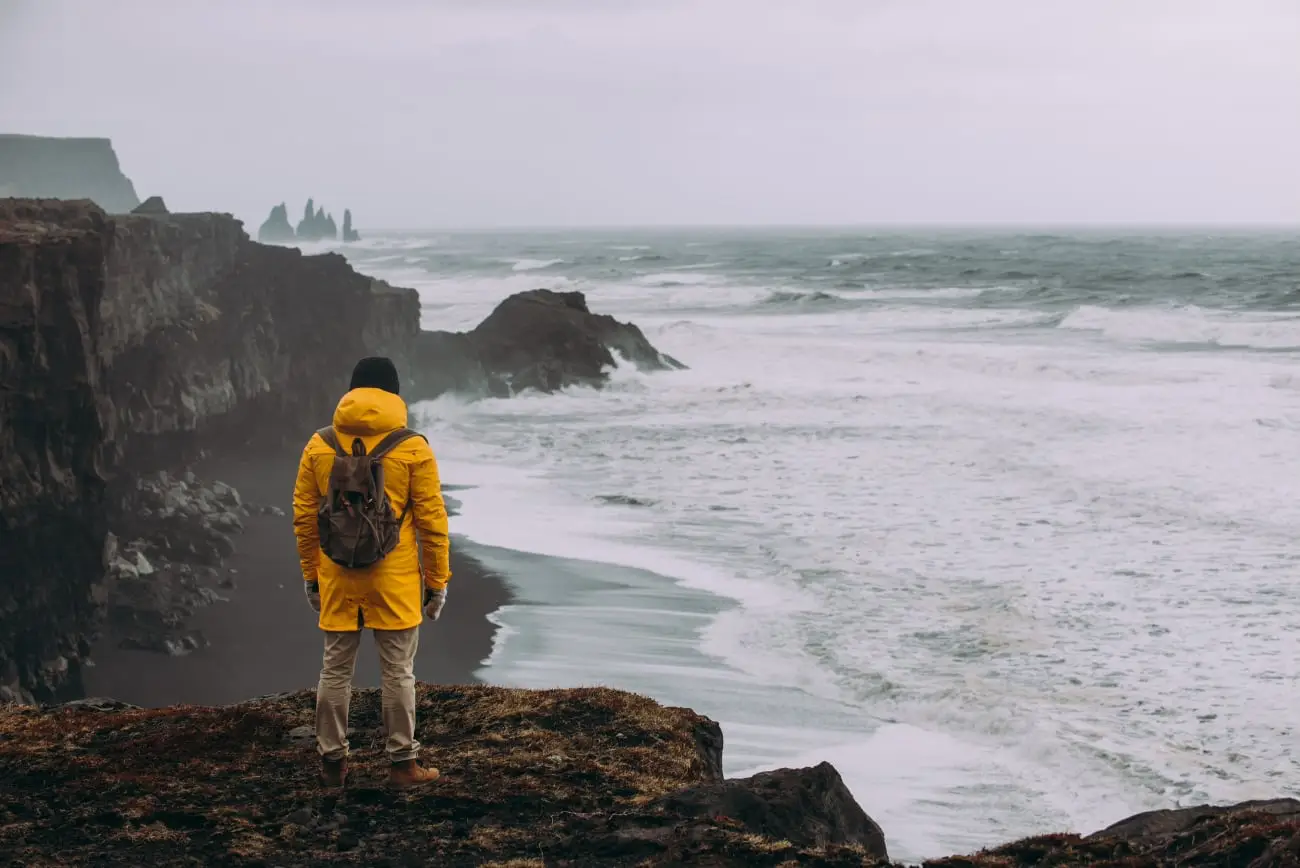
Wear a waterproof hat as well. Above all, do not let a few raindrops keep you from the opportunity to make unique photos. Once a surprising result rewards you for getting wet, rain will never again stop you from going outside to photograph.
Tip 2: Protect Your Camera
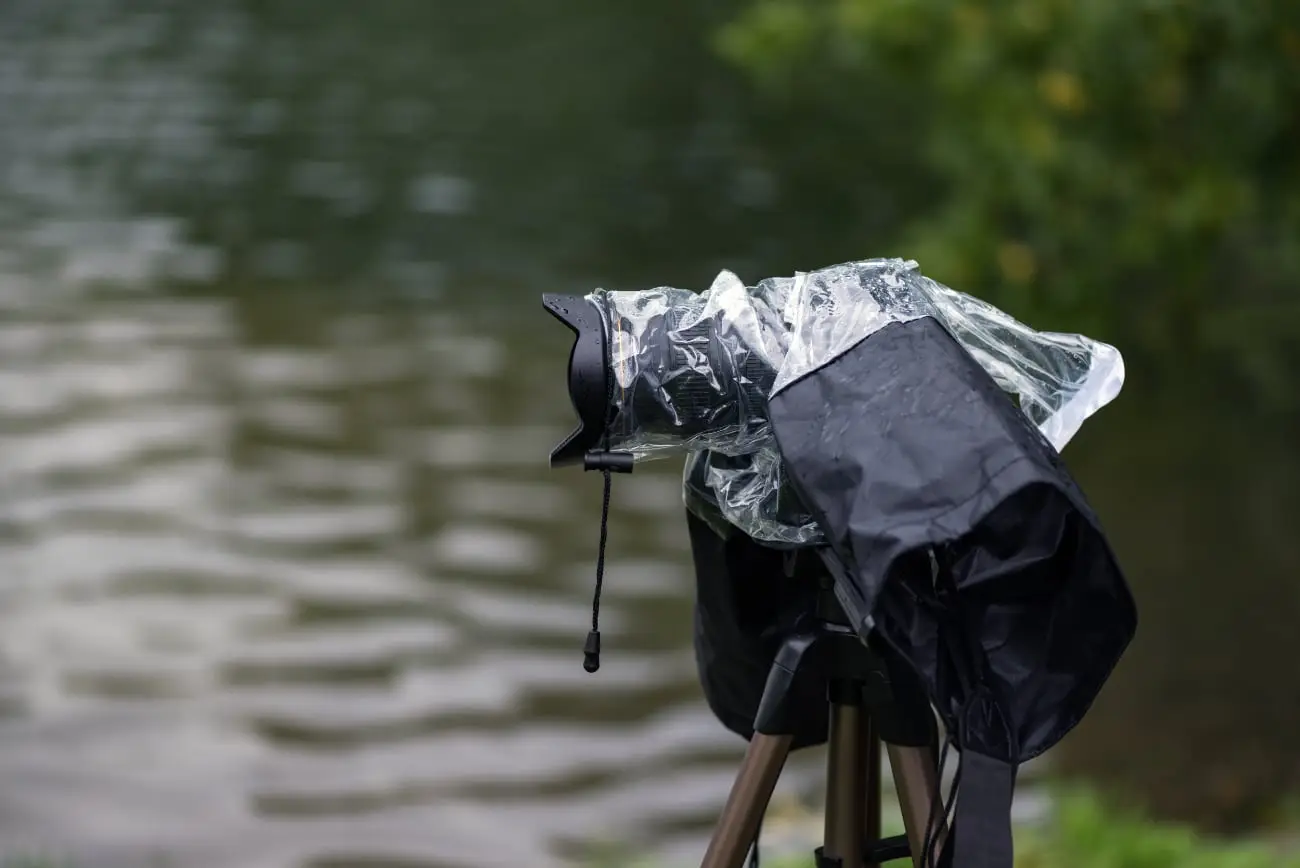
Camera rain covers are easy to carry and very inexpensive. If you discover that you enjoy photographing in the rain, buy one or two and keep them in your camera bag in case a storm ever catches you by surprise.
For shoots where rain is likely, buy a bag that stays dry inside and bring plenty of soft lens cloths to wipe water droplets from the camera filter or lens—essential for keeping moisture away from the glass. A lens hood can also help keep water off the front element. Finally, never change lenses if there is even the slightest chance that water could enter the camera. Wait until you can stand somewhere dry.
An umbrella can help keep you and your camera dry in ordinary rain, especially if you do not have a rain cover. Never use an umbrella during a thunderstorm, however; seek safe shelter as quickly as possible.
A waterproof compact camera or action camera can also be a practical choice if you often photograph in heavy rain or around water. These cameras can take underwater photos too, so shooting in the rain should generally be worry-free. Their pocketable size is another advantage, making it much easier to maneuver on slippery surfaces and in stormy conditions.
Tip 3: Stay Safe
A thunderstorm is different from ordinary rain: safety must always come before the photograph. Seek safe indoor shelter as quickly as possible and stay away from trees, high points, and fast-moving water. When severe weather threatens, always follow current warnings and guidance from the KNMI.
Lightning does not strike people often, but it is never worth the risk. Wear shoes with good soles in case you encounter a slippery surface, do not drive over potentially muddy unpaved roads, and stay away from fast-moving water.
Tip 4: Look for the Mood
Rain is a transformative force. It can make city streets look clean, bring life to a dry field, make a peaceful tree look fierce, and add a sense of action to an otherwise dull setting.
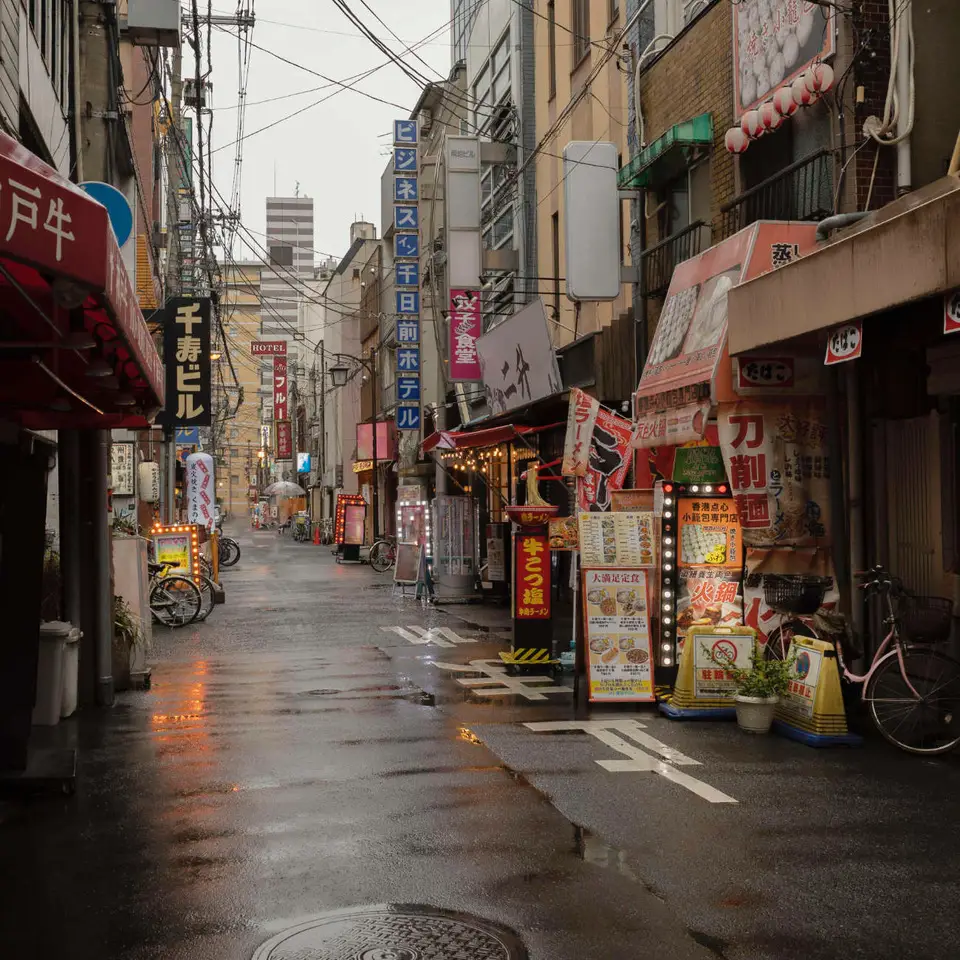
Rain can make people unhappy. On the other hand, it can also make them happy, introspective, or refreshed. As a photographer, your job is to determine how the storm affects your scene and capture that mood in your photograph. Look, for example, for a wet, bedraggled row of birds perched on a wire with their feathers sticking out. Or watch for small children with brightly colored umbrellas splashing in puddles.
If you photograph at night, find a place where city lights reflect on wet cobblestones. Look for reflections of people and other objects in puddles too. Rain offers a million different opportunities for a fresh view of ordinary scenes.
Tip 5: Find the Droplets
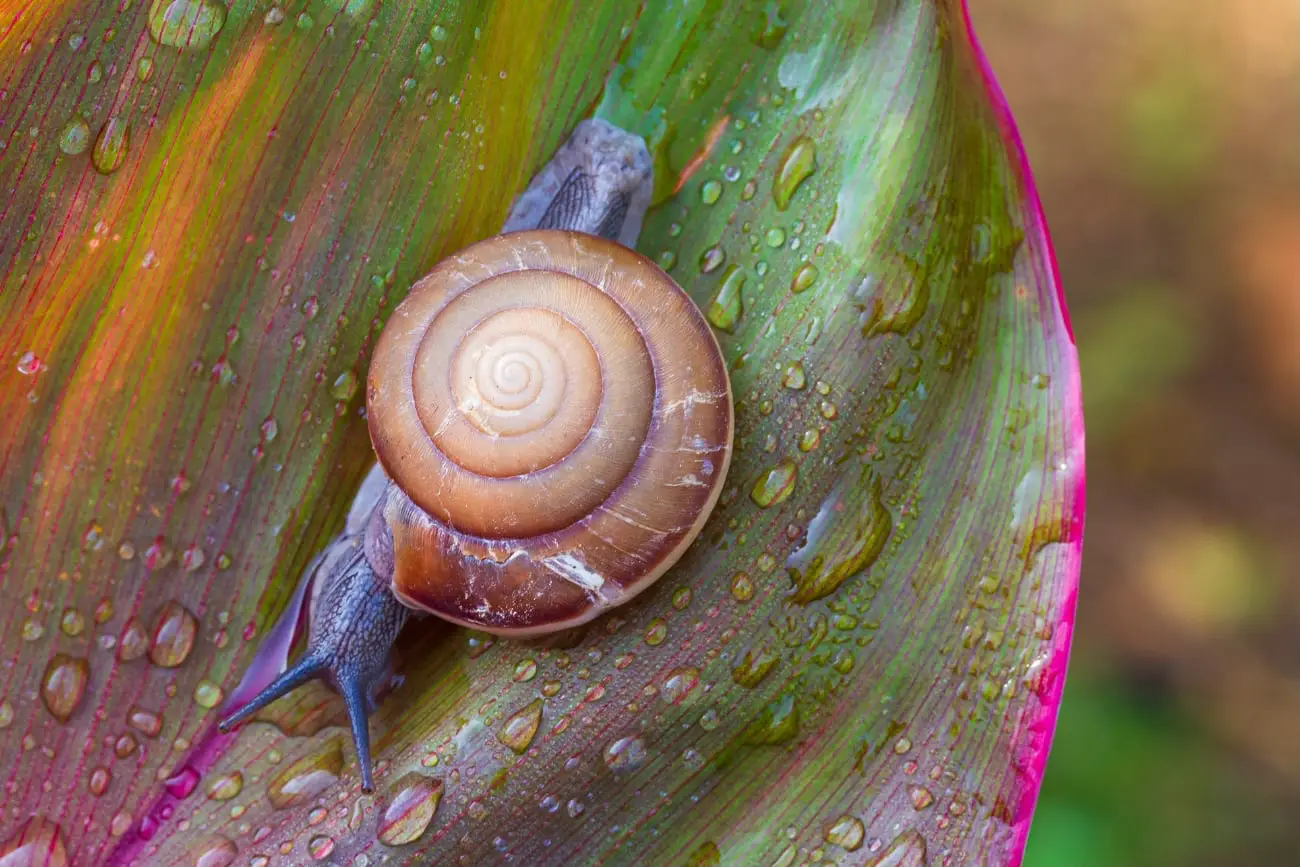
It is difficult—but not impossible—to capture actual raindrops with a camera. Start by looking for drops that have already fallen: stationary droplets. Leaves, flower petals, and smooth artificial surfaces such as glass are all good places to find perfectly formed drops of rain.
What about falling rain? It can be difficult to capture well, but there are several ways to make those falling droplets appear in the final image (see tip 7). Start by using backlighting. If you are shooting at night, you can use streetlights.
Backlighting is an effective way to make falling rain more visible. In the evening, for example, you can use streetlights; around sunrise or sunset, natural backlighting can produce the same effect. Choose your focus point deliberately and experiment with your position relative to the light source to limit flare.
An external flash can also help make raindrops visible. Start with modest flash power and adjust it according to the distance to the rain, the ambient light, and your camera settings. Success naturally depends on other factors as well, including the intensity of the rain and the shutter speed.
Tip 6: Cheat a Little
If macro photography is your thing, you can simulate rain quite easily. A watering can held by a patient assistant, or even a stationary sprinkler, can be a good solution when you simply want to create that perfect photo without waiting for the right weather.
Tip 7: Pay Attention to Your Camera Settings
Your camera settings will naturally vary depending on the mood you choose and the amount of ambient light. Rainy days are generally dark, however, so if you are holding the camera by hand, you will probably need to use a higher ISO and/or a wider aperture.
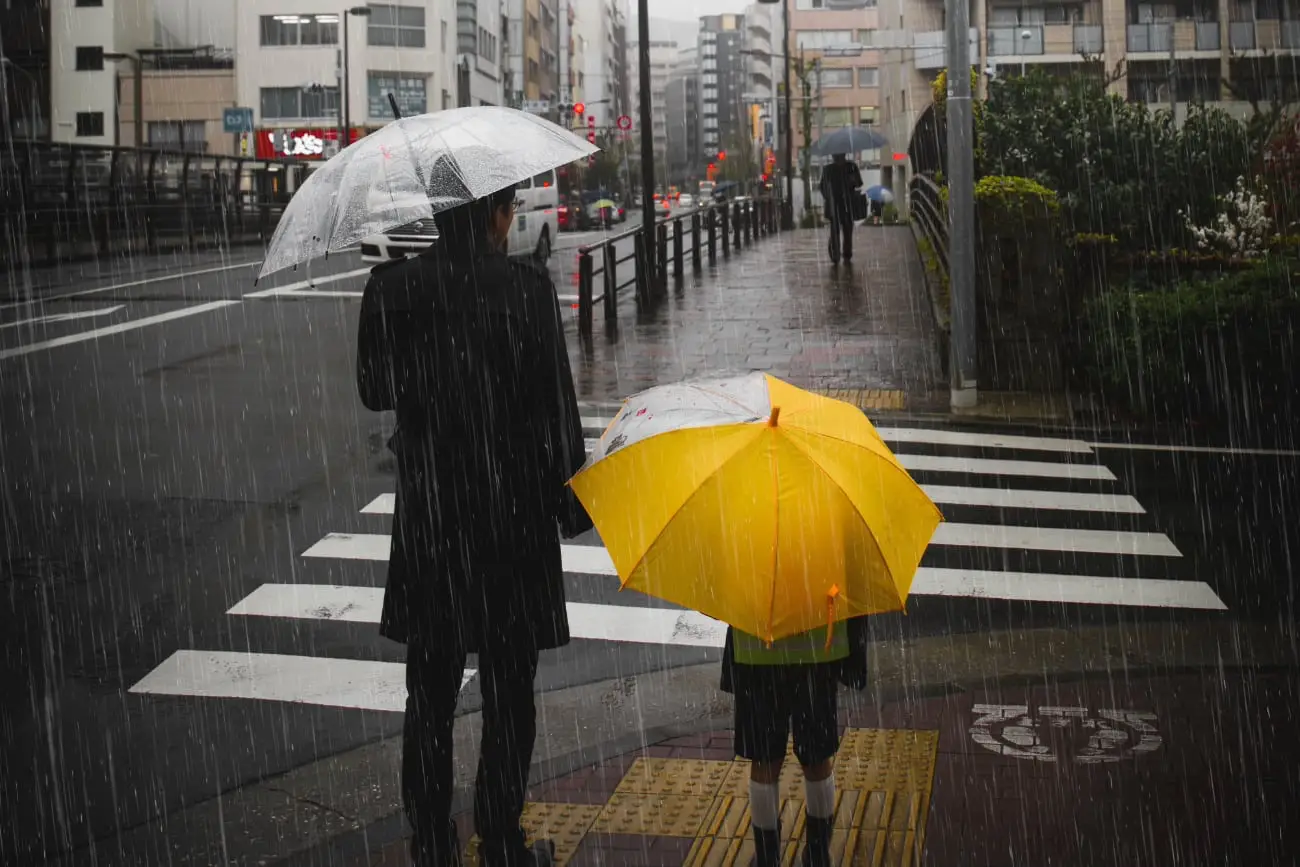
Rain is clearly a moving subject, so shutter speed should be your first consideration. How do you want to depict the rain: frozen in motion, or with the movement of the drops visible? It can also be useful to bring a tripod , which gives you extra flexibility—for example, to photograph the motion of raindrops at somewhat slower shutter speeds.
To freeze raindrops in motion, however, use the fastest shutter speed you can. A shutter speed of about 1/500 s or faster is a good starting point for freezing falling rain.
Depending on the light, you may not be able to use a fast shutter speed without raising your ISO. That is fine: accepting a little grain at a higher ISO is better than missing a beautifully balanced, compelling shot.
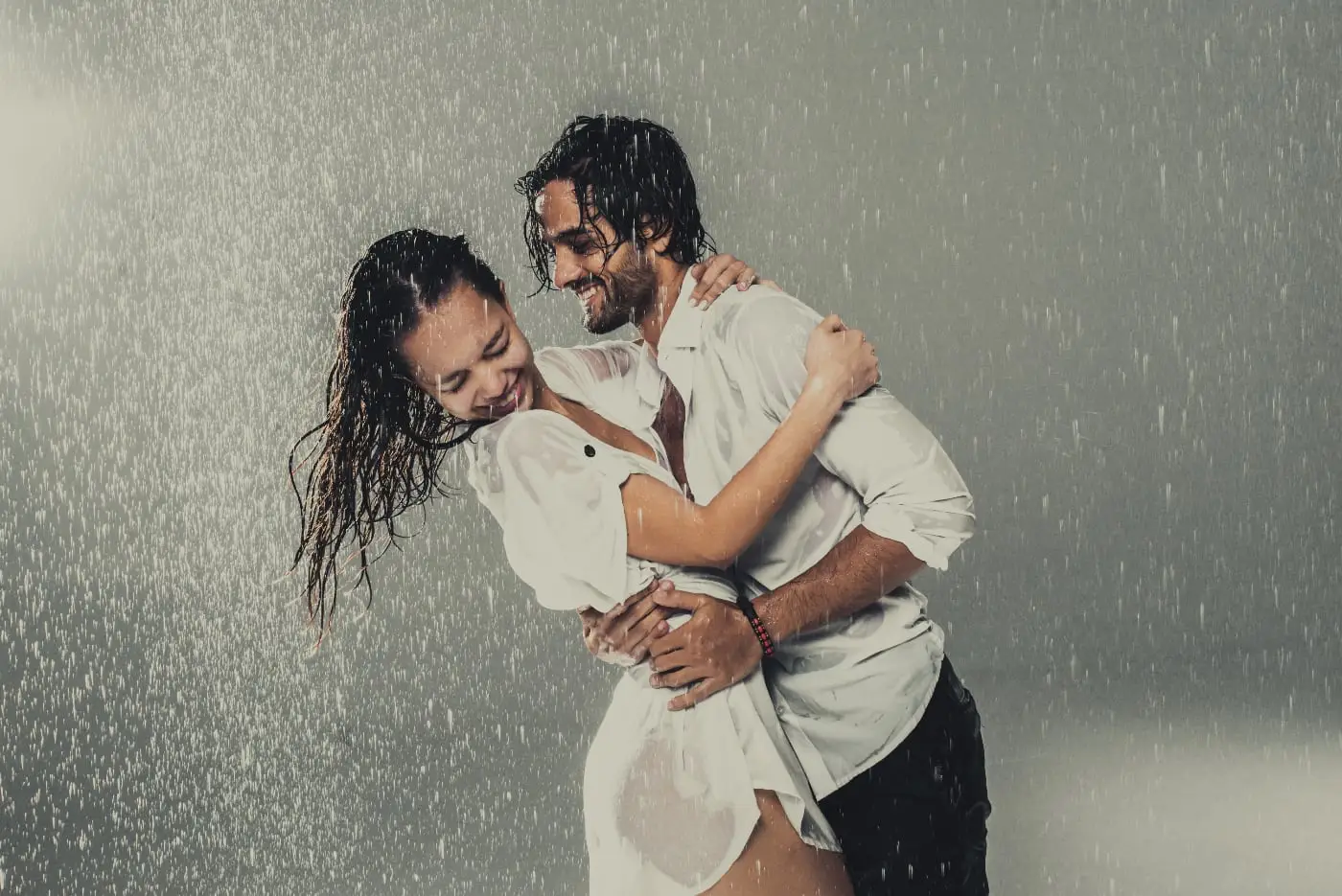
If you are going to use a flash , remember that your camera normally fires it at the first curtain, immediately after the shutter opens. That is not a problem at relatively fast shutter speeds. If you combine flash with a somewhat slower shutter speed to record the droplets’ motion, however, you capture both the drop’s movement and the instant in which the flash freezes it.
With first-curtain flash, the result can make the drop appear to move upward: the flash freezes the drop first, after which the camera records part of its continued movement. You can correct this directly in your camera settings by selecting second-curtain flash.
Tip 8: Use Dramatic Effects
Raindrops can be emphasized quite dramatically with different light sources. If you are on a tropical island during one of its passing storms, sunlight breaking through the clouds can provide beautiful backlighting.
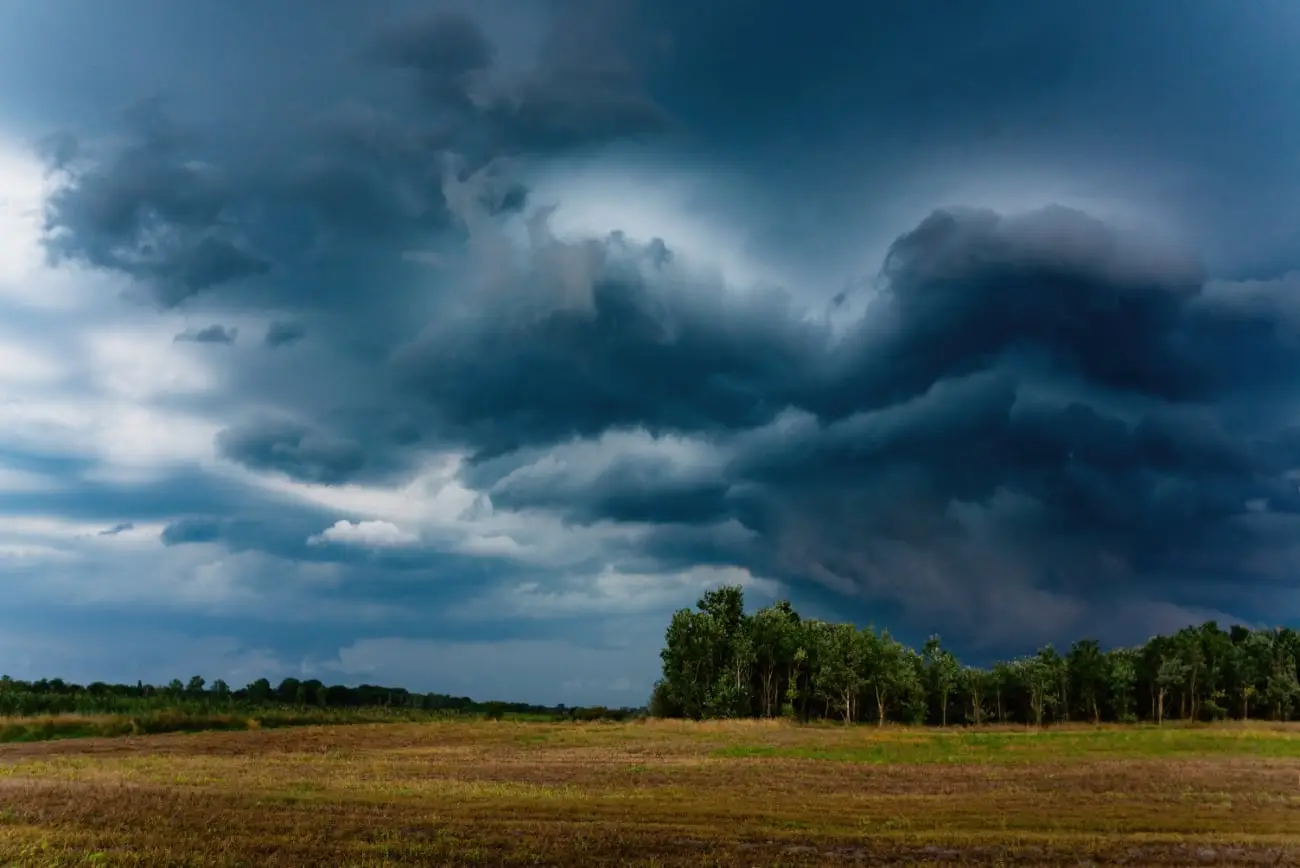
The image above is a good example of dramatic lighting. The way the clouds and heath are illuminated makes it a spectacular scene.
A streetlight is another excellent example. Like an old black-and-white detective film, a monochrome image of rain falling in front of a streetlight at night is a classic shot. So when it rains, make a point of looking for the light.
Tip 9: Get Low
One of the best moments to capture water is when it strikes the ground, a puddle, another body of water, or an object. In the image below, some drops are still falling while others are bouncing.
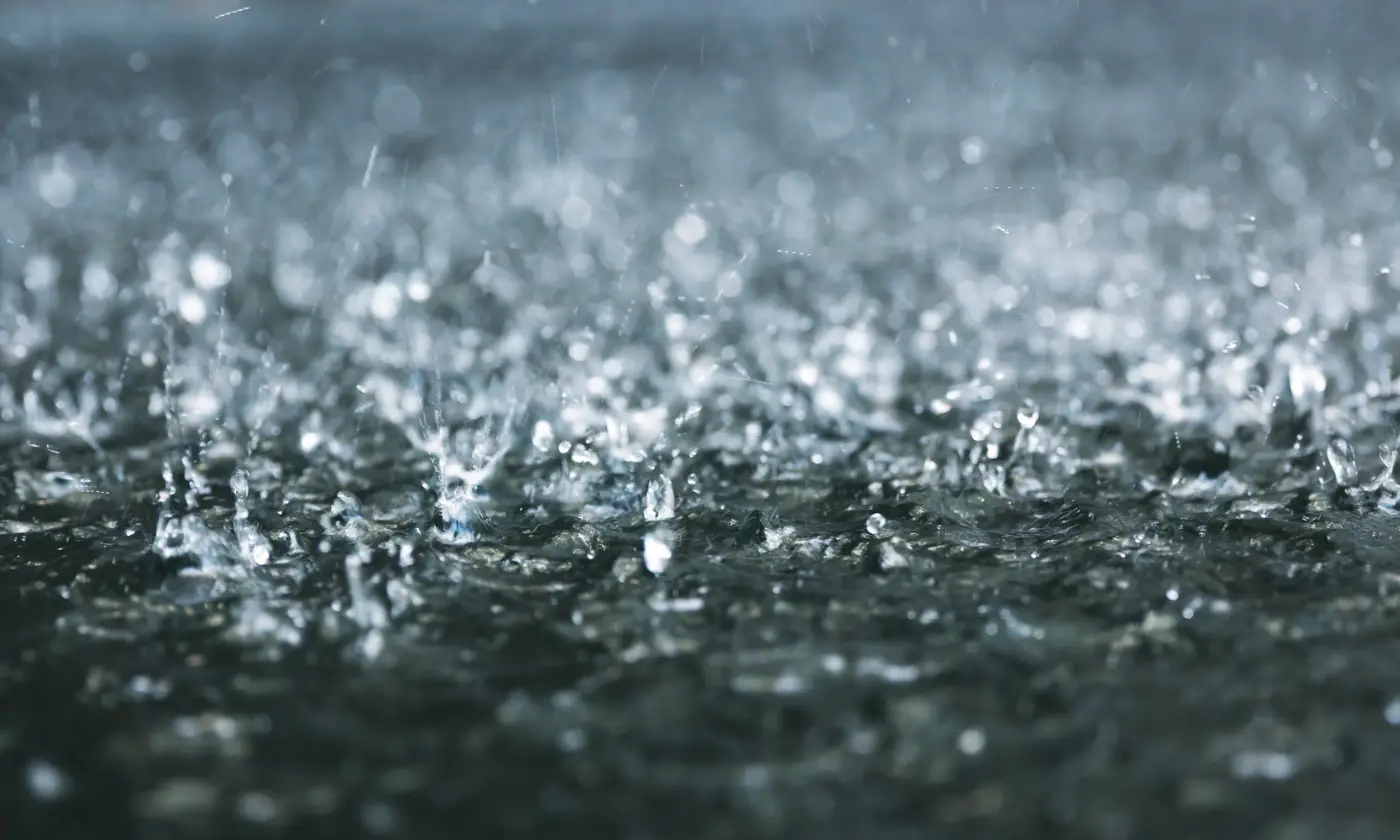
Consider getting close to the ground for some of your shots. Pavement, puddles, rocks, and similar surfaces offer excellent opportunities to capture water landing on them.
Tip 10: Use Reflections
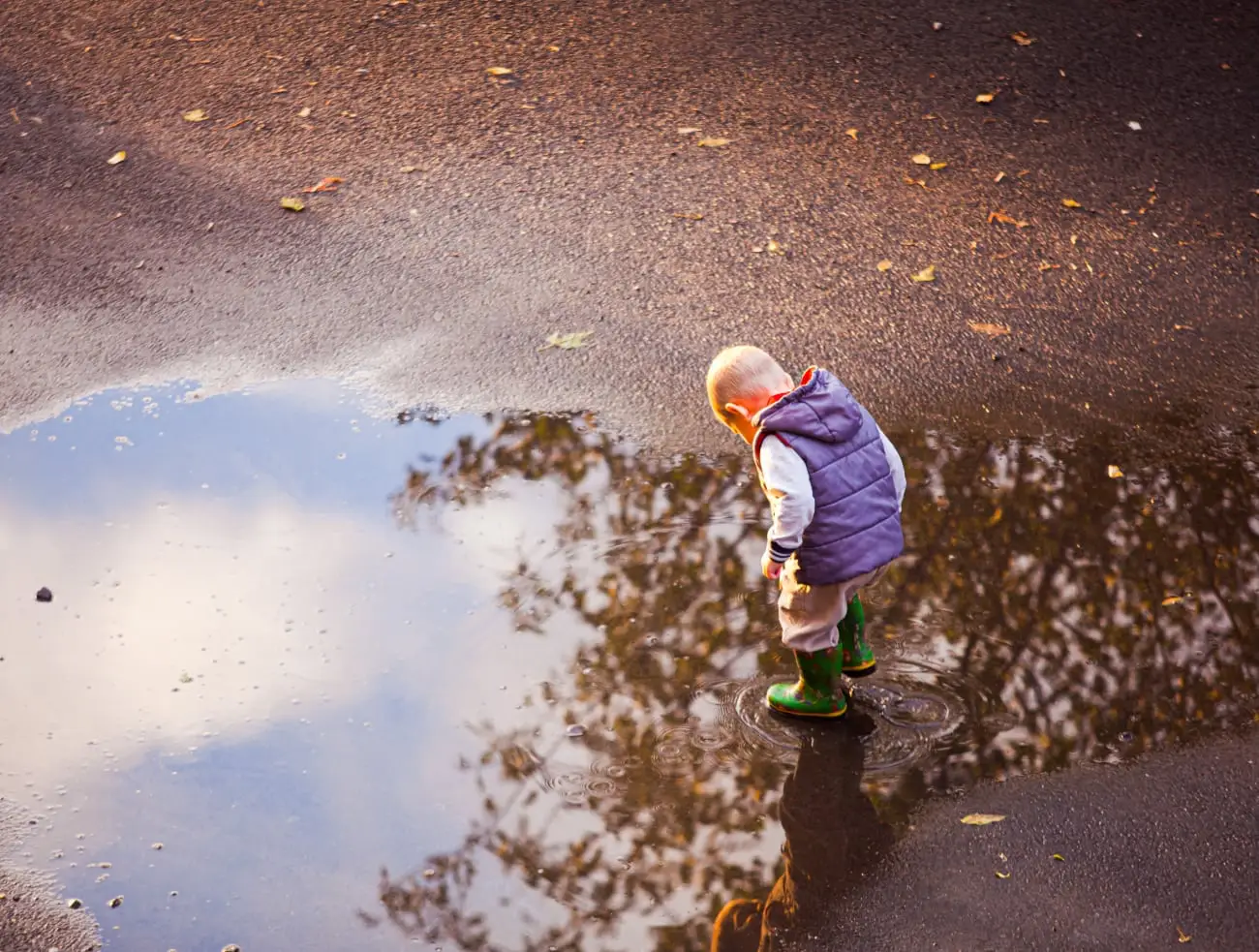
Puddles are wonderful places to capture a reflection while it is raining, and they are often easy to find. Simply take a walk down your street during a rain shower.
An image of a child splashing in a puddle, or clouds reflected in the water, can work very well. View the puddle from different angles to see how the scene changes. A photograph taken from the other side will probably produce a very different reflection.
Conclusion
With a well-protected camera, you can create enjoyable photos in wet weather. When you head out with your camera, consider the season and the forecast, and do not treat a little rain as a reason to go inside and abandon the shoot. See it as an excellent opportunity to make remarkable photographs unlike any you have taken before.