The attention surrounding cameras such as the Sony RX10 V touches on an old question: how much camera do you actually need? Not everyone wants to carry a bag full of lenses, but not every photographer is happy with a single built-in lens. The choice between a superzoom and a mirrorless camera is therefore less about specifications than about how you photograph.
The Sony RX10 V is a good example of a camera that seems to go against the grain. While many manufacturers emphasize mirrorless cameras, large sensors, and increasingly specialized lenses, the RX10 V opts for a single built-in zoom lens with an enormous range. From wide-angle to supertelephoto, without changing lenses, without getting dust on the sensor, and without having to think about which lens should be on the body.

That sounds almost too easy. Yet the idea behind a superzoom like this is not outdated at all. For some photographers, one camera actually makes things calmer, faster, and more straightforward. For others, it becomes a limitation after a few weeks. So the question is not whether a superzoom is better than a mirrorless camera, but when one built-in lens is enough.
What a superzoom does well
A good superzoom camera is made for situations where you do not know exactly what you will encounter. A bird in the distance, a child on a sports field, a detail on a building, a landscape in beautiful light, or a portrait on the go. A mirrorless camera can do all of that too, but you need to have the right lens with you and often be willing to change it.
That is exactly where a built-in superzoom lens becomes convenient. You do not have to choose before you head out. The camera remains complete just as it is. One battery, one lens, one bag, one way of working.

That is appealing for travel. If you are walking through a city, visiting a nature reserve, or mostly want to look around rather than haul gear on vacation, range is often more useful than absolute perfection. You can respond to what happens. A street scene at 24mm, a portrait-like detail at 100mm, or a bird or church tower at 500 or 600mm. Switching between those views is the strength of the concept.
It also works well for family, sports, and animals. You do not have to get right next to your subject, yet you can still compose quickly. Especially with subjects that will not wait for you, that matters more than theoretically perfect image quality.
When one built-in lens is enough
One built-in lens is enough when you think primarily in terms of possibilities, not maximum control. You want to be able to photograph what you see without the technology constantly coming between you and the moment.
That applies, for example, to photographers who enjoy hiking, traveling, or photographing birds and animals without carrying heavy telephoto lenses. It also applies to parents on the sidelines, people who bring a camera to events, or photographers who prefer to travel light. The camera should not become the entire project. It should simply be ready.
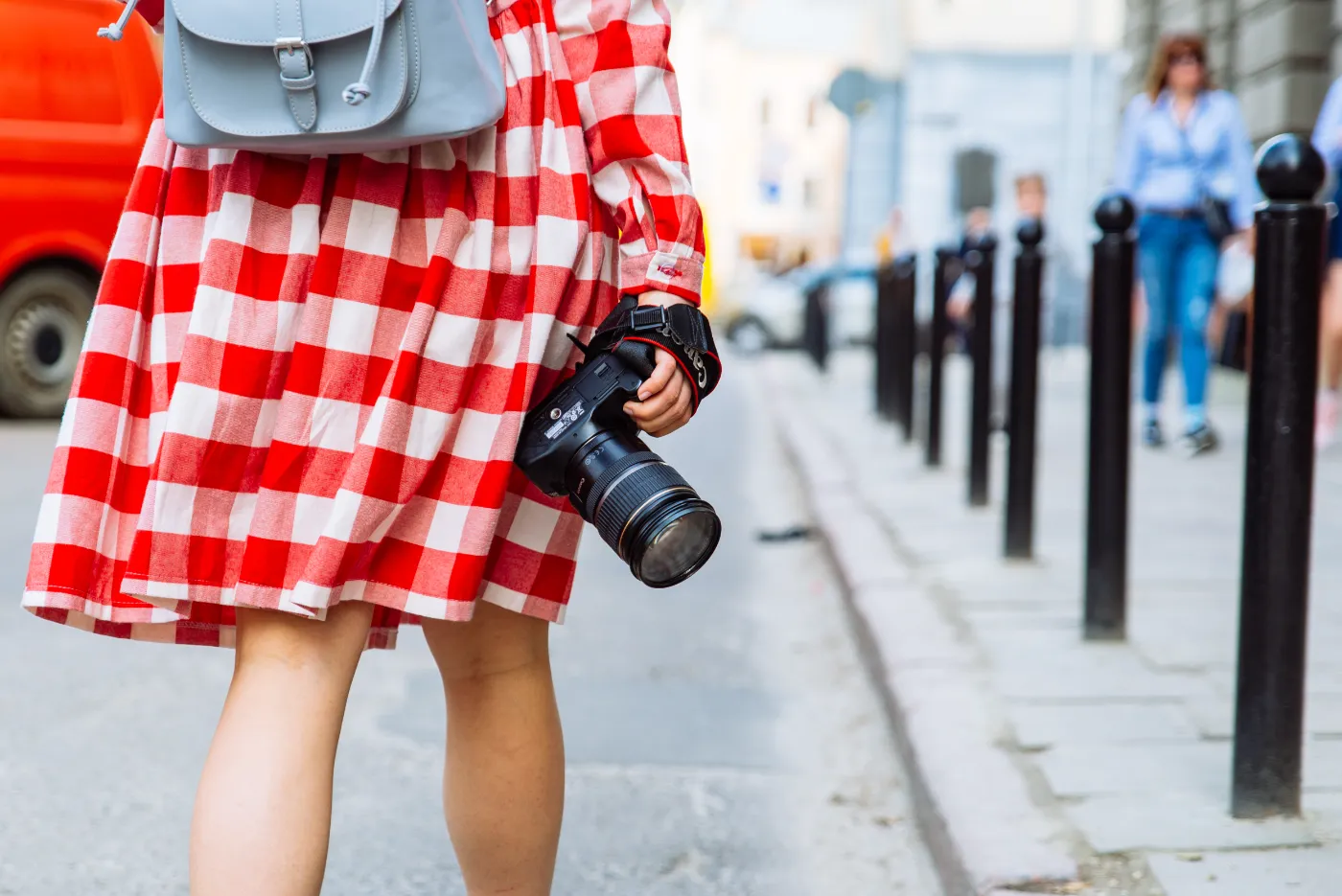
A superzoom is also useful if you are still discovering which subjects you enjoy most. You will naturally learn which focal lengths you use often. Perhaps you will find that you almost always photograph around 70mm. Or perhaps you will discover that you use telephoto much more often than you expected. In that sense, a superzoom can also be an educational camera.
There is another advantage: you spend less time thinking about purchases. With a mirrorless camera, a second process often begins after buying the body. Which standard zoom? Which telephoto lens? A fast prime after all? A macro? A better bag? A superzoom does not close off that route entirely, but it does make it less pressing.
Where the limitations begin
Of course, one built-in lens is not magic. The limitations become most apparent when your photography gets very specific.
If you often work in low light, you will reach the limits of the smaller sensor or restricted maximum aperture sooner. A concert hall, dark church, interior without a tripod, or portrait at dusk often asks more of the camera and lens. A mirrorless camera with a fast prime then has a clear advantage.

A mirrorless camera also usually wins for portraits with a strongly blurred background. Not because a superzoom cannot produce a beautiful portrait, but because sensor size and maximum aperture determine how much room you have to work with. An 85mm f/1.8 on a mirrorless camera creates a different visual feel than a built-in superzoom lens at a comparable framing.
The same can happen with macro, architecture, studio, and professional product photography. As soon as you want precise control over perspective, distortion, depth of field, flash, or specialized accessories, a mirrorless camera becomes more flexible. You choose interchangeable lenses not because they look impressive, but because the work requires those tools.
Mirrorless camera: not always better, but more open
A mirrorless camera is primarily an open system. You are not buying just one camera, but access to a collection of lenses and accessories. That is both its strength and its pitfall.
The strength is clear. You can start small with a standard zoom and expand later. A compact prime for street photography. A wide-angle lens for interiors or landscapes. A telephoto zoom for sports and nature. A macro lens for flowers, insects, or product details. You build the kit around your way of seeing.
Photographers looking for the same 100–400mm zoom range as the professional Sony FE 100–400mm F4.5 GM OSS, but in a lighter and more affordable package, can choose the Sony FE 100–400mm F5.6–8 OSS. Weighing 654 grams, the lens is easier to carry, although its maximum aperture of f/5.6–8 makes it slower.

The pitfall is that you are never finished. There is always a lens that is just a little better, lighter, sharper, or faster. As a result, photography can quietly turn into managing equipment. For some people, that is part of the experience. For others, it takes the momentum out of taking pictures.
That is why a mirrorless camera is not automatically the more advanced choice, and a superzoom is not automatically the easy choice. They are two different ways of working. One provides freedom by putting everything into a single body. The other provides freedom by letting you change components.
Think in terms of subjects, not specifications
The best choice does not begin with megapixels, autofocus points, or the question of which camera is newest. Start with your subjects.
If you mainly photograph trips, nature walks, zoos, children, sports days, and unexpected moments, a superzoom makes perfect sense. The distance and size of your subject are constantly changing. In that case, range matters more than the last percentage point of image quality.
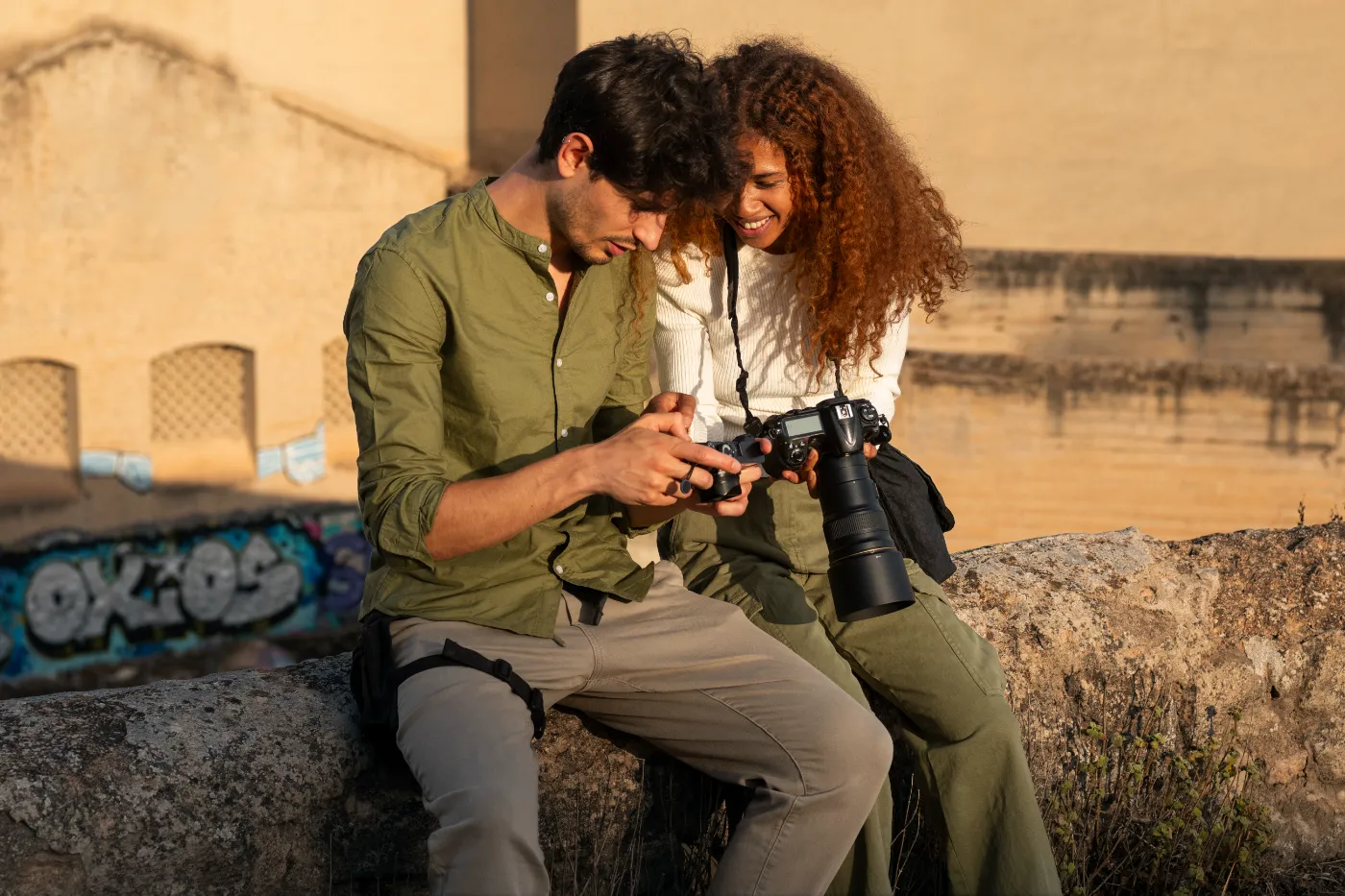
If you mainly photograph portraits, interiors, weddings, studio work, streets at night, or assignments for which clients expect a specific level of quality, a mirrorless camera quickly becomes more attractive. Not because you always need many lenses, but because you can choose the right lens for the assignment.
For landscapes, the choice is less clear-cut. A superzoom can work surprisingly well, precisely because it also lets you isolate details in the landscape. But photographers who like to work with filters, a tripod, an extreme wide-angle lens, or high resolution will be more likely to choose a mirrorless camera.
The bag test
Here is a simple way to choose: imagine you are going away for an entire day tomorrow. Not to a photo shoot with a strict plan, but simply out for the day.
Would you be happy to bring a camera bag such as the Peak Design Everyday Sling 6L with two or three lenses because you enjoy making deliberate choices? Then a mirrorless camera probably suits you. You do not mind changing lenses; perhaps it even helps you look more carefully.
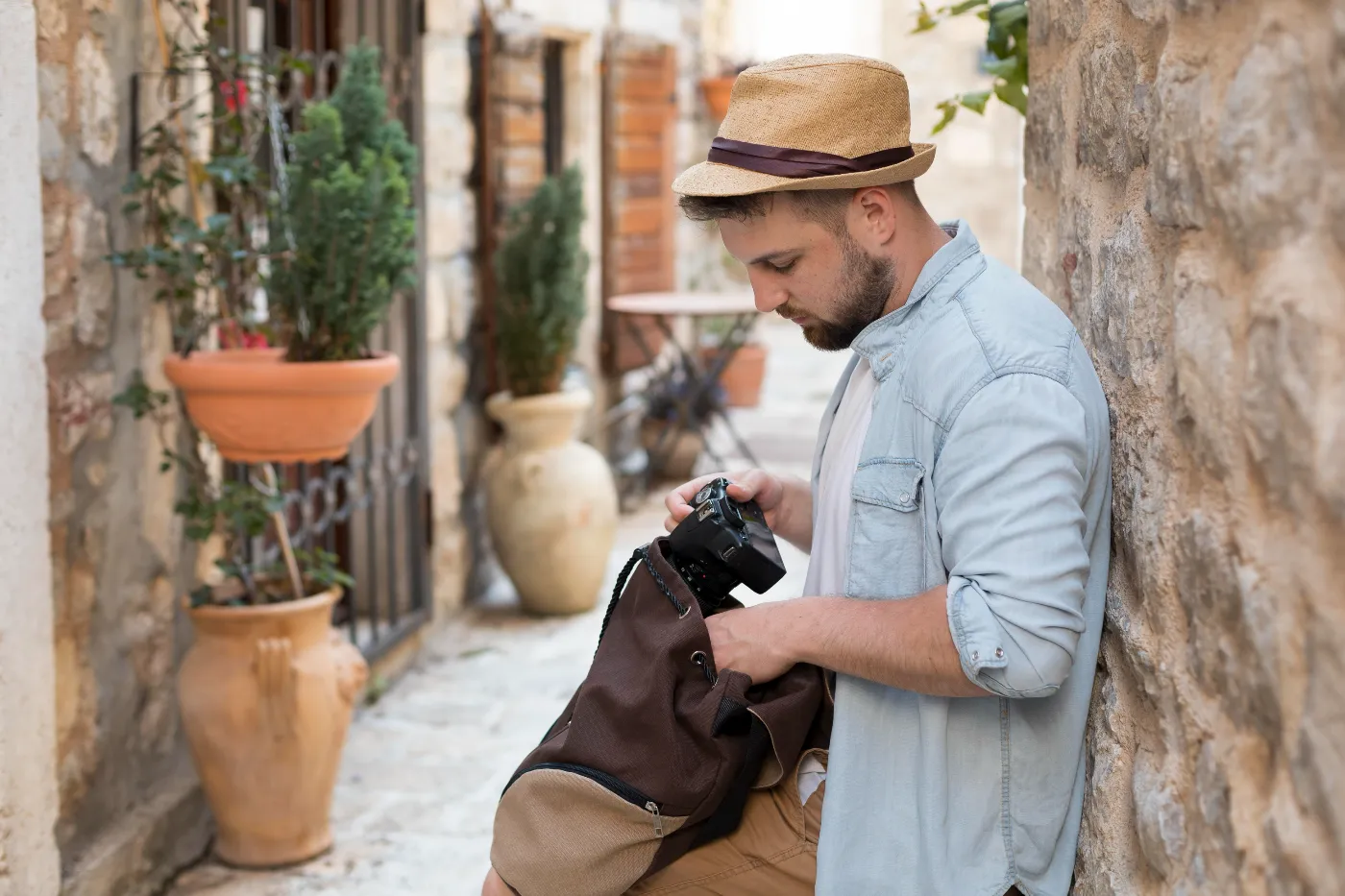
Would you rather pick up one camera and leave, without debating which lenses to take? Then a superzoom may make much more sense. Especially if you often find that you miss photos because the wrong lens happened to be on the camera.
The bag test is not technical, but it is honest. Equipment that stays home because it feels too heavy, too expensive, or too cumbersome does not take pictures.
When is one lens enough?
One lens is enough if it does not hold you back. If you come home with the photos you wanted to take. If you do not constantly think while you are out: I wish I had brought another lens.
For many photographers, a built-in superzoom lens can do exactly that. It delivers range, speed, and peace of mind. You accept that there are limits, but you gain clarity and simplicity.
For other photographers, one built-in lens feels too restrictive. They want to be able to choose, refine, and change. They use a mirrorless camera not because they have to, but because interchangeable lenses shape their visual language.
The best camera, then, is not the camera that can do everything. That camera does not exist. The best camera is the one whose limitations you understand and whose strengths you actually use. Sometimes that is a mirrorless camera with a small set of lenses. Sometimes it is one superzoom that is simply always ready.