The Nikon 500mm f/4E and 600mm f/4E broadly do the same job. They share the same maximum aperture and F mount, and both are still available new. The difference is one hundred millimetres and just over seven hundred grams. Does that extra 100mm make your photograph better — or not?
More millimetres mean a larger subject in the frame. But a 600mm lens also magnifies the effects of shimmering air more strongly. So which makes more sense?
Nikon introduced both lenses in 2015 as considerably lighter successors to the G versions. Nikon Netherlands still lists them new and in stock. They also appear regularly on the used market. At these prices, that is no minor consideration.
That f/4 aperture
F/4 may not sound spectacular if you are coming from a 70-200mm f/2.8. At 500 or 600mm, it is. It can be the difference between a shutter speed that freezes a moving animal and one that lets another wingbeat slip past.
Put a 600mm f/6.3 beside it and you lose roughly 1⅓ stops of light. Where f/6.3 needs ISO 3200 at the same shutter speed, f/4 gets you down to around ISO 1250. The benefit is not just a line on a lab chart: it shows in the noise, the shadows and how long you can keep shooting at first or last light.
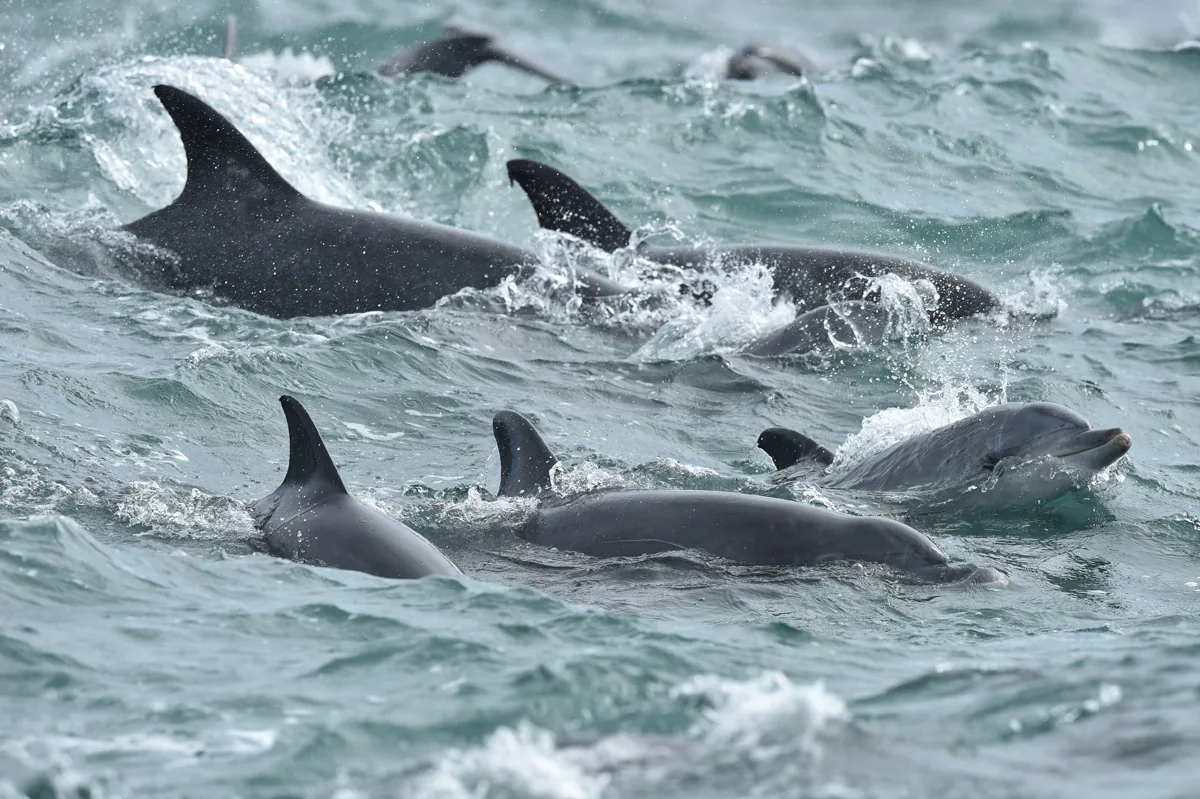
F/4 also makes it easier to separate a subject from the background. How pronounced that effect becomes also depends on your distance from the subject and the space between the subject and the background.
Working with a lens this size is a skill in itself. In Supertelephoto lenses: how do you use them for photography? you can read more about support, shutter speeds and focusing at long focal lengths.
The 500
The AF-S NIKKOR 500mm f/4E FL ED VR weighs 3,090 grams. Its predecessor, the 500mm f/4G, weighed 3,880 grams. Almost 800 grams less. That is not just a rounded number in a brochure. It can be the difference between taking it along and leaving it in the car.
The minimum focusing distance is 3.6 metres. On a DX camera, 500mm gives the same angle of view as approximately 750mm on full frame. A DX body therefore already provides a very narrow angle of view without having to move up to the heavier 600mm.
Three thousand grams still does not make this a walk-around lens. Brief spells of handheld shooting are possible, but a monopod, tripod or beanbag is advisable for longer sessions.
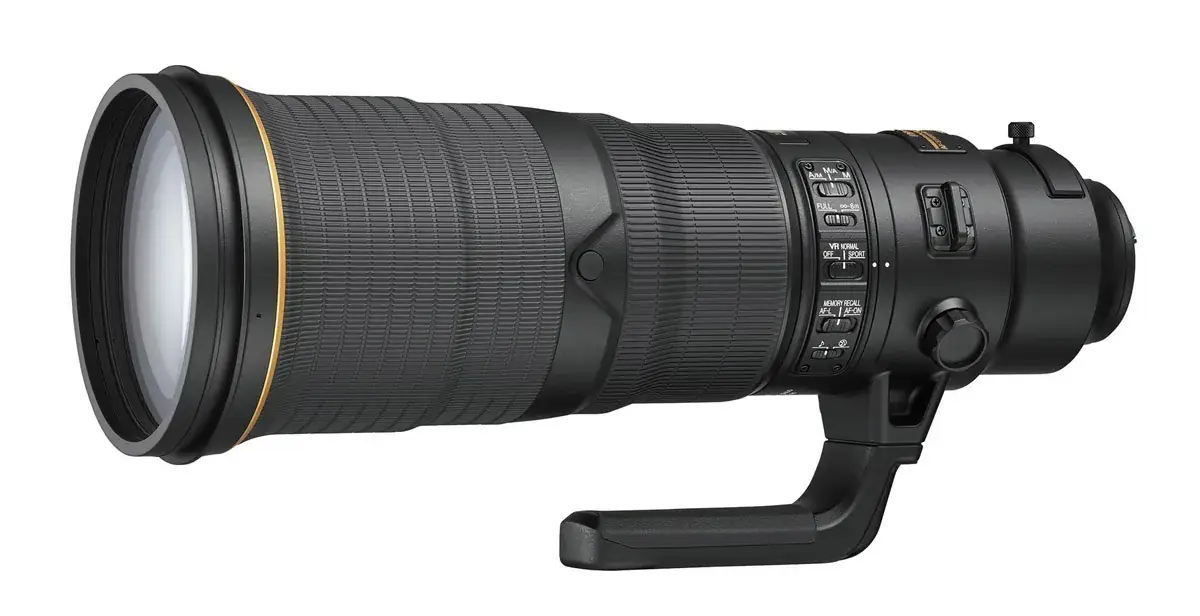
Even so, the 500mm is clearly the more agile of the two. You can turn more quickly, track for longer and find a bird more easily when it darts out of the frame. That weight saving does not show up on a sharpness chart. You notice it in how many minutes you can keep following your subject.
The 600
The AF-S NIKKOR 600mm f/4E FL ED VR weighs 3,810 grams. Its predecessor weighed 5,060 grams: more than five kilos. Nikon shaved off 1,250 grams. It remains a heavy lens, but it is no longer the anchor it once was.
Compared with the 500mm, you carry just over 700 grams extra. On a table, that may not seem much. After two hours out in the fields, it does. The minimum focusing distance is 4.4 metres, eighty centimetres farther than with the 500mm.
At the same shooting distance, 600mm renders the subject twenty per cent larger in each dimension than 500mm. Because both height and width increase, it covers approximately 44 per cent more pixels on the sensor.
Crop a 45-megapixel photograph taken at 500mm to the angle of view of 600mm and you are left with roughly 31 megapixels. That is still more than enough for many uses, but it is not 45.
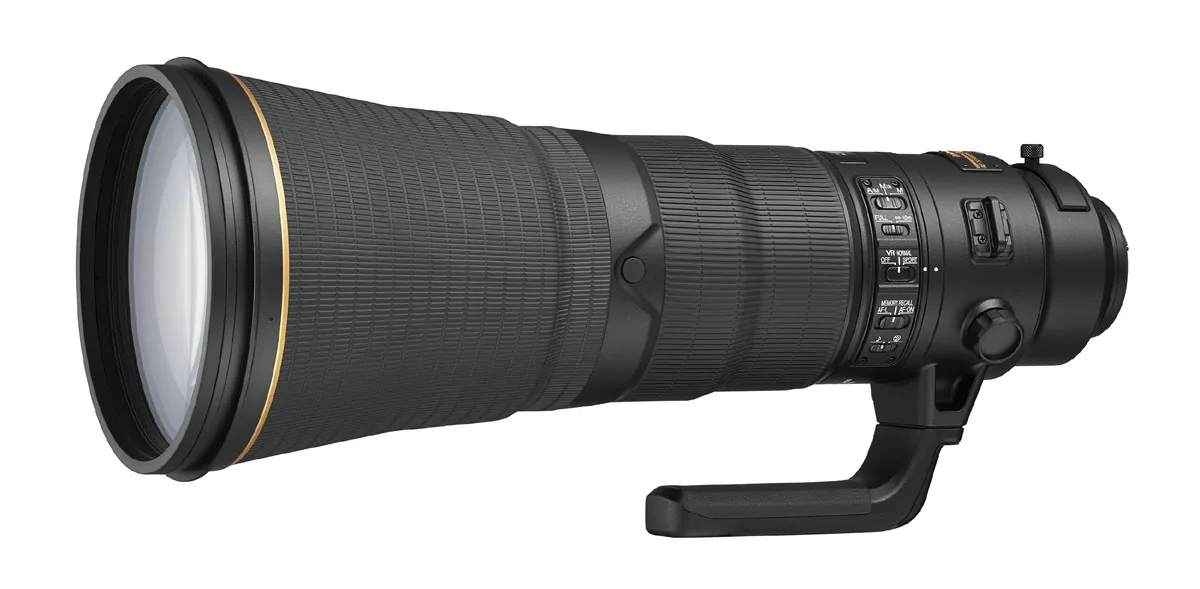
You mainly buy those extra hundred millimetres for subjects you cannot get closer to. A bird that flies off as soon as you take a step, wildlife on the far side of the water or athletes at the other end of the pitch.
Shimmering air
This is where things can go wrong.
More focal length means more magnification. It enlarges not just the subject, but also the distortion caused by turbulent air. Warm tarmac, a sunlit embankment or a meadow in August: the air can visibly shimmer, and the 600mm magnifies that effect more strongly than the 500mm.
You then have more reach, but not necessarily more detail. The lens is not the weak point; the air between the camera and the subject is.
On a cool morning, with stable air and a distant subject, the 600mm really can deliver more usable detail. On a warm afternoon shooting across eighty metres of water, an image taken at 500mm with a modest crop may be sharper.
Not because the 500mm contains better glass, but because extra magnification also makes atmospheric blur more obvious. Getting closer to the subject then helps more than another hundred millimetres of focal length. Not every subject will let you do that, though.
Anyone who does this regularly knows the phenomenon. The 600mm is not an automatic upgrade. It magnifies the subject and everything going on between you and that subject.
Adding a teleconverter
Both lenses have SWM autofocus and vibration reduction with NORMAL and SPORT modes. Nikon claims a benefit of around four stops. SPORT is intended primarily for fast subjects and continuous shooting, and provides a steadier viewfinder image while tracking. It can also work well from a monopod.

With a suitable 1.4x teleconverter, the 500mm becomes a 700mm f/5.6 and the 600mm becomes an 840mm f/5.6. You gain reach but lose one stop of light. Small focusing errors and atmospheric shimmer also become more visible.
A teleconverter is therefore not automatically the best solution for a subject that remains too small in the frame. On a high-megapixel camera, a sharp image without a converter may turn out better than a less sharp image with one.
The E diaphragm and Nikon Z
The E in the model name stands for an electromagnetically controlled diaphragm. This helps maintain consistent exposure during fast bursts, but not every older Nikon DSLR fully supports it.
On older cameras such as the D90, D200 and D2 series, the diaphragm cannot be controlled electronically. The lens then stays at f/4, so you cannot stop down. Before buying, check that your camera body fully supports an E-type lens.
On Nikon Z cameras, both lenses work through the FTZ or FTZ II adapter, retaining autofocus and exposure metering. The adapter does not automatically make autofocus slower: the focusing motor is inside the lens. The camera body, settings and conditions still determine the ultimate performance.
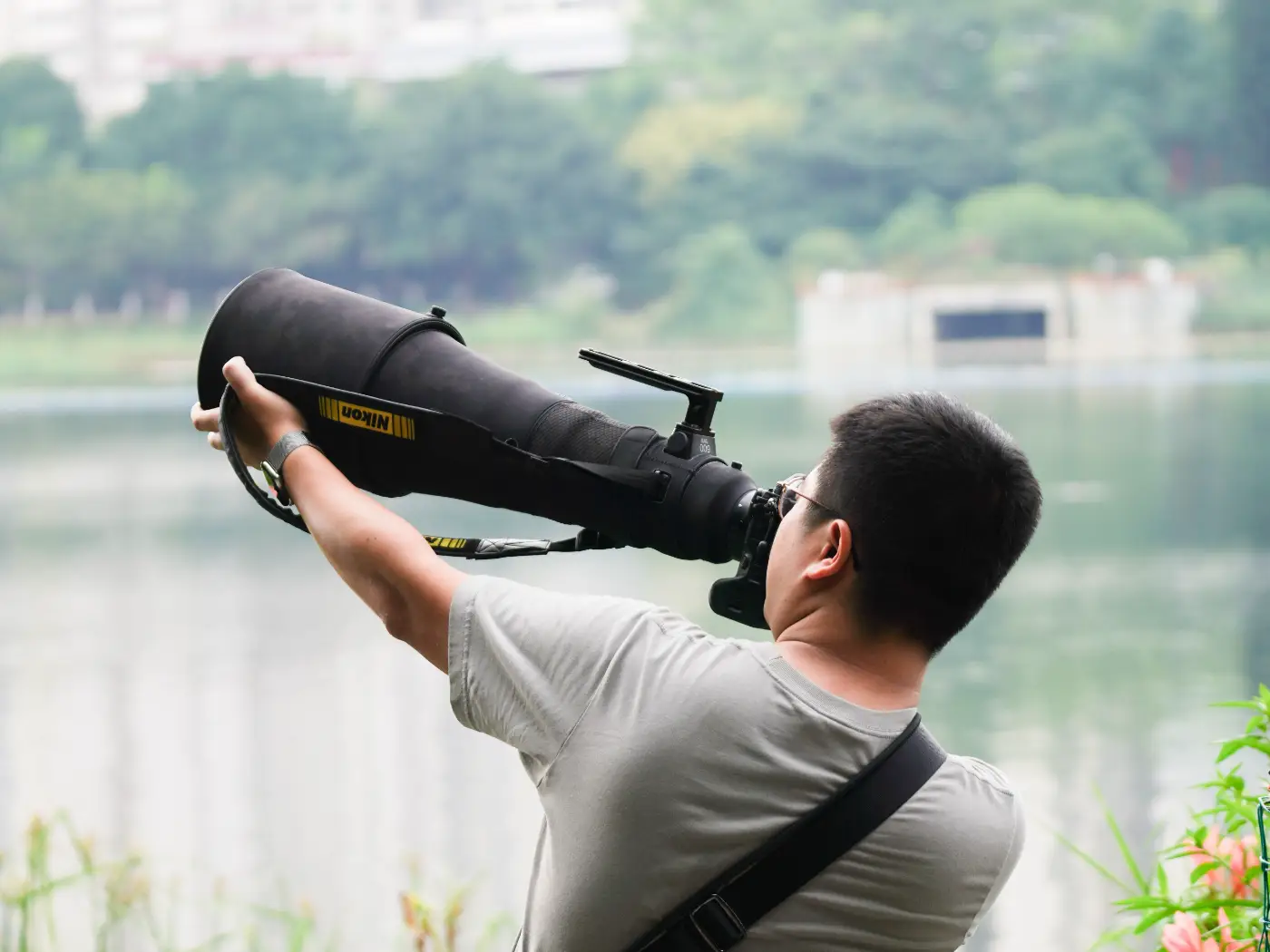
Always carry the combination by the tripod collar. Do not leave three to four kilograms of lens hanging from the camera mount or FTZ adapter. The adapter is not a handle.
Which one should you buy?
The 500mm is the more agile option. It is lighter, focuses closer and is easier to aim at a flying bird or an animal that suddenly moves. If you walk, track subjects and regularly change position, this is the logical choice.
The 600mm is for situations where you cannot get closer. A fixed position, a wary subject or a distance dictated by water, fences or the surroundings. You accept just over 700 grams extra and get a subject rendered twenty per cent larger.
On the right morning, that can make the difference between a recognisable speck and an animal whose fine details remain visible. On a warm afternoon, it may mainly give you more atmospheric shimmer.
If you are really torn between the two, the 500mm is probably the wiser choice. You buy the 600mm when experience has taught you that 500mm consistently falls short.
The Z alternatives
If you already shoot with Nikon Z, choosing one of these F-mount lenses should not be automatic.
The NIKKOR Z 600mm f/6.3 VR S weighs approximately 1,390 grams without its tripod collar. That is over 2.4 kilograms less than the F-mount 600mm f/4E. You give up roughly 1⅓ stops of maximum aperture, but gain a lens that is much easier to carry for a full day.
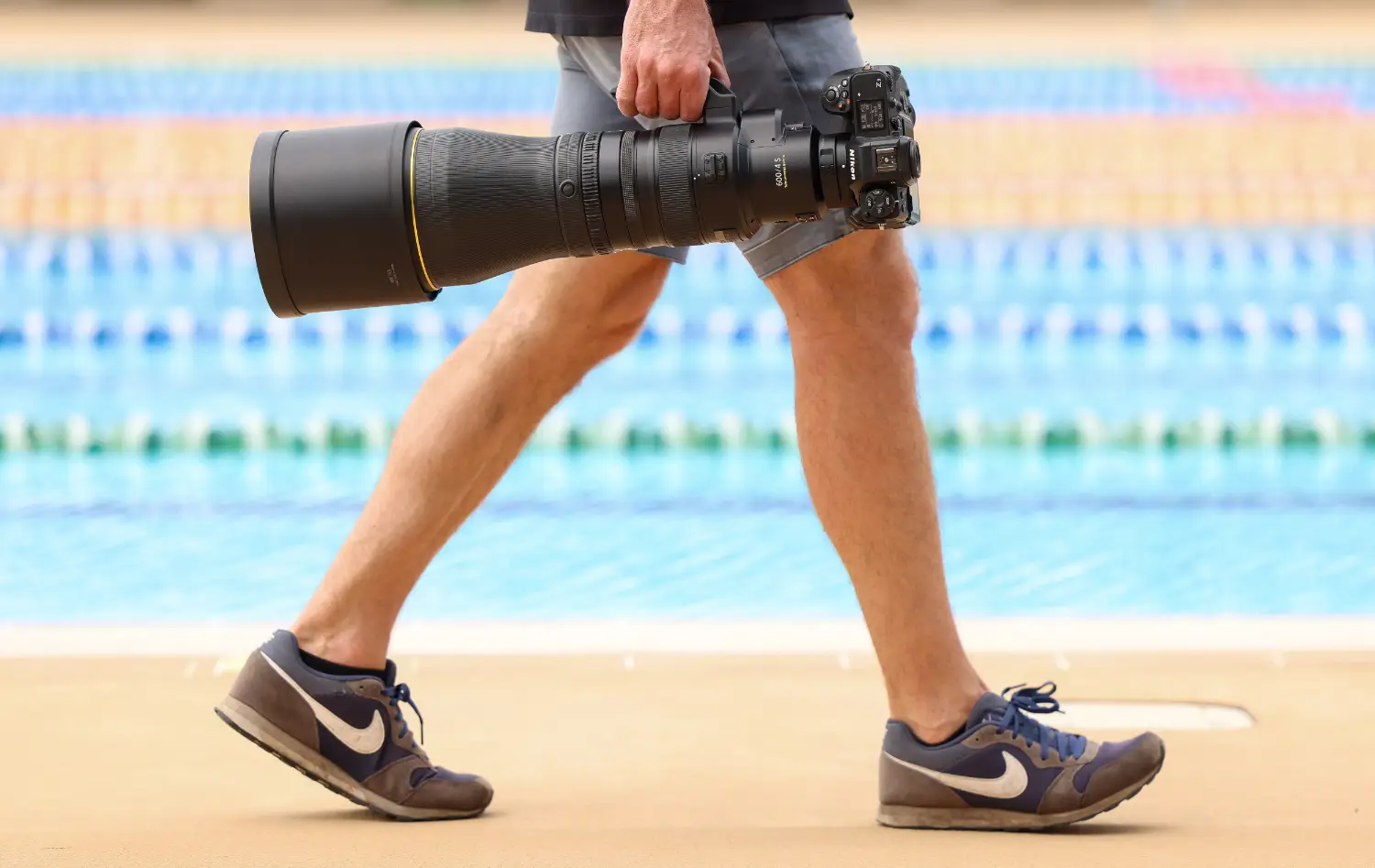
The NIKKOR Z 600mm f/4 TC VR S retains the f/4 maximum aperture and has a built-in 1.4x teleconverter. That turns 600mm f/4 straight into 840mm f/5.6. The lens weighs 3,260 grams, works without an FTZ adapter and sits in a considerably higher price bracket.
If you do not specifically need f/4 and want more flexibility, you could also consider the NIKKOR Z 180-600mm f/5.6-6.3 VR. It is not a replacement for a 600mm f/4, but for many bird and wildlife photographers it is a more practical way to use this focal-length range.
What they cost
Both F-mount lenses are still available new from Nikon Netherlands. As a Dutch price reference at the time of this update, the 500mm f/4E is listed at €10,999 and the 600mm f/4E at €13,348. Both models also appear regularly on the used market.
At this price level, those extra hundred millimetres are not an impulse purchase. The difference is more than two thousand euros. In return, you get a subject rendered twenty per cent larger and just over seven hundred grams of extra weight.
You could say: pay more and take the 600mm. Or you could choose the 500mm and spend the difference on a teleconverter, a better tripod or another season of trips to the places where you will actually use it.
The 500mm if you move. The 600mm if your subject does not and the conditions cooperate. The Z 600mm f/6.3 if losing 1⅓ stops of light matters less than carrying an extra 2.4 kilograms.
Walking away is an option too. This is not a lens you buy because it wins on a list. It is glass you buy because you know exactly what you need it for. Otherwise, it is mainly an expensive anchor.
This article was originally published in 2015 and was fully revised and updated on 31 August 2026.