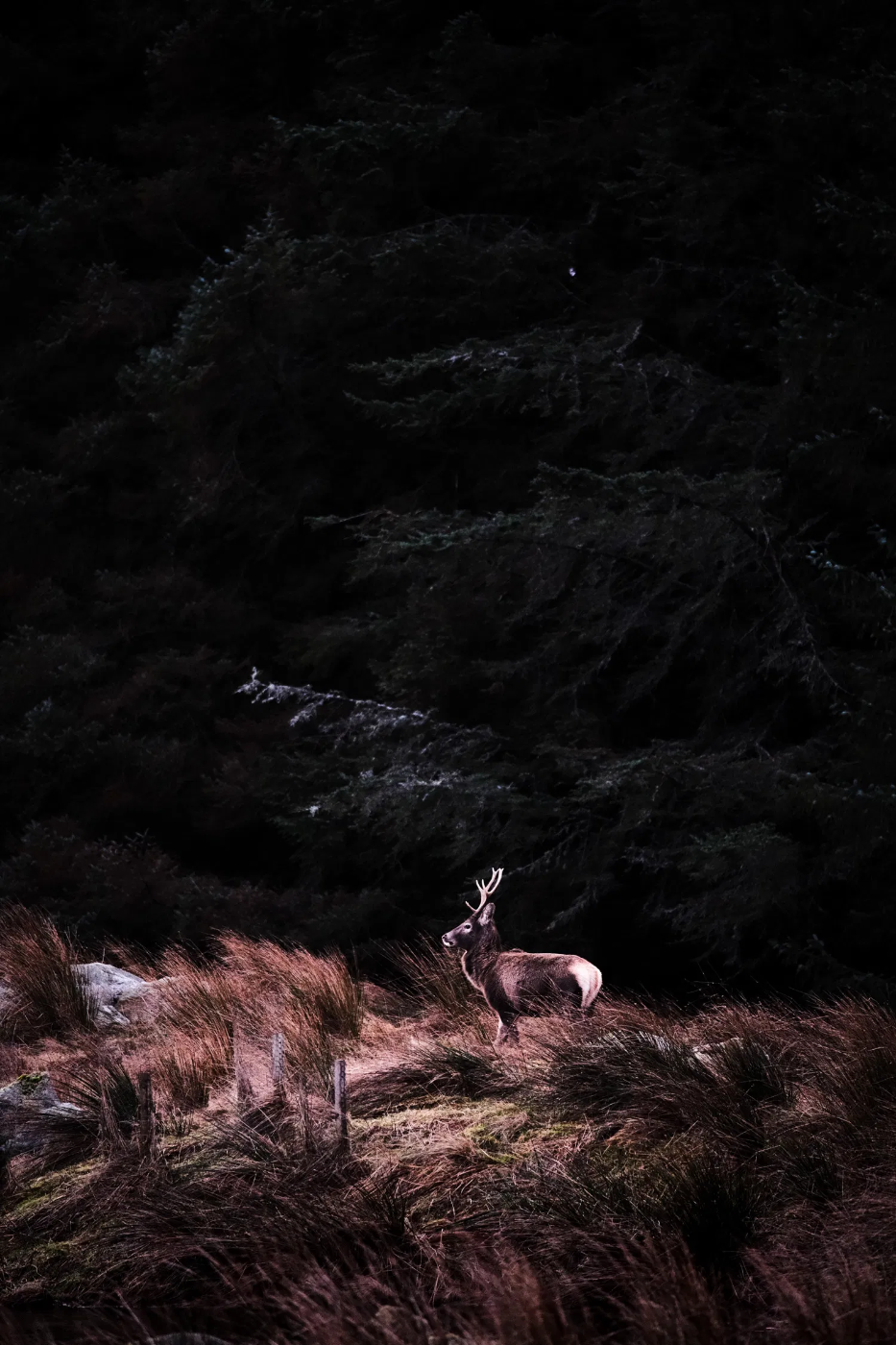
photo: © Peter Steffen - FUJIFILM X-H1 and FUJINON XF200mmF2 LM OIS WR, 1/500 sec at F2, ISO 250
Photographing in low-light situations requires choices. You can already see the photo in front of you, but the available light to take that photo is limited. This means: look carefully, adjust carefully, and above all work with the right lenses. The right lens can make it possible to take sharp pictures, even when you have to work with slower shutter speeds. They also help you reduce noise without sacrificing detail. And they give you control over depth of field, even when the light is almost gone.
In this article you can read what you should technically pay attention to in low light, and which type of lens makes the difference.
Working in low light: what should you pay attention to?
In low light, there are three ways to maintain your exposure:
- Slower shutter speed: You leave the shutter open longer so that more light comes in. Disadvantage: moving subjects or small vibrations can cause blur.
- Higher ISO value: The sensor is made more sensitive to light. Disadvantage: this can cause noise, especially in dark situations.
- Large aperture (low f-number): The lens opening becomes larger, allowing more light to reach the sensor. Disadvantage: your depth of field becomes smaller, which can also be a creative advantage.

FUJIFILM cameras such as the X-T5 and X-S20 often offer support with up to 7 stops of in-body stabilization, allowing you to continue shooting hand-held, even if you have to increase the shutter speed a bit. Yet the aperture remains the ideal tool for working under difficult lighting conditions: it ensures maximum light, limits risks and gives you more creative control.
Preferably use the Aperture priority (A position) in combination with Auto ISO. This way you let the camera make smart choices itself, while you determine the aperture.
Prime lenses: maximum light-gathering ability and control
Prime lenses, or lenses with a fixed focal length, have a simple but purposeful construction. This often means that these lenses have fewer moving parts and are therefore smaller or lighter than a zoom lens. At the same time, these lenses usually have a larger maximum aperture.
Within the FUJIFILM X Series there are prime lenses with a maximum aperture of F1.0 to F2.0, which allows you to capture considerably more light than with an average zoom lens. These lenses offer advantages, especially in low light and difficult lighting conditions: more flexibility in shutter speed and ISO, and a smaller chance of noise or motion blur.
Below you will find an overview of the most commonly used bright primes from the X Series, each with its own character and applications.
Wide angle in low light: FUJINON XF16mmF1.4 R WR
This wide-angle lens is ideal for landscapes in the blue hour, architecture in narrow alleys or star photography in an open field. With a focal length of 16mm (24mm full-frame equivalent) and a large aperture of F1.4, this lens offers maximum light-gathering ability and a wide angle of view – a combination that you rarely encounter.

Thanks to the minimum focusing distance of 15cm, you can work surprisingly close to your subject. That also makes the lens suitable for creative close-ups with a wide perspective. In dark conditions you can often continue photographing by hand without a tripod, even at ISO values that you prefer to keep low.
Natural looking standard: FUJINON XF33mmF1.4 R LM WR
This lens with a focal length of 33mm (comparable to 50mm full frame) offers an angle of view that closely resembles what the human eye perceives. This makes a photo feel intuitively familiar. It's a favorite among street photographers, reportage photographers and anyone who wants to work flexibly in low light without sacrificing quality.
The F1.4 aperture makes it possible to shoot at night or indoors without a flash, while the fast, quiet autofocus motor ensures fast focusing. This also makes this lens very suitable for spontaneous moments or situations in which you want to work inconspicuously.
Ultra bright for portrait and atmosphere: FUJINON XF50mmF1.0 R WR
With a maximum aperture of F1.0, this is the brightest lens in the entire X Series. This 50mm (75mm full-frame equivalent) has been developed for photographers who want maximum control over the sharpness in their image, ideal for portrait photography at ambient light or night shots with a distinct atmosphere.

The extremely shallow depth of field ensures a clear separation between the subject and a soft, calm background (bokeh). At the same time, this lens also delivers a sharp and detailed image at full aperture, making the XF50mmF1.0 an exceptionally powerful tool in dark conditions.
Teleportrait in evening light: FUJINON XF90mmF2 R LM WR
The XF90mmF2 is designed for situations where you have a little more distance to your subject, and when there is little light available – for example outdoor portraits, performances or weddings in the evening. With a full-frame equivalent of 137mm and a bright aperture of F2, this lens offers nice image compression and natural subject isolation.
The fast and quiet autofocus, combined with high sharpness and minimal chromatic aberration, makes this lens popular among photographers who capture people in motion or in unpredictable environments.
Powerful telephoto for sports and action: FUJINON XF200mmF2 R LM OIS WR
This lens with a focal length of 200mm (305mm full-frame equivalent) combines a large reach with an impressive aperture of F2 – a rare combination for these types of focal lengths. This makes the lens ideal for sports, events or wildlife in low light, for example at sunrise or under artificial light outside on the field or in a sports hall.

The XF200mm F2 comes with a 1.4x teleconverter, which gives you a focal length of 280mm (427mm full-frame equivalent), with only one stop of light loss. Thanks to built-in optical stabilization, you can also continue working at lower shutter speeds without motion blur.
Remote bird and nature photography: FUJINON XF500mmF5.6 R LM OIS WR
The XF500mm F5.6 is the longest prime lens within the FUJIFILM X Series. With a focal length of 500mm (750mm full-frame equivalent), this lens is designed for photographers who want to capture subjects at a great distance - think of birds, wildlife or animals in motion.
Despite the long range, the lens is relatively light and well balanced, allowing you to remain extremely mobile and work flexibly. Thanks to effective optical image stabilization, you can use slower shutter speeds without compromising sharpness. The XF500mm F5.6 is ideal for early mornings or changing natural light—situations where you need both speed and reach without pushing ISO to its limit.
Low-light zoom lenses – flexibility with constant brightness
Zoom lenses are ideal when you don't want to keep changing lenses, or when you work in situations where you cannot adjust your position. Think of reports, events or when you travel. Compared to prime lenses, zooms usually have a slightly smaller maximum aperture.
Yet FUJIFILM offers a number of exceptionally good zoom lenses with a constant brightness of F2.8 over the full range, allowing you to continue working creatively and flexibly in low light.
Ultra-wide angle with constant brightness: FUJINON XF8-16mmF2.8 R LM WR
For those who like to work with extreme perspectives, this lens is an excellent choice. The XF8-16mm F2.8 (12–24mm full-frame equivalent) delivers a remarkably wide angle of view with minimal distortion. Ideal for architecture, interiors, landscapes and creative shots where you want to be close to the subject, but still want to include the entire environment.
The fixed F2.8 aperture makes the lens useful in low light, for example inside churches or during the blue hour. Despite the complex optical design, sharpness remains high and image quality consistent throughout the zoom range.
All-round standard zoom: FUJINON XF16-55mmF2.8 R LM WR II
This second generation of the popular standard zoom offers improved balance, faster focusing and the same bright F2.8 aperture across the entire range. With a range of 16–55mm (24–84mm full-frame equivalent), this lens covers the most commonly used focal range for reportage, documentary, portrait or daily use.
The XF16-55mmF2.8 R LM WR II is a workhorse: robustly built, weatherproof and optically optimized for use in low light. Perfect for photographers who want one reliable lens that allows them to continue working in a variety of lighting conditions – without sacrificing image quality or flexibility.

Telephoto zoom with stabilization: FUJINON XF50-140mmF2.8 R LM OIS WR
With a range of 50–140mm (76–213mm full-frame equivalent) and a fixed aperture of F2.8, this lens ideal for portraits, events, stage photography and even wildlife. The built-in optical image stabilization helps to compensate for vibrations, so that you can still take sharp images even at longer shutter speeds - even by hand.
The fast, quiet autofocus ensures that this lens can also be used with moving subjects in less predictable lighting conditions. For photographers who work in variable situations – from indoors to outdoors, from stationary to in action – this is a versatile and professional tool.
Super telephoto zoom for distance and detail: FUJINON XF150-600mmF5.6-8 R LM OIS WR
With an impressive range of 150–600mm (equivalent to 229–914mm full-frame), this lens is designed for photographers who work at great distances – think bird photography, aviation, sports or wildlife in vast areas. Despite the range, this lens is surprisingly light and well balanced, allowing you to continue working by hand for longer.
The variable aperture of F5.6–8 means that the lens is less bright than some primes or zooms, but the effective optical image stabilization partly compensates for this. Combined with the high ISO performance of X Series cameras this lens suitable for use in low light, for example in the early morning or late afternoon.
Get more out of working in low light
The right lenses not only give you technical space, but also creative freedom. Especially in low light, it is important to know what you are doing – and why you choose a certain type of lens. Do you work a lot in the evening, indoors or in natural light in the early morning? Then it pays to invest in bright lenses that suit your way of photographing.
Would you like to learn more about techniques, settings or the practical use of specific FUJIFILM X Series lenses? Then visit the FUJIFILM Learning Center. There you will find additional articles, examples and tips that will help you on your way, even when the light is challenging.