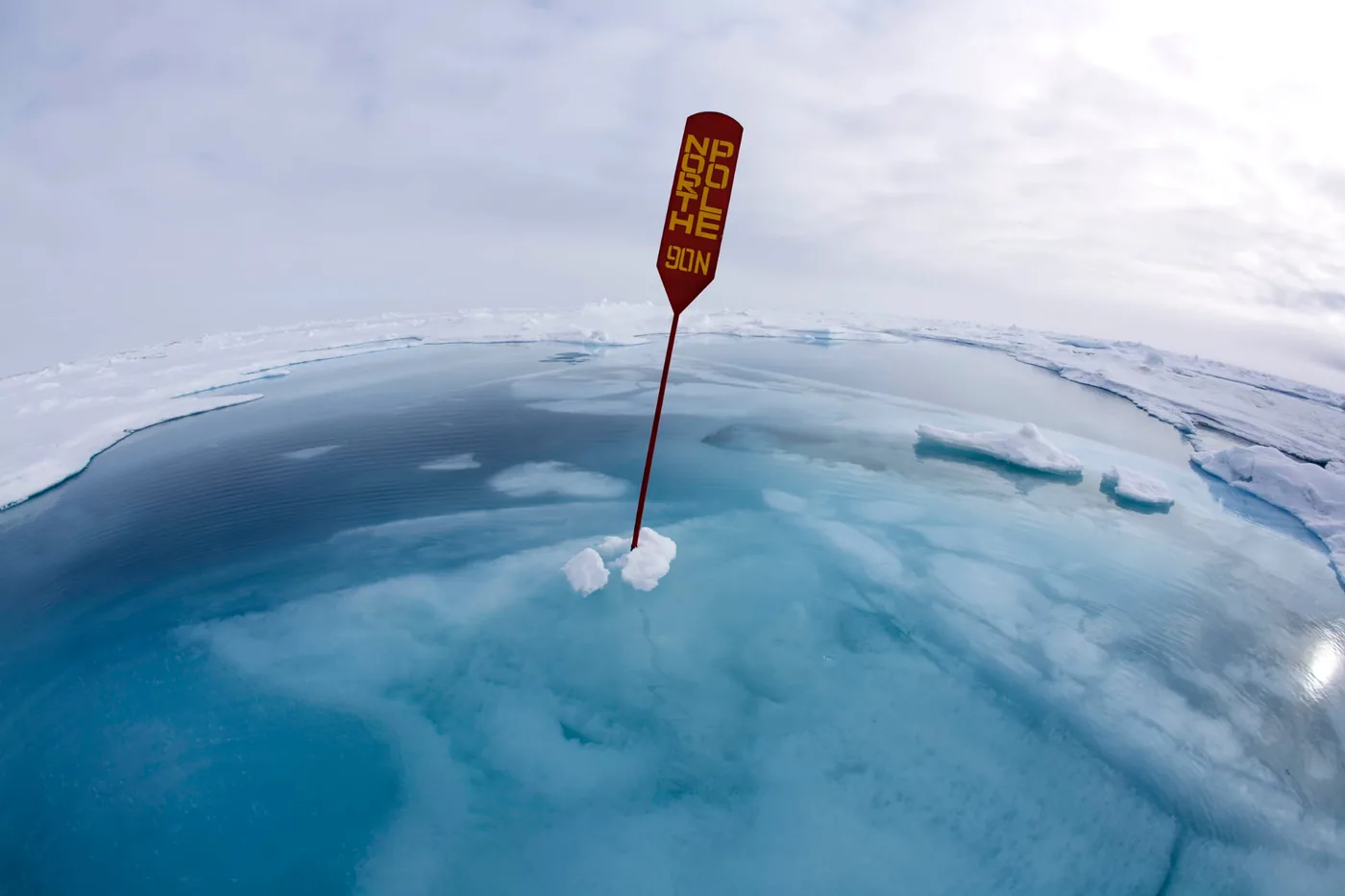
photo: © SPotY Winner 2020 (Climate Change) North Pole Under Water by Sue Flood FRPS
Each year, the Royal Photographic Society celebrates science photography through its Science Photographer of the Yearcompetition. For the first time, it included a climate category in partnership with Manchester Science Festival. The winning images had just been announced. Four photographers were selected for the winning photographs in the Climate Change and General Sciencecategories; two received the title Young Science Photographer of the Year in the youth divisions.
The Science Photographer of the Year 2020 competition celebrates the remarkable stories behind scientific exploration and application, shows their impact on our daily lives, and illustrates how photography helps document and explain global issues and scientific events.
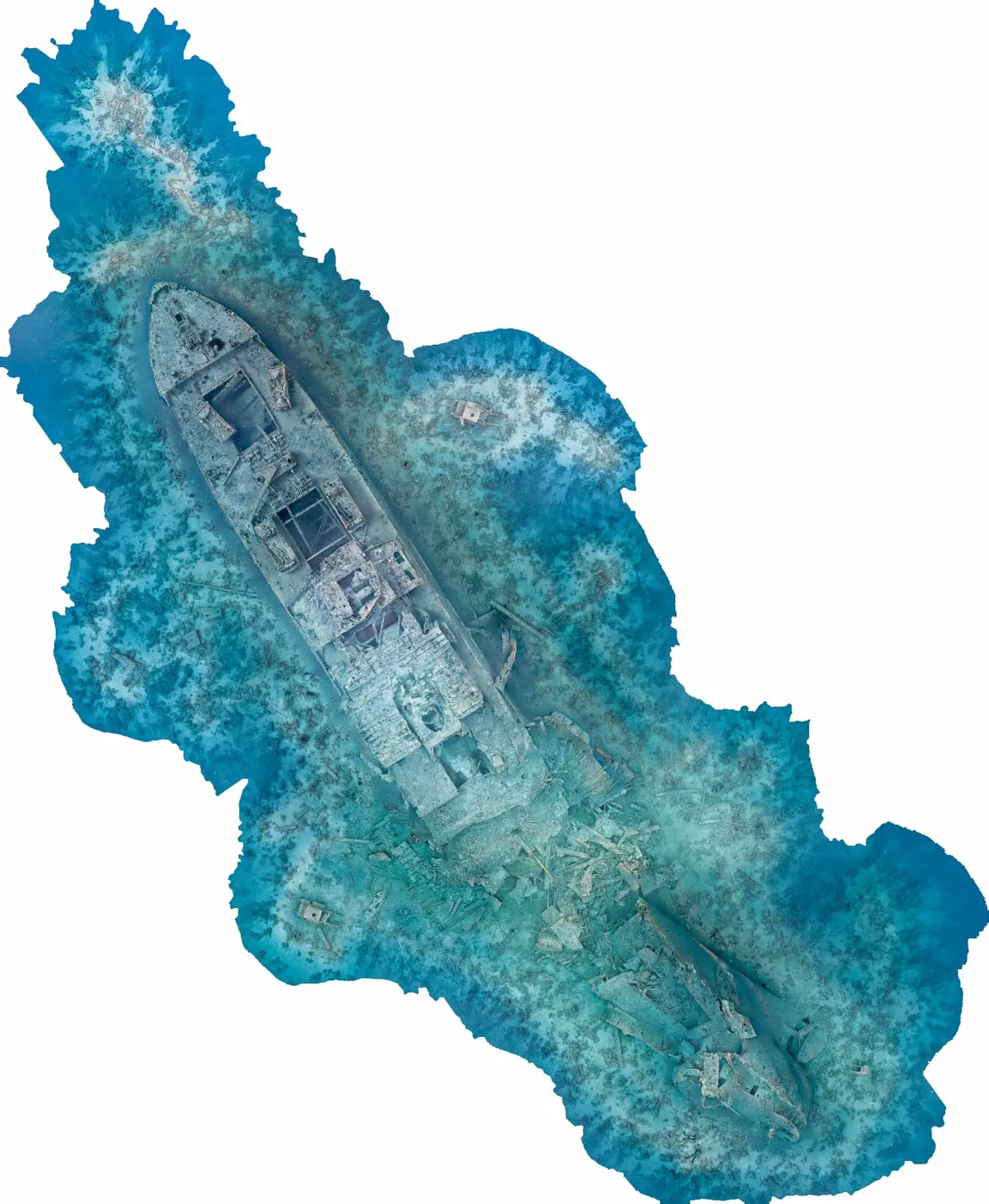
British photographer Simon Brown won the General Science category with his photograph Orthophoto of SS Thistlegorm, an intricate reconstruction of a shipwreck using photogrammetry as the imaging technique.
The wreck of the SS Thistlegorm, a ship sunk in the Red Sea in 1941, was rendered from 15,005 frames. Each frame was adjusted to provide a “straight-down” view before being tagged with GPSdata and merged with the other frames. The ship is a well-known recreational dive site (divers can be seen at bottom right) and is slowly becoming part of the local coral reef.
In the General Science category, the title Young Science Photographer of the Year was awarded to Katy Appleton (12) for her photograph Rainbow Shadow Selfie. Sunlight passed through a prism and cast a spectrum on a wall. Katy cast her own shadow on the wall to make the spectrum more clearly visible.
Photographer Sue Flood won the Climate Change category with her striking photograph North Pole Under Water: a signpost at the North Pole, at 90 degrees north, standing on sea ice that is largely covered by water. Each year, ice cover across the Arctic declines as a direct result of Earth’s changing climate.
Sue Flood: “I am extremely proud that my photograph was selected. Climate change is real, and the polar ice is melting at an alarming rate, posing a serious threat to wildlife and people worldwide. I hope many people will see the photograph and that it helps communicate the need for urgent action on climate change to individuals, businesses, and governments.”
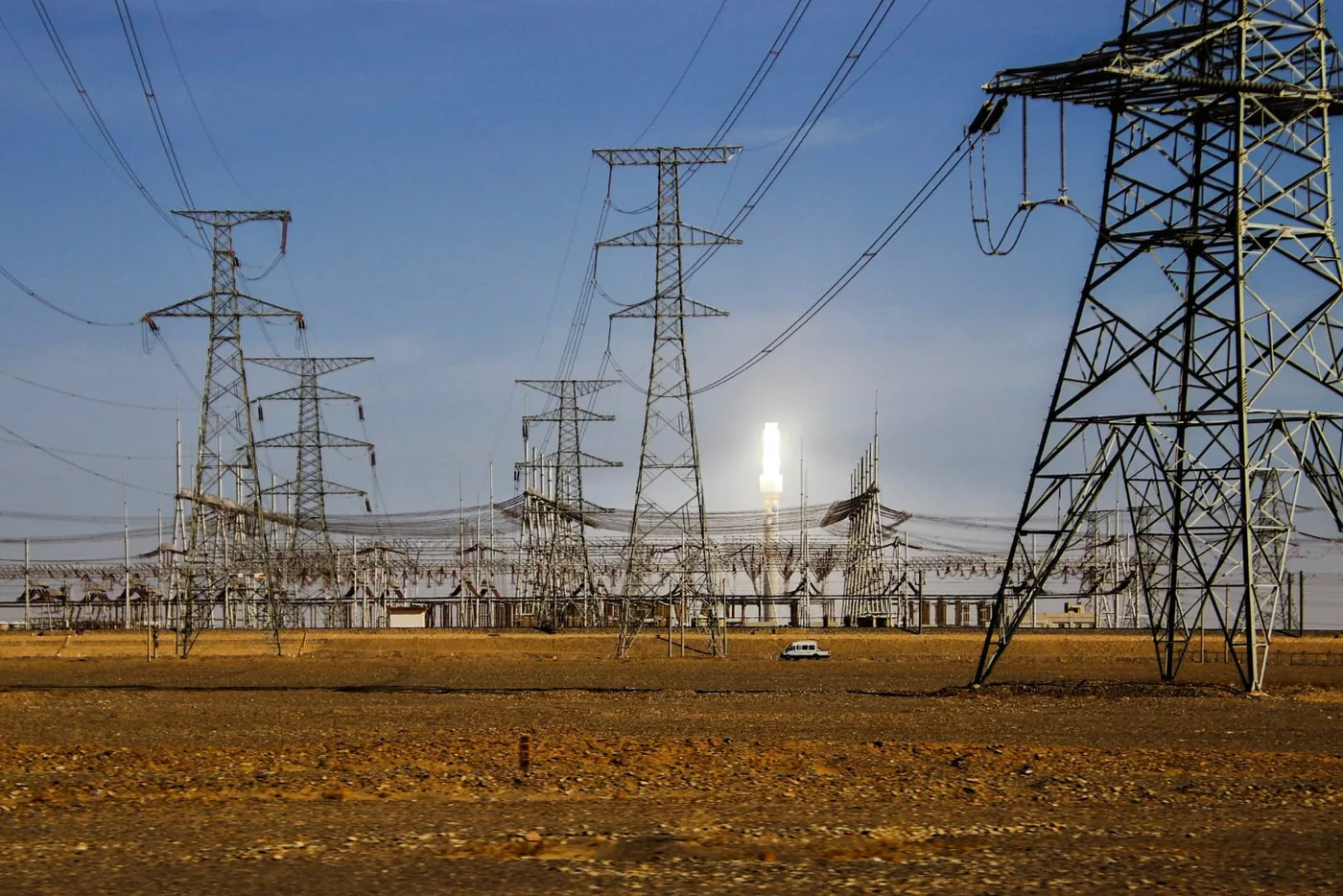
Raymond Zhang (11) won Young Science Photographer of the Year 2020 in the Climate Change category with his photograph Apollo’s Emissary, showing one of the largest solar-power stations in western China.
A concentrated solar power (CSP) plant in China. Its 12,000 mirrors reflect sunlight towards a central tower, where it heats sodium nitrate salt. This passes to a heat exchanger, where steam is generated to drive turbines. Its thermal inertia allows the station to operate throughout the night, saving up to 350,000 tonnes of CO2 emissions per year.
The four winning images were presented together with a selection of seventy-five other photographs in an online exhibition for Manchester Science Festival, produced by the Science and Industry Museum in Manchester. The competition received more than 1,200 entries from both professional and amateur photographers.
That year’s selection documented our fragile planet, the human consequences of global warming and actions taken by communities around the world, including innovative irrigation methods and energy sources for solar power and turbines.
The images revealed remarkable imaging techniques, from microscopic observations, medical examinations, and fossil excavations to kaleidoscopic patterns of refracted light rays, vibrations, and crystallisation.

Climate change in Afghanistan by Solmaz Daryani: Two boys try to save their potato crop from a field in Bamiyan, Afghanistan, after a flash flood. More frequent extreme weather events in the country are attributed to the effects of climate change.
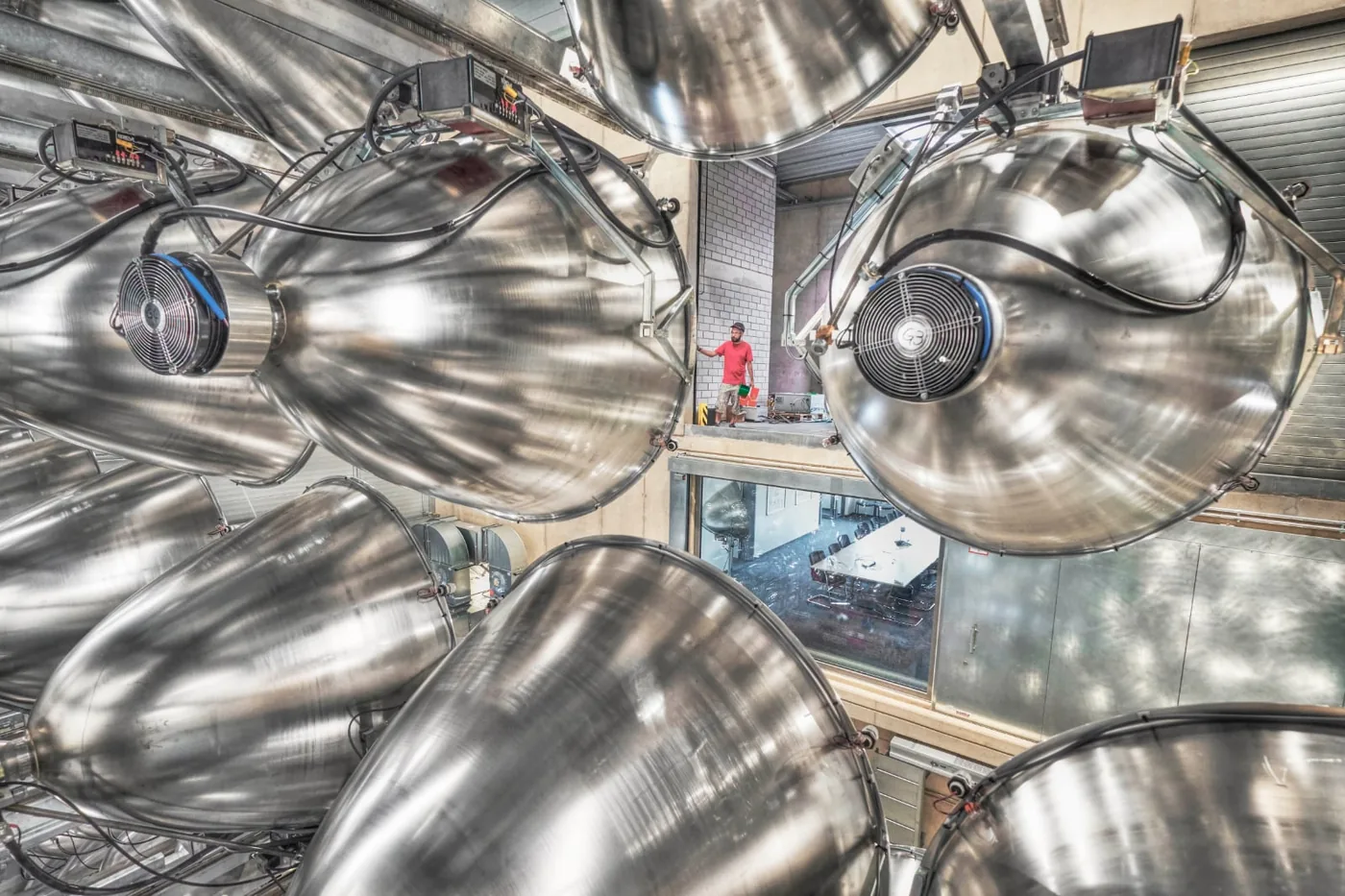
Synlight Experiment at DLR by Christian Lünig: Some of the 149 xenon arc lamps that make up the Synlightexperiment. They produce light 10,000 times more intense than the Sun’s incident radiation and are used in experiments to make fuels such as hydrogen from water. Photographed in Jülich, Germany.