The lighting is harsh, the composition accidental, and sometimes an animal disappears halfway out of the frame. Yet the images from more than 300 camera traps in western Tanzania are immensely valuable. In a single year, they recorded rare species, mapped previously undocumented ranges and gave researchers a clearer picture of wildlife in the region.
A serval runs through the frame at night. The animal is sharp enough for its coat to be examined, but the foreground is brightly lit and only part of a second serval is visible. As a wildlife photograph, the image is unlikely to win a competition. For researchers, it is an important record.
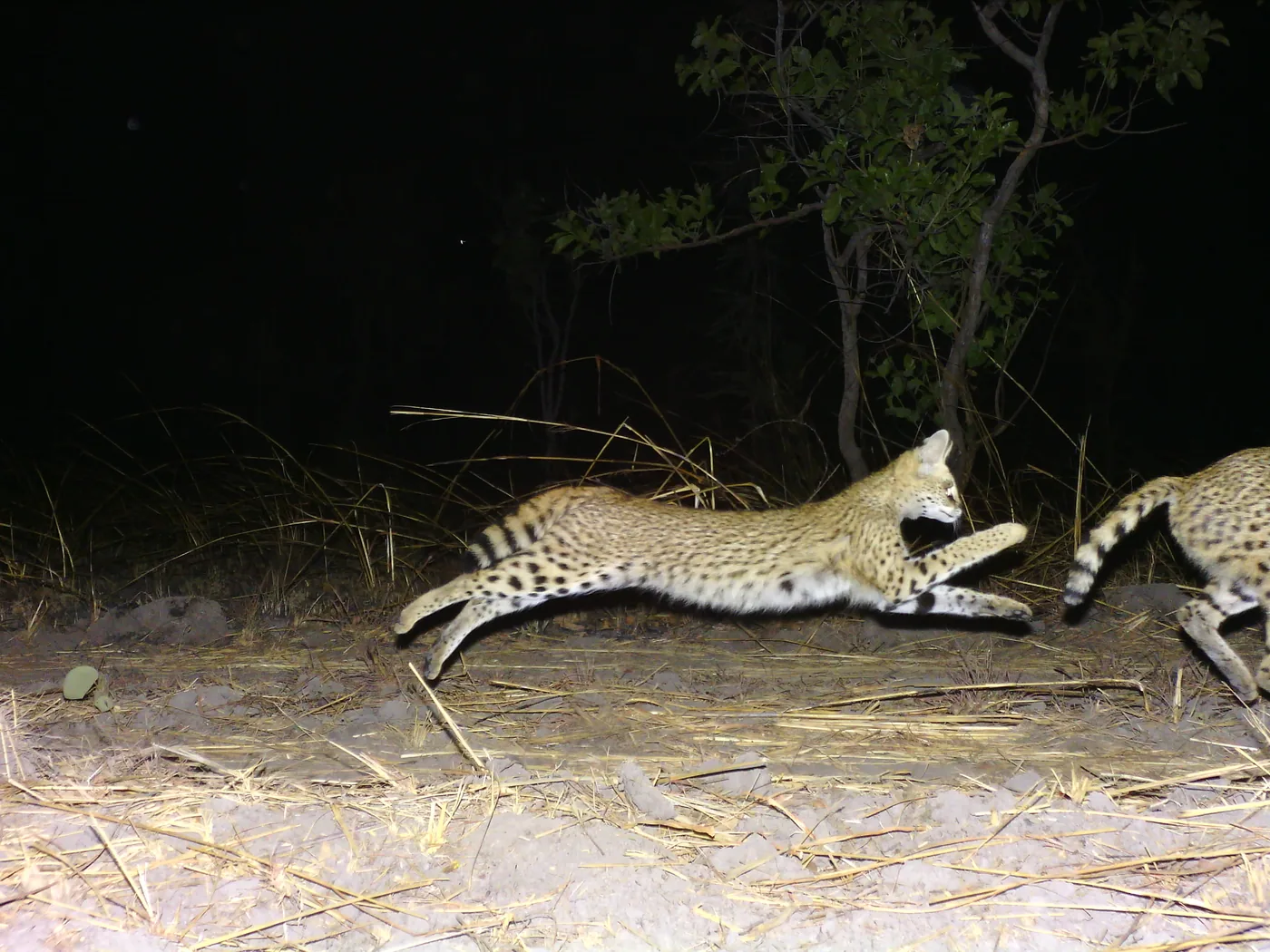
The small, closely spaced spots reveal that this is no ordinary serval. It is a rare coat variant known as the servaline morph.
Not made to hang on a wall
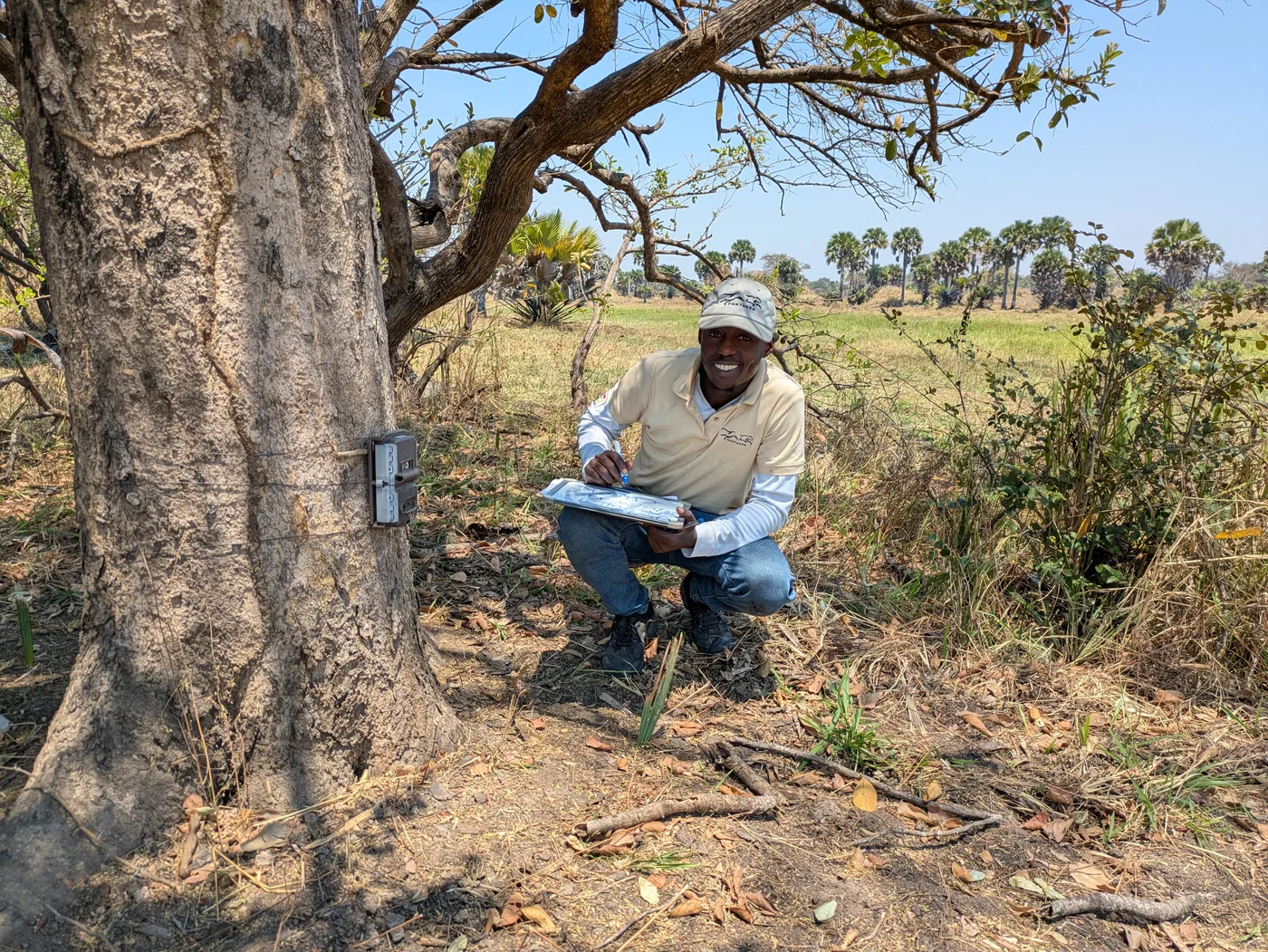
Camera traps are not installed to produce individual masterpieces. Their job is to record which animals use an area, how often they pass through and when they are active. By staying in the same place for months, a camera sees animals that people rarely, if ever, encounter.
To discover how a system like this works, read our article on photographing wildlife with a camera trap.
More than 300 of these cameras were deployed in western Tanzania. Together, they captured over 150,000 images in 2025. The photographs included lions, leopards and buffalo, but also species that had barely been documented in this part of Tanzania.
The cameras recorded aardwolves, bat-eared foxes and springhares, among other species. A melanistic galago, better known as a bushbaby, also appeared in front of the lens with an unusually dark coat. Several images are among the first official records of these animals in the areas surveyed.
The viewpoint is chosen in advance
Although the camera releases the shutter automatically, the photographic work begins much earlier. Researchers have to decide where an animal is likely to pass, and at what height and angle to mount the camera. An animal trail, a waterhole or a narrow gap in the vegetation may yield better results than an attractive view.
Then comes the wait. As soon as an animal triggers the sensor, the camera takes one or more photographs. There is nobody behind the viewfinder to choose the right moment, adjust the exposure or correct the framing. The subject itself determines when the image is made.
Knowledge of animal behavior, patience and keeping disturbance to a minimum are just as important in conventional large mammal photography.
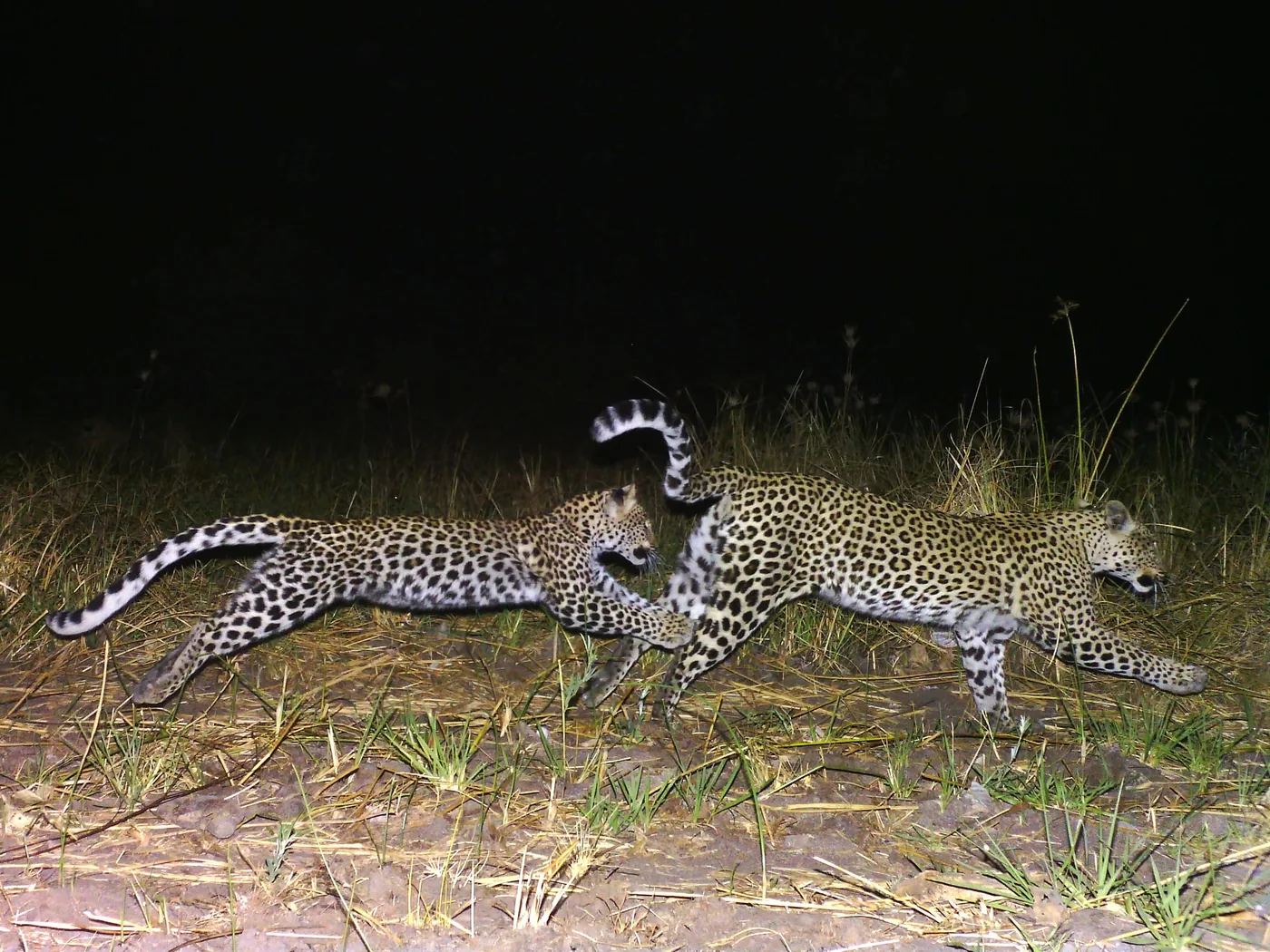
That explains the sometimes unusual compositions. A buffalo stands almost against the camera, a serval darts along the edge of the frame and two young lions play in the harsh nighttime light. Photographically, the images are unpredictable. For the research, what matters most is that an animal can be identified and linked to a place and time. Photographers who want to photograph animals from a distance generally use a longer focal length.
A serval with freckles
A typical serval has clearly defined black spots and stripes. In the rare servaline morph, the spots are smaller and more densely spread across the coat. The pattern almost resembles a scattering of freckles.
Previous confirmed sightings of this coat variant came from countries including the Republic of the Congo, Rwanda and Uganda. The images from Ugalla and Luganzo-Tongwe game reserves are the first confirmed records in Tanzania. The finer pattern may offer better camouflage in some environments, although much remains unknown about the distribution of this variant.
The remarkable thing is that the researchers have not yet seen the servals themselves. These elusive animals live in vast areas visited by few people. A camera trap can remain unobtrusively in place for weeks or months, recording behavior that would probably not occur in the presence of humans.
From a single photograph to scientific evidence
One photograph cannot tell us how many animals live in an area. The real value comes from combining large numbers of images from different cameras. Individual animals that return, routes and patterns of activity then become visible.
The photographs provide a baseline. Researchers can compare future images with these initial results to assess whether populations are growing, declining or moving elsewhere. They can also examine whether conservation measures are having the intended effect.
Technically imperfect photographs can still be useful. An animal partly out of frame may show enough features for its species to be identified. A nighttime image with harsh lighting may reveal a coat pattern. An empty frame, however, does not prove that no animals were present: the camera may have missed an animal.
A troubling picture, too
The collection shows that western Tanzania still supports a wide variety of wildlife. At the same time, the research makes clear that this richness cannot be taken for granted.
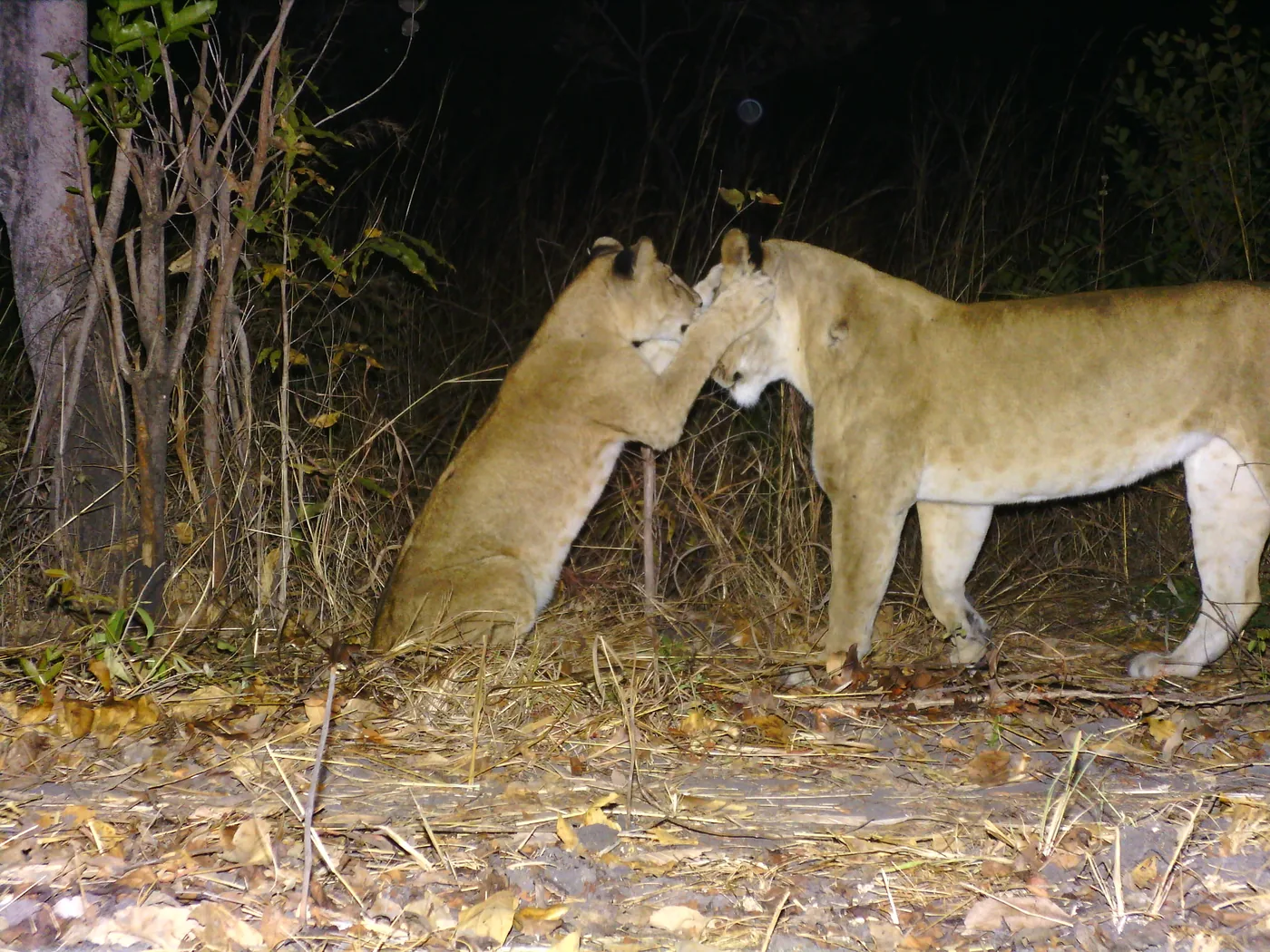
According to the researchers, lion numbers in Ugalla and Luganzo-Tongwe in particular are well below the level the habitat could support. Snares set for the bushmeat trade, vehicle collisions and expanding human settlement are increasing pressure on the area. Leopard numbers are also below their potential, although both species are still considered capable of recovery if threats are addressed in time.
The camera trap therefore records more than an animal's presence. Over time, it can also reveal its disappearance.
Photography without a decisive moment
In traditional wildlife photography, the photographer waits for the decisive moment. With a camera trap, much of that decision is deferred. Position, direction and settings are chosen in advance; after that, the animal effectively takes over the picture-making.
The result is rarely refined wildlife photography. The value of these images lies elsewhere: a camera trap can monitor the same spot for weeks or months, automatically recording which animals pass by. This captures sightings that might otherwise easily go unnoticed.
The value of the 150,000 images from western Tanzania therefore extends beyond a single remarkable photograph. Together, they provide a foundation for better understanding and protecting wildlife.