Capturing the beauty and intricacy of a spiderweb is a rewarding challenge, even if you are afraid of spiders. Perhaps you are very afraid of them—but look closely: there is a special beauty in the delicate structures spiders inhabit, and when the spiders are home, they usually sit still.
So the next time you encounter a spiderweb, set your hesitation aside. Take a step back, study its composition, and ask yourself whether it could make an interesting or beautiful photograph.
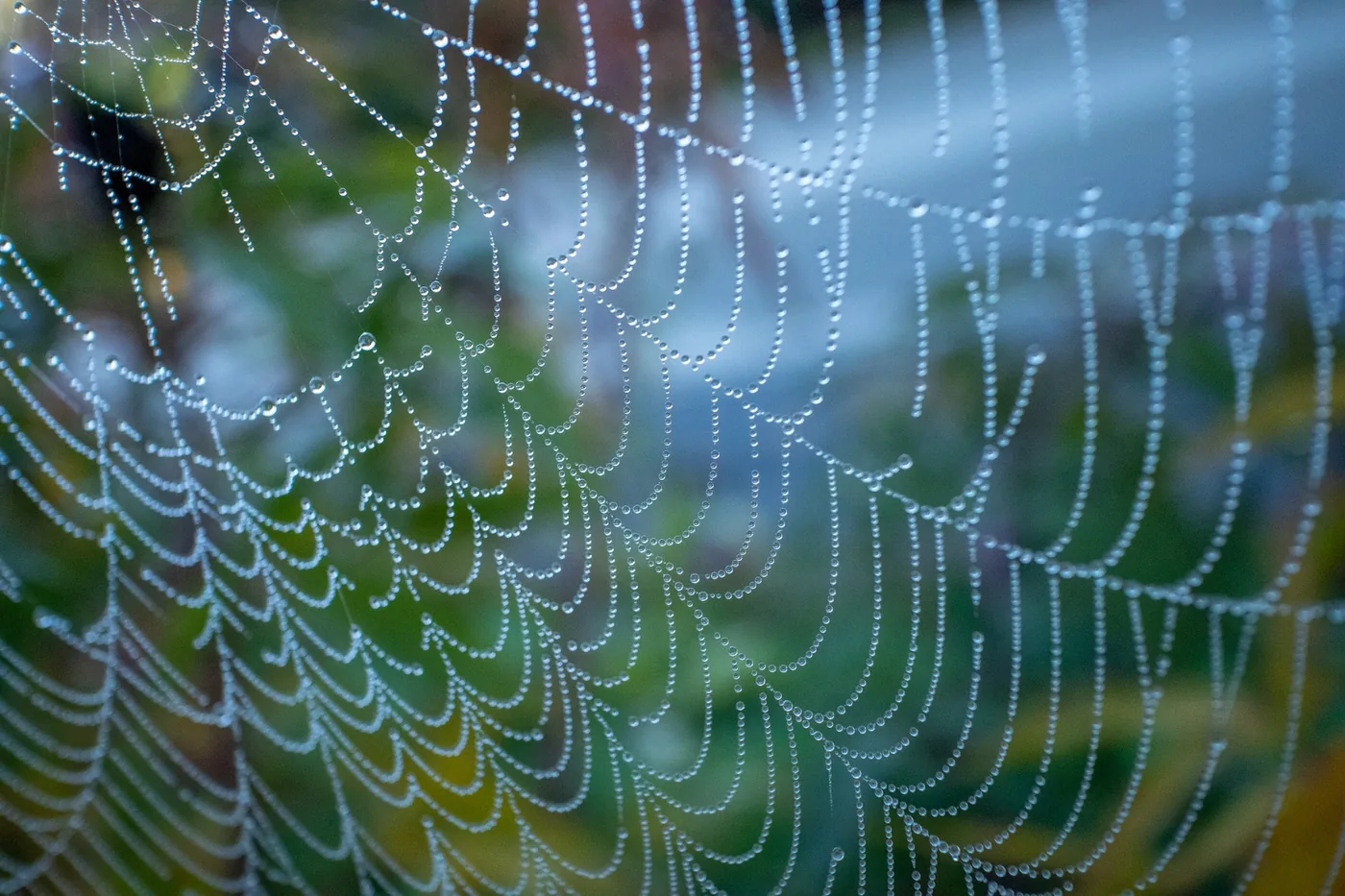
When you decide to photograph spiderwebs, remember that they deserve to remain undamaged. If a web crosses your path, try not to damage it. Doing so creates unnecessary work for its resident, who will eventually have to rebuild it.
You might consider misting a web with a little water to create a dewy look, but even a small amount applied badly can damage it. It is better to wait for a morning with plenty of natural dew.
What You Need
Spiderweb photography is like any other macro photography: you need a macro lens for your DSLR or a good point-and-shoot camera with a macro mode that can focus at close range. You will also need a tripod, which can help you position the focus point precisely. (We will return to this shortly.)
You should also be able to release the shutter remotely. If you do not have a remote, you would normally use the self-timer, but that can be problematic when photographing spiderwebs—especially occupied ones—because the light can change or the spider can move during the countdown.
In short, a remote shutter release and tripod are the best tools for getting the correct exposure and focus without risking camera shake.
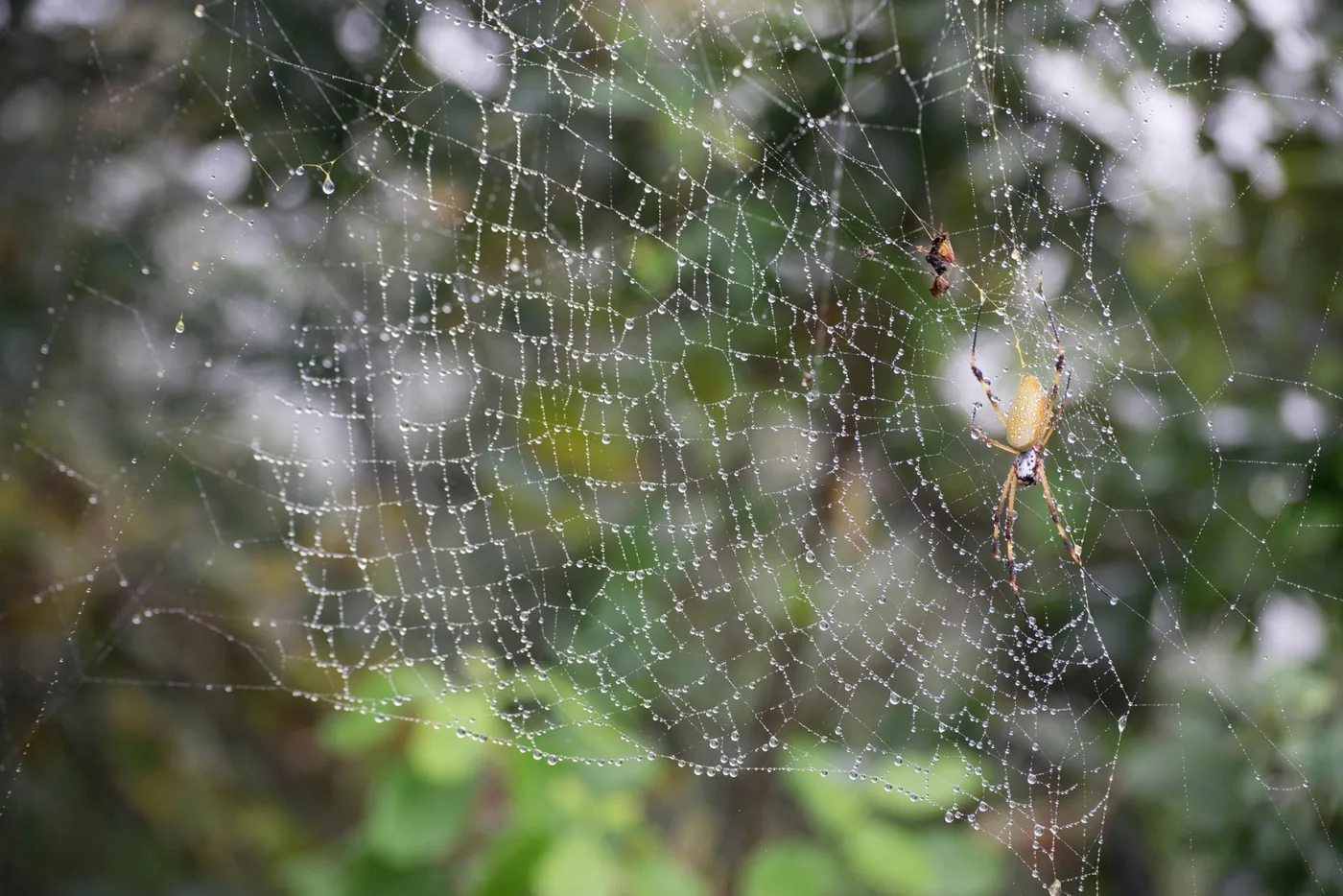
A camera with manual focus is best. That does not mean you cannot take good spiderweb photos with a point-and-shoot camera that lacks manual focus, but it can be more difficult. Because a spiderweb is so fine, autofocus may fail to lock onto it and focus on the background instead.
If there is a spider in the web, this is much less of a problem: autofocus can lock onto the spider, bringing the web into focus as well, provided you do not use an aperture so wide that the spider and web fall in different focus planes.
Challenges
Spiderwebs are extremely light and delicate and can sometimes be hard to see. Has someone ever pointed out a web that you could not see until you moved to view it from several angles? Spider silk is exceptionally fine—about 0.003 mm in diameter for an average garden cross spider. Unless you stand where light reflects from the web rather than passes through it, you may not see it, and neither will your camera.
Make the web more visible by positioning the camera so it appears against a dark background. Green foliage can help it stand out, while lighter colors such as dry grass or an overcast sky may not. The more uniform the background color, the easier the web will be to see. A background that shifts from light to dark and back can cause some strands to look faint or disappear while others remain clearly visible.

If you have photographed delicate flowers on a windy day, you know how challenging it can be. Wind—or its absence—is one of the main reasons, along with light, that flower photography is best done early in the morning. The same applies to spiderwebs. Even a very slight breeze can move a web enough to create motion blur at slow shutter speeds. More importantly, wind can push the fine web out of the focus plane and make it look blurry. Morning is usually the calmest time of day.
Wind is not the only thing that can move a web out of the focus plane; your hands can do that too. This is where the tripod helps. When you are very close to a tiny subject such as a spiderweb, it can be difficult to hold the camera steady and keep the web sharp. The web occupies a very narrow focus plane, and even a small change in camera position can move it out of that plane. Mounted on a tripod, the camera stays fixed on the web unless something unexpected occurs, such as a sudden gust.
Composition
Orb-weaver spiders in particular create highly symmetrical webs, so a symmetrical composition can work beautifully. Be sure to experiment with other compositions too. Remember that depth of field becomes very shallow when you get close to the subject. A web photographed at an angle can quickly fall out of focus, leaving only a narrow area sharp even when you select a smaller aperture.
That can make an interesting composition, but also try taking a few photographs with the web parallel to the lens. Because an orb web is essentially flat, aligning it with the lens lets you use a much wider aperture to blur the background, bringing the web forward and making it easier to see.
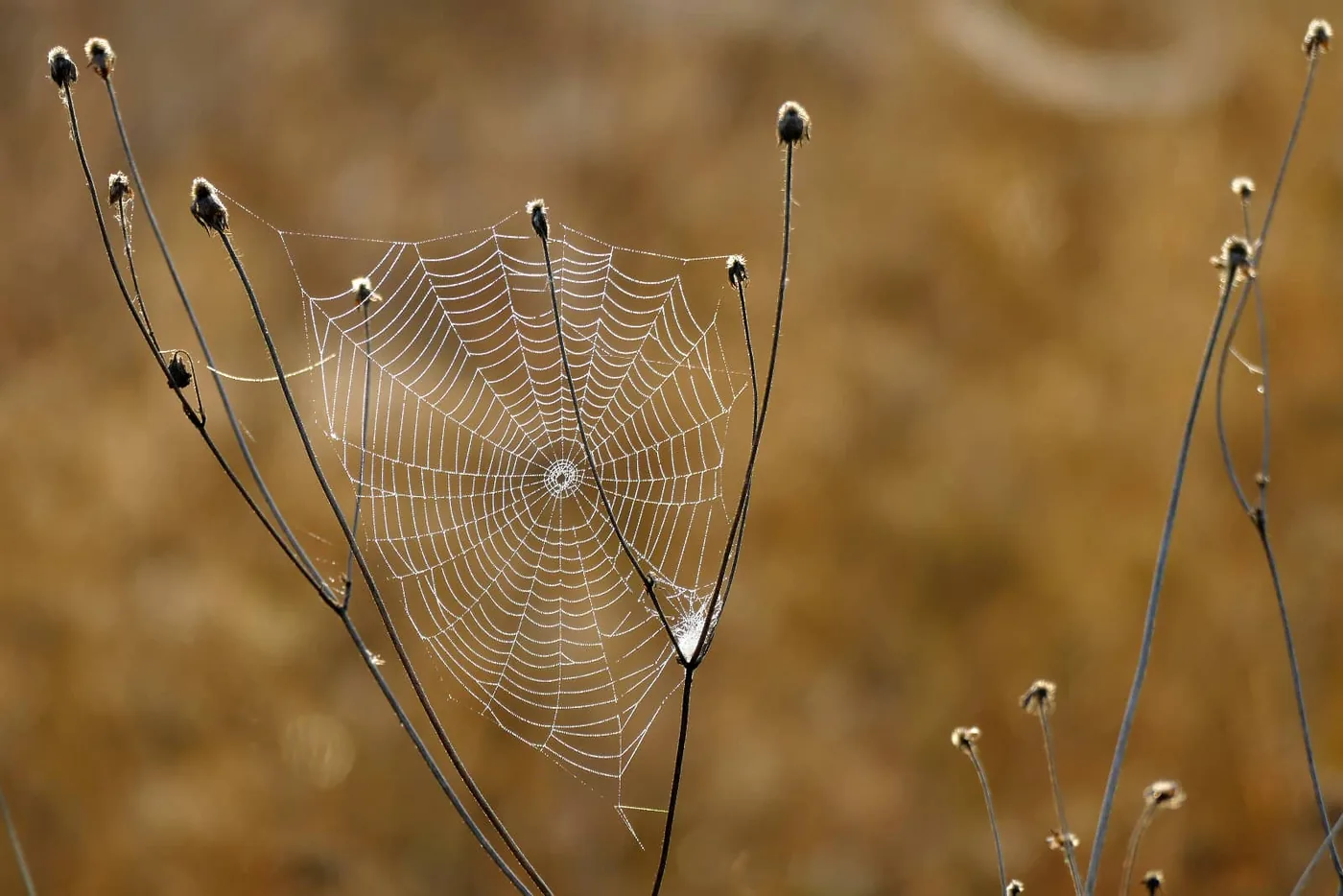
Do not assume that a symmetrical web always requires a symmetrical composition. A composition using the rule of thirds can also produce interesting and distinctive photographs. Try shooting from as many perspectives as possible.
Not every spider makes a flat web. You will also find interesting webs that cover a broad three-dimensional area. Photographing one may require a smaller aperture, but you still may not get the entire web in focus, especially at close range.
Watch the Light
Light can make or break your spiderweb photos. If you struggle to capture a web from one angle, walk around it and shoot from the other side; the light may strike it better there. You can also consider adding a small amount of flash. A subtle reflection from the delicate strands can bring the web forward, but do not overdo it or the image will look unnatural.