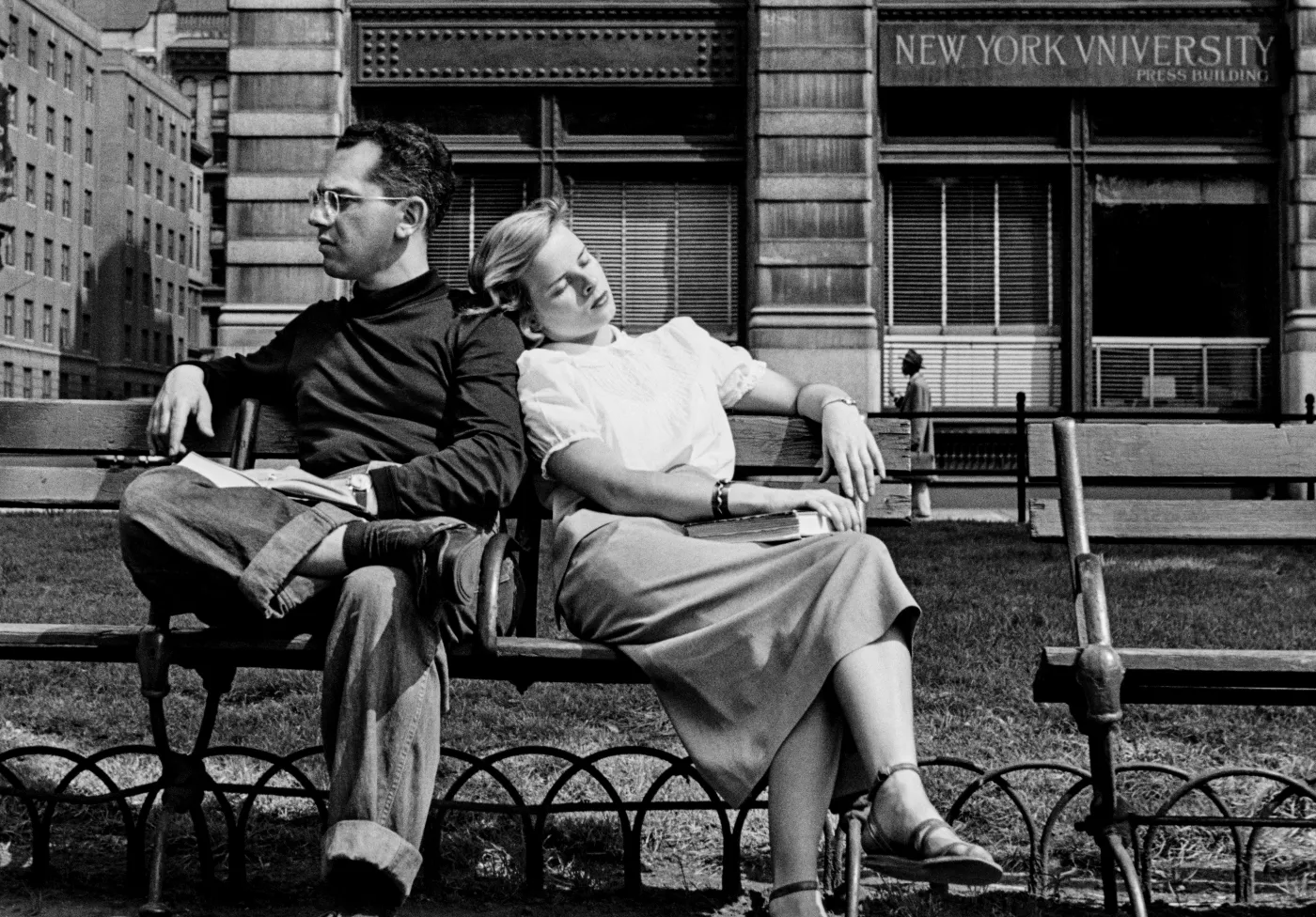
photo: © John Baer - Couple Washington Square Park 707
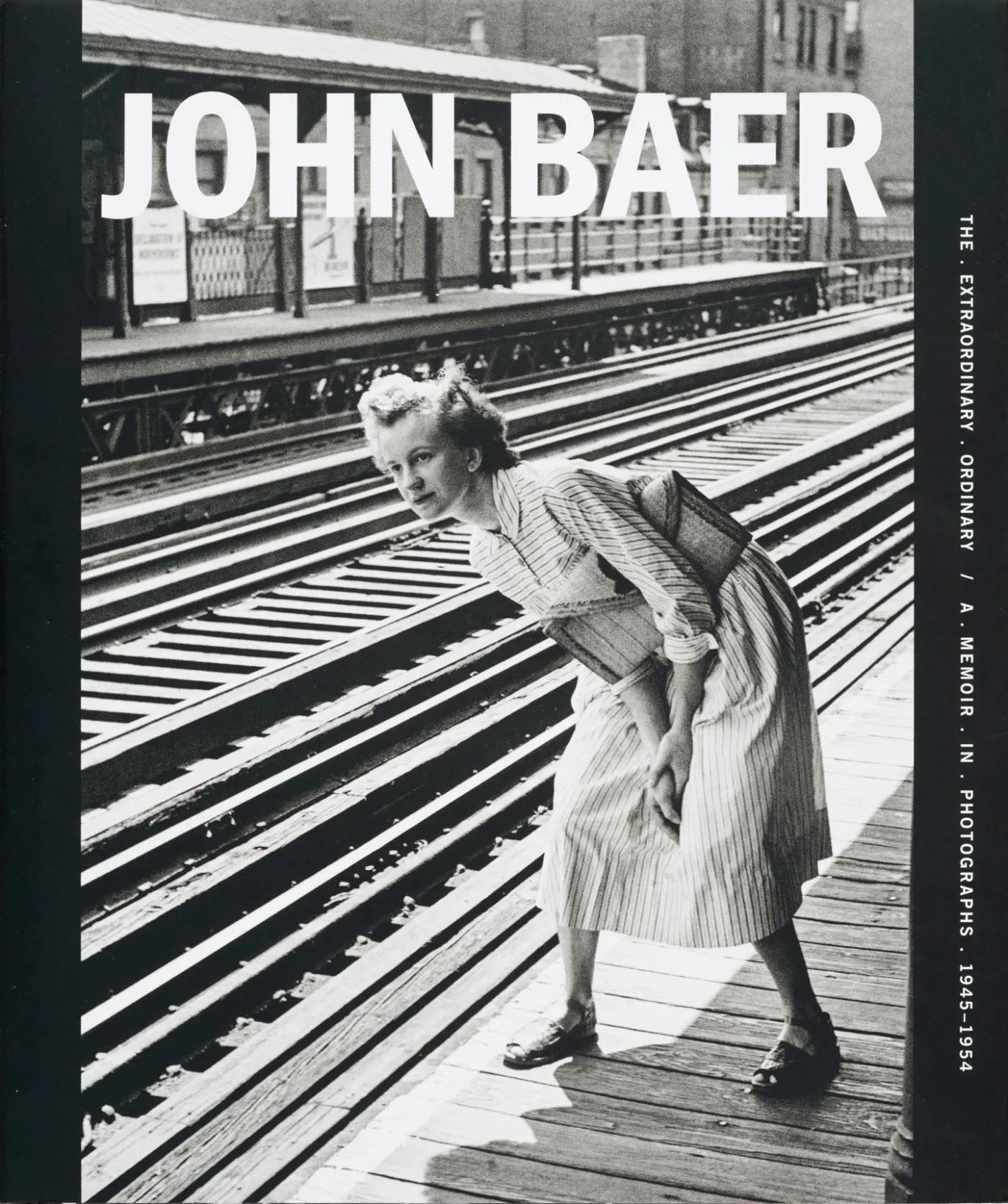
Some photographers build their careers step by step. Others disappear almost entirely from view, only for their work to resurface years later. John Baer (1920-1994) belongs to the latter category. His name may not immediately ring a bell for many photography enthusiasts, but John Baer: The Extraordinary Ordinary: A Memoir in Photographs, 1945–1954 reveals the rediscovered work of a remarkable photographer.
The beginning of Baer’s photographic story is almost cinematic. In 1945, he served with the U.S. Army’s 644th Tank Destroyer Battalion. World War II was drawing to a close, Europe lay in ruins, and the Allies were advancing through liberated territories. Under those circumstances, Baer acquired a Leica from a captured German soldier.
With no training, no knowledge of photographic theory, and no lengthy apprenticeship in the darkroom, he began taking pictures. First, he photographed his fellow soldiers, exhausted by the war. Later, he turned to the people and streets of a world trying to find its bearings again.
That makes this book more than a collection of forgotten photographs. Together, the approximately 250 images form a vivid portrait of Europe and New York in the years immediately following the war. In France, Germany, and Spain, Baer looks at a continent still grappling with the effects of destruction, occupation, and political change.
He photographs posters, children with toy guns, streets being rebuilt, and cities slowly recovering their rhythm. The war is over, but its aftermath is present everywhere in his photographs.
The war is over, but its aftermath is present everywhere in his photographs.
Baer does not photograph this world as a detached reporter. He was right in the middle of it. His early photographs of weary soldiers therefore have a direct, almost quiet power. He does not seek heroism or grand gestures. Instead, in small moments, waiting bodies, and casual poses, he shows what war does to people.
After his return to the United States, the work takes on a different tone. In New York, where Baer lived from the late forties onward, he points his camera at a city eager to move forward. The images from Midtown, Bryant Park, Lexington Avenue, Fifth Avenue, and Rockefeller Center show an energetic metropolis, full of movement, work, leisure, and consumption. Men in suits, street workers, nuns with shopping bags, people on benches, and ice skaters: Baer observes everyday life, but photographs it with a remarkable sense of timing.
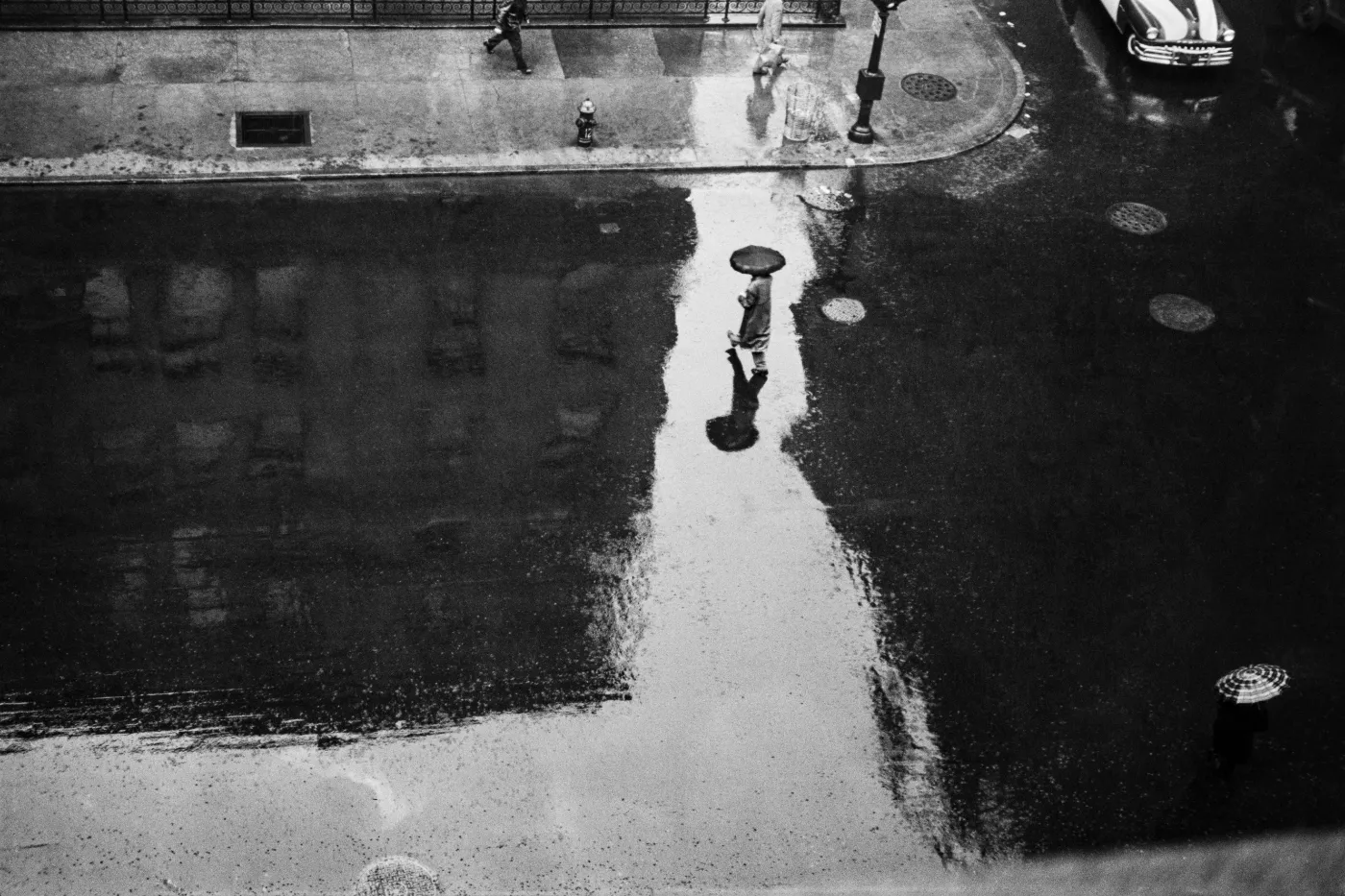
What stands out most is the precision of his images. The compositions rarely feel accidental. A pedestrian swallowed by his own long shadow, a figure with an umbrella reflected in a wet street, a double exposure in which his wife Louise moves through New York almost like an apparition: these are the photographs of someone who intuitively understood what the medium could do.
Baer was a journalist and later worked in public relations, but photography seems to have been more than a sideline for him. He had an eye for light, form, and human behavior.
The compositions rarely feel accidental.
Yet in the mid-fifties, this work disappeared into boxes. After Baer’s death in 1994, his son Andrew found three bins containing negatives, prints, and contact sheets. It was not until 2021 that Andrew and his wife, Megan Moynihan, began systematically scanning the material. What emerged was not a random collection of pleasant snapshots, but a coherent body of work with a distinct perspective.
It is tempting to compare Baer to Vivian Maier, another photographer whose work was discovered only much later. But Baer deserves to be considered on his own terms. The Extraordinary Ordinary presents an unknown photographer who was looking in exactly the right place at the right historical moment: at a Europe in recovery and at New York in the midst of full postwar expansion.
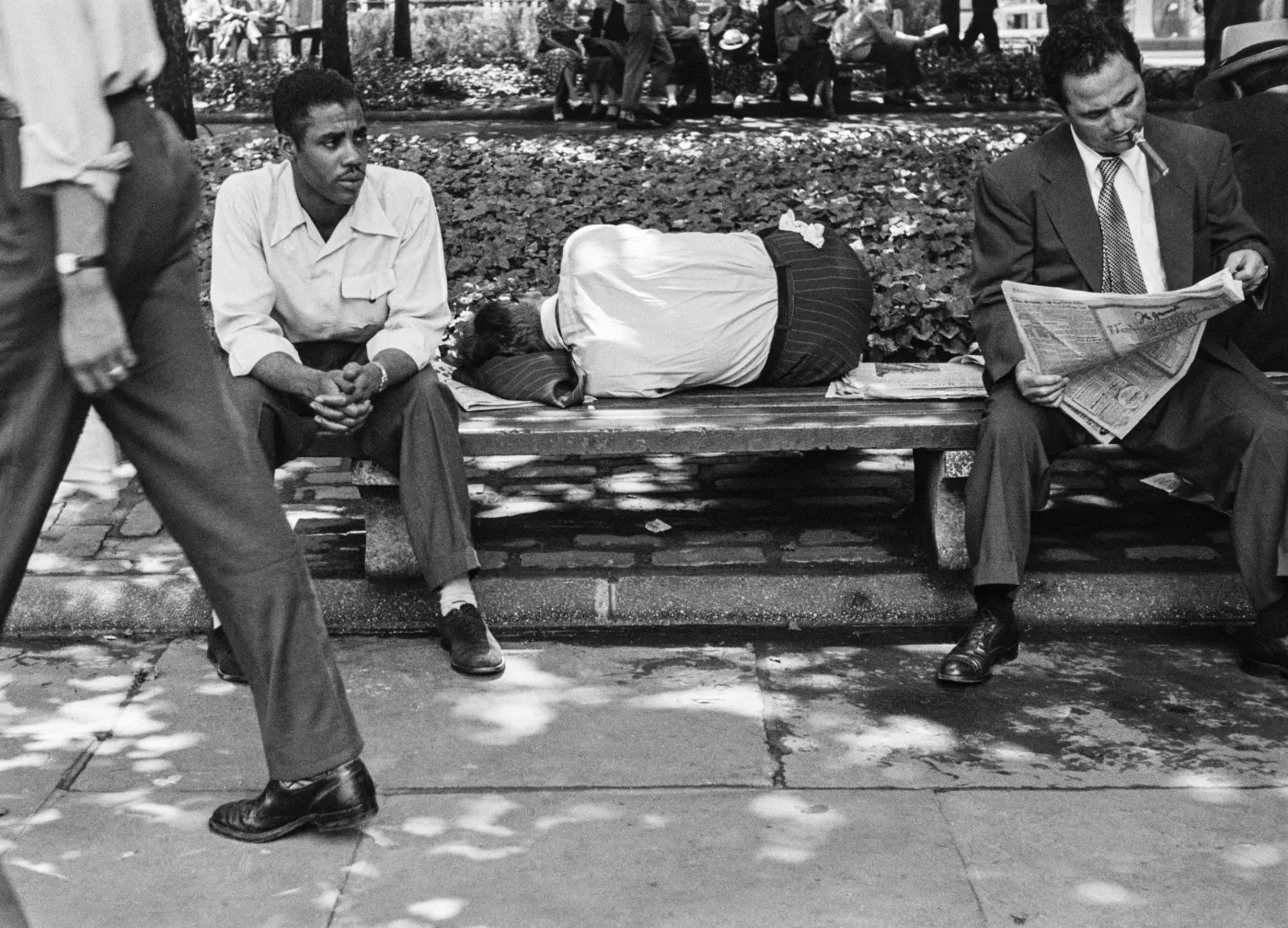
His photographs remind us that history is written not only through major events, but also through people waiting, working, walking, playing, and briefly unaware that they are being observed.
This makes the book a valuable rediscovery. Not only for street photography enthusiasts, but for anyone who wants to see how ordinary life cautiously began to take shape again in the immediate aftermath of a global conflagration.
It is also the first time these photographs have been published and shared with a wider audience.
John Baer: The Extraordinary Ordinary: A Memoir in Photographs, 1945–1954
Pages: 248
Price: $ 65,00
Publisher: johnbeararchive
Edited by: Andrew Baer & Megan Moynihan
Release date: September 15, 2026