The new OM SYSTEM PEN combines its familiar compact design with modern autofocus, five-axis image stabilisation and a built-in electronic viewfinder. It gives the original PEN concept a thoroughly modern successor.
The Olympus PEN was once something of an outsider: smaller than a DSLR, better than a compact camera and designed above all to be carried everywhere. The new OM SYSTEM PEN revisits that idea, adding modern autofocus, image stabilisation and clever creative features.
Look back at our review of the Olympus PEN E-PL1 and you can see how innovative the concept was in 2010. At the time, the camera was described as ideal for holidays, slightly larger than a compact camera but considerably smaller than a DSLR. The short summary may have been even more apt: “A PEN is for anytime, anywhere.”
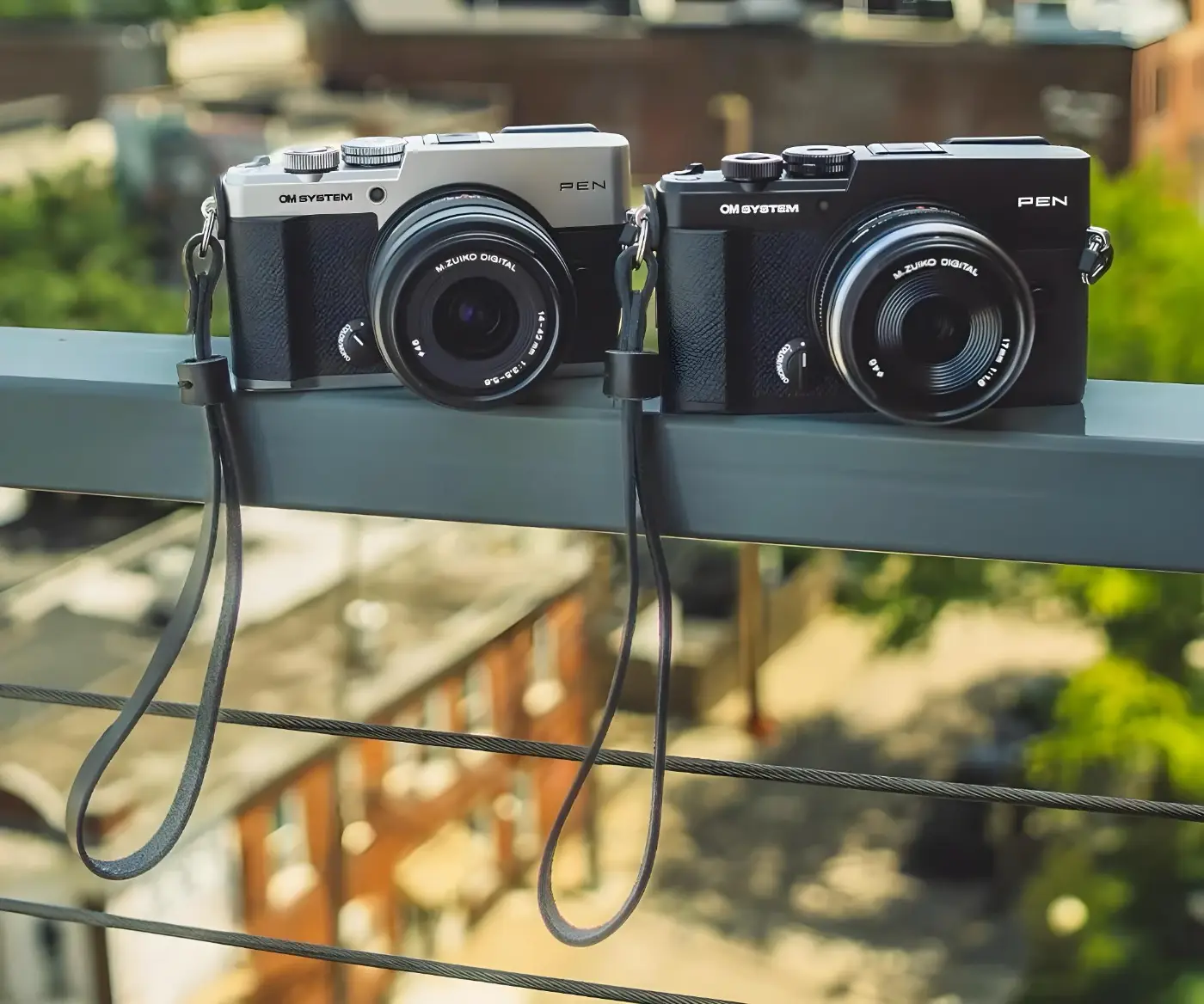
Sixteen years later, that principle has barely changed. The new PEN weighs 393 grams including its battery and memory card, and has a flat, classic camera shape. It is small enough to take along without a second thought, while still accepting interchangeable Micro Four Thirds lenses.
It has been more than five years since the last PEN camera arrived. The Olympus PEN E-P7 was introduced in June 2021, and the series now finally has a successor bearing the OM SYSTEM PEN name.
Resolution has barely changed over those five years, but beneath the surface the PEN takes a considerable step forward. The new camera gains a built-in viewfinder, hybrid autofocus with AI subject recognition, Pro Capture and burst shooting at up to 30 frames per second in RAW and JPEG. The body also receives an IPX1 rating for protection against dripping water when paired with a suitable weather-resistant lens. This means the PEN is no longer simply a stylish travel and street camera, it is also better prepared for action, animals and less predictable weather.
The built-in viewfinder returns
With the first digital PEN cameras, the viewfinder was still a point of discussion. The E-P1 and E-PL1 had no built-in viewfinder, while the E-P2 came with a separate electronic viewfinder.

The PEN-F from 2016 did have a viewfinder built into the body, but it disappeared again from the more compact PEN E-P7 in 2021. The built-in OLED viewfinder returns in the new OM SYSTEM PEN. Its 2.36 million dots make accurate framing in bright daylight much easier. The camera also has a fully articulating 3-inch touchscreen for shooting from low and high angles.
Twenty megapixels and modern autofocus
Inside is a 20.4-megapixel Four Thirds Live MOS sensor paired with the TruePic IX image processor. Twenty megapixels may not sound spectacular, but it is generally more than sufficient for everyday use, travel and street photography.
More important is the hybrid autofocus system with 121 cross-type points. The camera can recognise and track people and animals, including their eyes and faces. This makes the new PEN much better prepared for moving subjects than the models that launched the series.
For fast action, the camera can shoot bursts at up to 30 frames per second in both RAW and JPEG. At its highest setting, it can capture up to 29 RAW files or 154 JPEG images in succession. At top speed, this means a RAW burst lasts roughly one second, so it is mainly intended for brief, carefully timed moments of action.

With Pro Capture, the PEN also begins recording images before the shutter button is fully pressed. This increases the likelihood of capturing exactly the right moment.
Create your own in-camera style
The physical profile switch suits the character of the PEN. It lets you move quickly between colour and black-and-white profiles and create your own settings. The result is applied directly to the JPEG, so not every photograph has to pass through Lightroom first.
The camera also offers sixteen built-in Art Filters. These can give photographs a pronounced colour treatment, a grainy black-and-white effect or another creative look. You can preview the effect on the screen and through the viewfinder while shooting.
The clever shooting functions familiar from other OM SYSTEM cameras are present too. High Res Shot produces files with additional detail, Live ND simulates the effect of a neutral-density filter, and Focus Stacking increases depth of field. During a long exposure, Live Composite shows the image building up step by step.

The built-in five-axis image stabilisation helps when shooting at slower shutter speeds. Because the sensor itself is stabilised, it also benefits small Micro Four Thirds lenses that do not have their own stabilisation.
Shooting video with the PEN
The PEN records DCI 4K video at 24 frames per second and 4K UHD at up to 30 frames per second. In Full HD, slow motion is available at up to 120 frames per second. Those who want more flexibility for colour grading can record in OM-Log400. An external microphone can be connected for better sound, and the camera can also be used as a webcam via USB-C.
The battery is rated for approximately four hundred shots. There is no built-in flash, but an external flash can be attached to the hot shoe.
The PEN philosophy remains intact
The technology has changed considerably since 2010, but the original idea has not. The OM SYSTEM PEN aims to offer substantially more than a smartphone without requiring you to carry a large camera bag.

The built-in viewfinder, modern autofocus and creative shooting functions make the new PEN more complete than its early predecessors. Small, discreet and always ready to go, sixteen years later that concept still feels surprisingly relevant.
Price and availability
The OM SYSTEM PEN will be available in black and silver for €999. Deliveries are expected to begin in October.