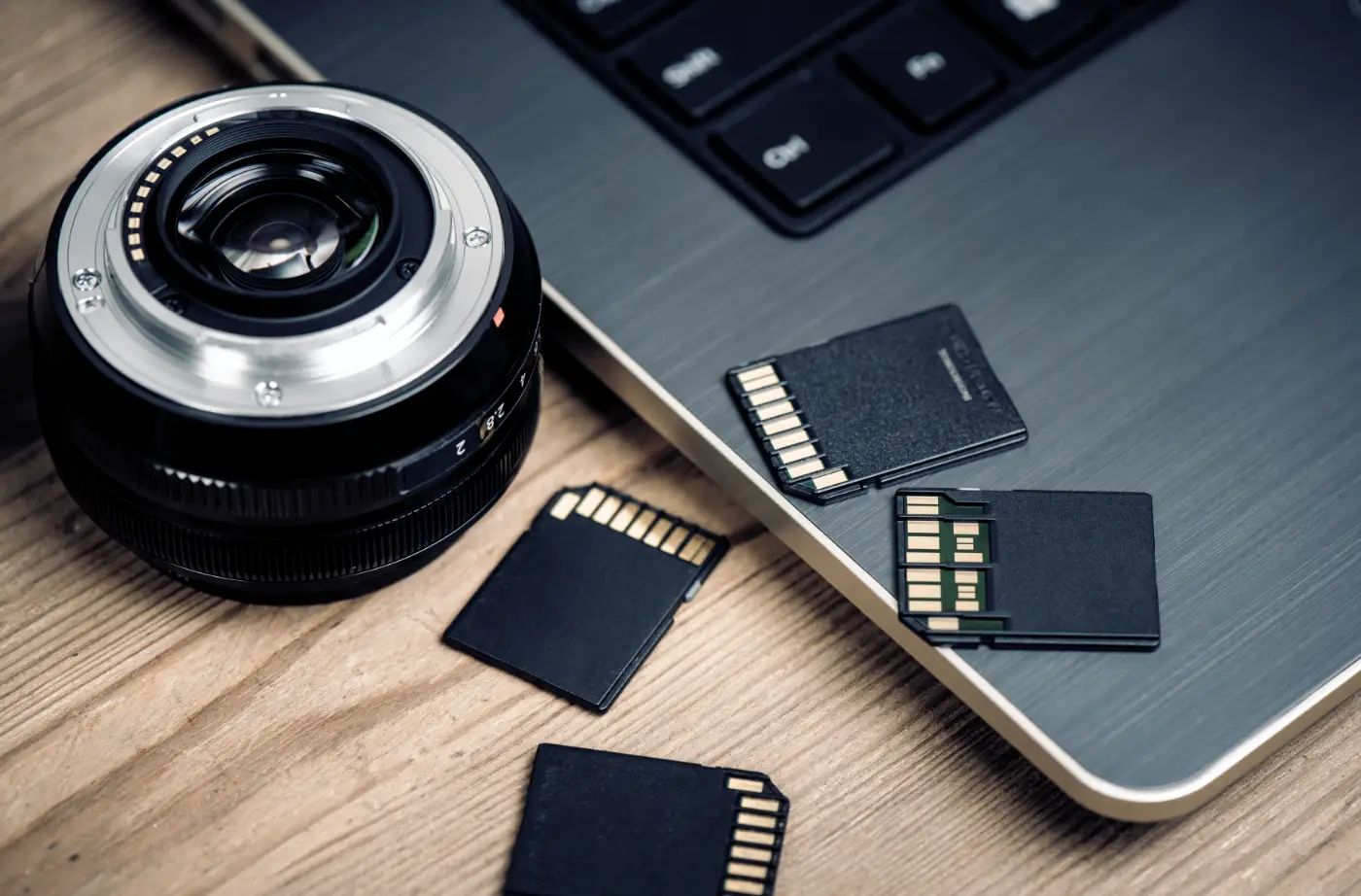
Please note: this review is about an older Micro Four Thirds model. The Olympus PEN E-PL1 is no longer produced, but remains popular among photographers as an affordable second-hand entry-level camera. This review has therefore been reserved for anyone who is still considering this model today.
Shortly after the launch of the digital Pen, Olympus started a second Micro Four/Thirds line. The new Pen E-PL1 is not retro-based and aims at a wide audience. With new methods of use that should make photo technology manageable for everyone. Interesting!
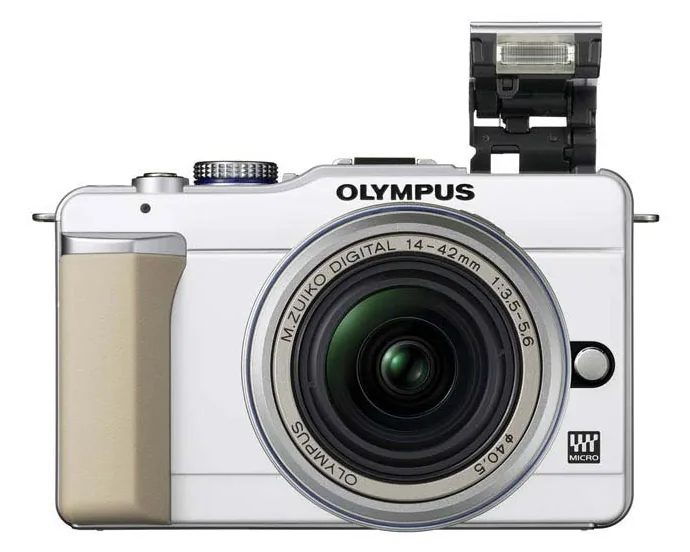
If you place the specifications of the first two Pens next to it, you will immediately see: the E-PL1 has a built-in flash. The light source rises elegantly upwards with a double hinge construction. Nicely done.
This is of course a lot nicer than sliding a separate flash onto the camera, as with the Pen E-P1 and E-P2 (there should be no clip-on viewfinder on the camera, because then you cannot use the flash: retro has its price...).
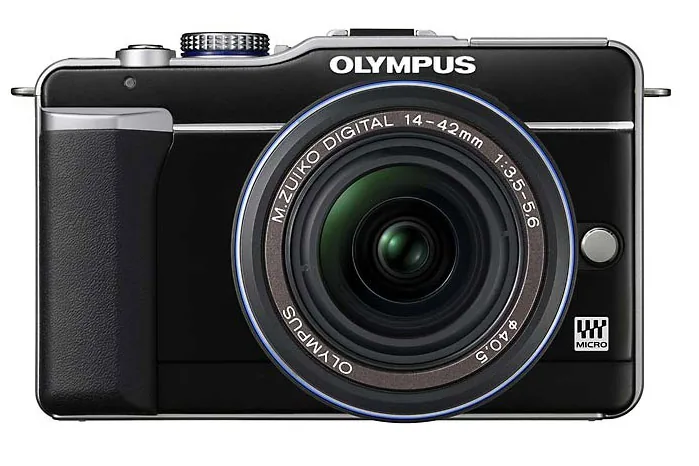
You shouldn't have to deal with these kinds of inconveniences if you want to make a camera that you want to sell to just about everyone. So: built-in flash.
Easier
No reflex, but the level of quality: that remains the trademark of the Olympus Pen concept. It turns out that the reflex system with folding mirror can be jettisoned, as we already saw with the E-P1 and E-P2.
Without seeing a single aperture or shutter number, you work with background sharpness and movement
This means that cameras and lenses can become even smaller. A current compact Micro Four Thirds alternative is the OM SYSTEM OM-5 Mark II. From a technical/mechanical point of view it is even simpler, because you have fewer moving parts. And also important: it offers new possibilities for use.
Olympus shows this perfectly in the E-PL1. This camera allows you to work with aperture and shutter speed without feeling like you are working on technology. Olympus calls it Live Guide. Without seeing a single aperture or shutter number, you work with background sharpness and movement.
Example: you choose the 'Blur background' function and a vertical slider appears on the right of the screen. At the top of the slider scale it says 'Blurred', at the bottom it says 'Sharp'.
Use the four-way buttons on the back of the camera to move the slider up or down to choose a blurred or sharpest possible background. You also see the result immediately.
Something Special
This will seem completely logical to a first time user. But: it wasn't possible until recently. At one reflex the aperture is always fully open to keep the viewfinder as bright as possible; only during recording it is briefly closed to the selected value. But that is not necessarily necessary here, because the brightness of the LCD image is simply adjusted.
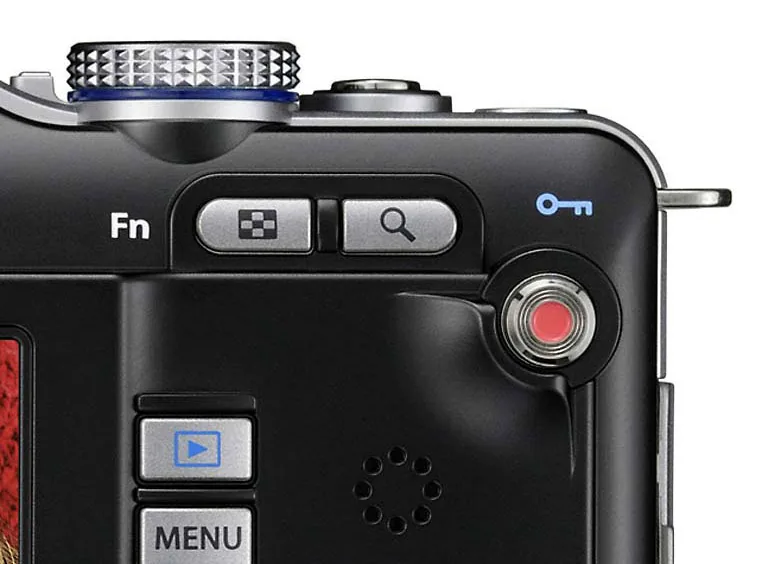
Olympus has kept the number of buttons limited. Press the OK button and the most important functions appear on the right of your images, such as ISO value, white balance and exposure compensation.
So if you choose a sharper background, the aperture will actually close further. You will not notice that less light enters from the brightness of the LCD screen, because it is kept constant. Only if you choose a small aperture in low light, the LCD image may show noise: noise that does not appear in the photo.
This viewing through the closed aperture happens when you use Live Guide, which is linked to the iAuto mode. In the normal photographic modes P, A, S and M, the aperture is always fully open until the moment of the shot.
Except when you activate the visual depth of field control: then the aperture closes to the selected value. The LCD screen also adjusts its brightness. Great for photographers who want to consciously control their depth of field. Also because you can zoom in on the image to control/control the sharpness very precisely.
Simple
Anyone who is used to a compact camera, is considering the Pen E-PL1 and reads the above technical story: forget what it says and remember that the Pen E-P1 can very easily familiarize you with all the basic factors for a successful photo. Without tiring or confusing you with technology.
In the same way that depth of field is worked, you can also control the appearance of motion (moving or frozen, the LCD screen's refresh rate is slowed down to simulate motion).
Plus the exposure correction (lighter/darker), the color tone (warm/cool) and the color saturation (little/much color). That's basically all it takes to customize photos. Yes, photo technology can be that simple!
Olympus has linked these functions to the iAuto mode, which is actually intended for photographing without having to set anything.
The Pen E-P1 can easily familiarize you with all the basic factors for a successful photo
But the smart adjustment technology actually deserves its own stand: iCreative would be a nice name. It deserves to be highlighted more as a unique feature.
Viewfinder
If you see these live view options, the reflex viewfinder is old-fashioned. But: the LCD screen is often less readable in sunny weather, and then you sometimes have to guess where your subject is. That's not photography! You're aiming, composition doesn't play a role for a while. It was the main criticism of the Pen E-P1 and it was solved with the Pen E-P2, which comes with that nice clip-on LCD viewfinder.
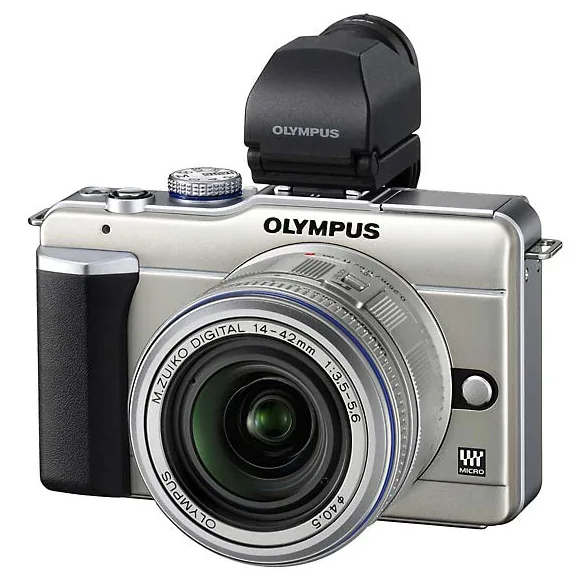
The good news is that this viewfinder can be purchased separately and also fits the E-PL1. The viewfinder is large, clear and detailed and greatly increases the usability.
Of course, Olympus doesn't shout from the rooftops that you should buy it, but if you get a taste of the E-PL1, you will probably buy it again.
Like the DSLRs
If you do not use the iAuto mode, you will end up in normal usage options and the E-PL1 works broadly like the Olympus reflexes. With many usable scene modes, plus 7 creative filters (such as pop art, pinhole and grainy black and white), all in good condition. And you can always assess immediately through live view. Of course, the traditional exposure modes are also available.
The Olympus reflexes always offer many options to make all functions work entirely according to your own taste. Most of it is in a separate menu, which you can also hide entirely, if this all goes way too far for you. This is the same with the E-PL1.
A Luxury Problem?
The lens range for Micro Four/Thirds is slowly expanding. A bit too slow, because a compact telephoto zoom is missing. Weird! The 40-150 mm for the regular Four/Thirds system is a good little thing: not much needs to be adjusted! You can use it with the help of an adapter, but that is an expensive solution.
A Pen is forever and everywhere
Olympus now only has the 14-42mm standard zoom, which is retractable, plus the flat 2.8/17mm. A 14-150 mm megazoom is on the way, and there is also talk of a wide-angle zoom. It is understandable: Olympus cannot deliver everything at once. But three bodies in a short time, and only two lenses, which is not very synchronous. By the way, the standard zoom is a great thing. Although not a high flyer, it is compact and versatile enough.
Compact or Pen?
It is surprising what quality a compact camera can deliver these days. For example, you see a Panasonic Lumix TZ7 (and the new TZ10) performing very well, with beautifully sharp, very detailed images, where the first impression does not immediately tell you that a compact was used here.
Only upon closer examination can you see that, and then you are at the level of microscopic hair-splitting. So that could bring you to the question: does such a pen really offer so much more quality?
A good compact does well at ISO 80 to 200. From ISO 400 you will increasingly miss details. How bad that is depends on the size at which you present your final image.
For example, the Pen provides much higher detail even at ISO 800. The image is much cleaner, less grimy in smooth areas. And you always have a clearly richer tonal scale. Shadows close less quickly, light areas provide much more detail.
At higher ISO values, the differences vary even further. Then the conclusion must be: even a good compact is primarily a fair weather camera, a Pen is for always and everywhere. You will also get beautiful results with atmospheric pub photos or living room portraits without flash. All in all: street lengths better than what a good compact performs, although the difference is not that noticeable in nice sunny weather.
If we look at the results individually, you see roughly the same quality image as with an Olympus E-602 and the Pen E-P1 and E-P2. Fine, slightly warm color rendering (pleasant). An extremely usable ISO 800, surprisingly good ISO 1600, and 3200 even better than just for pure emergencies.
Vacation
Very successful, this Pen E-PL1. Live Guide is very attractive for the beginner who wants to influence his settings. The camera is somewhat larger than a compact, clearly smaller than a reflex. Ideal for holidays. Do take into account the purchase of the LCD viewfinder.
Although the Olympus PEN E-PL1 is now outdated, it remains an interesting choice for novice photographers, budget seekers or enthusiasts of compact Micro Four Thirds cameras. The camera is available cheaply on the second-hand market and is still suitable for learning the basics of photography.
Are you looking for a modern entry-level camera? Then check out our latest reviews and guides in the category Camera news.