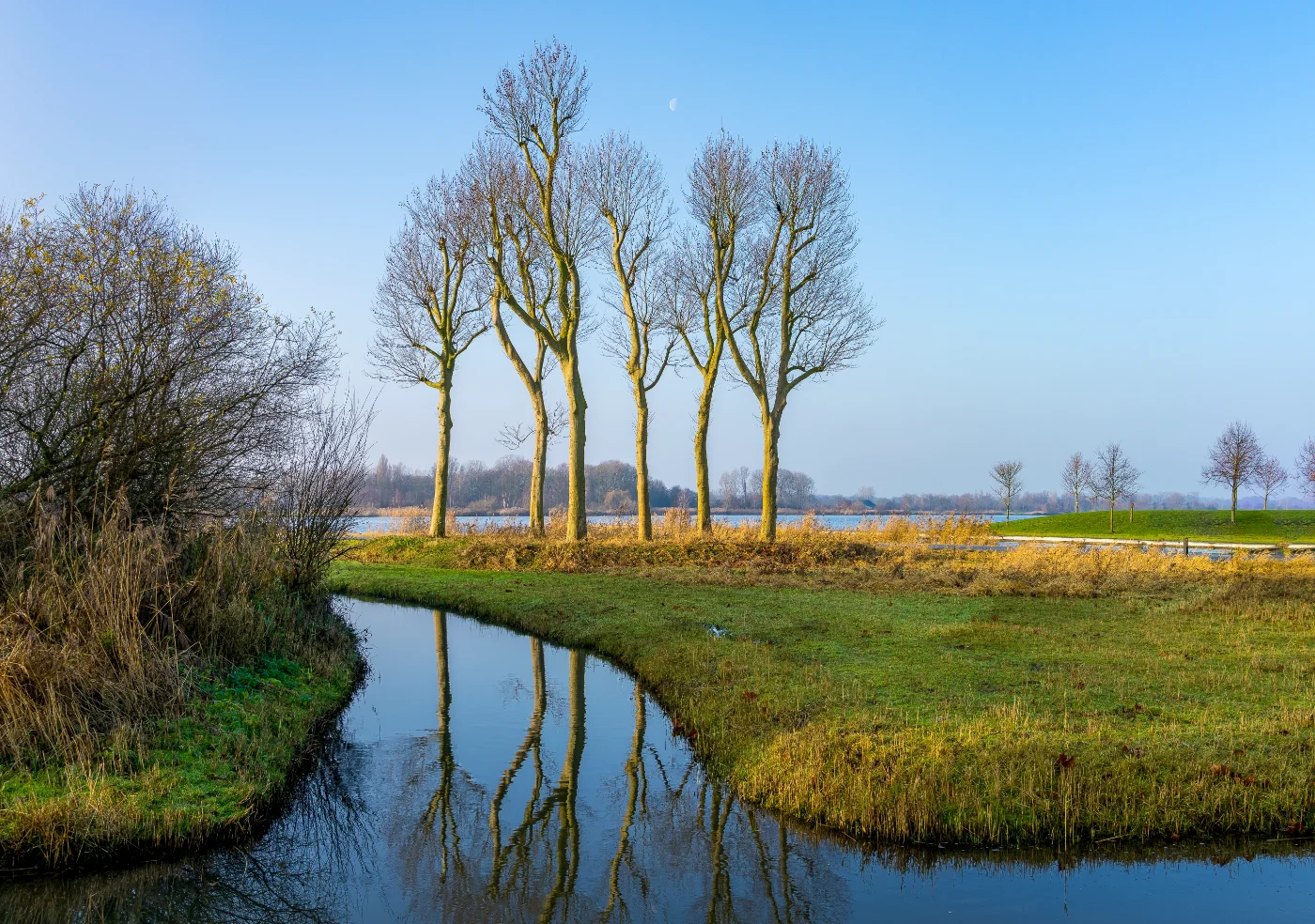
photo: Polder near Utrecht
You do not need to travel to the depths of Africa to take nature photographs. Beautiful images can also be made close to home—even in your own backyard. And just as in Africa, the Netherlands has several areas where your chances of capturing a truly outstanding image are a little higher.
Fotografie.nl takes a closer look at several of these areas. When should you visit, what should you look for, and what equipment should you bring?
The Wadden Sea Region
At school, Dutch children once learned “TV TAS” as a mnemonic. But being able to name the Wadden Islands means you know only a small part of one of the Netherlands’ most dynamic landscapes. The northern coasts of Friesland and Groningen are also inseparably connected to the Wadden Sea.
The tidal flats offer wonderfully romantic scenes. For example, join a sailing and nature excursion aboard a traditional flat-bottomed boat.
In the Groningen section, the small harbor of Noordpolderzijl, north of Warffum, is a beautiful spot. It is navigable only at high tide, and on calm, sunny days the surrounding area is especially good for photographing authentic Wadden landscapes. As summer progresses, red and brown tones become more prominent as many plants bloom or begin to die back.
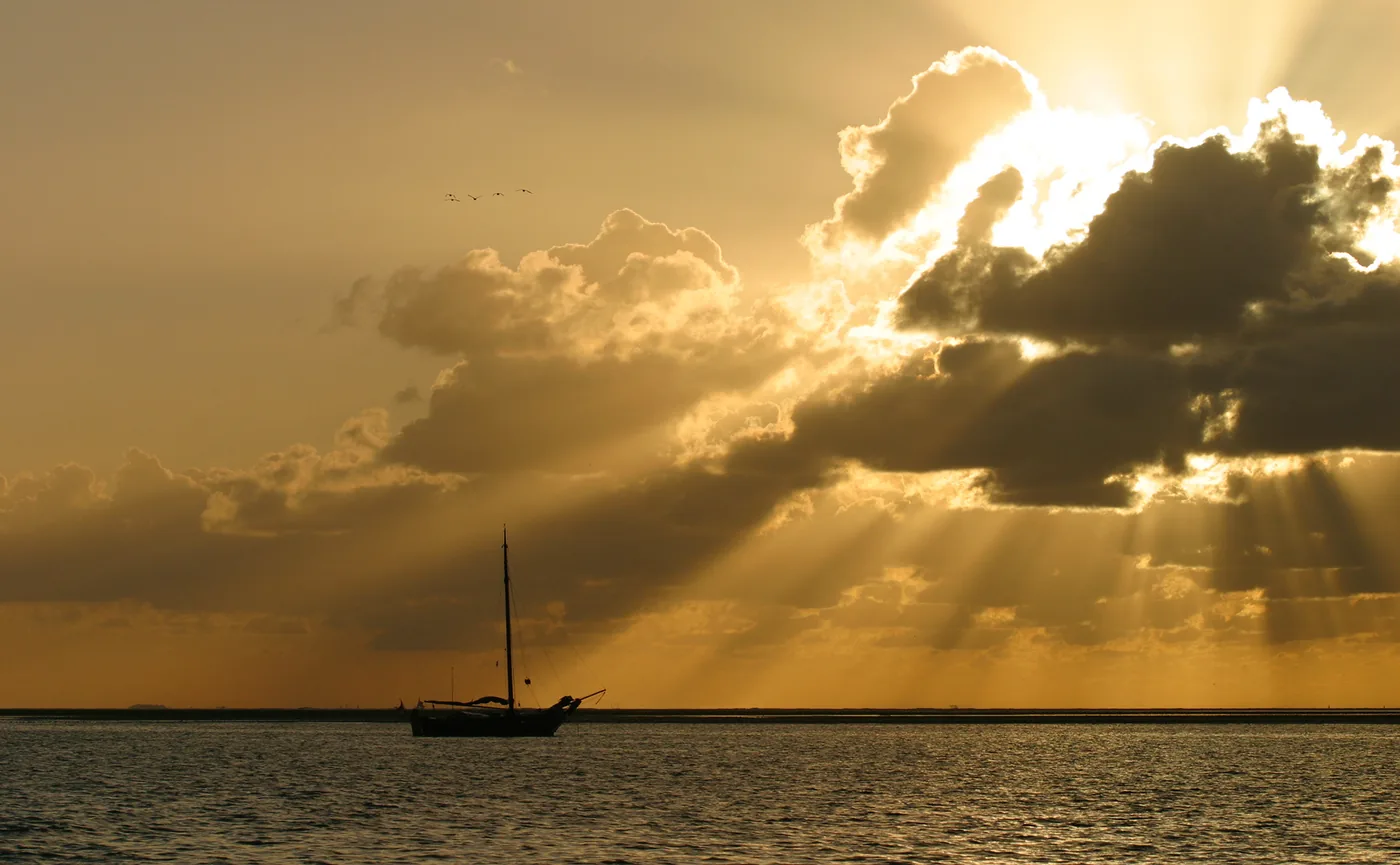
The Frisian side also has countless photogenic areas, including the surroundings of the village of Wierum. Look beyond the obvious: seaweed, barnacles, and shells on the brushwood dams all make rewarding subjects.
And of course there are the islands already mentioned: Texel, Vlieland, Terschelling, Ameland, and Schiermonnikoog. Each has its own character. Summer is the best time to photograph insects such as butterflies, particularly in the dune areas where they are abundant.
If you use a DSLR, do not forget your macro lens. It can reproduce insects at life size in the image. A relatively inexpensive set of extension tubes can also be used with lenses you already own, while a close-up lens is another affordable option. These are available for various digital compact cameras as well.

For macro work , a tripod is indispensable. The short working distance and shallow depth of field make it easy to miss focus. Experiment with the aperture and check that everything you want sharp is actually in focus.
The IJssel
“Thinking of Holland, I see broad rivers flowing slowly through endless lowlands,” the poet Marsman once wrote. The IJssel is one of the Dutch rivers where you may still be able to capture the image from what is perhaps the country’s best-known poem.
This seventeen-kilometer route takes you past numerous photogenic locations along the IJssel.
In this landscape, you can photograph not only the primal force of a flowing river but also humanity’s influence on the environment. You will regularly face the question: is this still nature photography? The boundary between nature and landscape photography is not always clear.
Always ask yourself what you want your image to say. If you want to portray “untouched nature,” a man-made dike on the horizon may be distracting. If you want to show the human struggle against the water, make sure that dike is included.
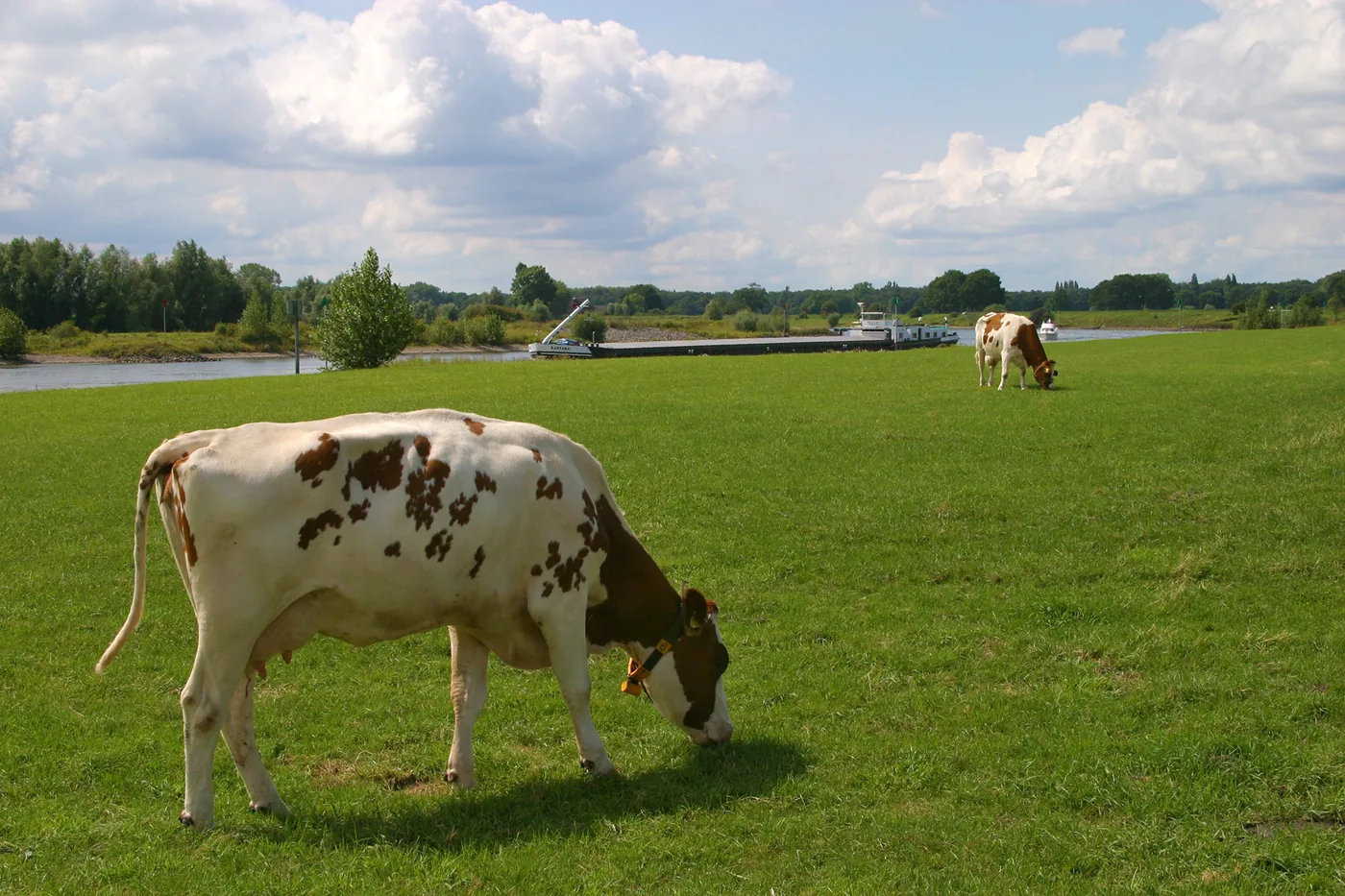
Red-and-white cattle and inland cargo vessels: it is a typical IJssel scene, but it can hardly be called nature photography anymore.
The Dutch railway company has mapped out a beautiful walk between the stations of Zutphen and Deventer. This seventeen-kilometer route passes many photogenic IJssel locations, including the former Nijenbeek Castle. Several cut-off river channels can also be found along the way, some filled with flourishing water lilies.
Watch for the many storks in the area. If you are lucky enough to get one in front of your lens, try to do more than simply record the species. Photographing at the bird’s eye level also reveals much of its habitat and often gives the image greater impact.

The Duursche Waarden lie between Wijhe and Olst. Here, water can once again flow freely in and out of the floodplains, and you may encounter rare plant and bird species. Grazing cattle create a varied landscape and are interesting photographic subjects in their own right.
The Veluwe
The Veluwe is the largest continuous nature reserve in the Netherlands. Its thousands of hectares present photographers with enormous possibilities and challenges. “The Veluwe” is actually a collective name for the region roughly bounded by Hattem, Putten, Ede-Wageningen, Arnhem, Dieren, and Apeldoorn. Smaller nature areas such as Veluwezoom, De Hoge Veluwe, and the Royal Forestry Estate Het Loo together make up the Veluwe.
The Veluwe’s many drifting-sand areas offer endless photographic possibilities.
The region is not only vast but also highly varied, with seemingly endless coniferous forests, heathlands, country estates, and drifting sands. Each subarea has its own character. The Veluwe is an excellent place to spot and photograph large wildlife such as wild boar and red deer.

In May and June, the visitor center at De Hoge Veluwe National Park in Hoenderloo organizes excursions to wildlife observation posts. The chances of encountering a red deer, horse, or mouflon can be quite good. Finding promising locations yourself is just as rewarding, although some knowledge of the behavior of the animals you want to photograph is naturally helpful.
There is also plenty to enjoy for photographers who do not yet own a camera with a huge telephoto lens.
Your own behavior—making little noise and moving calmly—can determine the success of a photo excursion. A long telephoto lens of 400 mm or more is very useful for photographing large mammals. Although these animals sometimes encounter people, they remain very wary. There is still plenty to enjoy if you do not yet own a camera with a huge telephoto lens.
Visit one of the drifting-sand areas mentioned earlier, such as Kootwijkerzand. Subjects are everywhere: look at the irregular shapes of the Scots pines and the beautiful patterns the wind has “painted” in the sand.

De Weerribben
A few miles west of Steenwijk lies one of northwestern Europe’s most important wetlands: De Weerribben National Park. It is the only area in the Netherlands where you may encounter otters in the wild.
Together with the nearby De Wieden, the area contains almost 10,000 hectares of reed beds, water, marsh, and peatland. Large-scale peat extraction shaped the landscape, followed later by reed cultivation. This created an extensive network of waterways, wet meadows, excavated peat channels, and narrow strips of land. It is a unique area best explored by boat.
A quiet electric boat offers a very different perspective from exploring De Weerribben on foot or by bicycle.

You can rent a quiet electric boat in villages such as Ossenzijl and Kalenberg. On a photo expedition in De Weerribben, bringing someone to steer allows you to focus entirely on the plants and animals. A grass snake may swim alongside the boat, although a swimming snake rarely produces a magazine-cover image. It is often better to look for snakes basking on the bank.
Because snakes are cold-blooded, they need the warmth of the sun to become active. Early morning is therefore a particularly good time to look for grass snakes. Photographers who prefer plants and landscapes will also find plenty to explore in this national park.
Around Winterswijk, a highly photogenic, intimate landscape of streams, small woods, and peatlands unfolds.
Water lilies, water soldier, and other interesting marsh plants flourish in many waterways, supporting a rich insect population. Try photographing a dragonfly or damselfly. With patience, even a good digital compact camera can produce frame-filling images of these animals.
The Achterhoek
Most people roughly know where the Achterhoek is, yet for many it remains unexplored. Around Winterswijk, a highly photogenic, intimate landscape of streams, small woods, and peatlands unfolds. About seven kilometers north of Winterswijk, just across the German border, lies the Zwillbrocker Venn, where both greater and Chilean flamingos breed.

Peatlands on the Dutch side are also well worth visiting, including the Korenburgerveen and Meddosche Veen. In May, cotton grass creates a fairytale scene, as if snowflakes were dancing above the peat.
Every season leaves its mark on raised bogs such as the Wooldse Veen.
Cross-leaved heath begins flowering in June. Unlike common heather, it thrives in wet conditions. Where it grows, look closely: rare plants such as sundew, bog asphodel, and orchids are often nearby. Lie flat and make a wide view with a wide-angle lens; it often produces a surprising composition.
As elsewhere in the Netherlands, people have strongly influenced the Achterhoek landscape. It can be exciting to make a nature photograph that shows none of that influence, but it is at least as skillful to emphasize the relationship between people and the landscape in an image.

Decide in advance what you want to photograph and why. What should the image express? Once you think carefully about this, you will soon see your photographs begin to stand apart from ordinary snapshots.
Tip: buy a 1:25,000 topographic map of the area where you often photograph. It can help you find the most attractive places and mark locations you want to revisit in different weather or light.