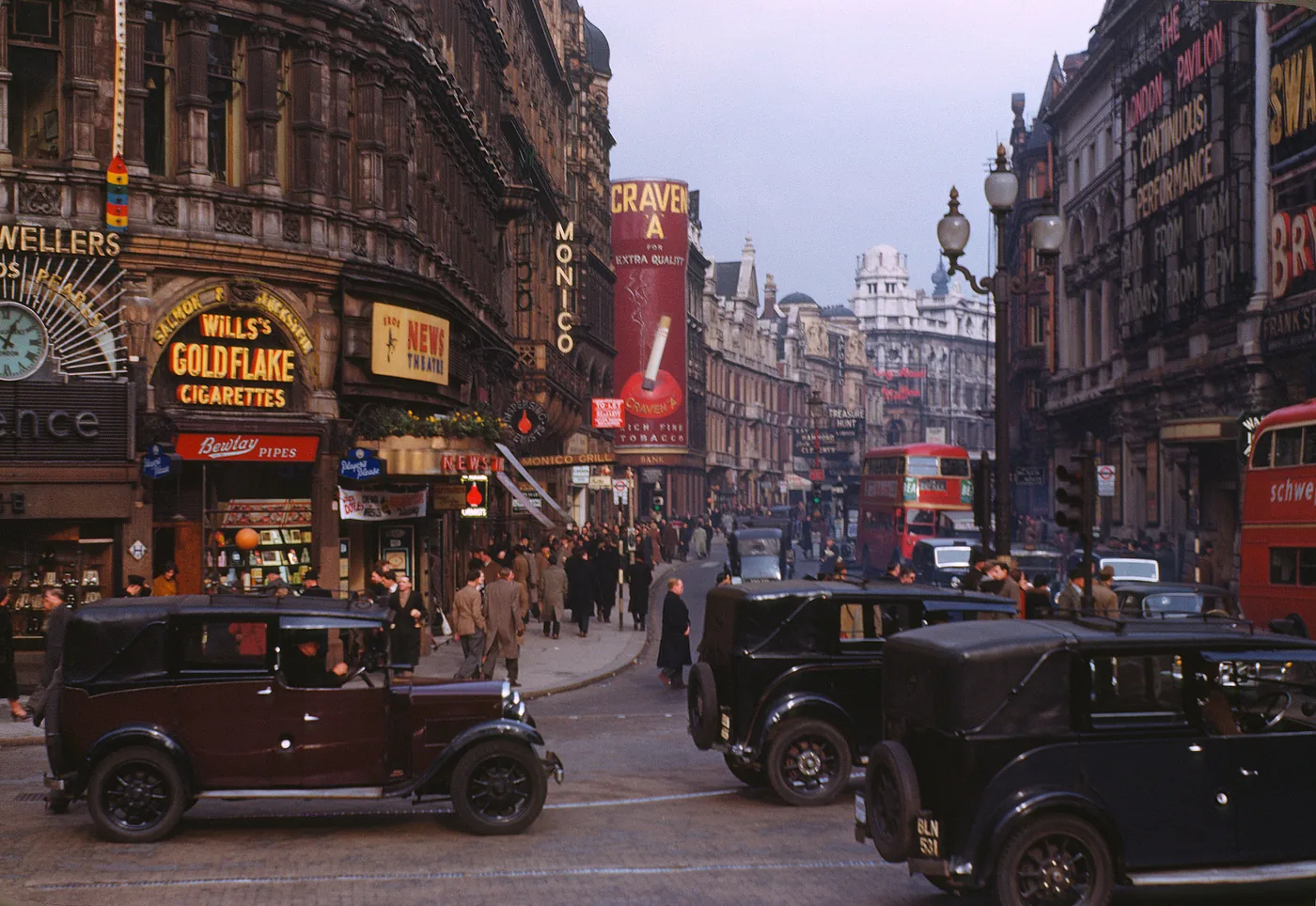
photo: Chalmers Butterfield | Kodachrome photo of Shaftesbury Avenue in London (ca. 1949)
Kodachrome is undoubtedly the most famous name in photographic film. It was loved for its exceptional sharpness but was complicated to manufacture and process. Almost no one was buying it anymore, so Kodak discontinued it.
Kodachrome was introduced in 1935. One of its unique characteristics was—and remained—that the image-forming dyes were not contained in the film but were added during processing.
As a result, the film's layers could be thinner than those of other slide films. This produced exceptionally high sharpness that competing films did not match until late in the analog era.
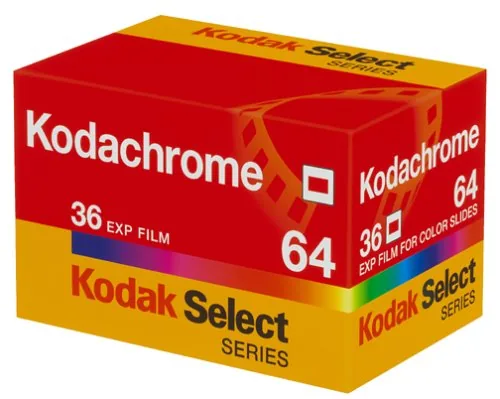
Its image longevity was also superior, thanks to the much higher-quality dyes. And the colors... always recognizable, unmistakably Kodachrome.
Complex Development Process
The Kodachrome development process was unsuitable for do-it-yourself processing and far too complicated for the average professional lab.
The film could be processed only at specialized facilities, and it sometimes took weeks to receive your developed film. Ordinary slide film, by contrast, was ideal for fast service: many professional labs offer or once offered two-hour processing.
Steve McCurry
For years, National Geographic photographers were permitted to work only with Kodachrome. The iconic portrait of the Afghan girl, for example, was shot on Kodachrome.
Steve McCurry took that photograph and was later given the honor of shooting one of the final rolls supplied by Kodak, on assignment for the George Eastman House International Museum of Photography and Film.
As a farewell to this Kodak legend, Kodak dedicated a small website to Kodachrome.
At this point, only one Kodachrome processing facility remained anywhere in the world: Dwayne’s Photo in Parsons, Kansas. It continued to sell film and offer processing through the end of 2010. After that, Kodachrome was truly gone.