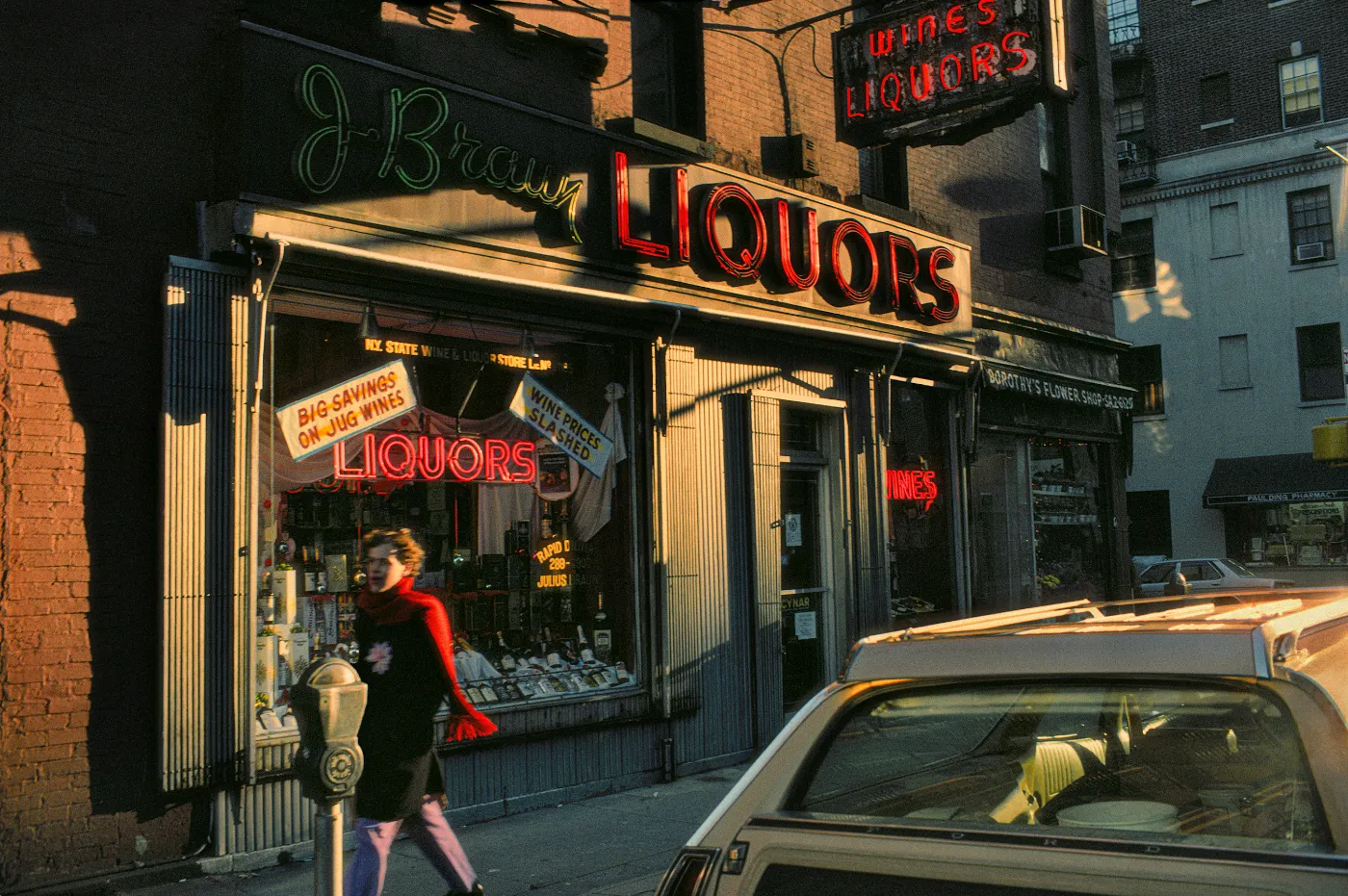
photo: © Harry Gruyaert - Manhattan, liquor store, 1985
For Harry Gruyaert, street photography is not only about the decisive moment, but just as much about color, light, and geometry. His images feel like stills from a forgotten film: warm, mysterious, and perfectly timed. As a result, Harry Gruyaert: New York feels not merely like a photo book about a city, but like a time capsule of color, light, and human presence from an era before smartphones, digital perfection, and endless streams of images.
Harry Gruyaert has that unmistakable combination of saturated Kodachrome-like colors, harsh sunlight with deep shadows, graphic composition, “chance” yet perfectly balanced street moments, and an almost cinematic quality that never feels staged.
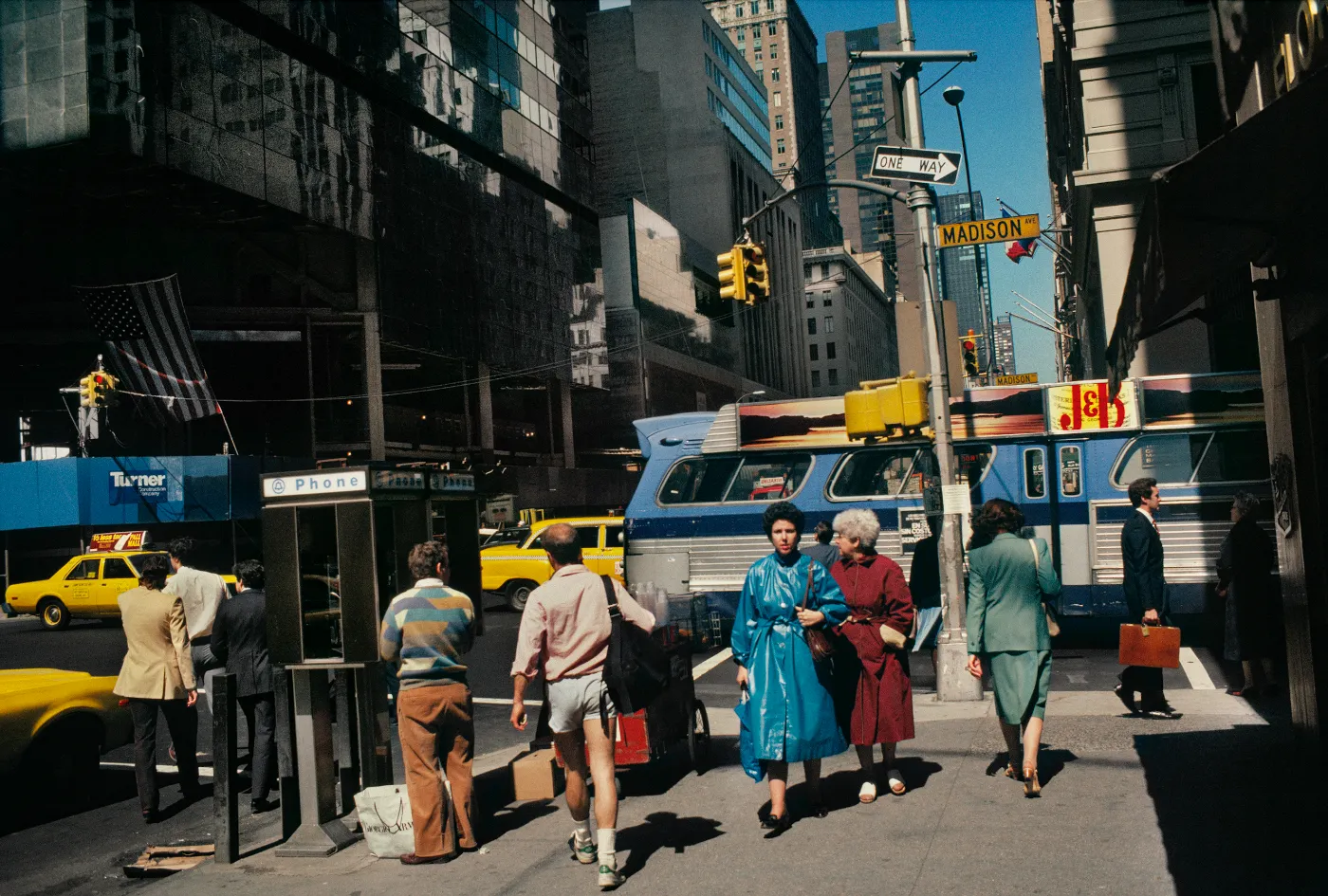
The cover photograph has precisely that signature Gruyaert quality: color as the main subject, not merely as a means of documentation. The contrast between the cyan-blue of the jacket and bus and the yellow of the taxis and traffic lights is especially characteristic. A seemingly ordinary street moment takes on the tension and atmosphere of a still from a forgotten eighties film.
If you enjoy this style, these photographers are also worth exploring: Saul Leiter, Joel Meyerowitz, Ernst Haas, and Willy Spiller.
New York as a stage for color and light
His work from New York in the eighties strongly reflects this approach. He often photographed through observation, allowing planes of light, reflections, and blocks of color to become almost more important than the people themselves.
For more than fifty years, Harry Gruyaert has roamed the streets of New York City, capturing its striking contrasts—from towering skylines and neon-lit diners to multicultural neighborhoods and fleeting street scenes. Designed as a large visual album, this book presents each photograph across a two-page spread, evoking the rhythm and energy of a cinematic storyboard.
It is not only about what happens, but above all about how light, timing, and color come together.
This striking visual journey is accompanied by fictional vignettes from acclaimed filmmaker Cédric Klapisch, which blur the boundaries between reality and imagination.
Gruyaert’s New York feels raw, vibrant, and almost surreal at the same time. Yellow taxis, neon signs, areas of shadow, and bright sunlight become graphic elements that combine to form an image extending far beyond straightforward street documentation.
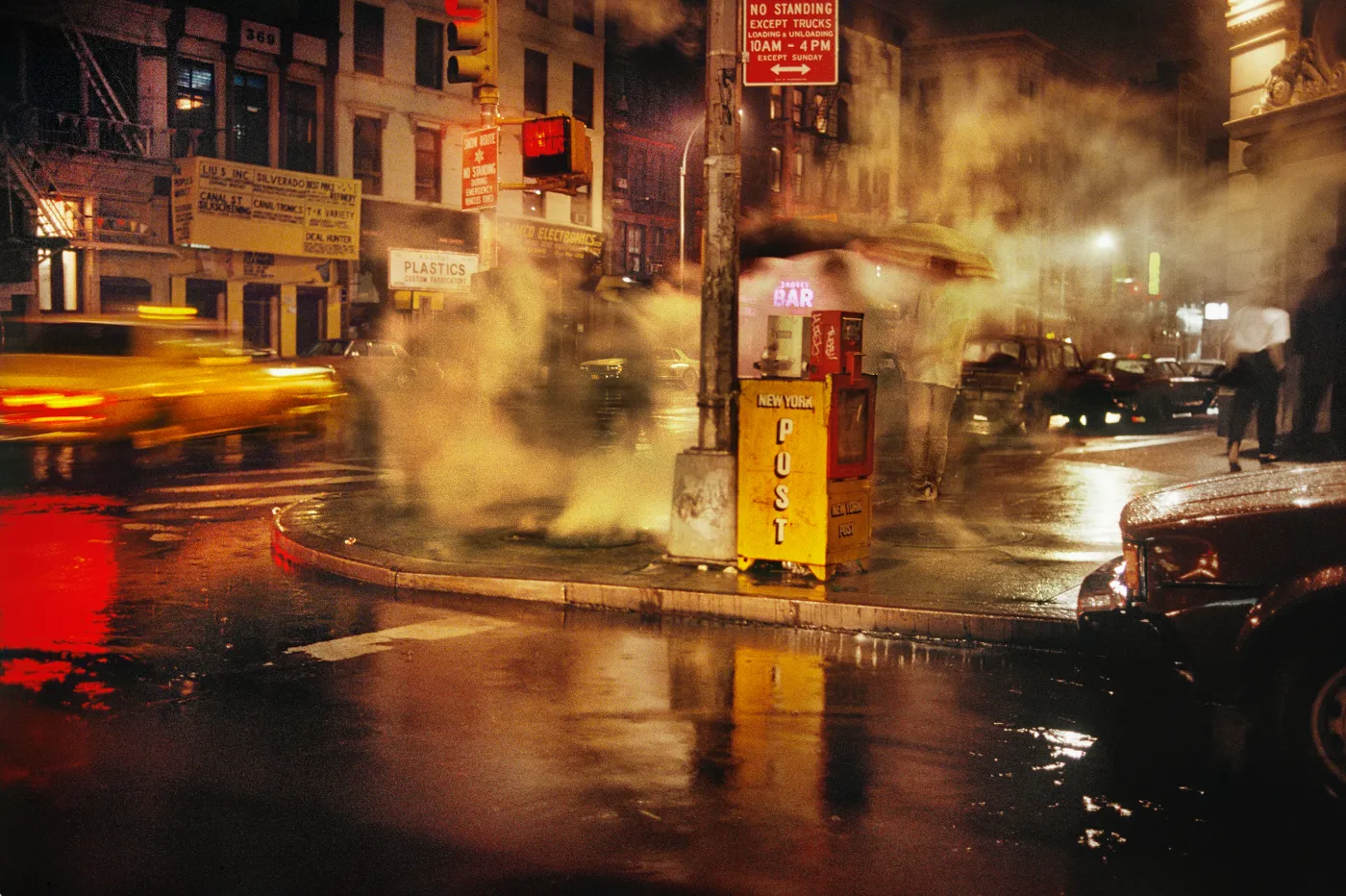
In his photographs, people sometimes seem almost to become part of the architecture or the planes of color within the frame. That is precisely what makes his work so recognizable. It is not only about what happens, but above all about how light, timing, and color come together.
More than street photography
Although Gruyaert is often categorized as a street photographer, his work actually feels broader than that. His images have a painterly quality, almost as if he first observed the light and then waited for the right people to enter the scene.
This can also be seen in his other well-known series, including those from Morocco, where color becomes at least as important as the subject itself.
At a time when analog photography, Kodachrome colors, and cinematic visual styles are popular again, Gruyaert’s work feels strikingly contemporary. Many photographers today are once again seeking atmosphere, imperfection, and uses of color that evoke emotion rather than technical perfection.
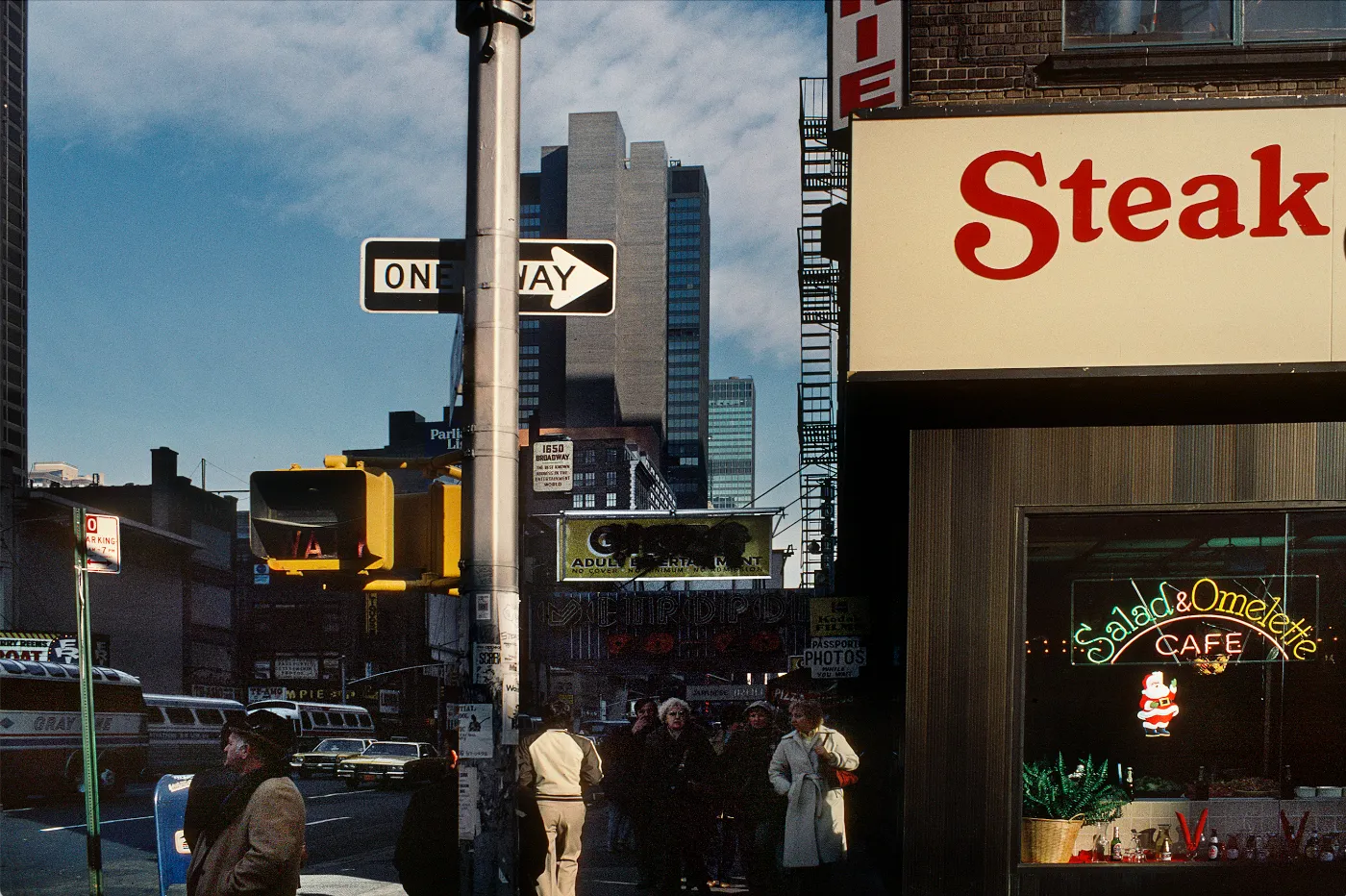
Gruyaert’s influence on contemporary cinema and editorial photography is clearly visible in modern color grading.
Harry Gruyart
Harry Gruyaert is a Belgian photographer known for his photographs of India, Morocco, and Egypt, and for his innovative use of color. He is a member of Magnum Photos. His work has been published in various books and exhibited extensively. He won the Kodak Prize.
Harry Gruyaert: New York
Pages: 200
Price: € 55,25
Publisher: Thames & Hudson