The Retropia Repurposed Disposable Film Camera Lens is exactly what its name suggests: a genuine lens from a disposable camera, rebuilt into a modern mirrorless mount. It is not a digital filter or software simulation, but literally a simple plastic lens from a disposable camera mounted on your Sony, Fuji, Canon RF, Nikon Z, and so on.
The original disposable-camera lens is, of course, simply a tiny piece of plastic optics without a mount. Retropia therefore installs it in a specially designed, body-cap-like housing with a genuine mirrorless mount.
The optics come from a disposable camera, while the back uses a standard camera mount. You simply click it onto your camera as you would any regular lens.
More body cap than lens
Retropia offers versions for Sony E, Fujifilm X, Canon RF, Nikon Z, Leica L, and Micro Four Thirds, among others. In construction, it resembles a body-cap lens or an ultrathin pancake lens more than a traditional lens.
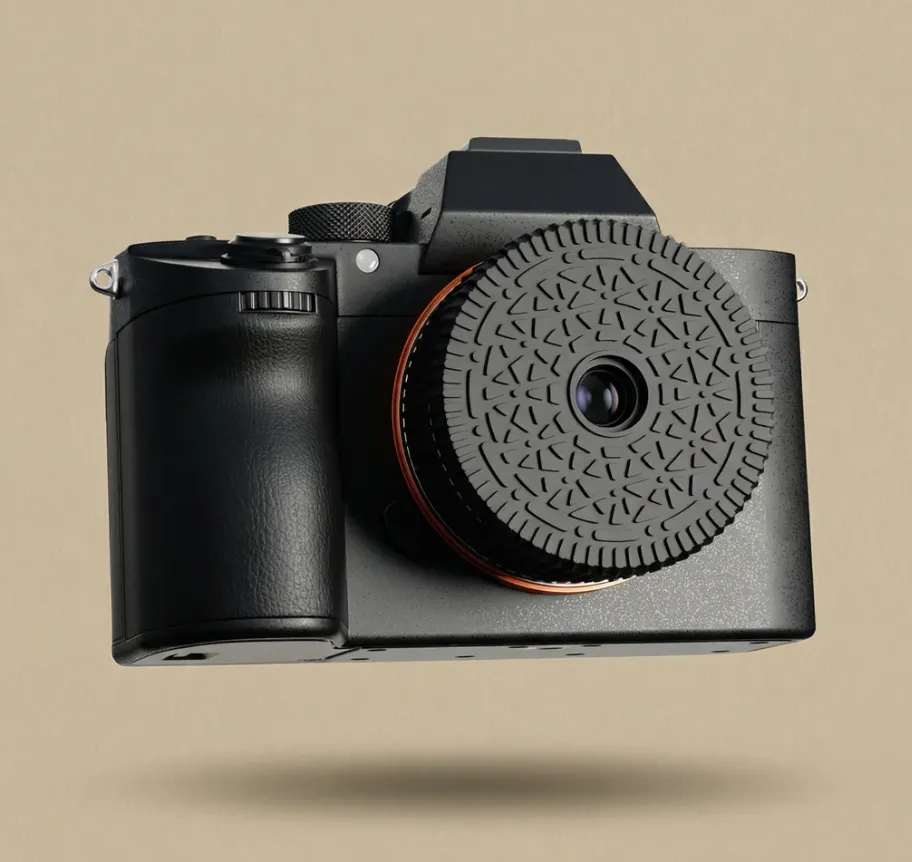
Because the lens is so small and light, it barely protrudes, weighs almost nothing, and keeps your camera extremely compact. With some versions, you can even rotate the lens for minimal focus adjustment, swap different disposable lenses, or use multiple “looks.”
Do not expect autofocus, electronic contacts, EXIF data, aperture control, or lens-based stabilization. Your camera will often “see” it as a manual lens, or sometimes even as if no lens is attached. On some cameras, you therefore need to enable “Release without lens” / “Allow shutter release without lens”; otherwise, the camera may refuse to take a photograph.
The appeal is that the entire setup almost feels like a digital disposable camera, but with a large sensor behind it.
If you want to take that digital disposable-camera look even further, the Retropia Retro Flash is a natural companion. Where this lens creates soft edges, flare, and unpredictable optics, the small hot-shoe flash adds the harsh, frontal pop of flash associated with many older compact and disposable cameras.
Why this lens looks so distinctive
Disposable-camera lenses were originally designed for small film formats, low expectations, and inexpensive prints. Put one in front of a modern high-resolution sensor and all its imperfections become highly visible: glow, softness, edge blur, flare, and field curvature. That is exactly why people buy it.
According to Retropia, the company genuinely uses recycled/disassembled lenses from real disposable cameras rather than entirely new optical designs that merely attempt to imitate the look.
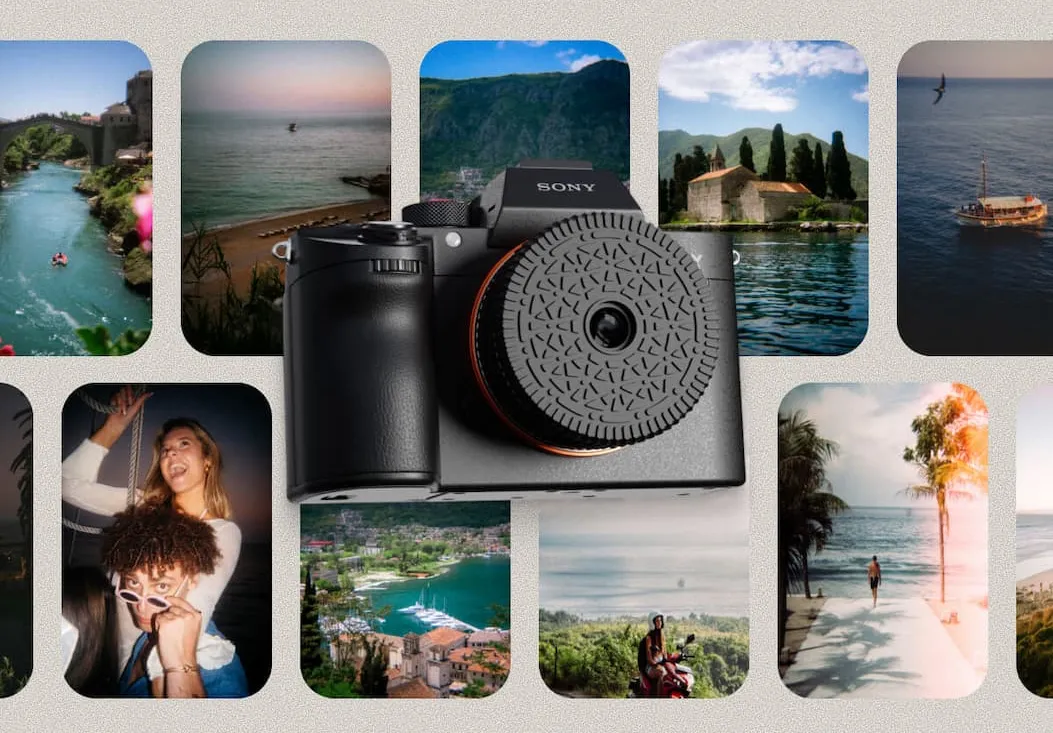
The concept involves dismantling old disposable cameras, removing the plastic lens element, placing it in a new mount/body-cap construction, and adapting it for modern cameras.
That also explains why the image quality feels so “authentically bad-good,” why the aberrations feel genuine, and why some examples render just a little differently: disposable cameras were once mass-produced in enormous quantities with fairly broad tolerances. No two lenses were perfectly identical.
Recycled or not?
There is some online debate about whether every Retropia lens actually comes from an old camera or whether certain batches may use newly manufactured equivalents. On Reddit, some users speculate that certain brands now also use newly molded, disposable-style plastic optics because genuine recycling is difficult to scale logistically.
Retropia, however, emphatically positions its product as genuine repurposed optics, without a software filter or modern recreation optics.
A look that is difficult to fake
Many of these disposable-camera lenses originally come from Kodak FunSaver-style cameras, Fujifilm QuickSnap-style systems, and inexpensive single-element plastic meniscus lenses.
Optically, they are extremely simple compared with modern lenses, often using only one or a few elements, made entirely of plastic, designed for inexpensive 10x15 prints, and not intended for modern high-resolution sensors. That is precisely what makes the look so difficult to reproduce digitally. The imperfections occur physically before the sensor. The result often feels more organic than a Lightroom filter.
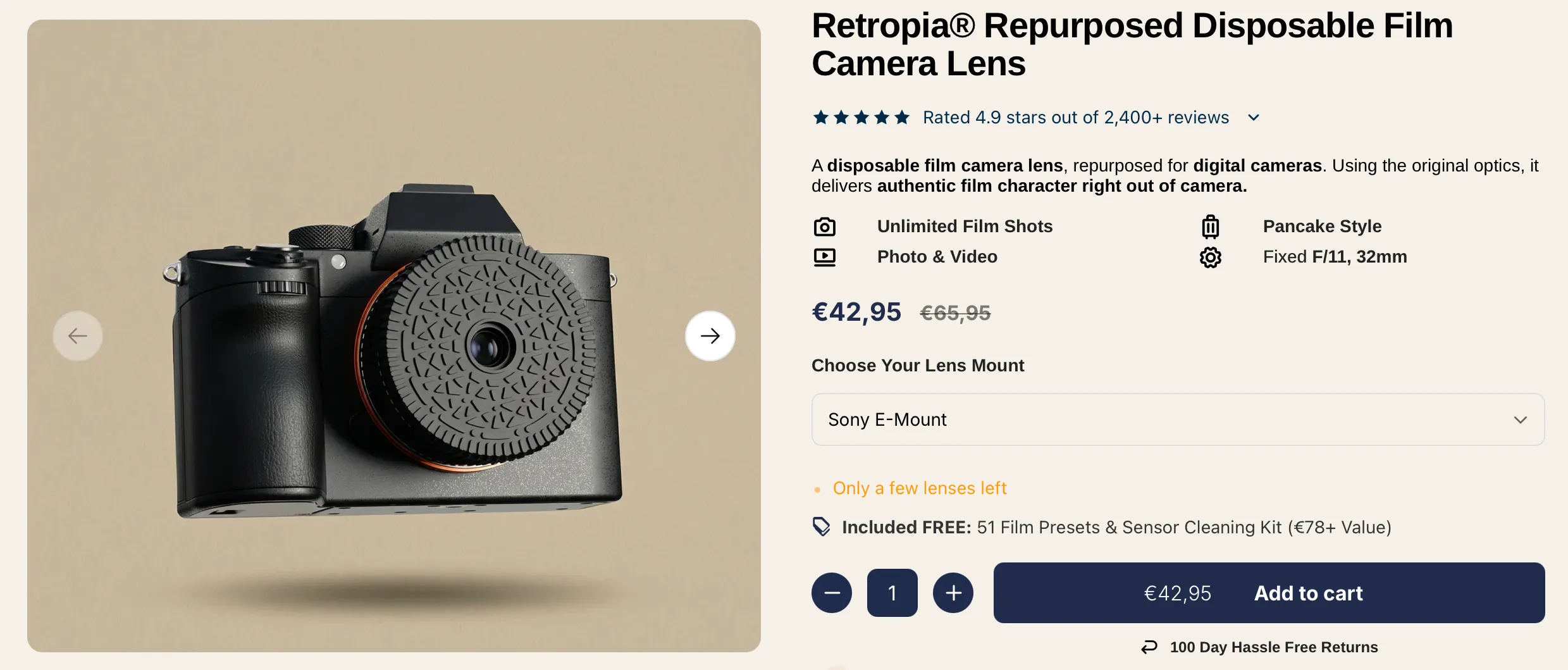
Retropia officially released this lens in early 2025. Technically, Retropia is a modern niche-hack concept from the past few years, but culturally it is rooted in a decades-old love of “low-fi photography.”
Nostalgia as a stylistic choice
Anyone seeking perfect sharpness should skip this lens. But photographers who appreciate character, nostalgia, and optical imperfections will find that the Retropia delivers a unique digital disposable-camera experience that is difficult to reproduce with software filters.
See the current price and available mounts for the Retropia Repurposed Disposable Film Camera Lens.