The new Fujifilm XF400mm F4.5 provides the same angle of view on an X Series camera as a 609mm lens on full frame. That is serious reach. Yet it weighs just 1,245g. Lightweight super-telephoto lenses are no longer uncommon, but the combination of this low weight, a relatively fast F4.5 maximum aperture and teleconverter compatibility makes this 400mm lens particularly interesting within the Fujifilm X system.
The XF400mm F4.5 is designed for wildlife, sports and aviation photography—subjects that are usually far away, often moving and rarely wait for the photographer to set up a tripod properly.
Between 200 and 500 mm
Within the Fujifilm X lineup, the new 400mm occupies an interesting position. The Fujifilm XF500mm F5.6 offers greater reach: its angle of view is comparable to that of a 762mm full-frame lens. The XF400mm gives up 100mm of reach, but is around 90g lighter and, at F4.5, approximately two-thirds of a stop faster.
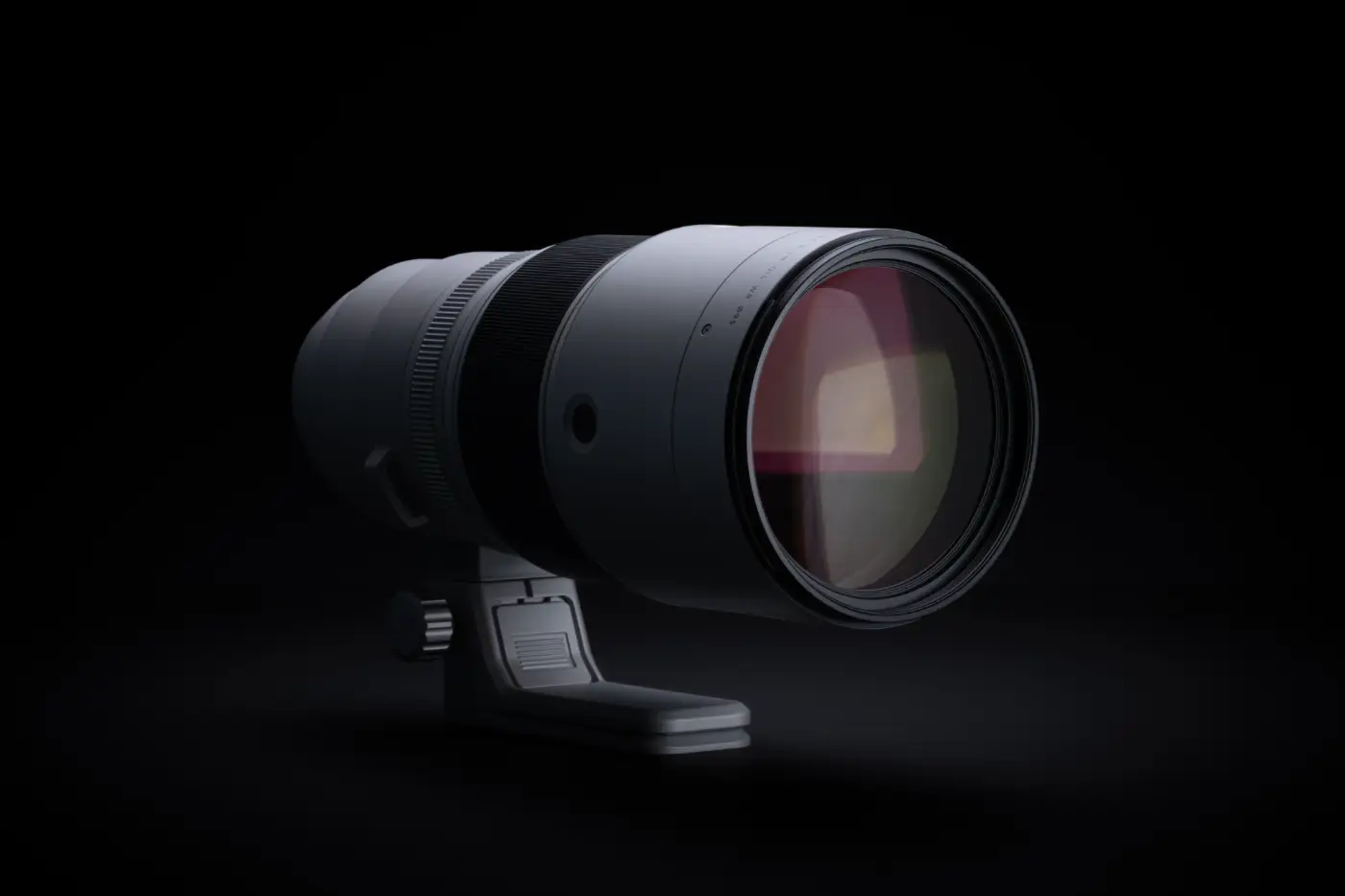
That difference may not sound dramatic on paper, but in practice it can be just enough to use a faster shutter speed or lower ISO setting. The slightly wider angle of view is also useful when tracking birds in flight, racing cars or aircraft. Finding and keeping a moving subject within the frame becomes increasingly difficult as focal length increases.
The 500mm remains attractive for small birds and distant wildlife. The 400mm looks like the better middle ground for photographers who want plenty of reach but do not always work from a tripod or fixed position.
At the other end of the range is the Fujifilm XF200mm F2. It is much faster and better suited to sports under artificial light, but its 305mm-equivalent angle of view offers considerably less reach.
That places the new 400mm neatly between the two: substantially more reach than the 200mm, but a faster aperture and slightly less weight than the 500mm.
Prime or telephoto zoom?
The Fujifilm XF400mm F4.5 has a fixed focal length, making it less flexible than a telephoto zoom such as the XF150-600mm F5.6-8. If an animal or racing car moves closer, you cannot simply zoom out. In return, you get a faster aperture and an optical design tailored entirely to 400mm. Photographers seeking maximum detail who know roughly where the action will take place will appreciate that; those constantly switching between wider views and close detail are better served by a zoom.
Up to 1,219 mm with a teleconverter
If a 609mm full-frame equivalent is still not enough, the XF400mm is compatible with the Fujifilm XF1.4X TC WR and XF2X TC WR. With the XF1.4X TC WR, the lens becomes a 560mm F6.3, delivering an angle of view equivalent to 853mm on full frame.

With the 2x teleconverter, even a 1,219mm full-frame equivalent comes within reach. A bird that was previously a modest speck in the frame suddenly becomes far more prominent. You lose two stops of light, but do not need to carry a second lens.
21 lens elements to combat colour fringing
The optical design consists of 21 elements in 14 groups, including two Super ED and four ED elements. These special glass types are intended to reduce chromatic aberration, an optical flaw that can appear as coloured fringes around high-contrast details with long telephoto lenses.
This is especially important with birds against a bright sky, white aircraft in sunlight or sportswear with strong contrast. Purple or green fringing quickly becomes noticeable in these situations.
The F4.5 maximum aperture also helps separate the subject from the background. The long focal length strongly magnifies and blurs that background, making distracting branches, grandstands or buildings less prominent.
Stabilisation helps
According to Fujifilm, the optical image stabilisation provides up to 5.5 stops of compensation. This not only helps at slower shutter speeds, but also steadies the viewfinder image, making it easier to track a bird, racing car or aircraft. You still need a fast shutter speed to freeze movement, of course: stabilisation keeps the camera steady, not the subject.
The weight distribution also helps when shooting handheld. Fujifilm has positioned the centre of gravity closer to the camera body, so the lens feels less front-heavy. Its 1,245g does not disappear, but it does feel considerably more manageable during a long afternoon beside a circuit or out in the field.
Autofocus for unpredictable action
For focusing, the XF400mm uses a relatively light internal focus group driven by a linear motor. This should deliver fast, quiet and accurate autofocus without changing the lens’s length during focusing.
The focus limiter can restrict the focusing range to subjects more than five metres away. The autofocus system then does not need to search through the entire range if it briefly loses the subject.
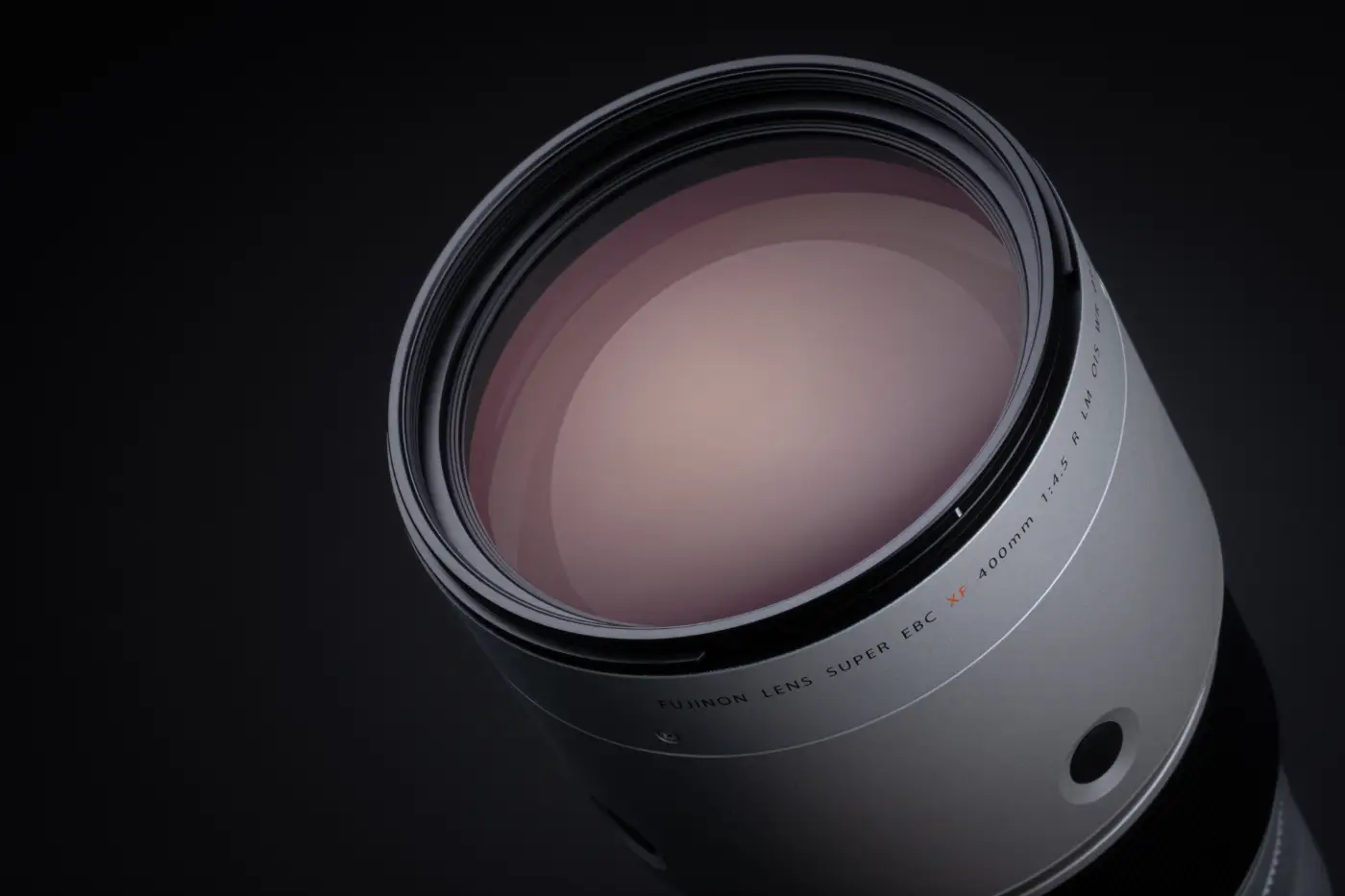
There is also a Focus Preset function. The SET button lets you store a focusing distance in advance. Set the Focus Select switch to PRESET and the Focus Control Button on the front instantly recalls that distance. This is useful when a bird repeatedly lands on the same branch or an athlete regularly appears at a predictable point.
The front of the lens also has a Focus Control Button that directly activates AF-L, PRESET or AF, so you do not need to enter the camera menu first.
Built for the outdoors
The XF400mm F4.5 is sealed against dust and moisture at 20 points and, according to Fujifilm, remains operational at temperatures down to -10°C. A fluorine coating on the front element makes water, dirt and fingerprints less likely to adhere to the glass.
That suits the work for which this lens is intended. Wildlife and outdoor sports do not take place exclusively on dry days with pleasant temperatures.
The XF400mm F4.5 is neither cheap nor a versatile all-rounder. Its fixed focal length is too specialised for that. For photographers who only need one long angle of view, however, it offers an interesting middle ground: substantially more reach than the XF200mm F2, a faster aperture than the XF500mm F5.6 and less weight than the XF150-600mm. Photographers who frequently work handheld seem likely to benefit most. A full review will have to determine how its autofocus and image quality perform in practice.
Price and availability
The Fujifilm XF400mmF4.5 R LM OIS WR is expected to become available from mid-September 2026. The recommended retail price is €2,899 including VAT.
The XF400mm F4.5 is neither cheap nor a versatile all-rounder. Its fixed focal length is too specialised for that. For photographers who only need one long angle of view, however, it offers an interesting middle ground: substantially more reach than the XF200mm F2, a faster aperture than the XF500mm F5.6 and less weight than the XF150-600mm. Photographers who frequently work handheld seem likely to benefit most. A full review will have to determine how its autofocus and image quality perform in practice.