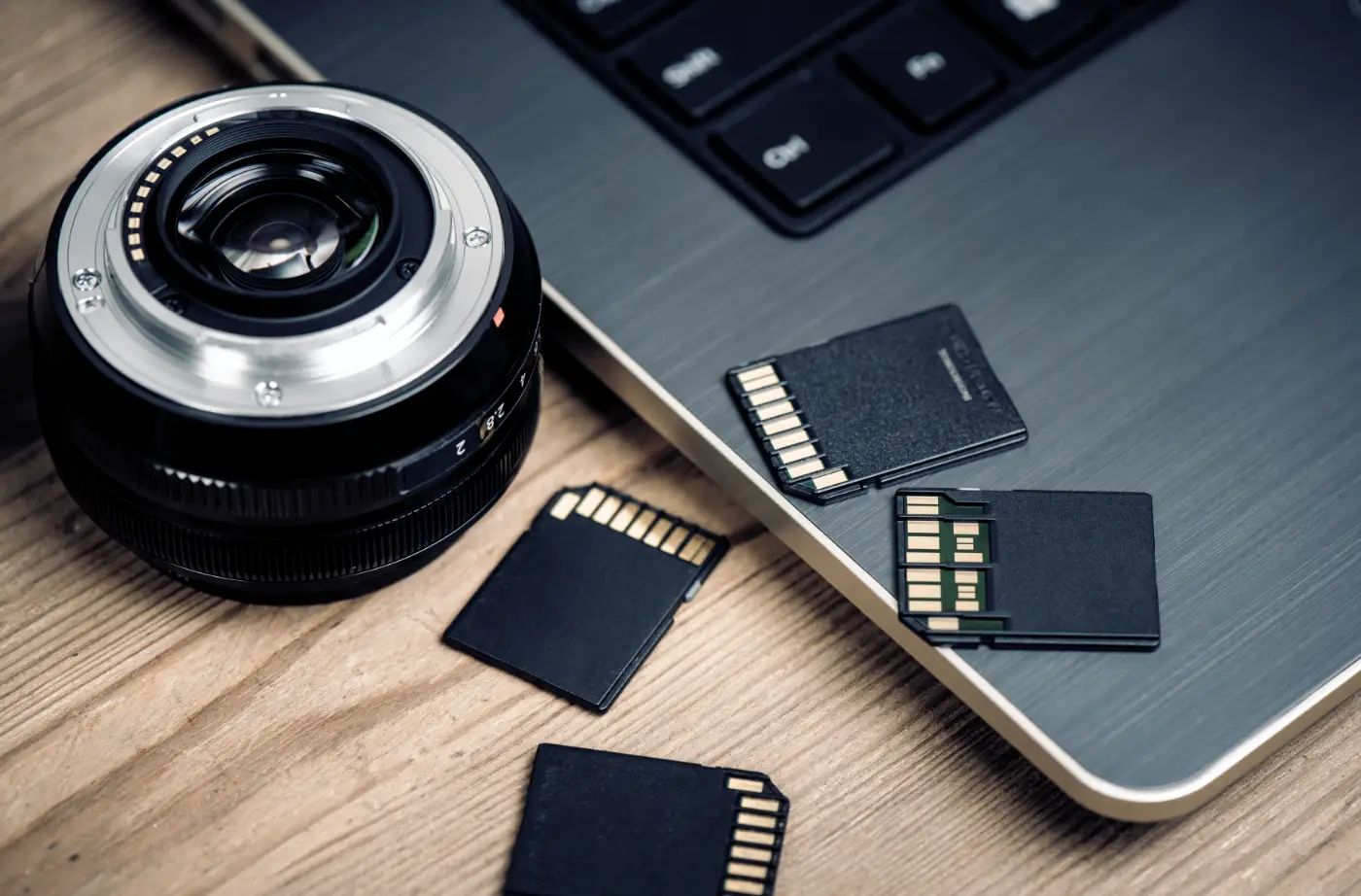
Studio photography offers many advantages, but hobby photographers do not always have access to a dedicated studio. That is a shame, because a home studio is the ideal place to gain experience. You have complete technical control, and indoors you are not affected by changing weather conditions. Turn that spare room into a small home photo studio in four steps.
Walls
The walls in your photo studio are among its most important elements. If they are painted a particular colour, that colour affects reflected light. Neutral shades such as white, black, or dark grey are therefore the most obvious choices.
With white walls, you need to account for reflected flash light. Black and dark-grey walls produce fewer reflections. Whatever colour you choose, always use matt paint to minimise unwanted reflections from your flash.
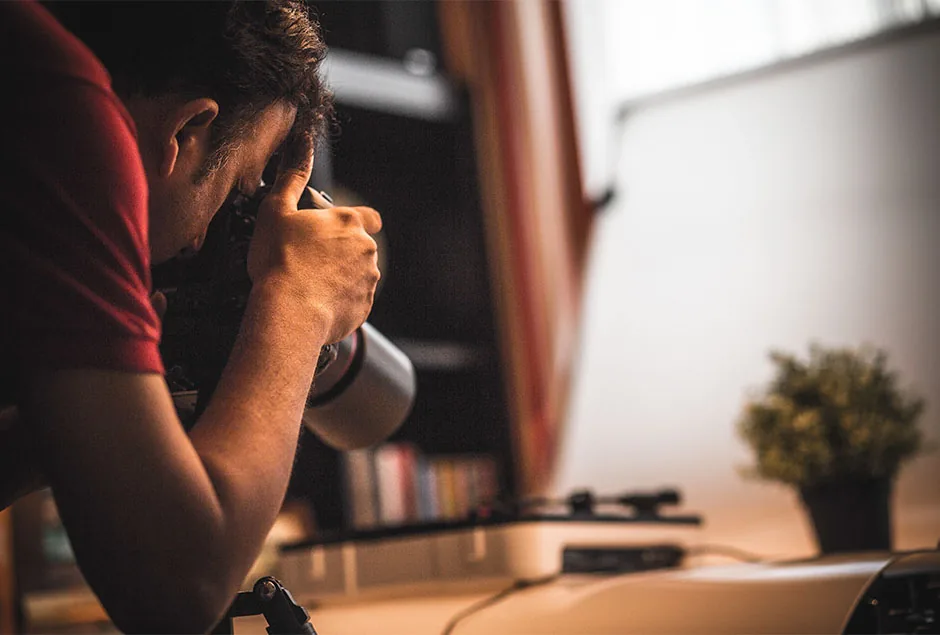
You can, of course, make use of white walls. Try pointing your hot-shoe flash at a white wall rather than directly at your subject. This mimics the effect of a large softbox. This indirect lighting method loses a lot of light, but a flash is generally powerful enough for bounce flash.
When using a regular lamp, make sure it provides enough power. Also pay attention to the light’s colour temperature. Flash is normally neutral in colour temperature (5000–5500 K) and can be adjusted with filters if necessary.
Background
Studio photography is often recognised by its calm, even background. You can buy a roll of backdrop paper or use a simple large sheet of fabric. Here too, you can choose from different colours. White or neutral backgrounds are common for product and portrait photography. A white background can create the illusion that the space in the photograph continues indefinitely. Curve the backdrop gently onto the floor to create this effect, making even a small studio appear larger than it really is.
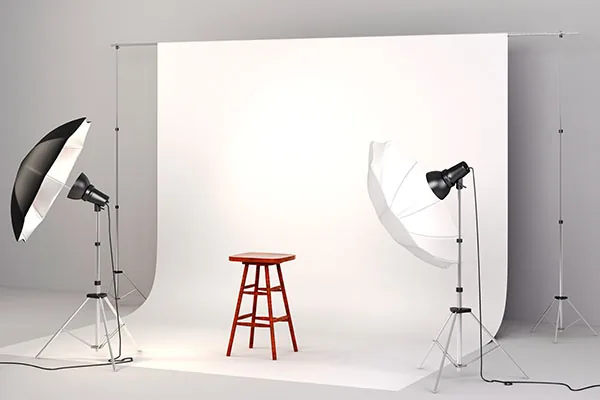
Would you prefer a specific background for product or food photography? You can have a photograph printed on cardboard and use it as a backdrop. Cardboard is sturdy and stands upright well, so nothing needs to be hung and products can be placed neatly in front of it. If you have a plain white wall but want to show different background textures for variety, choose a texture and have it printed on cardboard.
Light Sources
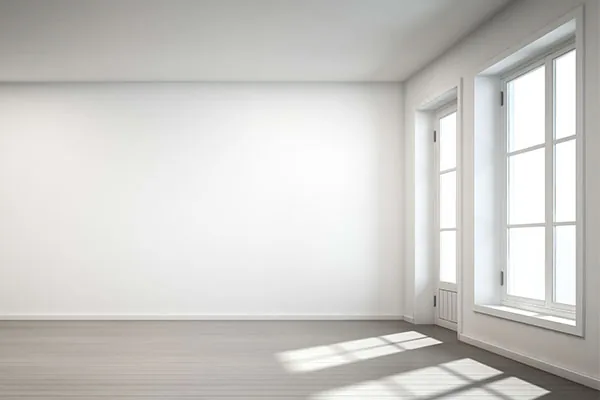
In your own studio, you decide which light sources to use. If the room has a large window and your budget for external lighting is limited, arrange the studio to make the most of the available daylight. Avoid direct sunlight on your subject to prevent harsh shadows in the photograph. For softer light, hang a thin sheet between the window and your subject.
You can also buy a Strobist kit, which uses hot-shoe flashes positioned off camera and fired with a wireless or wired trigger. Photographers often use this approach creatively with flash. It takes practice, but once you have mastered it, it is well worth trying outdoors too.
Light Modifiers
Light sources such as the sun, a flash, or a work light are the foundation, but combining them with modifiers often produces better results and more control. The best-known light modifiers are softboxes, snoots and umbrellas. Light modifiers help create softer light.
If you do not want to spend a lot of money straight away, start with an umbrella. It is a good alternative to a softbox and produces soft light, which can be especially attractive for portrait photography.
Recommended: the best LED lights for photography and video in 2025.