Sometimes a photo stays with you because it was taken at exactly the right moment. But often, its true power only emerges in a series: by returning to a subject, repeating forms, and moving between sweeping gestures and small details. A good photo series does not reveal everything at once. It invites you to look, compare, and gradually understand why this subject deserves attention.
A single standout image is tempting. You can immediately see whether the light is right, the moment hits home, or the composition works. With a series, that is more difficult. A sequence of images requires more patience, from both the photographer and the viewer.
It is not just about the best individual photos, but about how the images support one another.
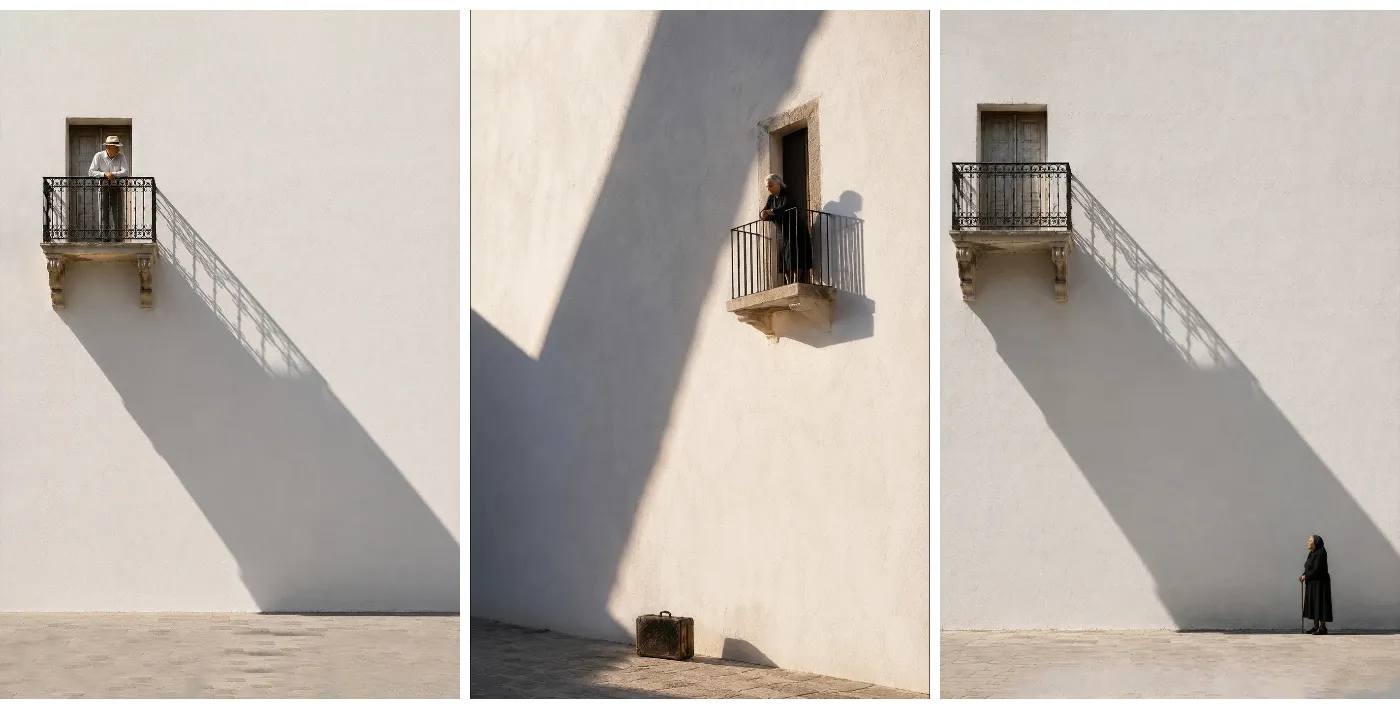
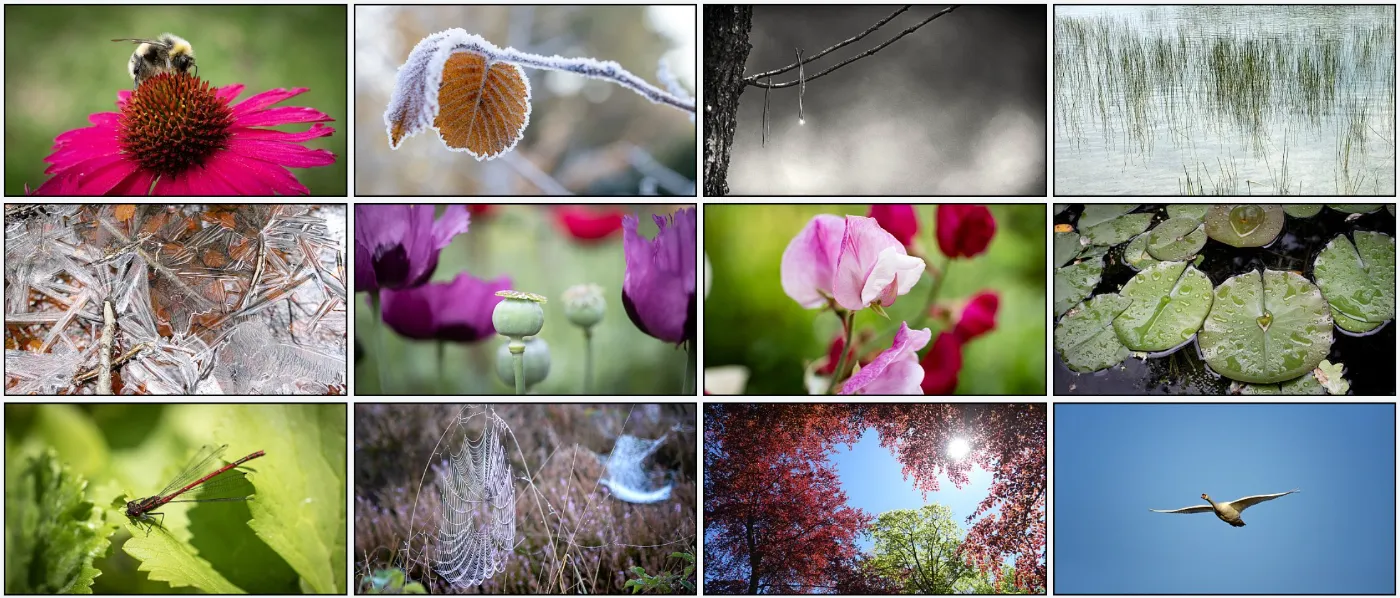
This becomes clear in the work of different photographers. You can photograph a river for years, not as a single spectacular landscape, but as a river with a history, an ecological problem, a personal connection, and countless faces. A series can also show how small, ordinary, and fragile things can gain meaning when you look at them again and again. Two entirely different worlds, but with the same lesson: a subject grows stronger when you do not wrap it up too quickly.
Start with a question
A series rarely begins with the idea: I am going to take twelve beautiful photos. That usually produces a collection of disconnected images. A stronger starting point is a question. What do you want to understand, convey, or explore?
It is not just about the best individual photos, but about how the images support one another.
That question does not have to be profound. You could start with: how does this street change at different times of day? What happens to a family at the end of a vacation? What does silence look like in a city? What traces does a river, a garden, a workshop, or a body leave behind?
A question like that provides direction without locking everything down. You do not yet know which photos you will take, but you do know what you need to become attuned to. That matters, because a series is not created simply by taking a lot of photos. It emerges from getting better at recognizing what belongs to the subject and what is merely beautiful by chance.
Repetition provides structure
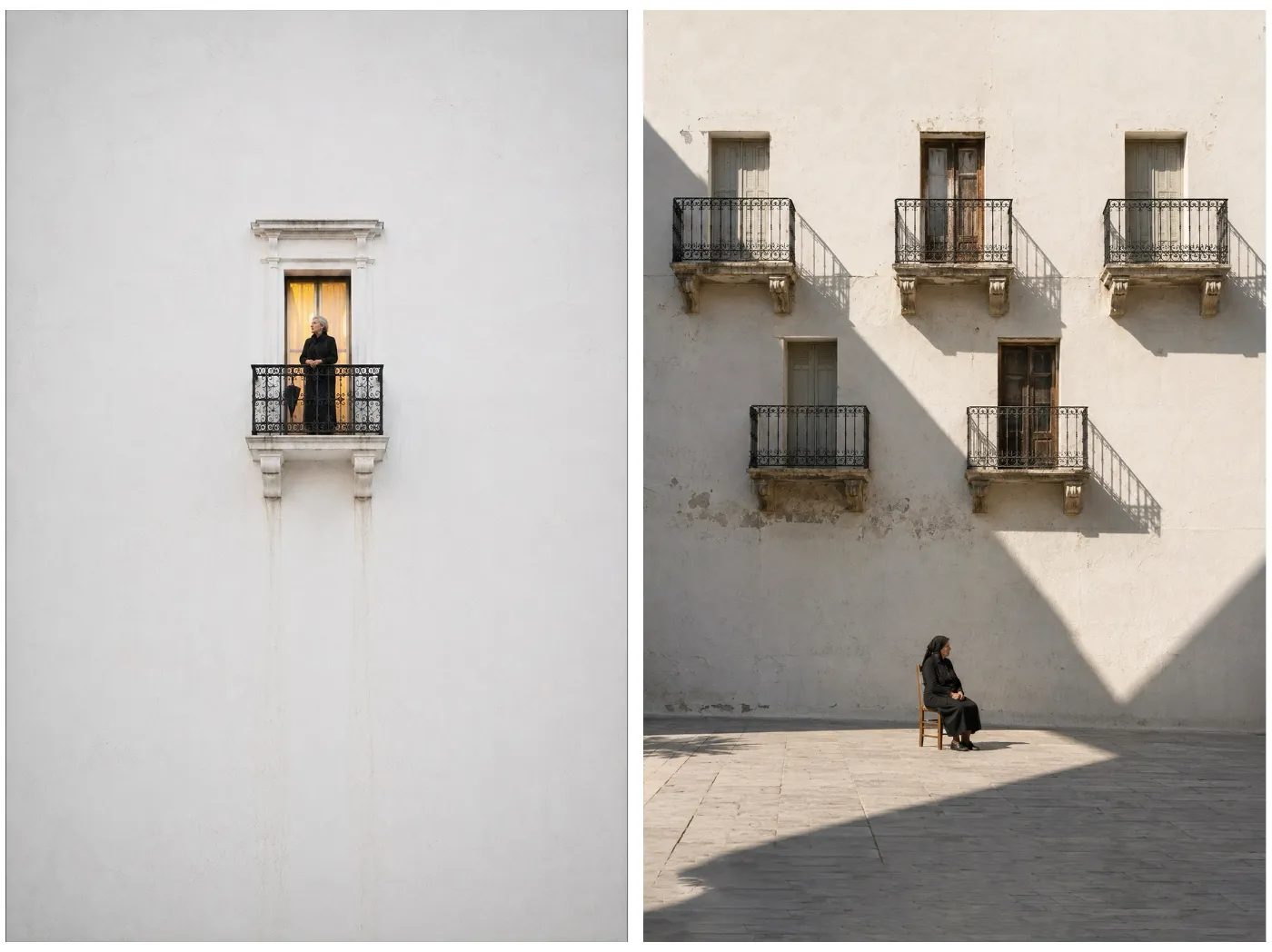
Repetition is one of the simplest ways to hold a series together. It might be a recurring color, a consistent distance, a particular kind of light, a gesture, a horizon line, or an object that keeps reappearing.
Repetition works because the viewer begins to compare. The first time, you see a shape. The second time, you recognize it. The third time, you wonder what has changed. That creates tension without having to fill every image with action.
Be careful, however, not to let repetition become a gimmick. Ten versions of exactly the same image are usually too many. Variation within a recognizable form is more interesting. The same front door in different seasons. The same river in places where it is wide, narrow, in use, or nearly gone. The same table after breakfast, homework, an argument, a visit, and silence.
Returning makes a subject richer
A single photo can be a matter of chance. A series requires you to return. You revisit the same place, person, route, or ritual. Not because the first photo failed, but because a subject only reveals its layers through repetition.
When you keep returning to a river, you see more than water and landscape. You see drought, use, recreation, decay, abundance, danger, and beauty. When you photograph a living room for weeks, you see more than furniture: traces of light, habits, clutter, absence, and care.

Returning does not have to be grand or complicated. Choose a place you already visit often: a market, a bus stop, the street outside your home, a sports field, a walking trail, or your kitchen window. Photograph it not once, but ten times. On different days, in different light, and in a different mood. Only then will you notice which images begin to complement one another.
Include the in-between images
When selecting a series, the quieter photos are often the first to go. They seem less spectacular than the obvious standout images. Yet those in-between images are exactly what a story needs in order to breathe.
A series made up entirely of highlights becomes exhausting. The viewer has no time to settle in. An empty landscape, a quiet corner, an almost imperceptible gesture, or a detail with no immediate explanation can bridge two stronger images. These are moments of rest, but also clues.
You see this in the work of many good visual storytellers: not every image demands attention. Some photos work because they shift the tone. They make the next photo stronger.
Alternate between distance and closeness
A series comes alive through rhythm. If all the images are taken from the same distance, are equally busy, or use the same visual language, the sequence becomes predictable. Think in layers instead: wide view, middle distance, detail.

The wide view shows us where we are. A street, landscape, room, or bend in a river gives the viewer a frame of reference. The middle distance brings people, actions, or relationships into view. The detail makes it personal: a hand on a railing, water lines in dried mud, a child's shoe by the door, a flower on a table, dust in a beam of light.
Those small images are often indispensable. They may not be the photos someone would choose first for Instagram, but in a series they can set the tone. They create breathing room and let the viewer feel that the photographer truly paid attention. Even with a subject such as photography and camping, the details often tell more than yet another sweeping vista.
Be selective, but not too soon
While shooting, give yourself room to explore. Make variations, try different distances, change your viewpoint, and note why you want to return. During the edit, however, you need to be selective. Not every beautiful photo belongs in the series. A strong selection revolves around the heart of the series, the images that genuinely add something new, and the photos that may be beautiful but ultimately distract.
That final category is the hardest. Sometimes the best individual photo has to go because it stands too much on its own. That may feel counterintuitive, but a series demands loyalty to the whole. The question is not: which photo is the most beautiful? The question is: which image moves the story forward?
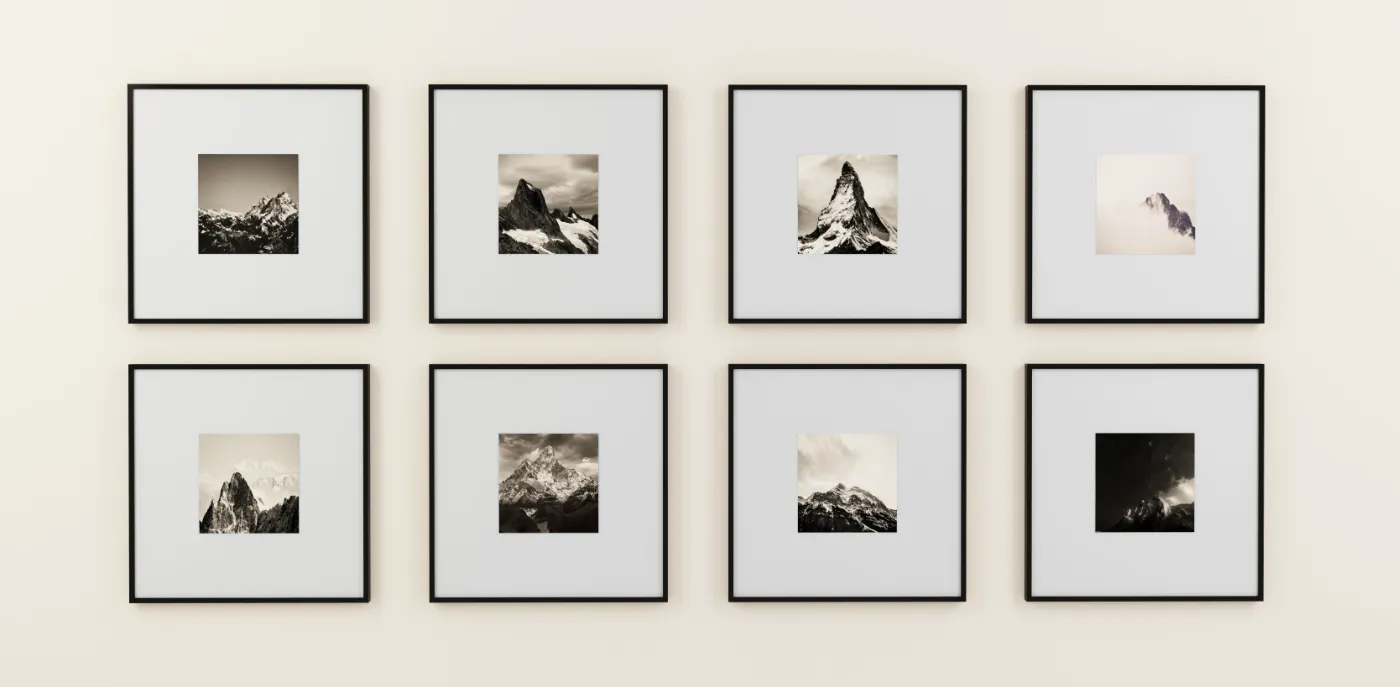
Lay out the selection side by side, either physically or digitally. Do not look only at individual favorites, but at sequence, breathing room, repetition, and surprise. An image that seems weak on its own may be exactly what is needed between two other photos.
Set yourself a small assignment
If you want to practice making series, you do not have to begin with a major documentary project. A small assignment often works better. Choose one subject and one simple rule.
For example: photograph the same window for ten days. Make one image of your route to work every morning. Follow a neighborhood store from the sidewalk for a month. Photograph the hands of people making something. Capture a walk in twelve images: beginning, transition, detail, encounter, trace, silence, end.
When you are done, do not choose the twelve most beautiful photos, but the sequence that shows a progression most clearly. What changes? What returns? Where does the series begin to breathe? Where does it become too predictable?
This exercise teaches you to see differently. You photograph less like a collector of isolated hits and more like a maker of connections. And that may be the difference between a photo that catches your eye for a moment and a series that stays with you.
A way of seeing
A strong photo series does not have to be weighty, ambitious, or world-changing. It can be about a river, a child, a street, a window, a garden, or a pile of dishes. What matters more is that you take the subject seriously and stay with it long enough.
Not everything has to fit into a single photo. Sometimes the story only begins with the second, third, or tenth image.
The single standout photo still has value. But a series can do something that one image rarely can: make time tangible. Rhythm. Return. Doubt. Change. Not everything has to fit into a single photo. Sometimes the story only begins with the second, third, or tenth image.
Special thanks to Helena Georgiou and Arnold Bartman.