photo: © Mac Stone - Wind-swept oaks and saw palmettos, American Amazon, teNeues 2026
When people think of the Amazon and unspoiled nature, they usually look to South America. Photographer and conservationist Mac Stone, however, turns his camera on a lesser-known region: the vast wetlands, ancient forests and rivers of the southeastern United States. In his photo book American Amazon, he portrays a landscape that is extraordinarily rich in life, yet increasingly under pressure.
The book is the result of nearly twenty years of photography, observation and research. Stone ventured deep into the wetlands, climbed ancient cypress trees and descended into dark underground caves. His images reveal a world that can seem otherworldly, yet lies surprisingly close to populated areas.
A different American wilderness
The name ‘American Amazon’ refers to a region spanning parts of Florida, Georgia, Alabama, Louisiana and the Mississippi Delta, among other areas. It encompasses the Everglades, blackwater rivers, coastal forests and vast wetlands that together form some of North America’s most important areas of biodiversity.
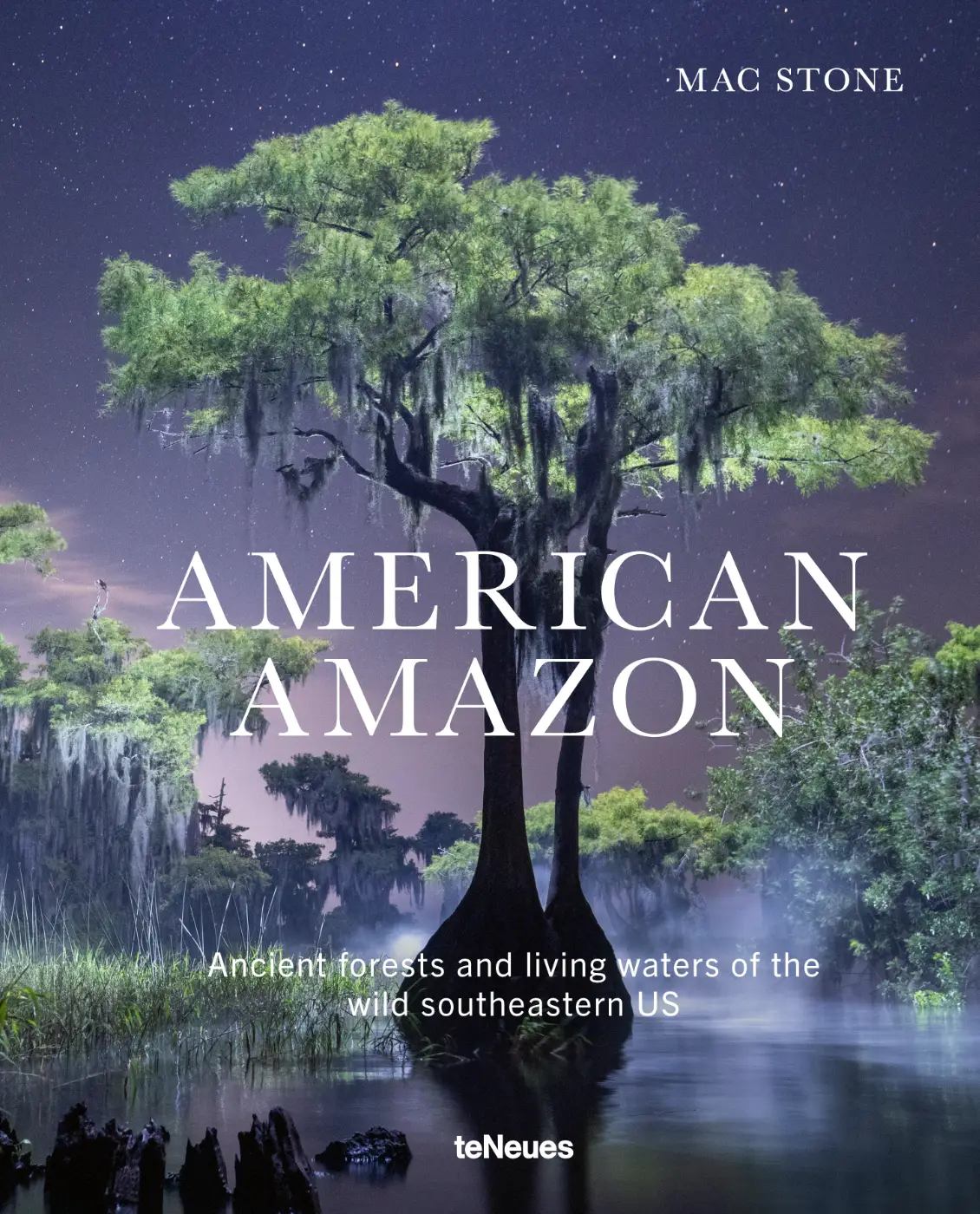
Mac Stone came to know the region through more than photography alone. With a background as a field biologist, he combines scientific knowledge with a strong sense of light, composition and visual storytelling. As a result, his photographs are both informative and highly atmospheric.
The region’s diversity is exceptionally rich among several groups of freshwater fish, turtles and salamanders. Some species occur nowhere else in the world. Even so, this natural environment receives far less international attention than tropical rainforests.
Between beauty and danger
American Amazon is not a carefree tribute to an untouched landscape. Amid images of alligators, black bears, rare orchids and glowing fireflies, the region’s vulnerability becomes clear.
One visible consequence of climate change is the emergence of so-called ‘ghost forests’: coastal woodlands where trees die as salt water reaches ever farther inland. Invasive animal species also have a major impact. In parts of Florida, Burmese pythons have severely reduced populations of several native mammals.
Stone photographs these changes without allowing the book to become entirely sombre. By presenting the landscape’s beauty and distinctive character so convincingly, he makes clear what is at risk of being lost.
Photography in extreme conditions
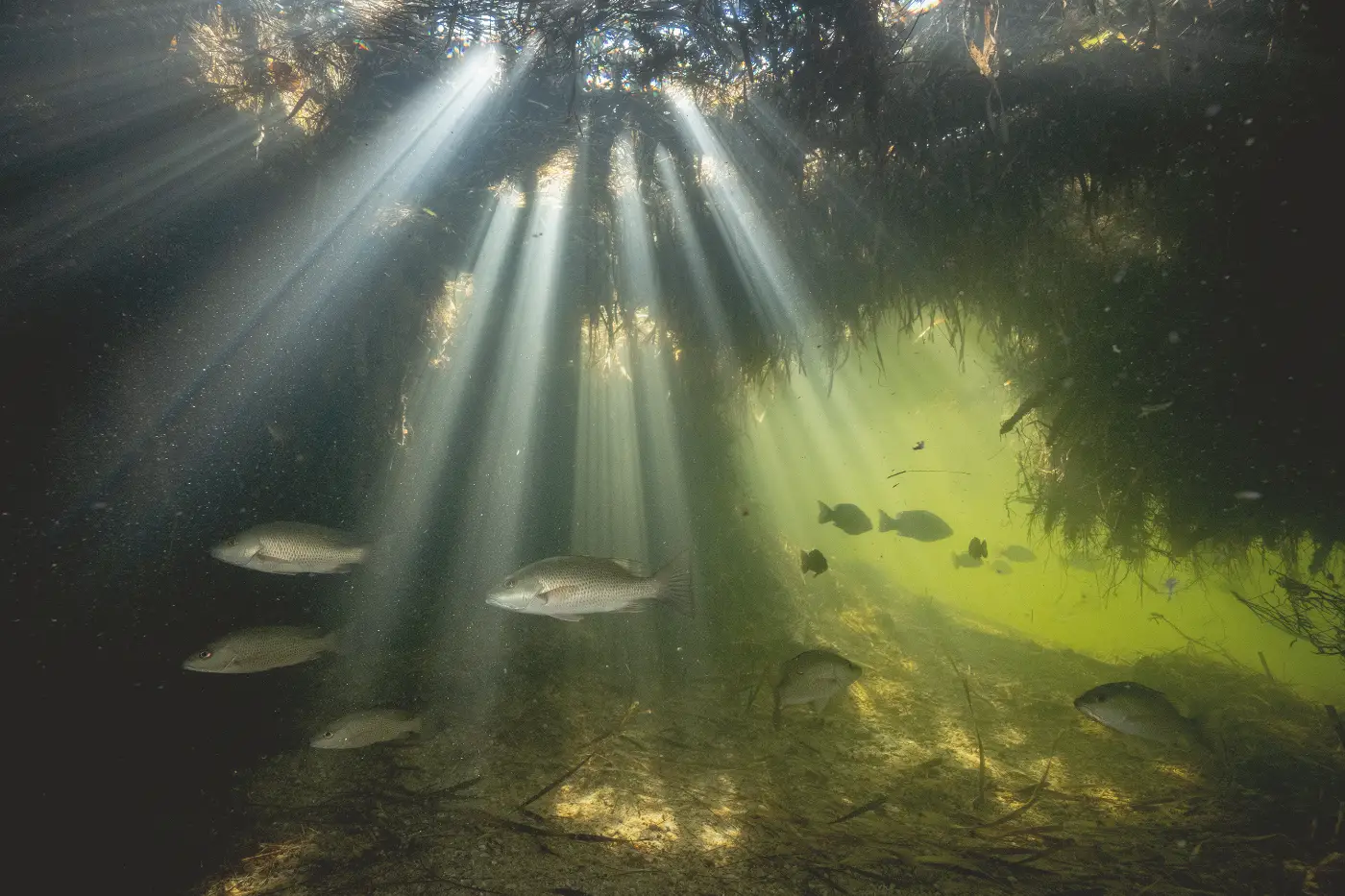
To make many of these images, Stone had to venture far beyond the usual paths. He worked from the water, climbed ancient cypress trees using fixed ropes and descended almost fifty metres into caves beyond the reach of daylight.
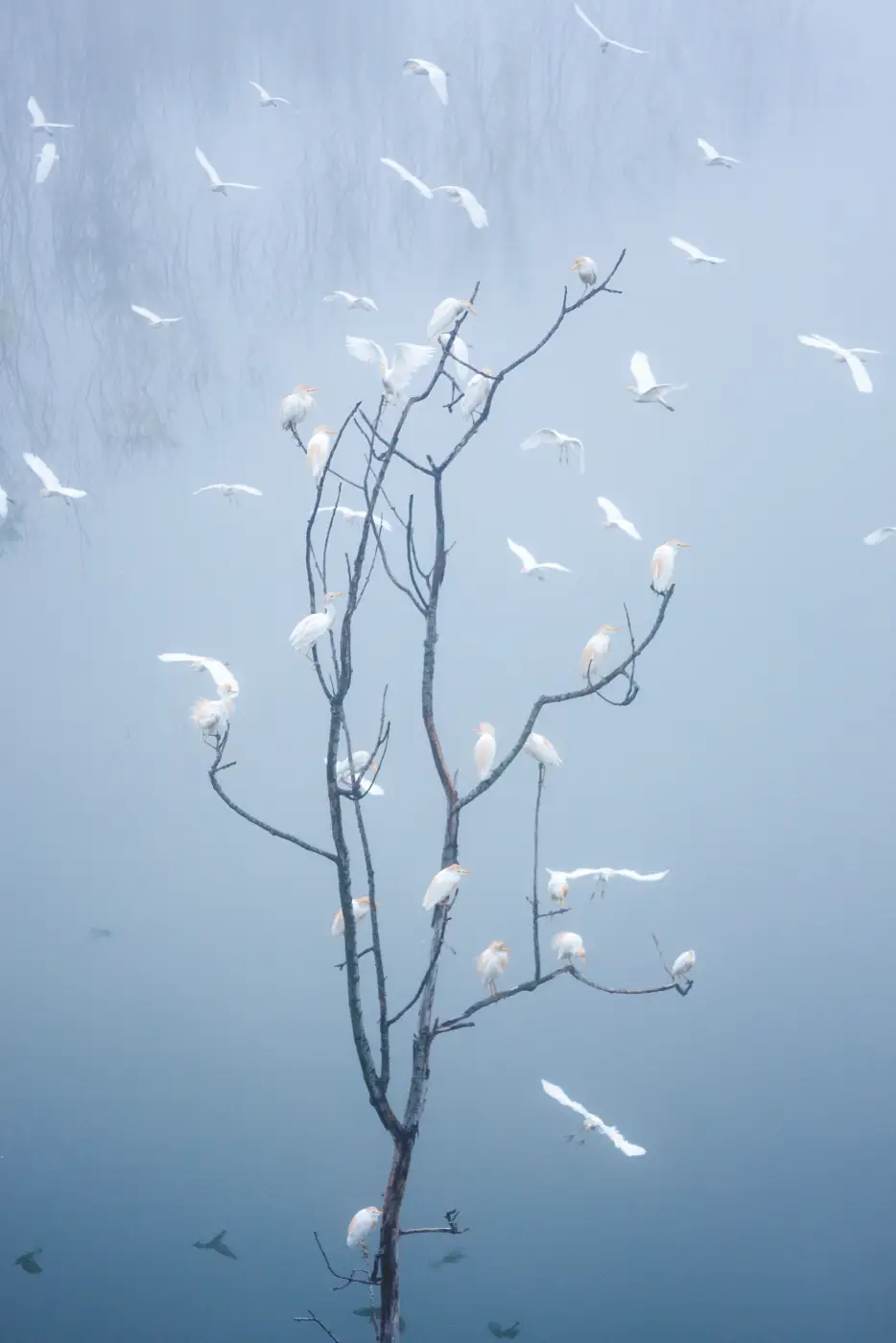
Those efforts yield perspectives that few people will ever experience for themselves. We do not merely see the swamp from the bank; we find ourselves in its midst, among dark currents, tree roots, mist and dense undergrowth. Nature appears not as a backdrop, but as a complex living system in which every organism is connected to its environment.
His approach reflects a broader development in nature photography. The spectacular moment remains important, but it does not stand alone. Together, the images tell a story about ecosystems, human influence and conservation.
From photo book to film
The long-term project also forms the basis of a cinematic collaboration with director Eric Bendick. Stone and Bendick spent four years producing moving images for an IMAX production and a miniseries for the American nature programme PBS Nature.
During the project, they recorded remarkable animal behaviour, including the extremely low-frequency calls of mating alligators and territorial fights between large hellbenders, giant salamanders that live in fast-flowing rivers.
The photo book can therefore be seen as the still-image heart of a much larger nature project. Where film adds movement and sound, the photographs give viewers time to study the landscape closely.
A 272-page call to action
At 272 pages and measuring 24 by 30 centimetres, American Amazon is a generously produced photo book. Mac Stone aims to inspire more than wonder with the book. His photography is also a call to view wetlands and swamps differently. What may initially appear inaccessible, dark or even threatening proves to be one of North America’s richest and most vulnerable habitats.
American Amazon shows that a wilderness does not have to lie on the other side of the world to remain unknown. Sometimes it is virtually in the backyard, hidden among water, trees and an encroaching silence.
American Amazon - Mac Stone
Subtitle: Ancient Forests and Living Waters of the Wild Southeastern US
Pages: 272
Price: € 50.00
Publisher: teNeues