This article about Worldwide Pinhole Photography Day was published in 2008. Its content is historical, but pinhole photography remains a popular experimental form of photography.
That year, Worldwide Pinhole Photography Day fell on Sunday, April 27. Pinhole photographers around the world were set to take part, with the results to be posted on a shared website.
At the time, results from the previous year’s event could be viewed on the organization’s website. Workshops were also planned in various countries around the world for the day itself.
Basics
Pinhole photography is photography in its purest form. All you need is a light-tight box or can containing a piece of film or light-sensitive photographic paper, with a tiny hole that lets the image through. No lens—that is the secret of the pinhole camera.
The basics are simple and make it perfectly clear how photographic images are formed; a pinhole camera also provides an excellent starting point for explaining how lenses, angles of view, and focal lengths work.
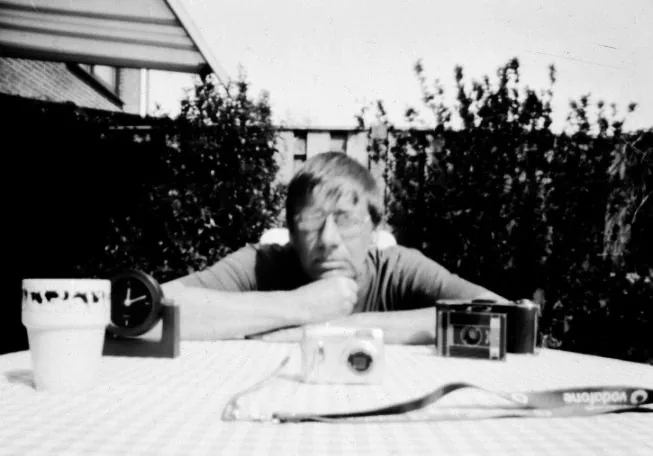
Camera was again my Twinings Earl Grey Tea tin can, with a 10 cm focal length pinhole. Exposure 60 seconds on long expired Agfa B&W paper on a sunny day. Developed, scanned, and processed (mirrored, positive, contrast, gamma correction) in Irfanview.
The smaller the hole and the smoother its edges, the sharper the image can be. Pinhole photographers are therefore undeterred by exposure times of many seconds, even in daylight, meaning that they work under conditions similar to those faced in the pioneering days of photography.
No lens—that is the secret of the pinhole camera
Pinhole photography is archaic, but it will never disappear entirely. Quite a few makers and enthusiasts build cameras in their garages or attics. At the time, Flickr hosted Pinhole Pools, and searching online for pinhole photography opened up a whole new world.