Obscure, thrilling, beautiful... urban exploration photography is all of these things. Those who practice this discipline need nothing more than a ruin no one has set foot in for years and a camera.
No one around. An abandoned site. A dilapidated factory building. Faint traces of the people who were once there. Shards of glass, a broken door, peeling paint. Where most people would feel uneasy, urban exploration photographers see beauty.
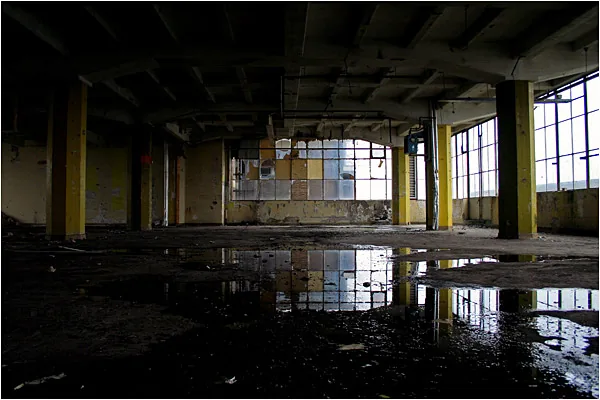
Urban exploration photography, also called urbex-photography, is a form of urban exploring, an English term that roughly means “exploring the urban environment.” Urban explorers enjoy venturing onto sites that are inaccessible or have been declared off-limits.
Rob Funcken has been part of the scene for about three years, essentially since he took up photography as a hobby. It must have been sometime in late 2005. Every day, Rob’s train passed the remote Koninklijke Verenigde Lederfabriek leather factory in Oisterwijk. His curiosity was piqued, and one afternoon he went there with a friend to take photographs.
This photography discipline is shrouded not only in an air of illegality, but also in secrecy
“It was a great adventure—fun and exciting. The atmosphere, all the strange objects, administrative documents... it was as though the building had been abandoned in a mad rush. They were no masterpieces, but I did manage to take a few photographs. More importantly, that afternoon sparked my interest in urbex photography.”
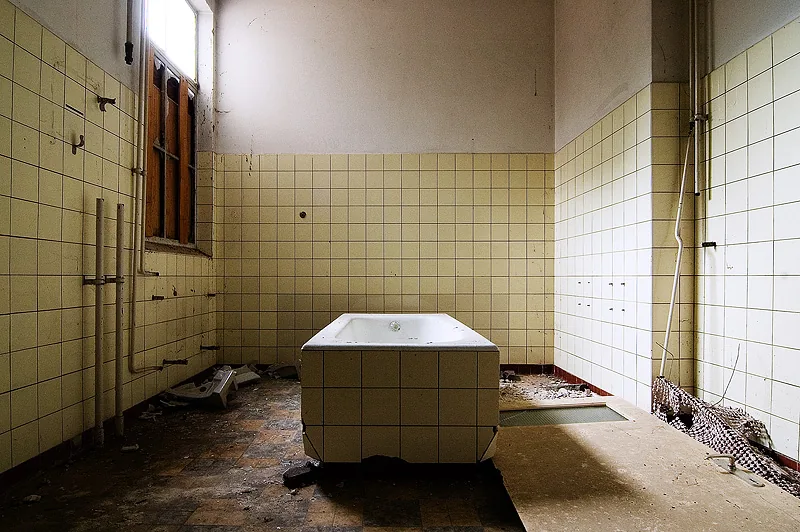
According to the 19-year-old graphic design student in Eindhoven, there are two types of urban explorers: those who go for beautiful photographs and those who go for the thrill, for whom a photograph serves at most as proof that they were there.
This photography discipline is shrouded not only in an air of illegality, but also in secrecy. To prevent fellow explorers—as well as vandals and thieves—from flocking to a site, urbex photographers do not readily reveal good locations. Keeping a low profile is the motto. This is also clear from the urbex forum, where locations are traded with great caution.
The most important ground rule in urbex circles is: leave nothing but footprints, take nothing but pictures
When asked about the best places, Rob points to Belgium. “Ideal. It’s nearby and has lots of vacant buildings. I know of an orphanage in the middle of the Ardennes. It has been empty for years and is simply being left to decay. Nearby, there is also a ghost hotel, a concrete structure that was never completed and has stood empty for years. Other good locations can be found in Germany’s Ruhr region.”
In the Netherlands, by contrast, the good locations can be counted on one hand. Another problem is that buildings are fairly quickly given a new purpose or demolished. But before a good urbex location can emerge, a building needs to stand untouched for a while, embraced by time and nature.
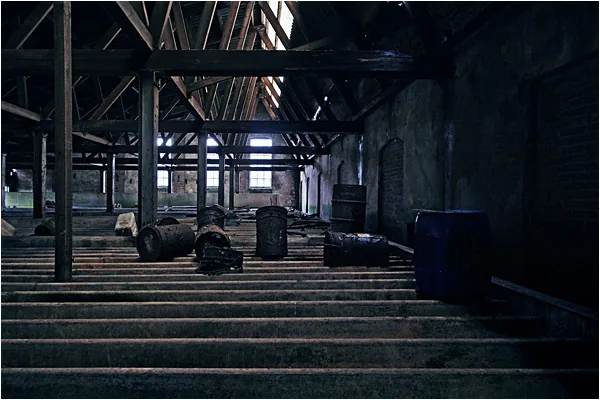
A second motto, if not the most important ground rule in urbex circles, is “leave nothing but footprints, take nothing but pictures.” This means that damaging the place is simply not done.
The Tilburg native does not force anything when entering a property either. He has never smashed a window or needed a crowbar. That would make him feel like a burglar. He would rather climb onto the roof in search of an open window. There is always a way to get in cleanly.
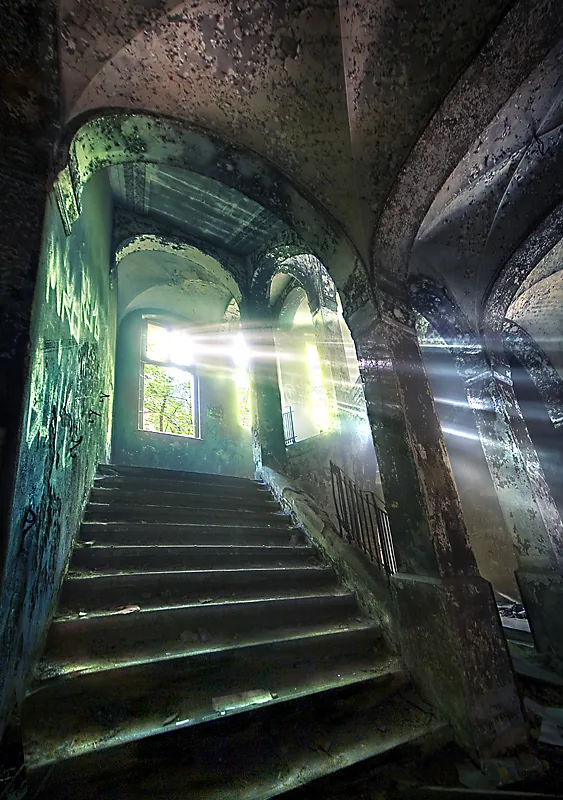
Sometimes he reaches for his set of screwdrivers or gives a door a hard shove. For that reason, Rob also wants nothing to do with graffiti artists. In his view, graffiti can ruin a building.
Rob opens his bag to show, on request, the standard equipment carried by an urbex photographer: a tripod, cable release, flashlight, cell phone, and good, neutral-colored clothing to avoid attracting too much attention.
Rob: “I’m a loner and keep to myself, but for safety reasons I never go alone. It’s scary. You can always get into trouble. You might encounter a homeless person or a couple of cowboys. And you are in there with all your expensive equipment.”
Although Rob never encountered a criminal during his roughly 25 visits to various locations, he did have “a brush with the law.” The incident at the old canning factory in Cuijk made him sweat for a moment.
Before a good urbex location can emerge, a building needs to stand untouched for a while, embraced by time and nature
Together with a friend, he had climbed in through an open window. After about fifteen minutes of taking photographs, they suddenly saw a car pull into the yard. Hiding among racks and cobwebs, Rob heard the open window being boarded up.
Then came footsteps, drawing closer and closer, and suddenly a burly construction worker and his coworkers were standing right in front of him. Three minutes later, the police had arrived as well.
Sometimes the police don’t understand that all you want to do is take photographs
“They thought we were copper thieves... Sometimes the police don’t understand that all you want to do is take photographs. A 50-euro fine for being on restricted property. But the photographs more than made up for it afterward.”
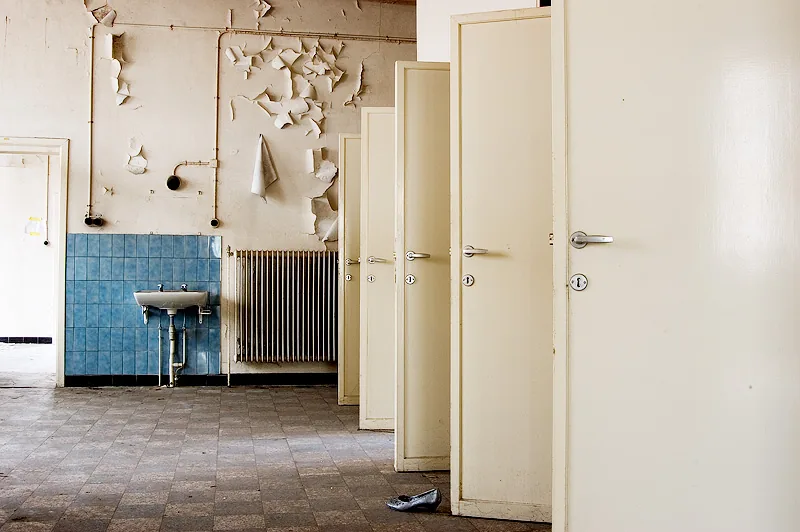
Shoe: the focus is on the rhythm of the doors, oddly interrupted by the shoe. The slipper, which was already there and was not placed there specifically, is an object you would not expect to find in such a place.