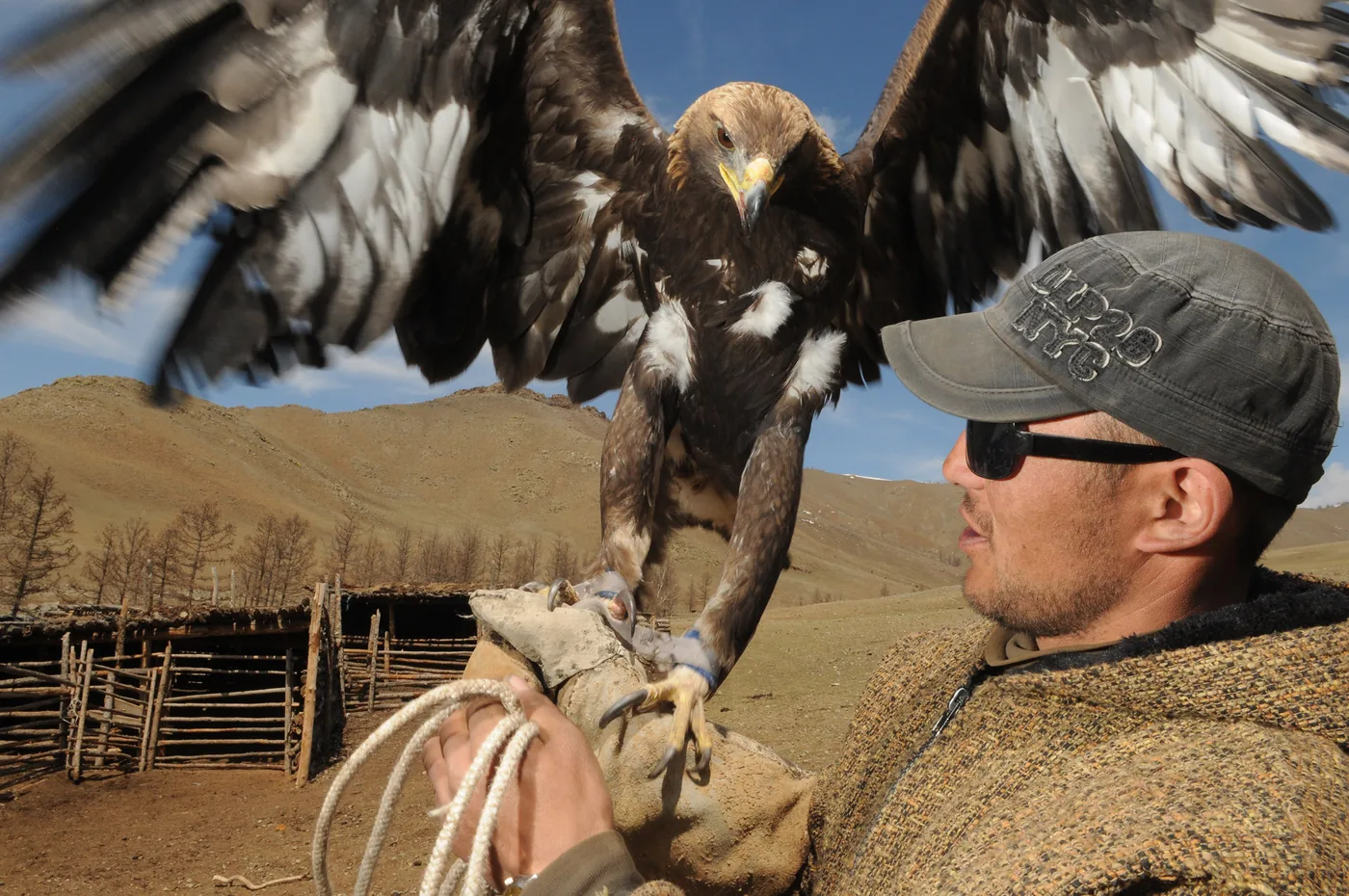
photo: © Tom van der Leij - Golden Eagle
Photographer Tom van der Leij travels the world, encountering all kinds of subjects along the way. In Moscow, he boarded the train to Beijing and got off twice during the journey.
I had always wanted to make the world's longest train journey: the Trans-Siberian Express from Moscow to Vladivostok, covering more than nine thousand kilometers across the Siberian tundra. Instead, I took the Trans-Mongolian Express—or, more precisely, the Trans-Baikal Express.
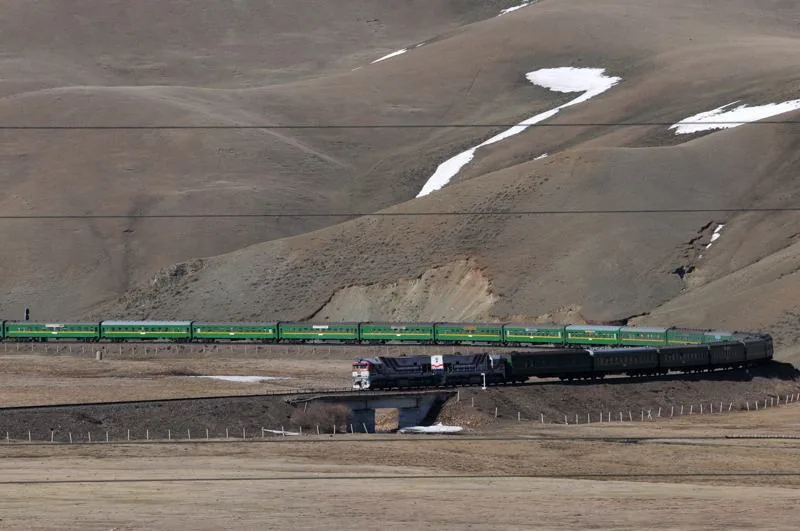
I chose this route because I was eager to see Lake Baikal, the world's oldest and deepest lake, and experience the Mongolian steppe. The first five thousand kilometers also follow the same tracks as the Trans-Siberian. At Irkutsk, the route turns southeast and ends in Beijing, for a total of 7622 kilometers.
Moscow is exciting and impressive. Then, late one evening, the whistle suddenly sounds and the journey begins. You quickly surrender to the rhythm of the train. Still, spending three and a half days in a climate-controlled car surrounded by stern Russians who become 'approachable' only after extreme amounts of alcohol is not especially thrilling.
With the neck strap wrapped three times around my wrist, I can just squeeze the camera through the small window
Nor is the bleak view of nothing but the white trunks of still-bare birch trees particularly inspiring. The godforsaken hamlets along the tracks look equally desolate.
Yet I am never bored. I read, take an afternoon nap, step onto the platform during every longer stop, buy some noodles, chat with fellow passengers, and do a little work on my computer (because my compartment has an electrical outlet!).
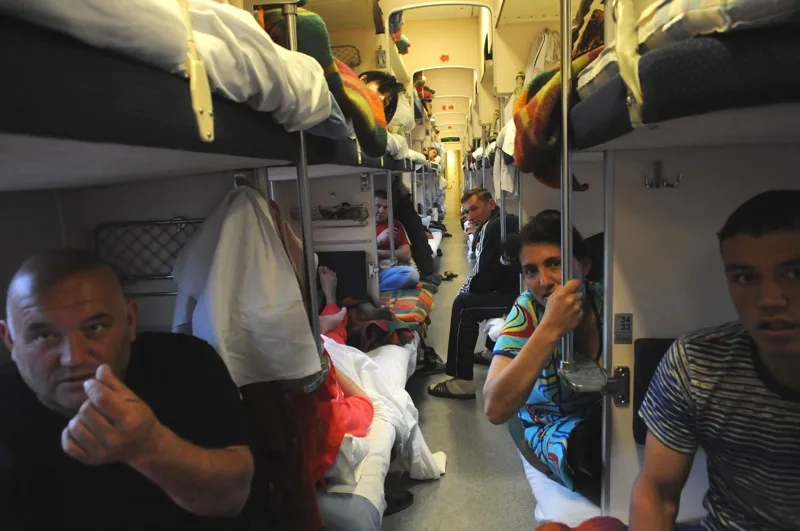
I am almost relieved that none of the windows can be opened, since there is not much of interest to photograph outside anyway. Only once do I find a small window that tilts inward. With the neck strap wrapped three times around my wrist, I can just squeeze the camera through it and, using a fast shutter speed take a few photographs on instinct.
The conductor soon orders me to close it again because I could disrupt the air-conditioning system. This happens just as the train enters a series of curves that offers a magnificent view of its front and rear. Photographing through the glass does not produce satisfying results.
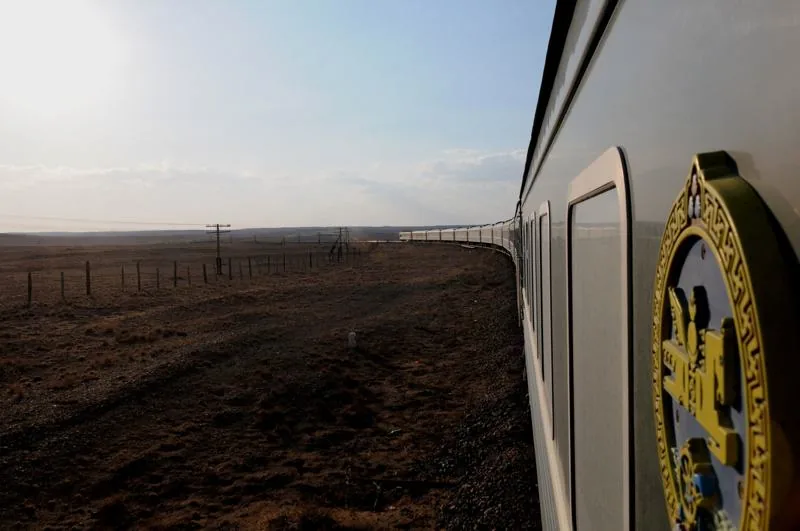
Fortunately, there is plenty to photograph inside the train. You can walk left or right, toward the front or the rear. The dining car is always busy, as is the back of the train. There, in the cheapest class, cultures and customs mingle in a cheerful jumble.
People invite me to have a glass of vodka, and with plenty of gestures I manage a reasonable 'conversation.' The stern faces turn out to be much friendlier than expected. Unfortunately, many people do not want to be photographed. So I discreetly take a few shots from the hip, smile politely, and pretend not to understand them.
At Irkutsk, I leave the train and travel to Lake Baikal. It is still spring; ice floes drift here and there, and the mountaintops around the lake are covered in white snow. It is still morning, and the sun breaks through.
I could not wish for a better gift, so I head out. The lake has unique flora and fauna, including many endemic plants and animals. In the distance, I see three freshwater seals watching curiously.
When I try to grab him by the collar, he runs around me and kicks my bag
At the end of the day, I climb a hill with a magnificent view. The lake lies calm as a mirror, but mighty Baikal is ever so treacherous. Enormous storms can arise here.
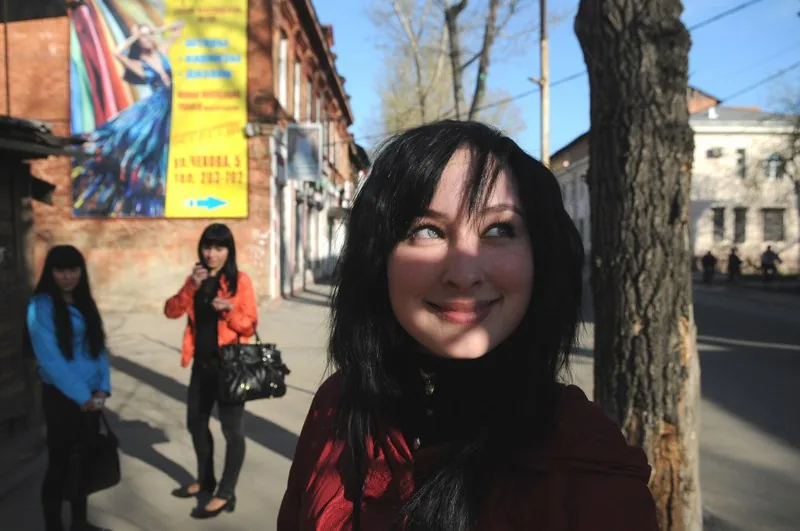
The next day in Irkutsk, I walk through an old neighborhood. While photographing a dilapidated wooden house, I am chased away by a Kazakh boy barely twelve years old. When I calmly show him what I am doing and continue, the child reaches for my camera.
Indignant, I shout at him to stop. He picks up a bottle and swings it at my lens. When I try to grab him by the collar, he runs around me and kicks my bag. Completely bewildered, I try to catch him, but he is too quick and runs away. With a heavy bag on my back, a camera in one hand, and groceries in the other, I am not very agile.
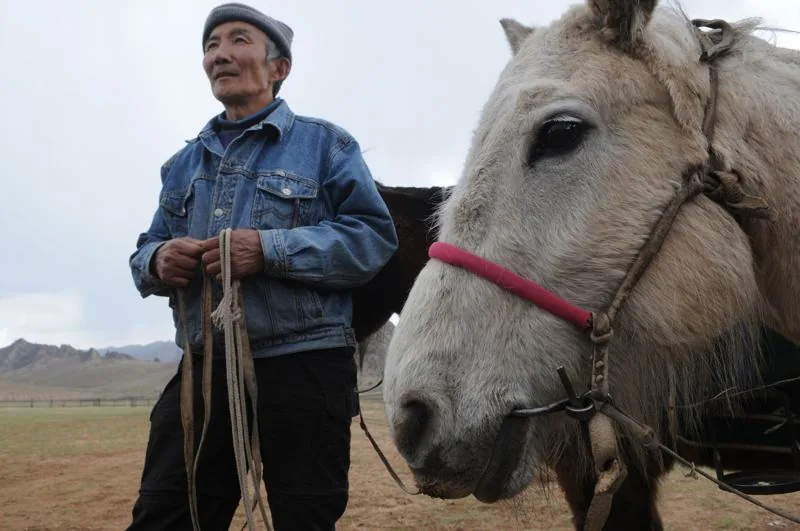
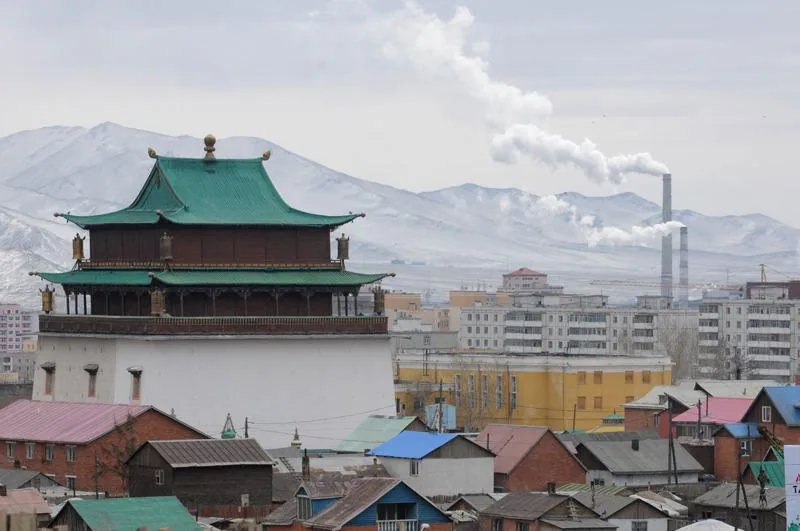
The train to Ulaanbaatar is much older than the one on the first leg. The landscape has gradually changed considerably. Deciduous trees have given way to endless grasslands, with grazing horses and the occasional ger, a Mongolian tent. The capital is highly photogenic because of its contrasts. Venture just beyond the 'center' and you enter a neighborhood filled with ger tents.
A drive of just under two hours takes you to Terelj National Park. Tourism has reached this area too, as the many new resorts and those still under construction show. Most are neatly fenced plots with rows of ger tents inside.
They have little or nothing to do with Mongolian tradition. Fortunately, the guide from the Dutch company Tiara Tours knows how to take me to a genuine ger. A Mongolian woman spontaneously invites us in for tea, and her son shows us his golden eagle.
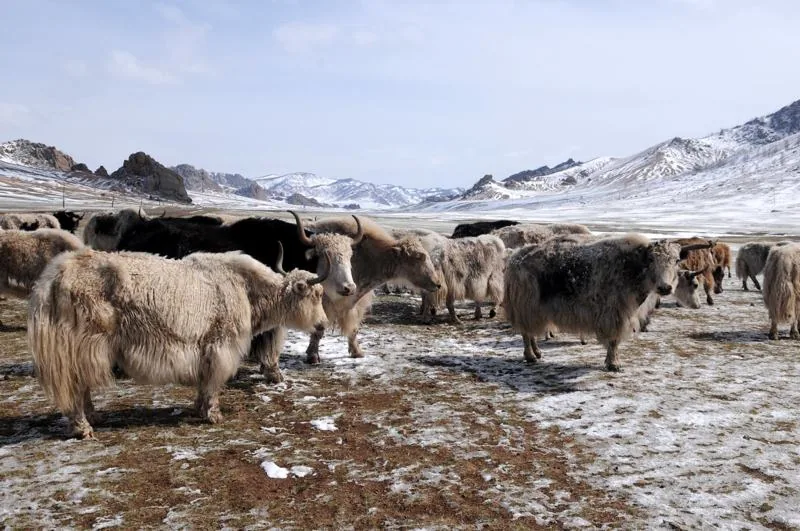
That evening, I have electricity to recharge my batteries; the cold drains them very quickly. When it snows the next day and I find myself among a herd of yaks, my photographic adventure is complete.
The final part of the journey crosses the Gobi Desert. The landscape becomes arid and barren until nothing grows at all. The night is extremely restless because of the border crossing into China, where we remain stationary for hours while the train is fitted with a different undercarriage to match the Chinese track gauge.
As daylight slowly appears, we discover that we are traveling through the mountains. The train lumbers through tunnel after tunnel. Urban development increases, and Beijing's outskirts appear in the early afternoon.
It marks the end of this journey but the beginning of another: after spending a week cycling in Beijing, I travel on to visit a friend in Hong Kong. I can hardly imagine a greater contrast with the train journey.
Want to learn more about this author and photographer? Visit the Tom van der Leij page.