photo: © LINK fotografie
Would you like to take strong professional portraits? Do you want to know what makes a profile photo truly effective—and the key to good professional portrait photography?
Below are seven tips that will help you create better professional profile photos.
Before the Photo Shoot
Tip 1: Consult with Your Subject
“You never get a second chance to make a first impression.” That is unavoidable in today’s digital age. Online, a profile photo can influence the opportunities someone receives. It creates the first—and most decisive—impression. The subject should understand this and consider what they want their profile photo to communicate.

What side of themselves do they want to show? Someone who works in health care may want to project something different on LinkedInthan an ING manager. Discuss this with your subject before the photo shoot. Ask the right questions and explore their answers. Want to know the three pillars of a strong presence that always work? I explain them in tip 5.
Tip 2: Offer Advice Before the Photo Shoot
Before your appointment, advise your subject on how to arrive well prepared for the photo shoot. Consider clothing, makeup, and coming to the studio well rested. What should they keep in mind?
Be Present and Take Your Time
Tip 3: Put Your Subject at Ease
Many people find having their photo taken stressful. Alongside public speaking, it is one of the most common causes of nervous perspiration. Put your subject at ease and take time for casual conversation. Revisit what you discussed on the phone and show genuine interest, both before and during the shoot.
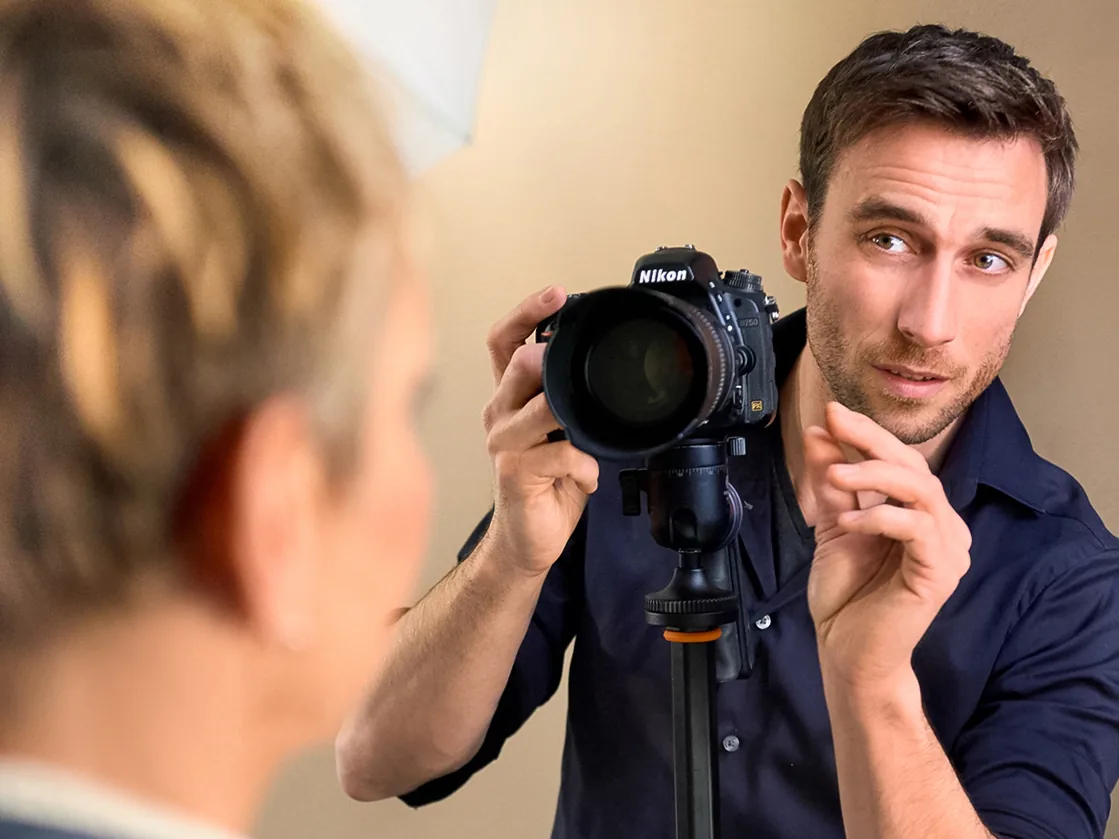
Tip 4: Make Sure You Are Relaxed
Make sure you are calm and relaxed too, so your subject can pick up on that mood. A good photograph is possible only when both of you feel comfortable. If you find it difficult to keep a conversation going or make a genuine connection, study some conversation and communication techniques. Portrait photography is ultimately about effective coaching and communication. For example, build rapport by subtly mirroring body language or adopting some of the other person’s vocabulary. You will immediately notice that this puts you more in tune with each other.
Coaching (Coaching Is Key!)
Tip 5: Coach Your Subject Toward the Desired Presence
The tips above have established the foundation for an enjoyable shoot. Now it is time to work actively on the presence your subject projects.
What lies at the heart of a strong professional portrait? Charisma—in other words, relaxation, warmth, and confidence. How do you achieve that? Through coaching. It is your job to guide the subject into a charismatic state of mind. Without coaching, we get a vacant gaze, which is precisely what we do not want.
Develop charisma by focusing on posture and genuine emotion. Maintain a good connection and keep the subject at ease (see tips 3 and 4). Offer only positive feedback and help the subject feel confident. If someone is very insecure, you could use a ‘power pose’ or visualization exercises. Good posture and relaxed breathing are essential for a powerful presence in a photograph. Want to capture a genuine smile? Do not ask the subject to smile; tell a joke or do something else amusing. It matters little what you try, as long as it works.

Tip 6: Know How to Handle Tension
As noted earlier, many people find having their photo taken stressful. Make sure you know how to respond to that tension. One person may freeze, while another withdraws; someone else may become boisterous or defensive. Be prepared to handle all these reactions. We do not want nerves in the photograph, but relaxation, warmth, and confidence.
The Final Result
Tip 7: Review the Photos Together and Offer Advice
Once the photographs have been taken, it is time to select the ‘winner.’ Many people find it strange to see themselves in a professional photograph and may become highly critical or feel they do not ‘recognize’ themselves.
Through effective coaching, you may have captured a powerful gaze and immediately see a fantastic photograph. The subject, however, may struggle to see themselves that way. The photo does not match the image they recognize from the mirror, or they focus too much on appearance: she thinks her nose is too large, while he believes his hair looks wrong. For someone with a negative self-image, seeing a powerful photograph of themselves can be confronting. They may not recognize themselves.
In that case, explain what you see: a powerful presence and a confident person. Take their insecurities seriously and do not dismiss them. Instead, explain that they are likely the only ones focusing on those details of their appearance. When insecurity gets in the way, it is your job to help them recognize a strong profile photo.
Because with the right coaching, a good professional profile photo follows naturally! :)