The Tamron 12-20mm F2.8 is a fast ultra-wide-angle zoom for full-frame mirrorless cameras with Sony E and Nikon Z mounts. Its range starts at 12mm, maintains f/2.8 throughout the zoom range, and is clearly aimed at photographers who want to shoot wide: starry skies, interiors, architecture, travel, and small spaces where a conventional wide-angle lens is just not wide enough.
On paper, a 12-20mm may sound like it is simply ‘a little wider,’ but in practice, 12mm truly changes how a photo feels. You not only fit more into the frame, but also increase the apparent distance between the foreground and background. A rock, chair, stair railing, or window frame close to the lens suddenly becomes an important part of the composition. The background appears farther away, lines become more pronounced, and a small space can look much larger than it really is.

That makes this Tamron interesting, but also demanding. An extreme wide-angle lens is not something you use to capture everything indiscriminately. Careless use can quickly lead to empty corners, leaning walls, or people stretched near the edge of the frame. Photographers who deliberately dare to get close, however, can create images that would be less distinctive with a conventional 16-35mm.
What 12mm Adds
On full frame, 12mm is truly ultra-wide. That is a step beyond the 16mm where many wide-angle zooms begin. For landscape photography, it means fitting more sky, foreground, and surroundings into a single frame. For interiors, it gives you a little more room to work in a small space. For architecture, you can include larger shapes, lines, and ceilings without immediately having to step outside or press yourself against a wall.
At the long end of the zoom range, 20mm is still useful as a somewhat more restrained wide angle. This makes the range more practical than a fixed 12mm lens. You can use the extreme setting when needed, but also return to 16, 18, or 20mm if the composition otherwise becomes too busy or distorted.
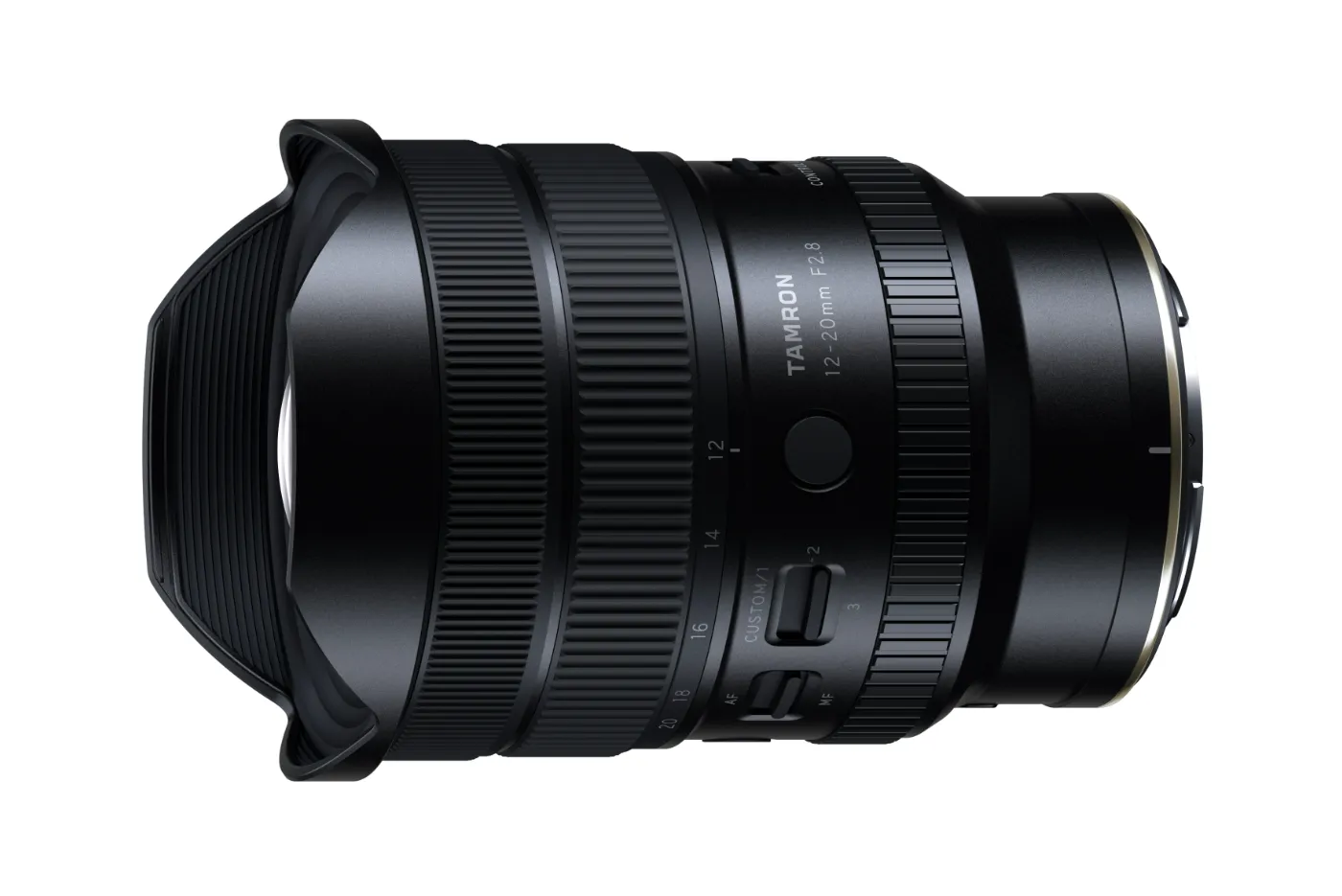
This places the lens in a different category from, for example, Tamron’s 16-30mm F2.8 Di III VXD G2 ultra-wide angle. That lens is more versatile for general wide-angle photography. The new 12-20mm is more specialized: less conventional, but stronger when you really want to shoot extremely wide.
Starry Skies and Night Landscapes
Tamron itself places a strong emphasis on astrophotography, and that makes sense. The combination of 12mm and f/2.8 is appealing for night landscapes because it lets you capture a large expanse of sky while gathering plenty of light. In star photography, lens speed is not the only consideration; how sharply points of light remain rendered near the edges of the frame matters too. According to Tamron, the optical design has therefore been specifically corrected for sagittal coma flare, a lens aberration that can cause stars in the corners to stretch into small wings or streaks.
That may sound technical, but the effect is simple: stars should remain stars, even outside the center of the frame. The difference can be visible particularly with the Milky Way, meteor showers, and nighttime landscapes with a prominent foreground. Anyone serious about astrophotography knows how quickly the corners of an image can become the weak point of a wide-angle lens.

Another useful feature is the MF Lock switch. It lets you lock the focus ring after focusing manually on the stars. That may seem like a small detail, but in the dark it is precisely the kind of practical feature that prevents a lot of frustration. A single accidental touch can be enough to leave an entire series of night photographs out of focus.
Interiors, Architecture, and Small Spaces
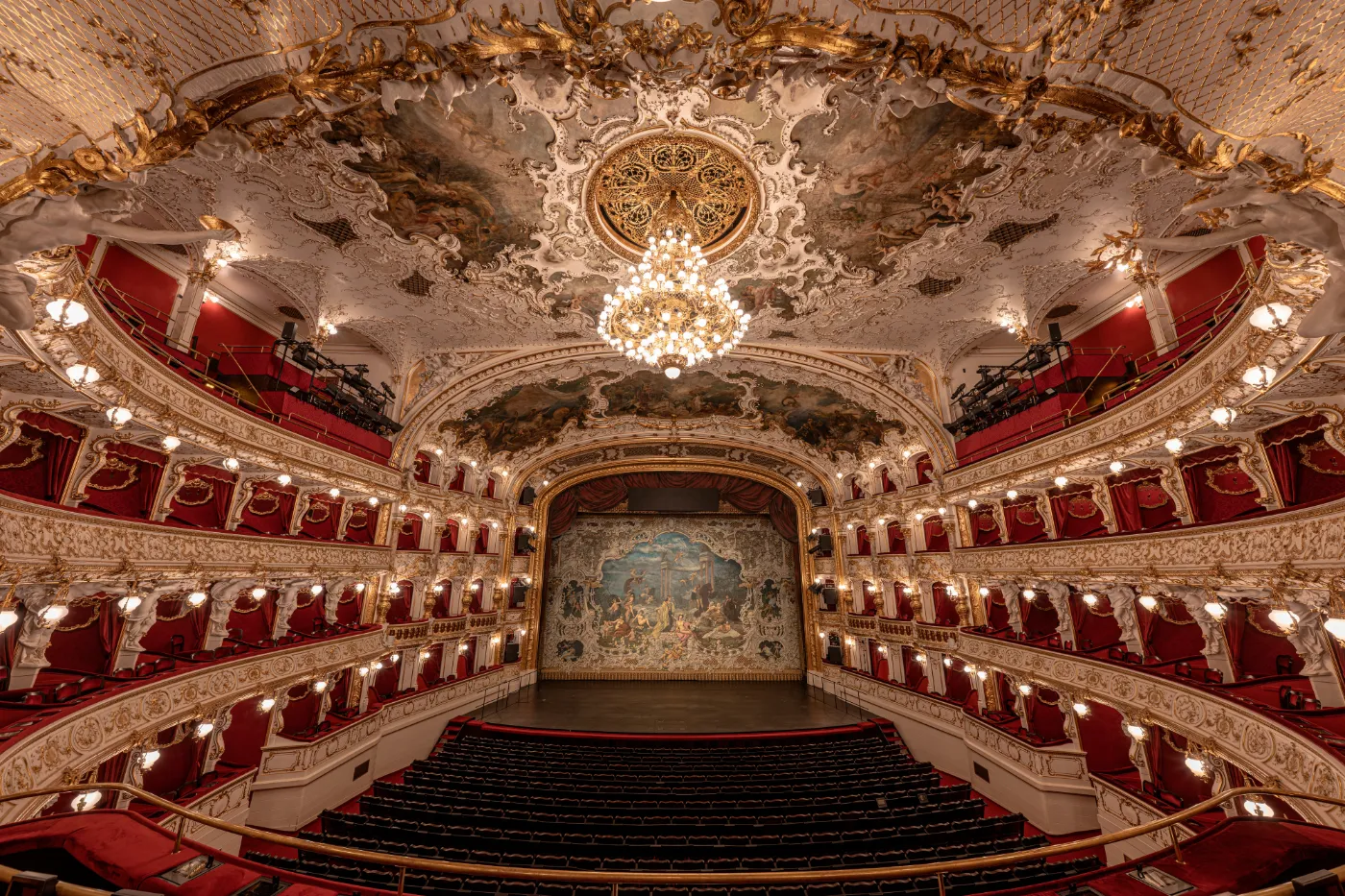
12mm is also interesting for interior photography. Think of hotels, stores, small studios, museums, churches, stairwells, or living rooms where you simply cannot move any farther back. A lens that starts at 12mm gives you more breathing room there than a classic 16-35mm.
But ultra-wide-angle shooting requires discipline, especially with interiors. If you do not keep the camera properly level, vertical lines will quickly appear to lean backward. Place people too close to the edge and their heads, arms, or legs will become unnaturally stretched. For architectural photography and interiors, 12mm therefore works best when you compose very deliberately: keep the camera level, use a strong foreground, maintain uncluttered edges, and pay close attention to what is happening in the corners.
The major advantage is that you can make scenes feel the way they do on location: spacious, tall, narrow, dramatic, or intimate. A small room does not merely have to be documented. With good use of lines and light, a 12mm image can also convey atmosphere and scale.
Up Close with a Wide Background
The short minimum focusing distance is also noteworthy. At the wide-angle end, the Tamron can focus from 18 centimeters, and at the 20mm setting from 28 centimeters. This opens the door to wide-angle close-ups: a flower, rock, detail, product, or object large in the foreground, with the surroundings still clearly recognizable behind it.

This is not macro photography in the classic sense of the term, but it can be very expressive. In a conventional close-up, the surroundings often disappear into blur. With an ultra-wide-angle lens, the location remains part of the image. A detail in an interior, an object encountered while traveling, or a plant in a landscape gains more context as a result.
This is, however, a stylistic device that can quickly be overdone. The closer you get to your subject, the more strongly its shape is stretched. That can work beautifully with rocks, flowers, architectural details, or products, but is less flattering for faces or body parts.
Professional Controls in a Compact Design
Despite its extreme range, the lens remains relatively compact. The Sony E version is 119.3 mm long and weighs 570 grams. At 121.3 mm and 585 grams, the Nikon Z version is slightly longer and heavier. For a full-frame ultra-wide-angle zoom with f/2.8 throughout the range, that is quite manageable, especially for photographers who take the lens to outdoor locations, cities, or nighttime settings.
The controls are clearly aimed at advanced users. The Sony E version has an aperture ring, while the Nikon Z version uses a control ring for aperture or exposure compensation. There are also customizable switches, a focus set button, and a USB-C port for use with Tamron Lens Utility and Tamron LINK. These allow functions to be assigned or adjusted for stills and video.
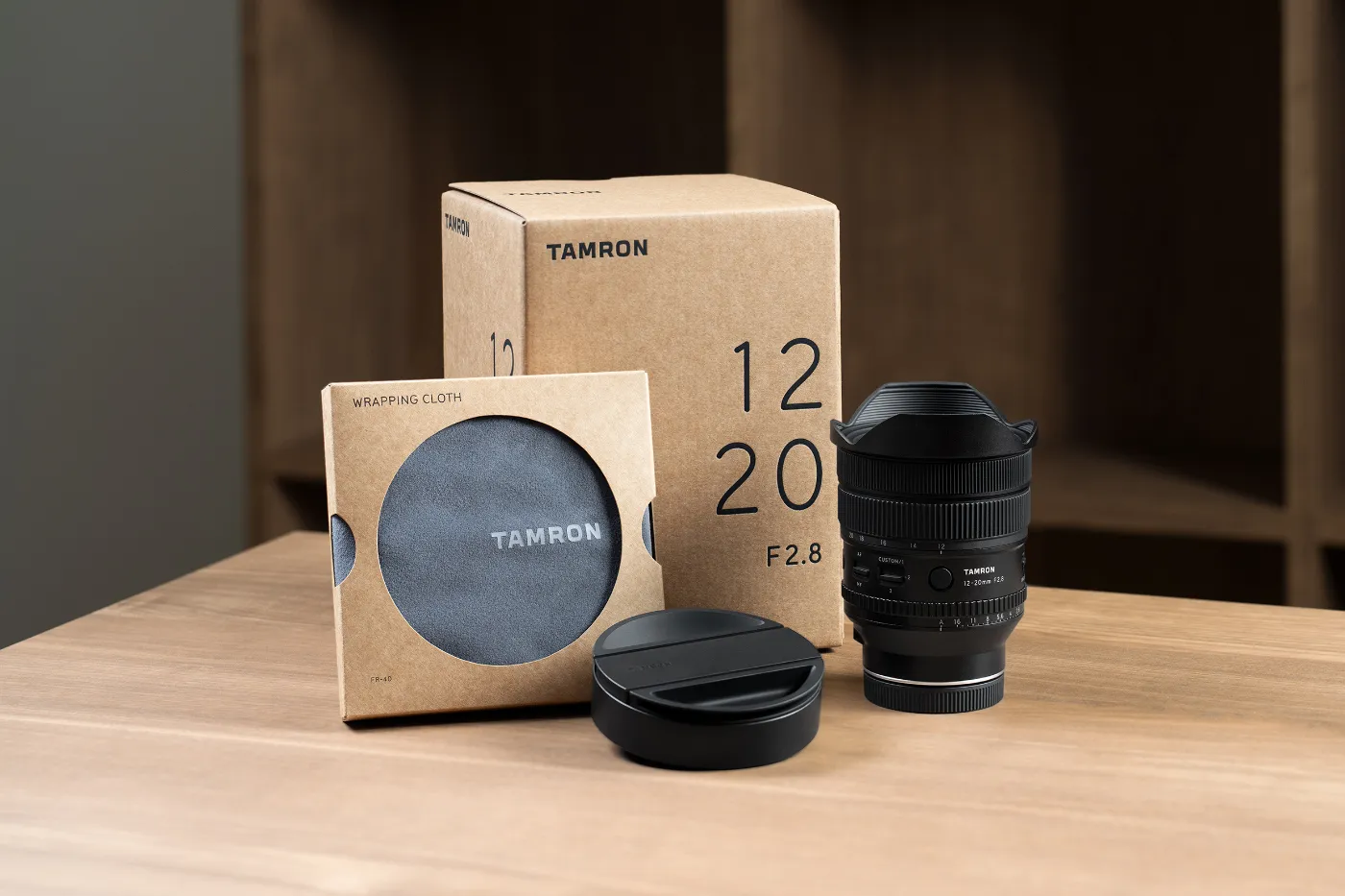
For filters, Tamron has chosen an integrated rear gel or sheet filter holder. This is particularly useful for landscape, cityscape, and night photographers who want to use ND filters or creative filters without placing a large filter holder on the front of the lens. A standard screw-in filter on the front is usually not a practical option with this type of extreme ultra-wide-angle lens.
The lens also features moisture-resistant construction and a fluorine coating on the front element. These are not spectacular features, but they are important for photographers working outdoors, for example in mist, spray, dew, or dust.
Where the Limitations Lie
The Tamron 12-20mm F2.8 is not a lens for everyone. Portrait photographers are more likely to reach for a 35mm, 50mm, or 85mm lens. Reportage photographers may miss having focal lengths beyond 20mm. And photographers who mainly shoot landscapes without really needing an extreme perspective may find a 16-30mm or 16-35mm more practical.
The greatest risk at 12mm is including too much in the frame. A strong wide-angle photo is not created by showing everything, but by having a clear foreground, line, or spatial structure. Without such an anchor, the image can quickly feel empty, cluttered, or chaotic.
The price also places the lens firmly in the serious segment. This is not an entry-level wide-angle lens for someone who occasionally photographs an interior, but a specialized lens for photographers who know that 12mm genuinely adds something to their work.
Price and Availability
The Tamron 12-20mm F2.8 (Model A084) for full-frame mirrorless cameras with Sony E and Nikon Z mounts is available.
The suggested retail price is € 1.699,00 including VAT for the Sony E version and € 1.799,00 including VAT for the Nikon Z version.