text: © Gallery WM
Many people regard today’s gas station as a necessary evil. Let’s be honest: gas stations are generally unattractive, take up a great deal of space, and are seen as symbols of the destructive use of fossil fuels, which of course harms the environment. Some would define them as “non-places,” much like highways, hotel rooms, airports, or shopping malls. The exhibition Searching for the Soul of Servicestations offers an eclectic view of gas stations, highlighting their many aspects—past, present, and future (do they even have a future?)—through a collection of photographs and paintings assembled over the years.
It is a cocktail of nostalgia, history, aesthetics, romance, social concerns, economics, realism, and a dash of humor: a cautious attempt to uncover the soul of the gas station and transform a rather dull subject into something lively, creative, and almost sexy.
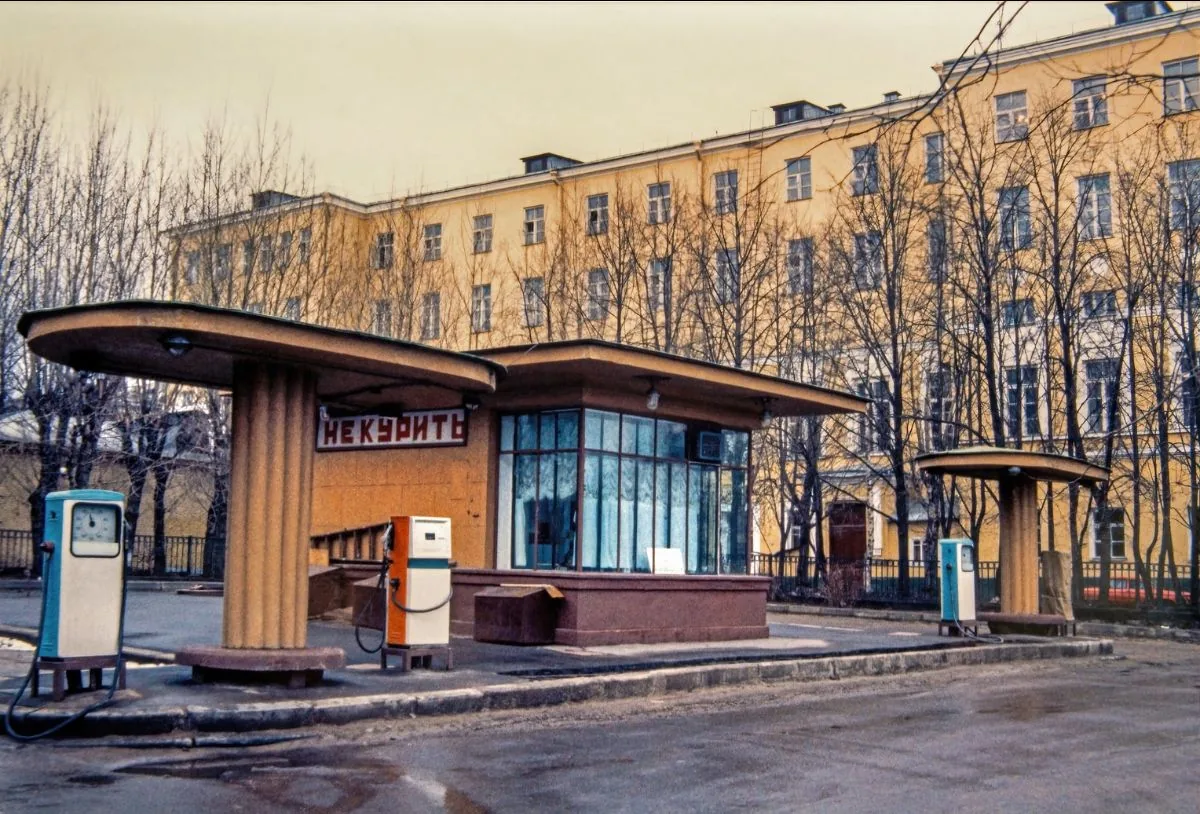
The term “non-place” was coined by French anthropologist Marc Augé. In his study Non-Lieux. Introduction à une anthropologie de la surmodernité Augé refers to spaces of transit where people stay briefly and remain anonymous. These spaces do not have enough significance to be regarded as “places” in an anthropological sense—that is, places capable of providing shared points of reference and reinforcing common identities.
Nevertheless, these establishments have become a ubiquitous part of our surroundings. Every vehicle user—whether an owner, driver, or simply a passenger—is entirely dependent on them, voluntarily or otherwise. These public-service sites are intrinsic to our daily lives and automotive mobility.
Historically, gas stations, fuel pumps, and filling stations have existed around the world for more than a century. As a result, many older stations have become objects of nostalgia, romance, or even history. Many are now abandoned, falling apart, or repurposed. They possess a certain charm as symbols of another era—perhaps a more optimistic, hypercapitalist time when aspiring to own a car was considered almost as important as owning a home. Today, for some people, an abandoned roadside gas station is simply a symbol of a decadent capitalist society in decline.
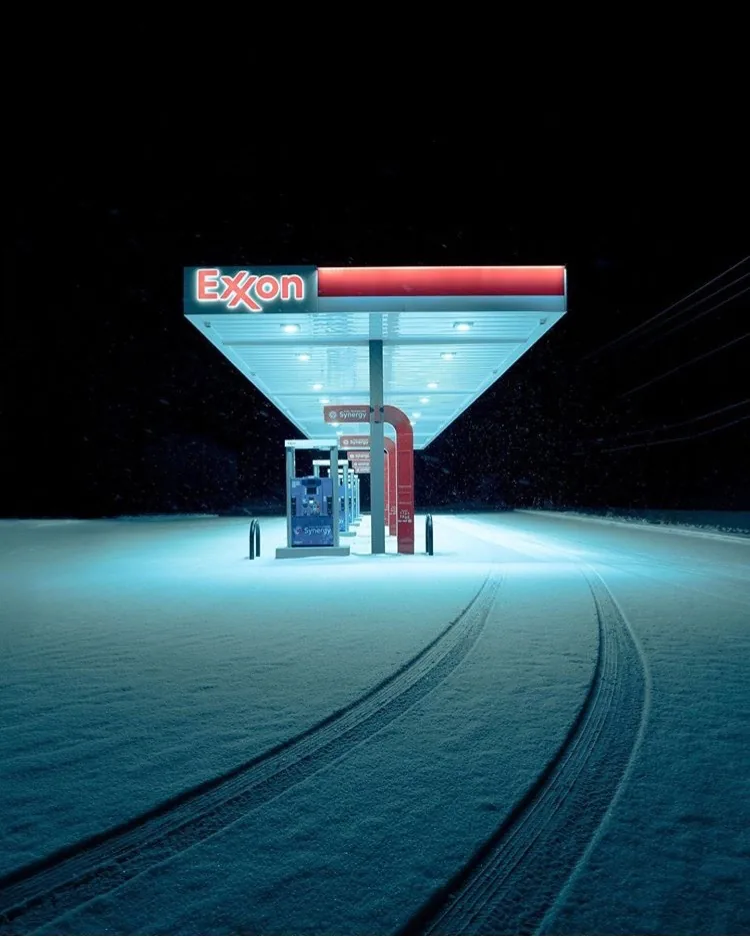
Although we may not like to admit it, gas stations also have a distinctly social dimension. They are almost never regarded as social spaces, yet gas stations and other roadside fixtures abound in social life. People use them as meeting places, rest stops, convenience stores, coffee stops, and sandwich shops, and they use services such as car washes. People constantly cross paths and interact there.
Gas stations generally have a short lifespan. They must be continually renovated, refurbished, and upgraded to remain competitive. In the Netherlands, the lifespan of functional structures is generally calculated at 7–10 years. Regular renovations are needed to maintain competitiveness, including new pumps, a larger store, and a new look. Gas stations that have lost their competitive edge are soon closed down or, in some cases, simply abandoned.
Changes in legislation resulting from urban redevelopment or new environmental requirements can also dictate the fate of gas stations, potentially forcing relocation or even removal, especially in city centers. This is clearly visible in Amsterdam, where the number of gas stations has fallen dramatically in recent decades.
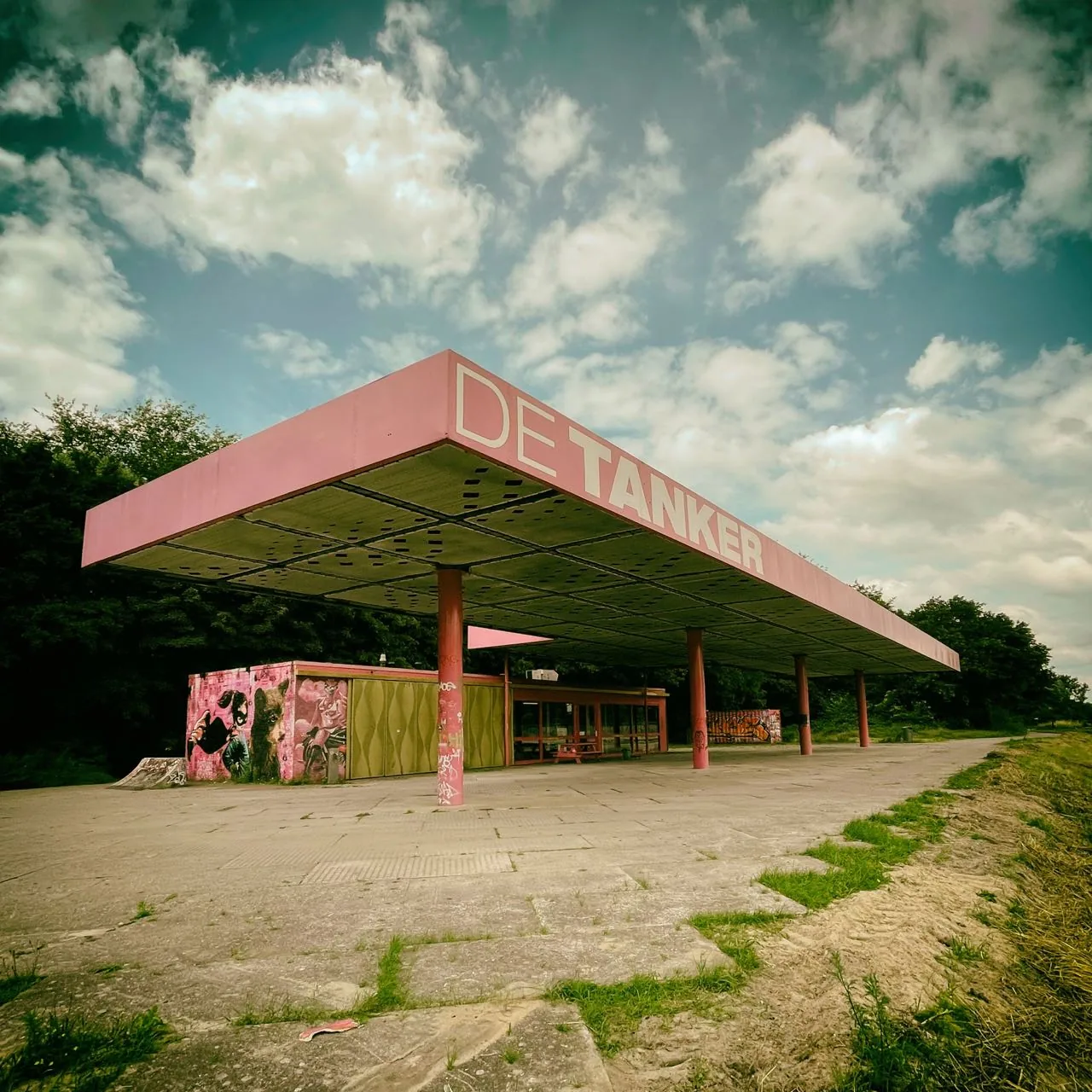
Standalone urban gas stations are slowly disappearing; others are being redeveloped along highways or integrated into large shopping centers.
Some gas stations have found a new life, such as one in Amsterdam-Noord that became an arts and events venue. More ironic, perhaps, is a station near Martigny, Switzerland, that became a roadside sex club, although it too has since closed.
Works by: Jaap Bijsterbosch, Harrie Blommesteijn, Valentin Brindesi, Birgitt Busz, Eric Chan, Jessie Chaney, Chéri-Cherin, Matt Dunlap, Odile Gesse, Araun Gordijn, Dutch den Hollander, Jacques Meijer, Wanda Michalak, Simon Nicoloso, Adrienne M. Norman, Chris Olszewski, Jorgen Polman, Paul Schäublin, Tomek Sikora, Nico vd Stam, Mees van der Starre, Marek Stawski, Michiel Voet & Jeroen Bisseroux, Witkowska-Verbunt, Krzysztof Wojciechowski, Marion Post Wolcott
Searching for the Soul of Servicestations (Searching for the Soul of Gas Stations)
curated by Paul Schäublin & Sebastian Rypson
November 26 through December 24, 2021
Gallery WM