When Philippe Halsman fled Paris to escape the Nazis in 1940, he could take very little with him. His camera and twelve prints were almost all he managed to save of his work. Most of his early photographic output remained behind in a city he was forced to leave.
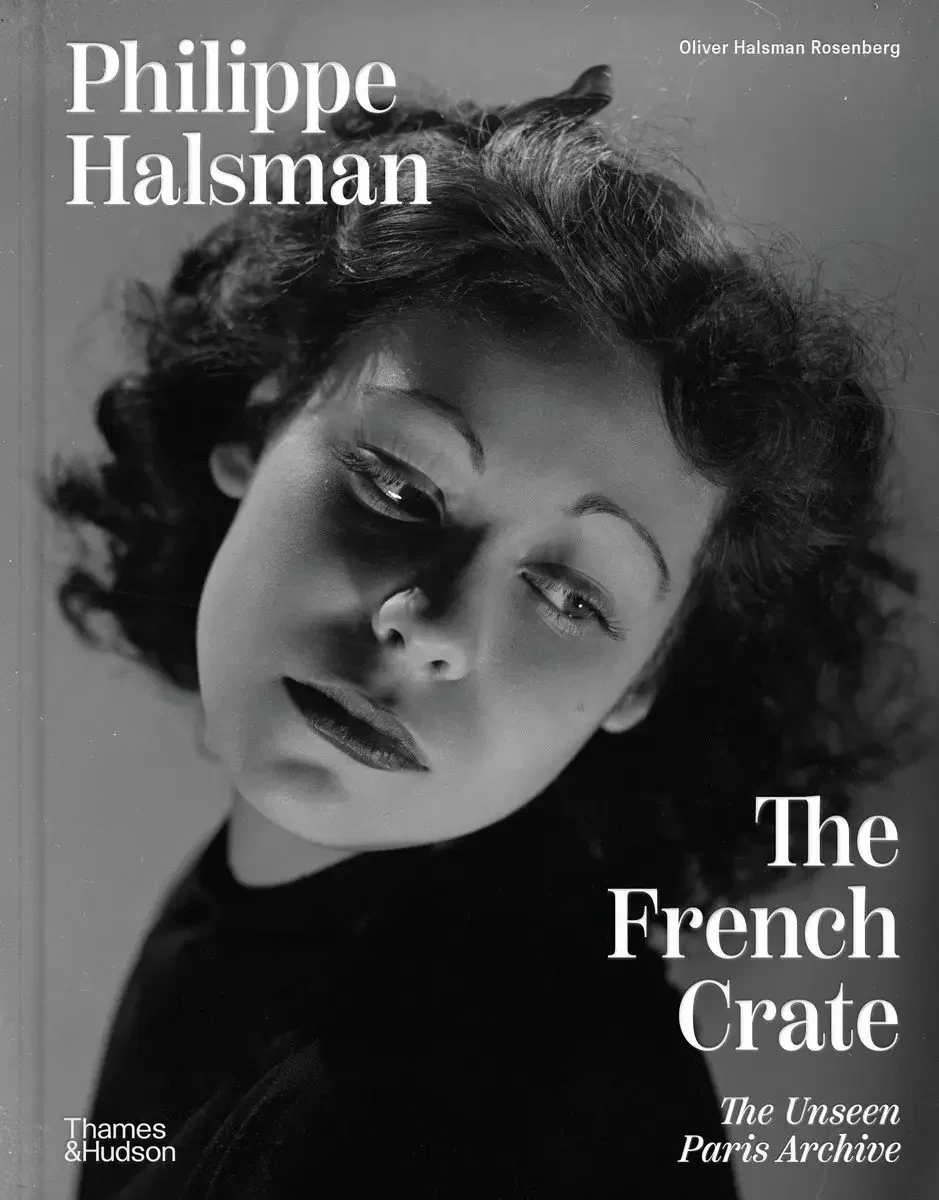
After the war, a crate of glass negatives was returned to him. The photographs then slipped from view and remained untouched for decades. Much later, Halsman's grandson Oliver Halsman Rosenberg rediscovered the crate. A selection from this little-known archive now appears in Philippe Halsman: The French Crate – The Unseen Paris Archive.
A photographer finds his approach
Philippe Halsman was born in Riga in 1906 and settled in Paris in the early 1930s. In 1931, he abandoned his engineering studies to devote himself entirely to photography. He photographed friends and people from the Paris art world while developing his own approach to portraiture.
Popular portraits of the period were often soft and idealized. Halsman chose a more direct approach. He wanted to show not only what someone looked like, but also something of their character. The psychological depth of Fyodor Dostoevsky's novels was one source of inspiration.
The glass negatives from the rediscovered crate date from these early Paris years. They reveal a photographer who was not yet world-famous, but whose interest in faces, gestures and personality was already clearly apparent.
Sixty little-known glass negatives
At the heart of the book are sixty carefully preserved glass negatives from the 1930s. The images depict friends, artists and other people in Halsman's circle. Some photographs feel thoughtful and concentrated; others leave room for the playfulness that would later become so characteristic of his work.
Precisely because these images fall outside Halsman's familiar body of work, they offer a different perspective on his development. These are not photographs selected retrospectively as highlights of a long career. They were made at its beginning, when Halsman was still shaping his photographic language.
The material itself matters, too. Glass negatives are fragile, heavy and difficult to store. That these plates survived an escape, a war and decades in storage makes their reappearance remarkable. The book also highlights the importance of photographic archives. They can hold images that suddenly reveal an unfamiliar early chapter in a well-known body of work.
In total, The French Crate contains 126 illustrations, including 101 in black and white and 25 in color. Alongside the rediscovered photographs, the book provides context for Halsman's Paris years and later life.
From Paris to New York
Halsman's life changed dramatically as German troops approached Paris in 1940. With Albert Einstein's help, he was able to escape to the United States. He started again in New York and became one of the twentieth century's leading portrait photographers.
He photographed celebrities including Marilyn Monroe and Einstein, and eventually produced a record 101 covers for LIFE magazine. He collaborated with Salvador Dalí for 37 years. Their partnership produced some of the best-known and most playful portraits in photographic history.
One was Dalí Atomicus from 1948, for which Dalí, furniture, cats and buckets of water flew through the studio. It took 27 attempts before all the elements came together at the right moment. Read more about how the photograph was made in Jumping Dalí.
That later work is technically sophisticated and often carefully staged. The Paris glass negatives show where Halsman's attention to facial expressions and human psychology began. This makes The French Crate a missing chapter in his development, rather than an isolated curiosity.
A family archive reopened
The rediscovery of the glass plates is thanks to Oliver Halsman Rosenberg, the photographer's grandson and co-manager of his estate. He compiled the book and gave the images the context needed to understand their place within Halsman's work.
The French Crate is therefore not a conventional retrospective devoted solely to famous photographs. Instead, it centers on the unexpected survival of work that seemed lost. We encounter Halsman before his American success, before the LIFE covers and before his celebrated collaboration with Dalí.
The images show that the foundations of his later portraiture were already being laid in Paris. There, Halsman searched for the moment when a face reveals more than a recognizable likeness. Almost a century later, those early explorations have come to light again.
Philippe Halsman: The French Crate – The Unseen Paris Archive – Oliver Halsman Rosenberg
Pages: 168
Illustrations: 126, including 101 in black and white and 25 in color
Format: hardcover
Dimensions: 21.5 × 27.5 cm
Language: English
US list price: $50.00
Publisher: Thames & Hudson
US publication date: November 17, 2026
ISBN: 9780500030462