The Nikon D3 was greeted with great enthusiasm, as was the D700. Now there is the Nikon D3x, with twice the resolution. What do you gain, and what do you give up?
The D700 and D3 are generally regarded as very well-balanced cameras. They produce highly detailed photographs with extremely low noise, even at higher ISO settings.
Images shot at ISO 3200 still look remarkably good. 12 million pixels on a 24 x 36 mm sensor provide an exceptionally broad range of uses.
Factor 2
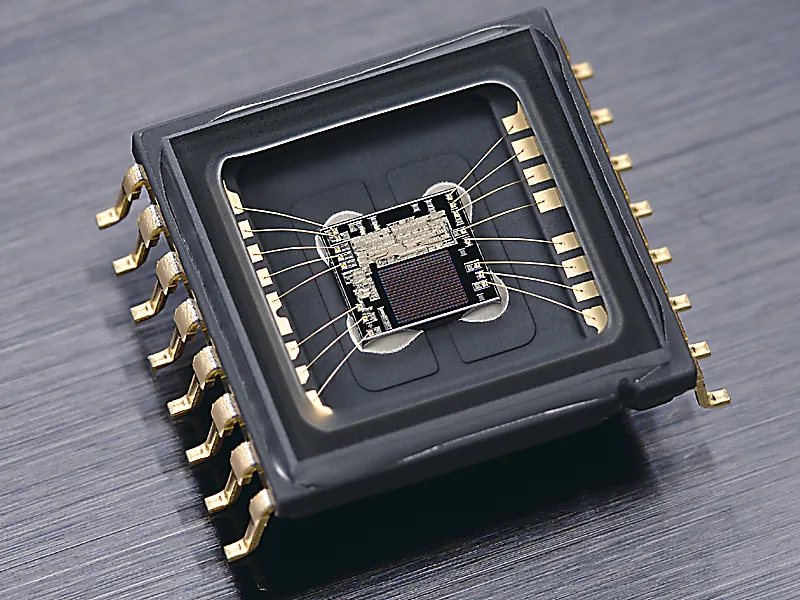
The D3x’s CMOS sensor uses smaller pixels, giving it a resolution of 24.5 million pixels—twice as many. To achieve a meaningful improvement, the pixel count has to increase substantially. Smaller pixels place much greater demands on electronic image processing.
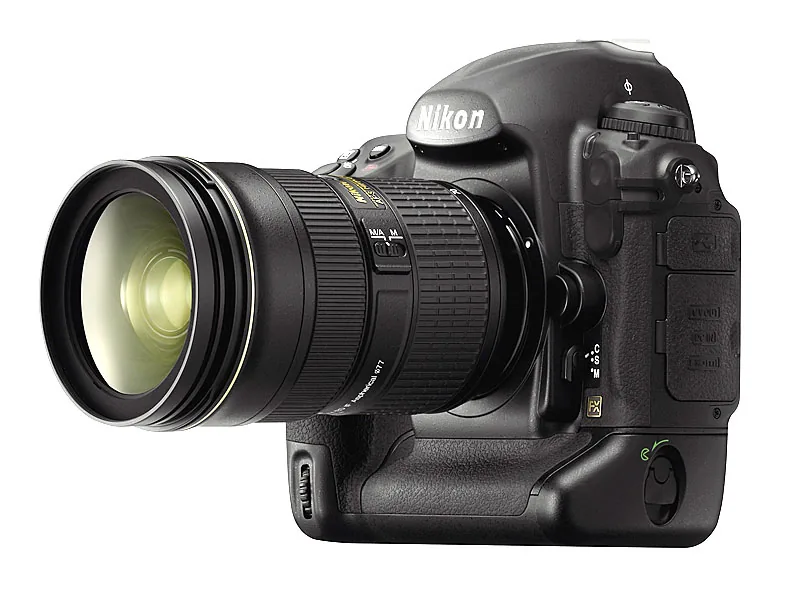
You gain resolution but have to work harder to keep noise under control. The net benefit is smaller than the factor 2 increase in pixel count. That is clear even before assessing the D3x’s results. It explains why such a large jump in pixel count was necessary and may temper expectations.
Antarctica
At the time of publication, there was a kind of testing frenzy focused solely on which camera produced the best image. An EOS 5D Mark II, a Sony Alpha 900 and a Nikon D3x were compared as though the average reader genuinely faced this buying dilemma. It quickly became a pixels-per-euro-or-dollar exercise, in which the D3x was dismissed as ‘too expensive.’ We will return to that price shortly.
Wet pixels are no use at all—absolutely none
Such comparisons sometimes overlook essential considerations—arguments far more important than differences in noise and resolution.
One illustration is a report from an Antarctica reader expedition organized by the respected website The Luminous Landscape.
There were 77 participants: 70% used Canon and 30% used Nikon. 6 of the 26 EOS 5D Mark II cameras failed, 3 of them permanently, while all the Nikons—mostly D700s—continued to work.
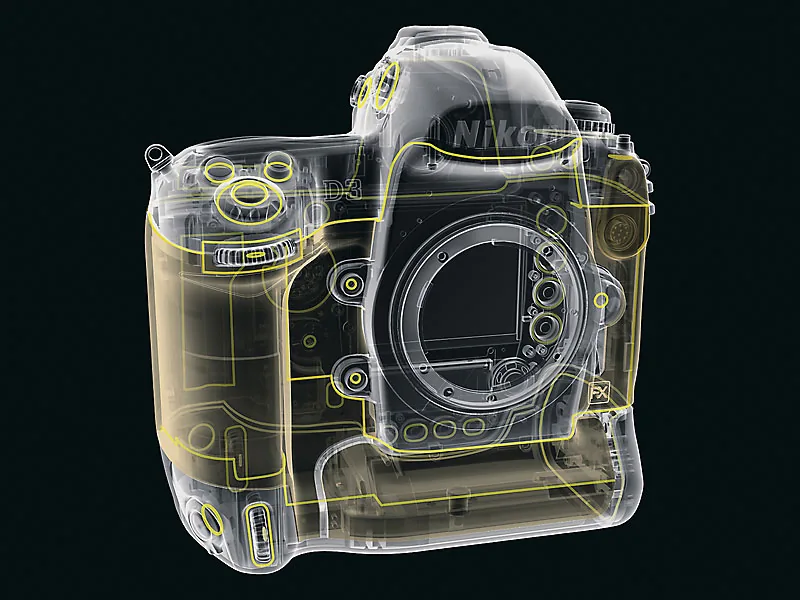
This is not a pro-Nikon story. It simply shows that buyers sometimes place emphasis on the wrong things: the EOS 5D Mark II was not protected against moisture entering the body, whereas the Nikon D700 was. Wet pixels are no use at all—absolutely none.
With the D3 and D3x, Nikon aimed for the highest possible reliability. These cameras can withstand rough, intensive and prolonged use and are extensively sealed against dust and moisture. All of this is taken to an even higher level than on the D700.
At higher ISO settings, RAW processing is more strongly recommended; ISO 6400 then remains very workable
Large
Whereas the D3 was designed for the broadest possible range of applications, the D3x was made for photographers seeking the highest possible level of detail. When is that useful? For anything displayed at a large size. The difference will never become apparent in a product photograph used in an A4 magazine advertisement.
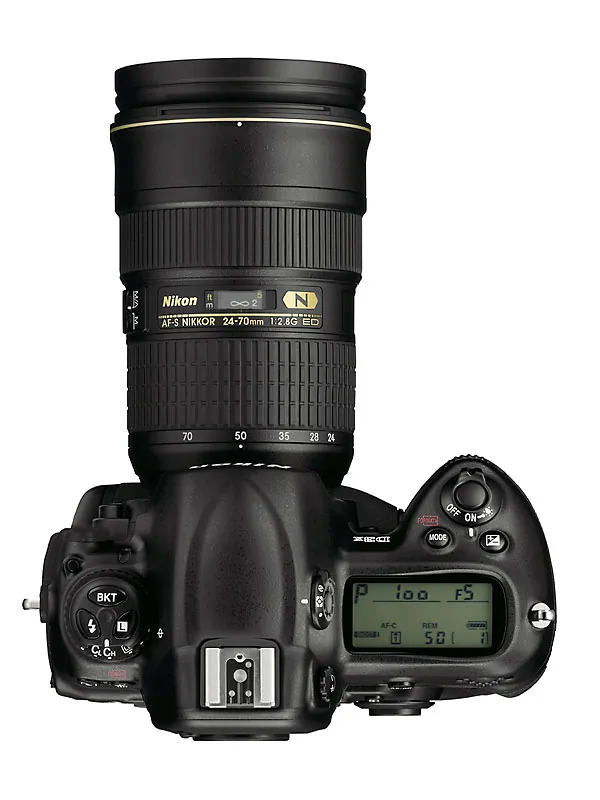
It does become apparent in large displays and large-format exhibition prints—big photographs viewed from very close range. With first-rate optics such as the 2.8/24-70 and 2.8/14-24, the sharpness of tiny details is genuinely astonishing. The impact is literal as well as visual. Here, a D3x clearly distinguishes itself from a D3 or D700, especially at lower ISO settings. That is where the greatest benefit lies.
Even at ISO 1600, however, the D3x delivers richly detailed, sharp results. Noise is not yet intrusive, and out-of-focus backgrounds retain the smooth softness produced by a lens such as the 24-70 mm.
Because the noise has a very even pattern, it is acceptable, particularly given the continued high level of detail. JPEG files are immediately very usable, so you do not feel compelled to work in RAW, although further gains are certainly possible with Nikon Capture NX. At higher ISO settings, RAW processing is more strongly recommended; ISO 6400 then remains very workable. In that respect, the D3x is still reasonably versatile.
DX
Nature photographers were eagerly awaiting the camera’s performance in DX crop mode. In that mode, a 500 mm lens gives the field of view of a 750 mm lens, although with fewer pixels—10.5 million in this case. Switching is quick and requires only one action, without entering the menus. A gray frame in the viewfinder indicates what will fall outside the photograph. This is useful for action photography because the larger viewfinder area lets you see what is about to enter the frame.
DX crop mode is activated automatically when a DX lens is mounted on the camera. This automatic function can, of course, be disabled. That is useful when working with a frame-filling fisheye for DX format: set the camera to FX, or full-frame, and the result is almost a circular fisheye. Other DX-format lenses can likewise use a larger image circle over part of their zoom range. At the time, photographers were already experimenting with this extensively online.
It is clear that Nikon thus leaves room for a camera that might, for example, be called the D700x
But back to the question: is DX mode a serious option on this camera? It leaves 10.5 MP, at 12 bit rather than 14 bit, and offers up to 7 fps rather than 5. Image quality in terms of sharpness and noise was just above that of a D300 and closer to the level of a D90. In other words: good.
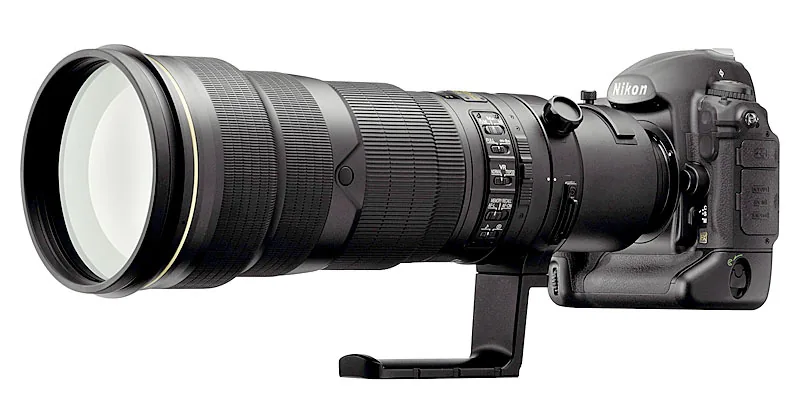
Overall, the photographs showed a very balanced distribution of tonal values and rarely required correction. RAW processing could sometimes recover a little more separation in the highlights. Active D-Lighting could also improve the highlights at capture, as well as the midtones and darker areas. The new Extra High setting did indeed provide very strong correction.
Paying the Price
Otherwise, there is as much to say about the D3x as about the D3: a magnificent viewfinder, a precise and fast autofocus system, extensive customization and programming options, and excellent handling. With the 2.8/24-70 mounted, it forms a very substantial combination.
The D3x is an absolute top performer in image quality, construction and operation. It was expected to offer the highest level of reliability—consider the D3’s reputation—and working professionals were prepared to pay for that. This was the only explanation for the D3x’s high price; the sensor and electronics providing the extra resolution could never by themselves justify the price difference over the D3.
It is clear that Nikon thus left room for a camera that might, for example, be called the D700x. There was enormous interest in this image quality at a more affordable price.