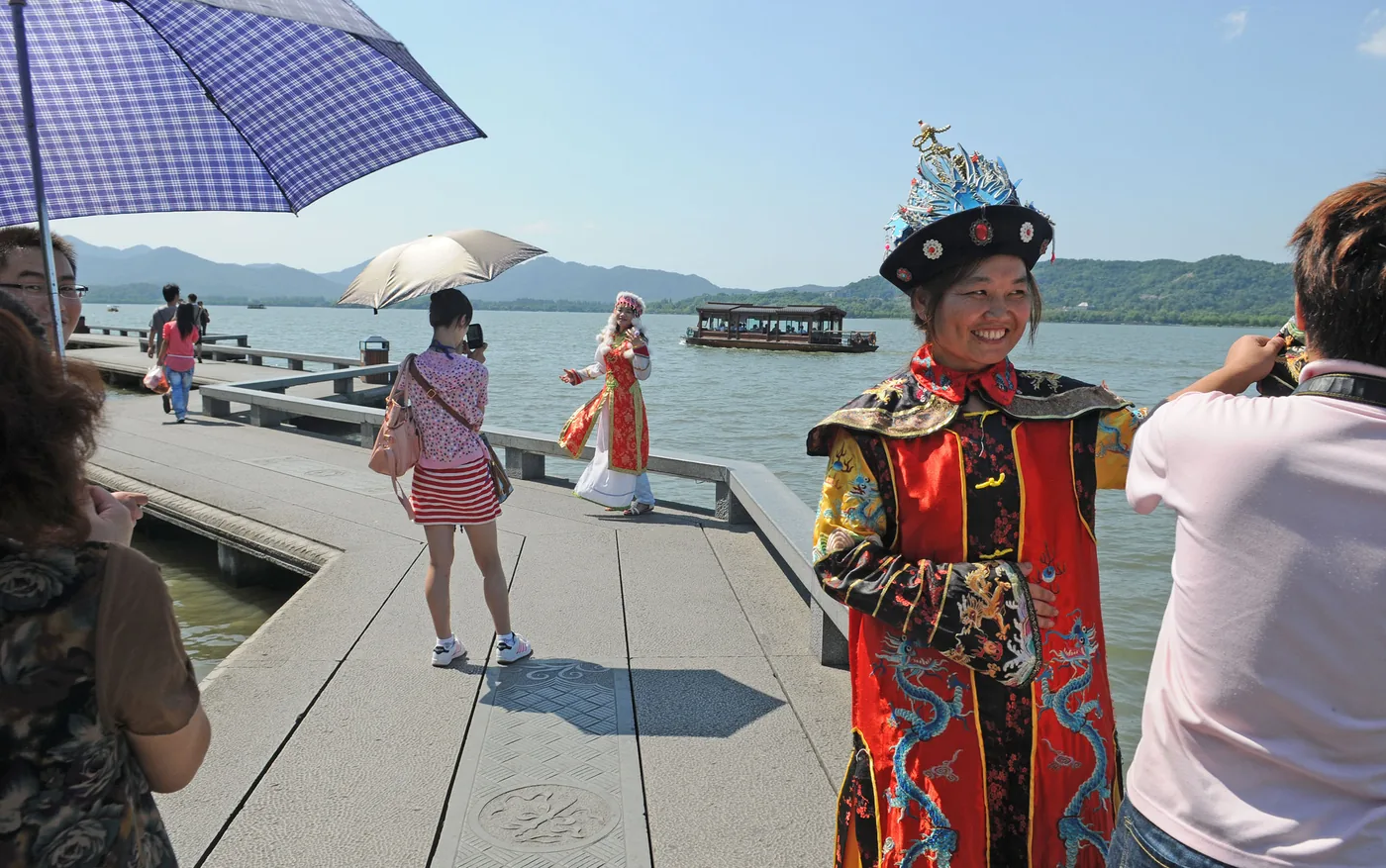
Photographer Tom van der Leij travels the world, and all kinds of subjects pass before his lens. During his travels in China, he discovered that the Chinese are the new Japanese.
The electric train stops in the middle of a desert-like landscape. The exclusively Chinese tourists, my traveling companion Jona Dekker, and I step out. At that very moment, several actors dressed as nomads emerge from behind a large hill on camels. The picture is complete.
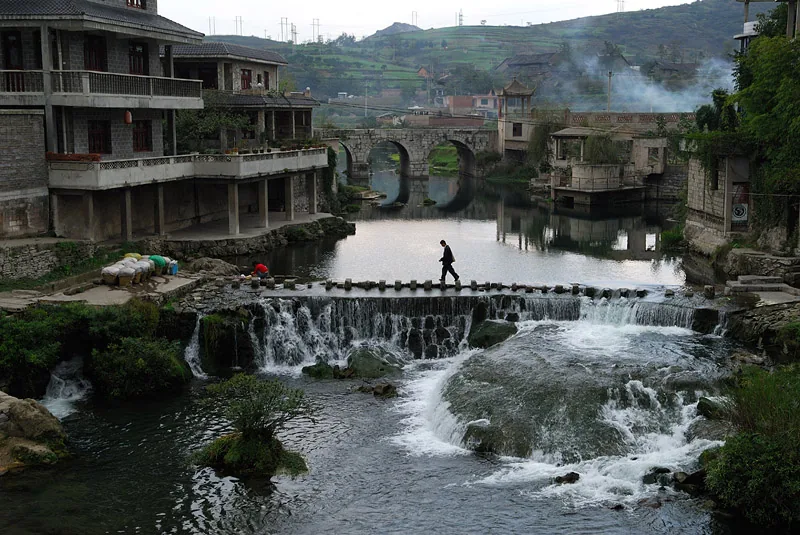
The biggest and most expensive cameras emerge from my fellow passengers' large camera bags, and a line of photographers shooting pictures forms around us. Welcome to China in 2010!
I first traveled through China in 2006. Together with writer Natascha van Aalst and our Chinese interpreter, we flew south from Guangzhou and spent nearly two weeks driving around the area near Guiyang. Its diversity of ethnic minorities makes this region a paradise for anthropologists.
The biggest and most expensive cameras emerge from my fellow passengers' large camera bags
Many minorities live in this area, and in some cases they have preserved their cultures quite well. The Miao and Dong peoples live there. We visited villages along remote, winding mountain roads, or across rivers in the middle of nowhere.

No Western tourists could be found in these fascinating areas; in fact, we did not see any during those two weeks. Chinese tourists, by contrast, were abundant a few hundred kilometers away.
At least, they were abundant where they were expected to be. Tourist trains traveled across a manicured landscape on paved roads, through parking lots built especially for large numbers of tour buses.
A fence surrounded the authentically reconstructed Dong village, and visitors had to pay admission. It was packed with Chinese tourists. Hundreds at a time—many from the wealthier east and southeast—stood there taking exactly the same photograph.
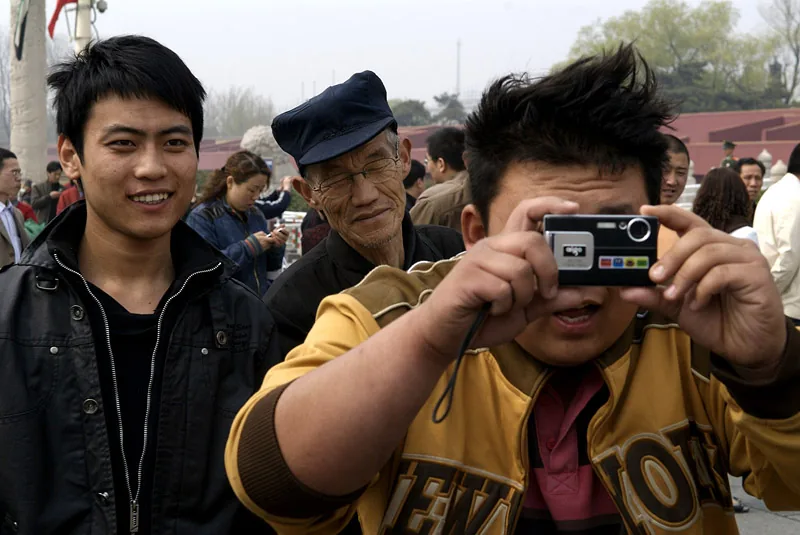
The cameras they used ranged from film cameras and disposable cameras—with rolls of film—to the first bulky digital models. Someone would pose in front of a Dong woman dressed in 'traditional costume,' and click: exactly the same picture was made. Usually it stopped after one or two clicks. With my Nikon D70, I felt like a real photographer.
I know, of course, that tourists all over the world photograph historic buildings and museums, but in China it still struck me as more large-scale and directed.
I discovered this when I visited Beijing two years later, in 2008, just before the Olympic Games. It is a hugely impressive city, with so much history and culture that it makes your head spin—and an excellent place for a photographer to cut loose.
This is especially true in the parks, where thousands of elderly people—from seventy to more than a hundred years old—do their morning exercises. Proud smiles invariably appear on their wrinkled faces when they realize you want to photograph them.
Perhaps because it was such an everyday scene, it did not interest other photographers or tourists. At major sights such as the Forbidden City and Drum Tower, the tourists were mainly Chinese.
Beijing is also an excellent place for a photographer to cut loose
This time they were better equipped, with cell phones and pocket-sized digital cameras at the ready. They shot enthusiastically, as though they were all taking a course in architectural and portrait photography—photographing one another in front of an important building or beside the portrait of the great helmsman Mao Zedong. Once again, they made the standard snapshots.
A week later, we traveled to the Great Wall, known in the Netherlands as the Chinese Wall. A Chinese woman and a Mongolian man who were friends of ours took us to a remote section, where we walked all day without meeting a single tourist. Tourists appeared only at the starting and finishing points, and almost all of them were Chinese.
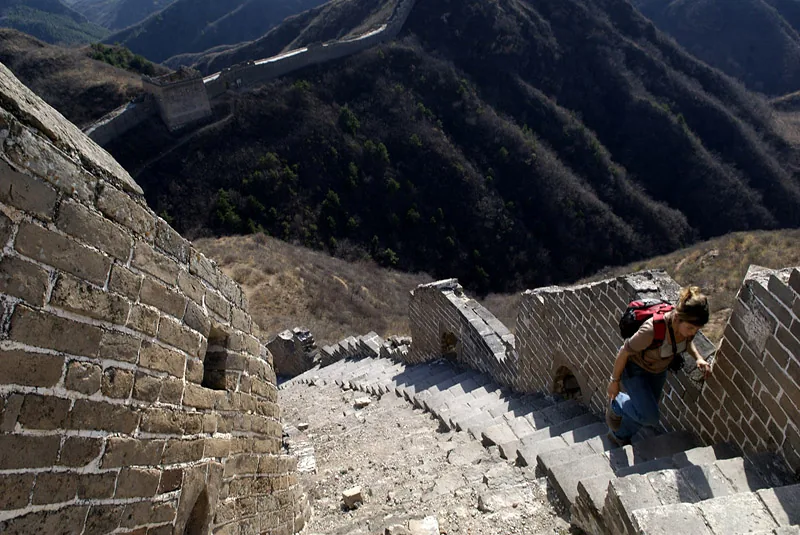
Once again, countless tour buses filled the parking lots around the many restaurants and stores selling tourist trinkets. Everyone made the same photographs that they also bought farther along as postcards.
In October 2010, I traveled to Urumqi in western China, near the border with Kazakhstan. I went with writer Jona Dekker on assignment for Columbus Magazine. We planned to follow the region's Kazakh nomads as they exchanged their summer encampment for a winter one.
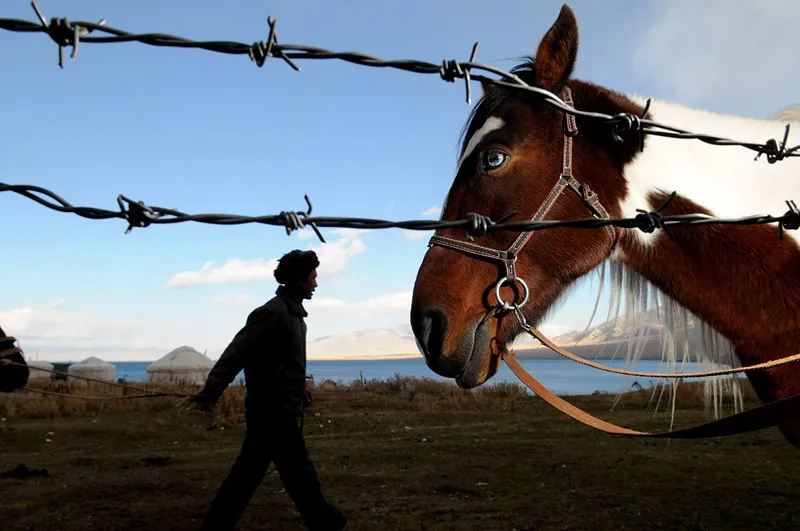
It is beautiful to watch the herds move along ancient tracks worn into the grassland. I did not see a Westerner for at least a week. But the Chinese tourists were there.
They were not in the places I found especially photogenic—inside the yurts or among the herds—but in a purpose-built theme park intended to boost the region and let Chinese visitors experience the beauty of their 'own hinterland.' They arrived by the busload.
This time they carried the latest digital SLR cameras, extremely expensive lenses, and enormous tripods, as if they all intended to make the photograph of the year. It became clear that my own digital equipment was among the more modest setups.
Just wait—they are coming in huge numbers, cameras in hand!
From exactly the same spot, they all took what appeared to be the same photograph of a lighthouse—placed there especially for tourists—in a desolate landscape with no water in sight. One person zoomed in, another used a wide-angle lens, and they never included a person unless they themselves posed in front of the lighthouse. They seemed to copy one another exactly.
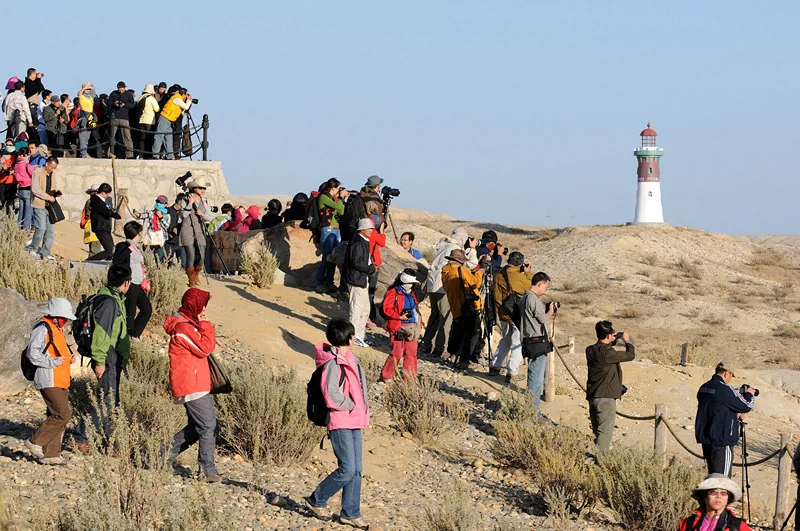
Get off the bus, stand in front of an attraction, and start shooting
In the West, the Japanese are known for a peculiar style of tourist photography: get off the bus, stand in front of an attraction, and start shooting. The Chinese have copied that behavior perfectly and become the new Japanese. They favor the standard pictures, but perhaps they capture much more than that. Just wait—they are coming in huge numbers, cameras in hand!
To stay in China, you can apply for a visa online here.
Want to know more about this author and photographer? Visit the Tom van der Leij page.
Reports from all three journeys were published in issues 8, 14, and 25 of Columbus; see www.columbusmagazine.nl. With the cooperation of www.vnc.nl and www.discoverchina.nl.