March 1936: Dorothea Lange was driving back from her first assignment as a photographer for the FSA (Farm Security Administration). By chance or otherwise, near Nipomo, California (175 km north of Los Angeles), she noticed a sign for a camp of seasonal agricultural workers. Twenty kilometers farther on, she decided to turn back after all. At the camp, she found a mother of seven children living in a tent and on the brink of starvation. In a 1960 interview with Popular Photography magazine, Lange said she had felt drawn to the woman as if by a magnet. She took just six photographs, moving closer each time. The last became an icon of the Great Depression in the United States during the thirties.
Dorothea Lange: "I did not ask her name or her history. She told me her age, that she was 32. She said that they had been living on frozen vegetables from the surrounding fields, and on birds the children had killed. She had just sold the tires from her car to buy food. There she sat in that makeshift tent with her children around her, and it seemed as though she knew my pictures might help her, and so she helped me. There was a kind of equality between us."
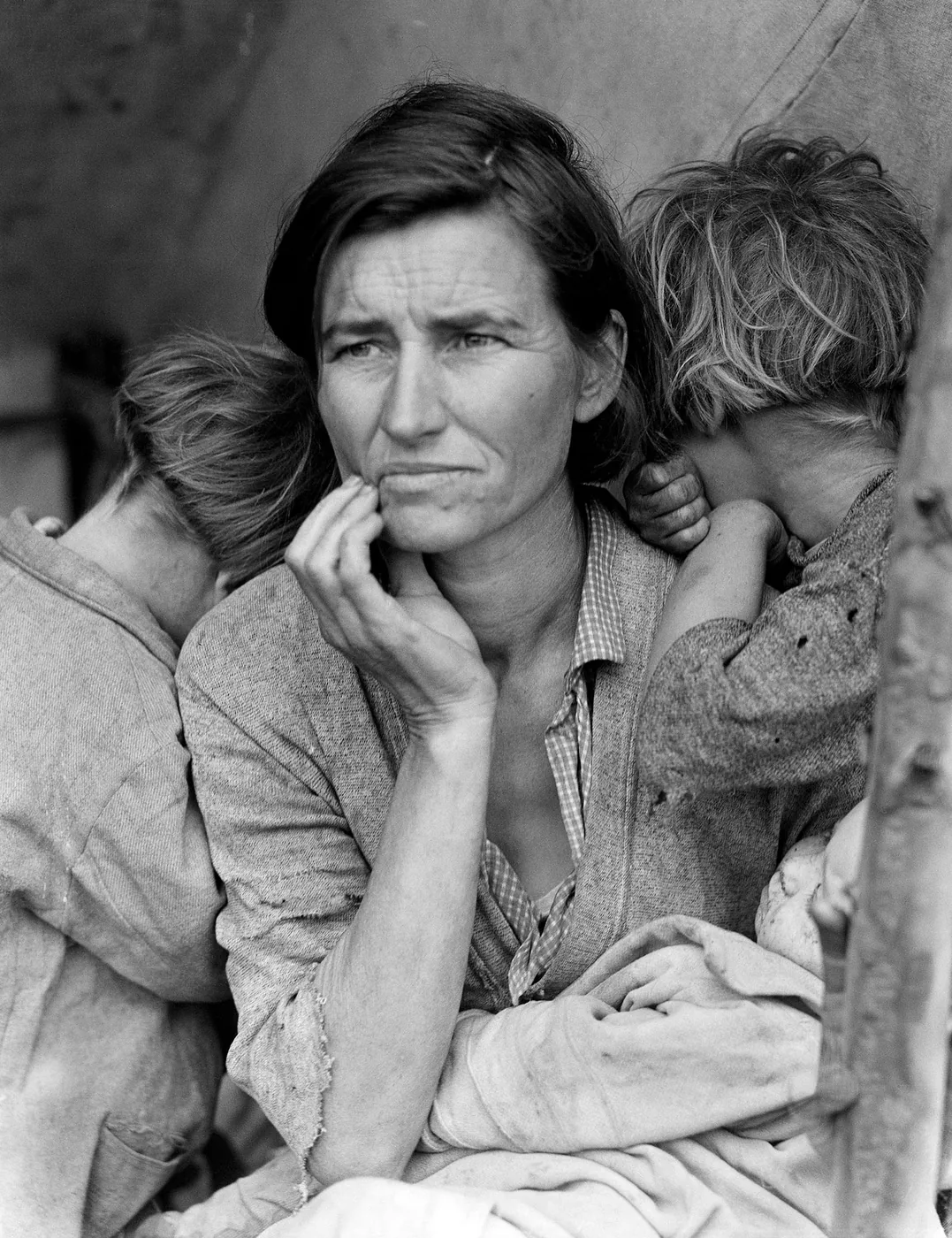
The peas in Nipomo had frozen, so there was no work. Dorothea did not take any more photographs in the camp, however. She left because she knew what she had to do. The next day, she sent the photograph directly to the publication San Francisco News and the editor then notified the government and published an article with the photograph. As a result, the government transported 10,000 kilograms of food to the camp.
The woman was Florence Thompson. She was a refugee in her own country. NET Online editor Bill Ganzel tracked her down in 1979 and interviewed her. She said that Dorothea had not spoken a word to her and that she had later been angry because she believed the photographer had made money from her face. Florence and her family left the camp the day after the photograph was taken, so they received none of the food. Dorothea Lange took the photograph for the FSA and therefore did not receive payment for it directly. Florence eventually understood that the photograph revealed the appalling living conditions caused by the Depression. She died in 1980.