Leica M lenses and autofocus normally do not belong in the same sentence. Megadap is changing that with the new M2RF.
The M2RF is a new adapter from Leica M to Canon RF, intended to allow manual M lenses to work with the autofocus of Canon EOS R cameras. According to Megadap, this is the first autofocus adapter for this combination, and that is exactly what makes it newsworthy. It is not an accessory for everyone, but it is a product that will immediately make a small group of photographers sit up.
-recht.webp)
Think of photographers with a favorite Leica M lens, or a Voigtländer or Zeiss ZM lens they would like to use more often on a Canon body. The character of these lenses is often exactly why they keep them. However, manual focus not pleasant in every situation. Especially when it comes to portraits, street photography and travel, a little extra convenience can make a big difference.
More Than a Simple Adapter
The M2RF is not a passive adapter. The housing contains a motorized mechanism that moves the entire lens forward and backward by a maximum of 4.5 millimeters. The lens itself remains completely mechanical, but the camera determines with its autofocus where the sharpness should be. The adapter then does the physical work.
On paper, this creates an appealing combination. Leica M lenses, as well as many Voigtländer M and Zeiss ZM lenses, gain access to features not normally associated with them: eye detection, face detection, subject tracking and continuous autofocus. You retain the compact size and distinctive rendering of classic rangefinder lenses while adding the convenience of a modern Canon body.
Where it becomes useful
This adapter seems most useful for calm to moderately dynamic photography. With a compact 35mmor 50mm lens on an EOS R camera, focusing can be a lot faster and easier than if you have to keep track of everything manually. This makes the M2RF especially interesting for portraits, street photography, travel and detail work, exactly the types of photography with which many M lenses already feel at home.
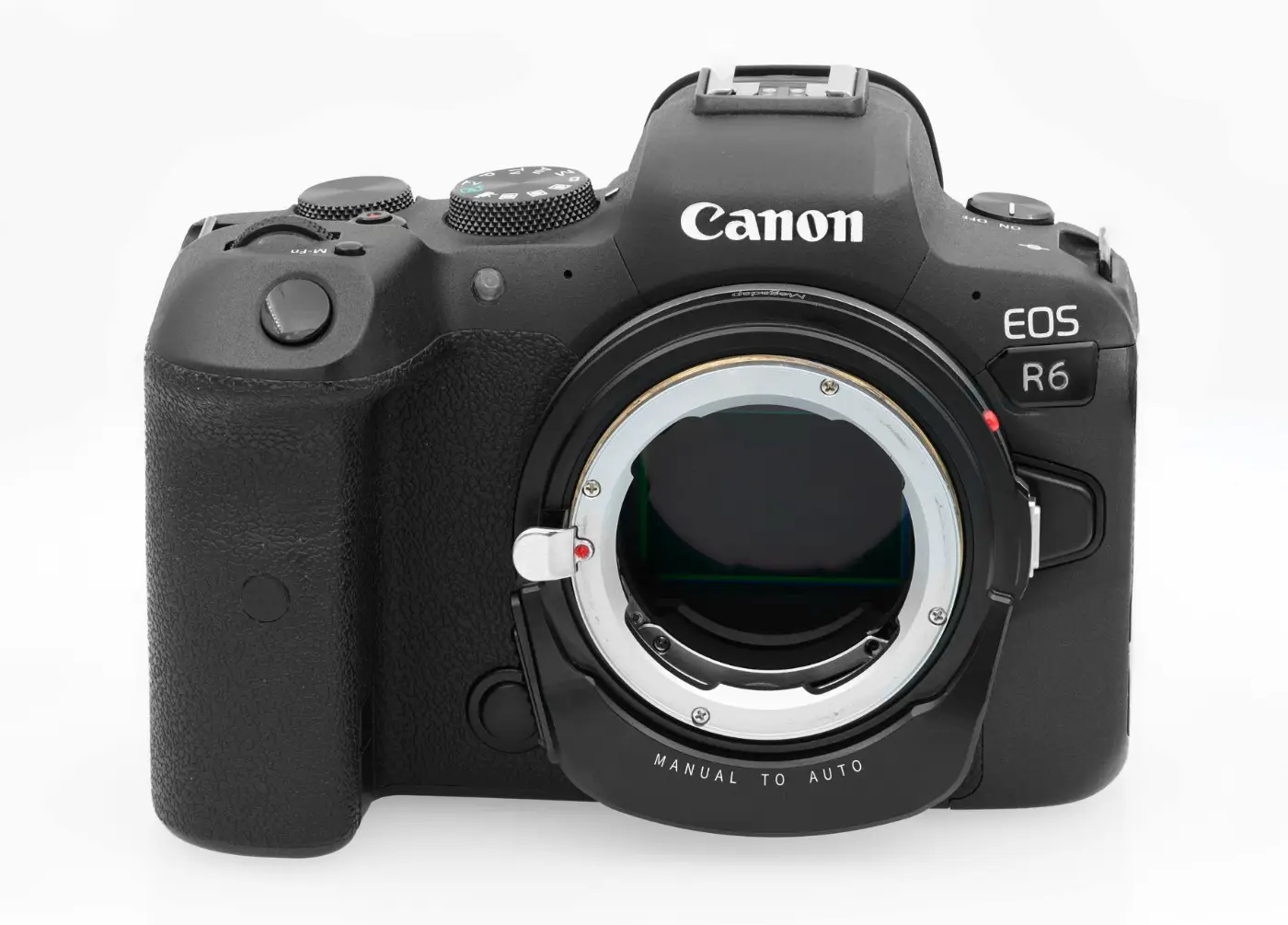
The adapter can also do something else that is quite welcome in practice: it allows many lenses to focus closer than they can on their own. That makes it useful for close-ups and small details. Don't see it as a real macro solution, but as a nice bonus for lenses that are normally quite limited in their minimum focusing distance.
Not without ifs and buts
Anyone expecting every manual lens to behave like a native Canon RF lens should temper those expectations. The system works best with shorter focal lengths. With longer lenses, you often need to focus roughly first, after which the adapter takes over the final adjustment. That is still useful, but it is not the same as completely effortless autofocus.
The aperture also remains a manual process. The adapter cannot electronically control or read the set aperture value of a Leica M lens. Up to four lens profiles can be saved via the software, each with the focal length and four aperture values. You then set the aperture on the lens and set the four-position lever on the adapter to the corresponding position. This way, the value on the camera screen and the information in the EXIF data match.
This requires a little more attention, but also prevents the M2RF from being overestimated as a plug-and-play wonder.
Clear boundaries
Megadap is clearly targeting compact lenses. The company recommends lenses weighing no more than 500 grams. When an additional mount adapter is used, the total weight on the lens side therefore remains an important consideration.
That actually says it all about the target group: this product is made for light, manual primes, not for heavy telephoto lenses or for photographers who expect maximum speed.
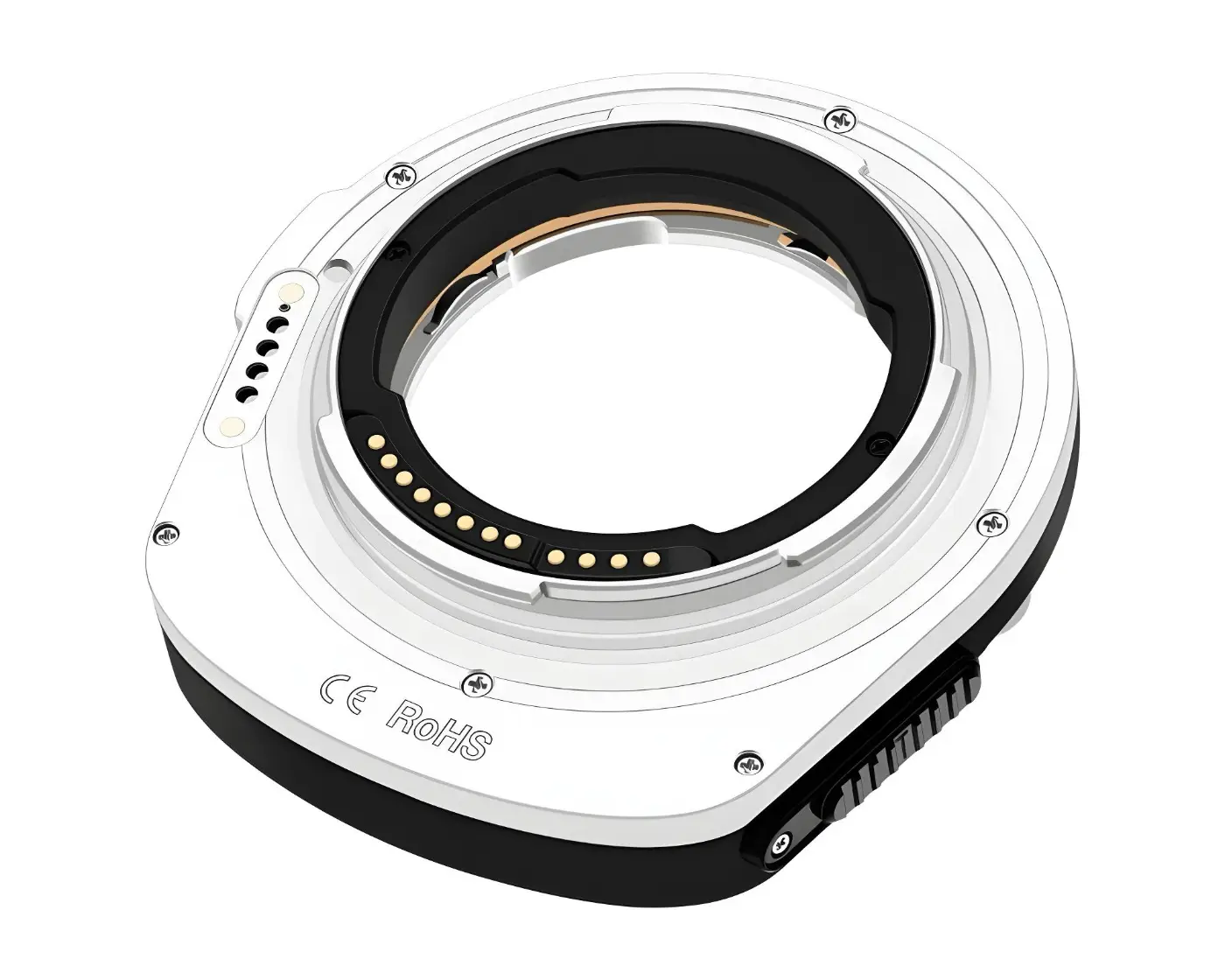
Autofocus performance will also vary by camera and lens. Lens weight, focal length and a correctly configured lens profile all play a role. A lightweight 35mm or 50mm lens is therefore a more natural match for this adapter than a heavy lens with a longer focal length. This is not a product to buy blindly; it is mainly for photographers who know which combination they want and are willing to experiment with it.
There is also a practical note for Mac users. The software with which you set the lens profiles only works on macOS on Macs with Apple Silicon. Anyone who still works with an Intel Mac should take this into account.
That does not immediately make the adapter attractive to everyone. But for photographers who have been enjoying beautiful M lenses for some time and who occasionally want to fight less with focusing, this is exactly the kind of niche product that can suddenly make a lot of sense.
Price and availability
At Cameraland the Megadap M2RF is listed at € 499 and was described as coming soon at the time of publication.
Megadap also has the EFTZ21 in the range, an autofocus adapter that allows Canon EF lenses to be used on Nikon Z cameras.