A photograph that almost everyone finds beautiful often contains universal qualities. Its beauty lies not in the situation or person shown, but in the way the subject was photographed. Composition determines how the photograph is appreciated. Six illustrations.
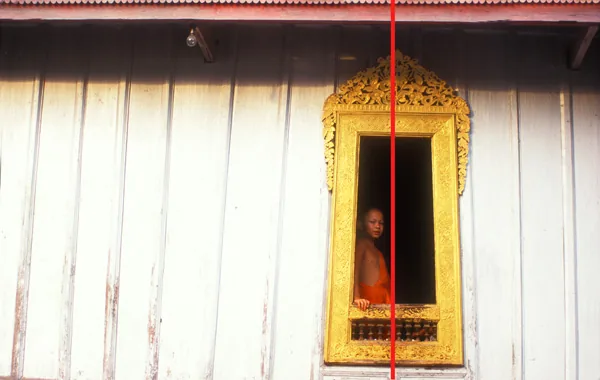
Golden-Ratio Line
When photographing an object, do not place it in the center of the frame, but about one-third of the way in from the left or right edge—on what is known as a golden-ratio line.
Painters and architects have applied this rule for centuries to create visual tension. As a result, we are more accustomed to this kind of image structure than we realize.
Consider, for example, a television news presenter positioned one-third of the way across the screen, with images beside them illustrating the subject of the report.
In many cases, a similar division can be achieved in a photograph. In this example, the emptiness of the building focuses all attention on the young monk.
Exactly in the Center Is Predictable and Therefore Dull
Positioning the Horizon
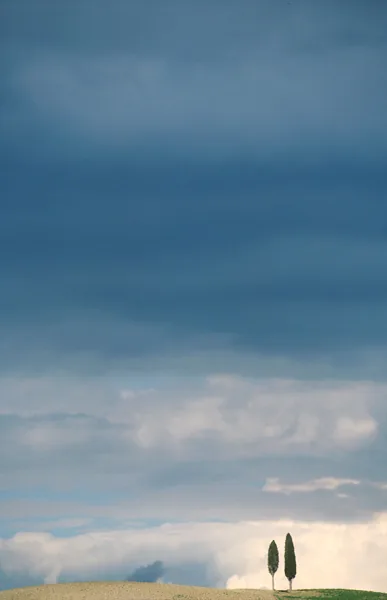
In many photographs, the horizon is visible in the distance. If you simply point the camera straight at the scene, the horizon will fall exactly in the center of the image.
In keeping with the golden-ratio rule, however, placing it exactly in the center is predictable and therefore dull. By tilting the camera slightly downward or upward, you can position the line higher or lower in the frame.
The horizon can, for example, run about one-third of the way up the image along a horizontal golden-ratio line. More extreme compositions, with very little or a great deal of sky, create an even stronger effect.
A Line from Bottom Left to Top Right Is Called an Ascending Diagonal
Using a Diagonal Line
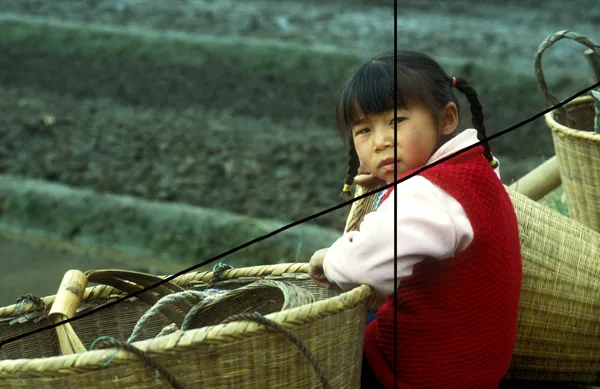
If you can include a sloping line in the frame, it often produces a pleasing photograph.
Such a line draws the viewer’s eye into the image. When it runs from bottom left to top right, we call it an ascending diagonal.
Its counterpart is the descending diagonal, which runs from top left to bottom right and seems to interrupt the natural viewing direction.
A diagonal need not be perfectly straight; a beautiful winding mountain path that leads the viewer up the mountain creates the same effect.
Choosing the Right Viewpoint
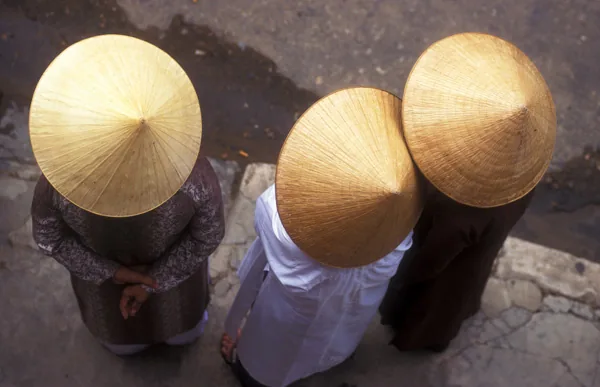
As tall Dutch people, we often need to bend our knees when making a portrait abroad. When you are at eye level with the person you are photographing, you do not look down on them, but straight into their face (see the photograph of the Chinese girl).
Do not crouch too low for a portrait, or you may photograph the face from below, including the chin and nostrils. Sometimes searching for a high or low viewpoint produces truly surprising images.
Creating Depth

We often photograph broad views with a wide-angle lens. That is not necessarily a problem, because such an image can show a great deal. But when making an overview, always aim for clarity and calm in the frame. Too many subjects are distracting and create a cluttered image.
If you do include a broad view, try adding part of the foreground—for example, an overhanging branch or, as here, part of the boat’s sail. This helps the viewer perceive depth and provides more information about the situation.
The Absence of Color Reveals Just How Important Composition Is
Use of Color
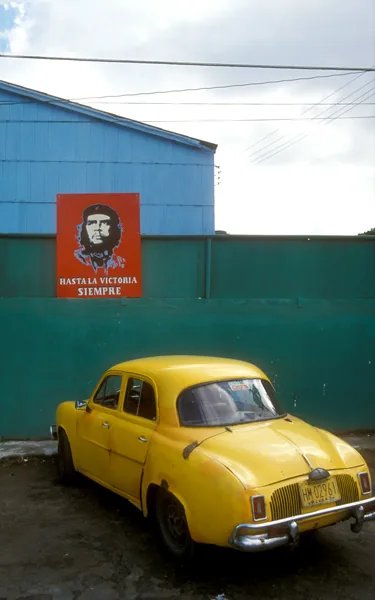
Non-professionals are using black-and-white photography less and less. That is unfortunate. The absence of color makes it especially clear that composition plays an extremely important role. Color, of course, makes it possible to represent a real situation accurately.
A photograph made up entirely of vivid colors creates a completely different mood from one containing only a single subdued color. When multiple colors are used, we call this polychromatic color use.
It goes without saying that a photograph with many vivid colors creates a more restless, busier image than monochromatic color use, in which only one color is important.
In summary: use colors deliberately in the photograph by choosing the right viewpoint and framing carefully.
Produced by Frank Muller