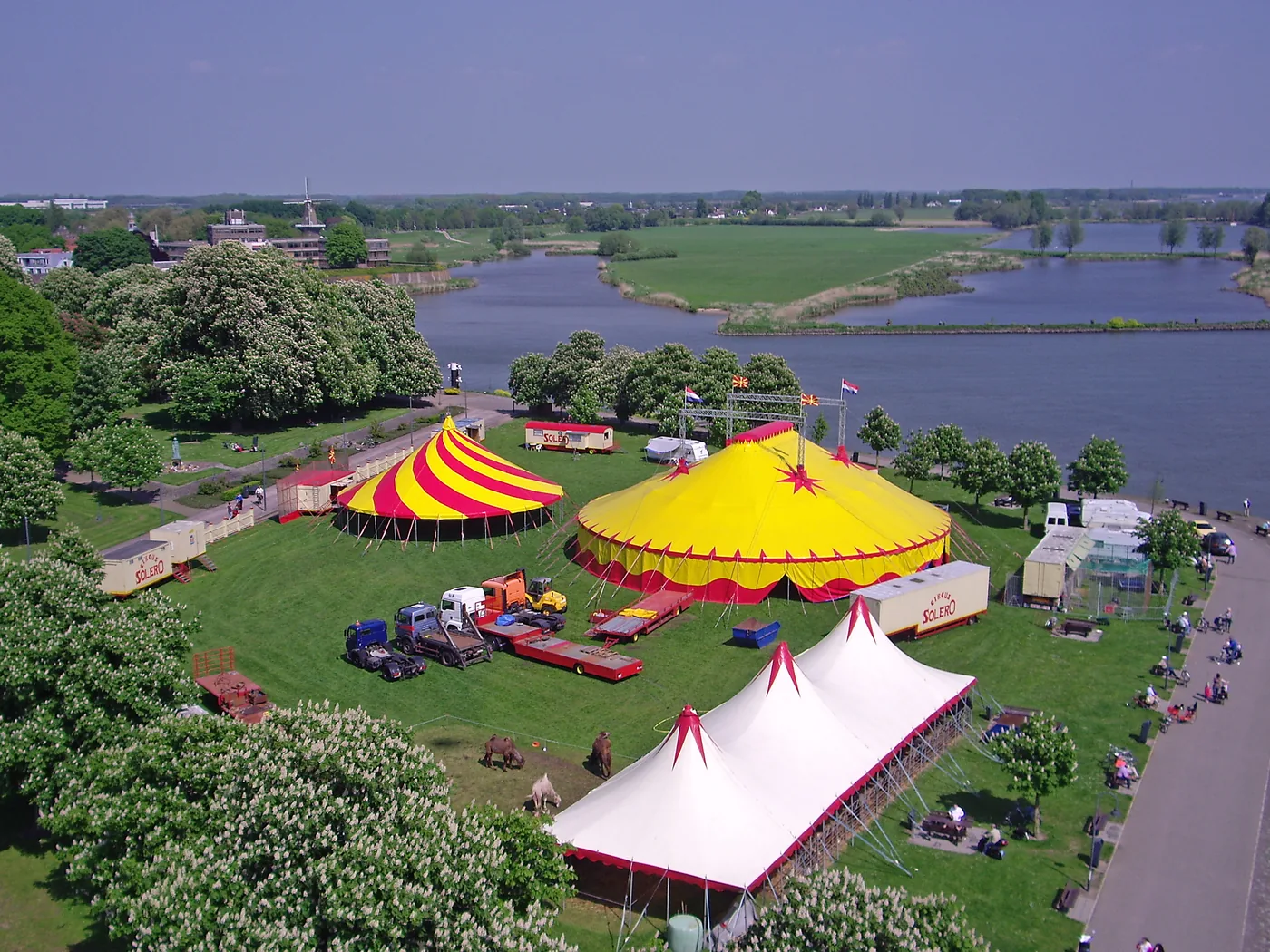
photo: Theo van Houwelingen
Photography already demands creativity, but kite aerial photography takes it to another level. Henk Landlust and Theo van Houwelingen are two practitioners of this discipline, also known as aerial kite photography. “My camera fell from a height of about 35 meters.”
Aerial photographs can be made in many ways: from airplanes, airships, helicopters, and rockets, as well as—more simply—from helium balloons, parachutes, and kites.
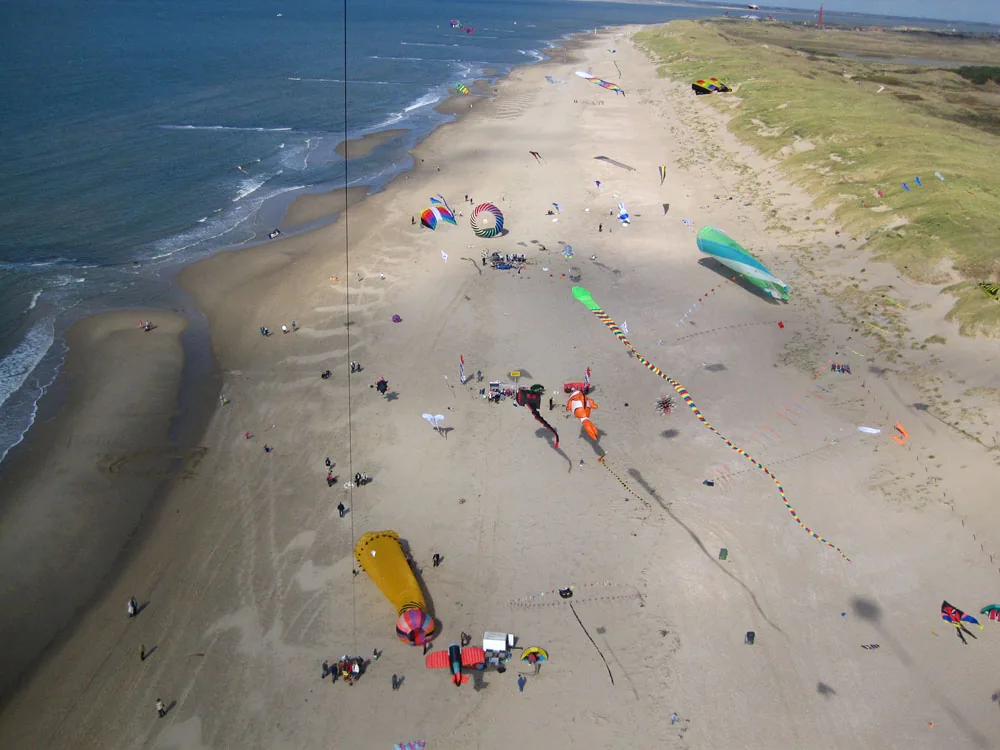
Henk Landlust and Theo van Houwelingen use the last of these lifting methods. It even has a name: kite aerial photography (KAP), sometimes called kite-ography.
Together with about a hundred other enthusiasts in the Netherlands, Henk and Theo belong to a select group of KAP practitioners who take aerial photographs for pleasure and, at times, on assignment.
Taking aerial photographs of military sites or properties belonging to the Royal Household is strictly prohibited
Kite photography is not entirely risk-free, according to the pair. Apart from the risk of property damage and personal injury, taking aerial photographs of military sites or properties belonging to the Royal Household is strictly prohibited.
Flying a kite within three kilometers of an airport or in a low-flying zone is also prohibited. Operating near railroad tracks, highways, high-voltage pylons, and wind turbines is inadvisable, while flying a kite as a thunderstorm approaches is life-threatening.
Henk Landlust—whose surname literally evokes a love of the land—has been taking photographs for forty years and has ‘always been fascinated by aviation.’ Landlust says: “Everything looks different from above: more geometric, straighter, a little like the miniature city of Madurodam. I have been photographing with a camera suspended from a kite line for about seven years.”
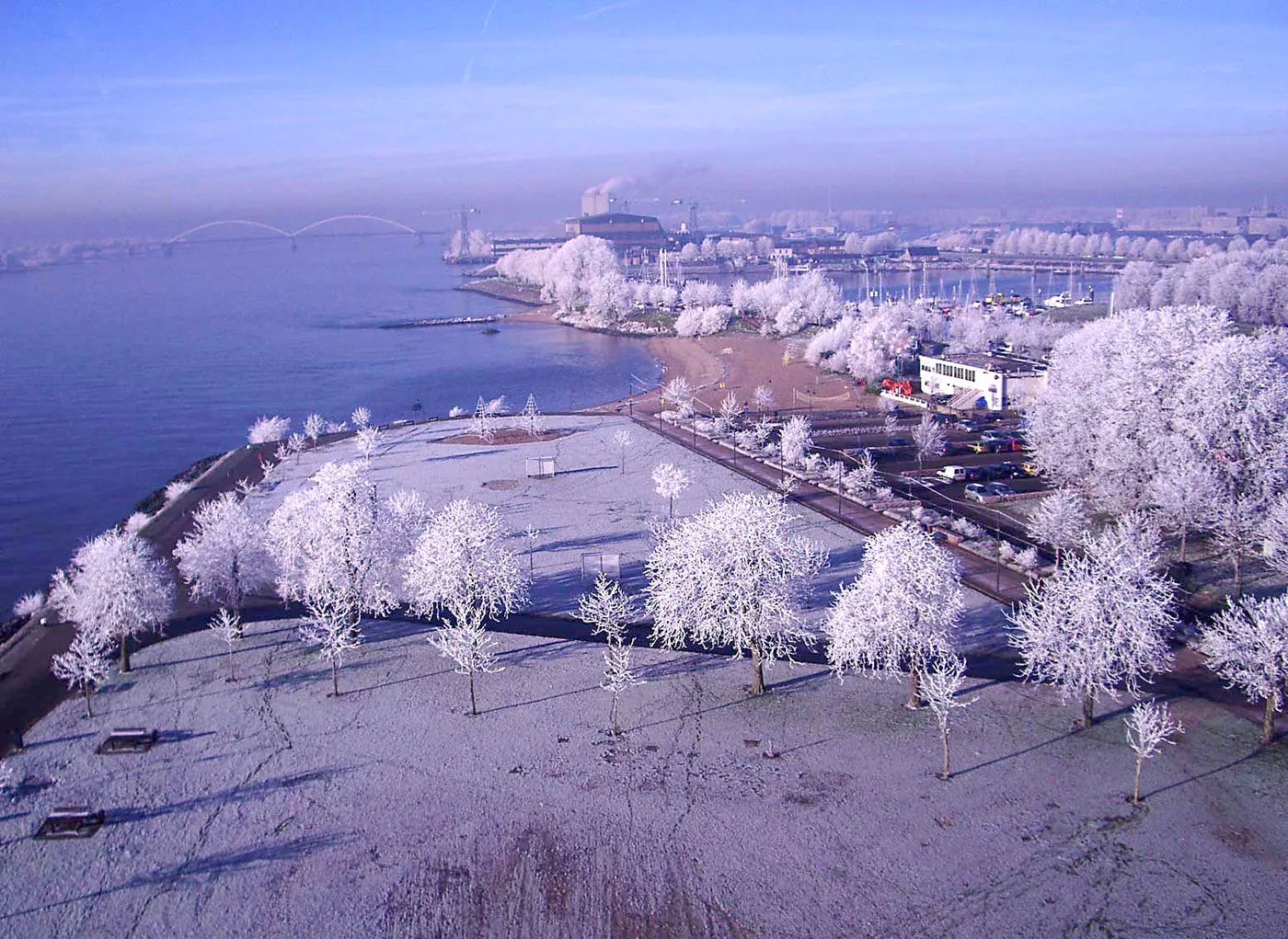
Theo van Houwelingen also became fascinated by aerial views years ago: “About ten years ago, I had the opportunity to fly at low altitude over the area where I live in an ultralight aircraft. Seeing my familiar surroundings from that perspective made a deep impression on me. I wanted to experience it more often.
The RIG (the platform in which the camera is mounted) requires some tinkering with moving parts and some electronics
Flying kites was already my hobby, and an online search led me to kite aerial photography. I began taking my first photographs using parts from a broken radio-controlled car bought at a thrift store and a reasonably priced digital camera.”
What exactly does the construction consist of?
Henk Landlust: “It consists of a homemade aluminum-profile gondola suspended from a pendulum. I attach the gondola to the line and let out more line until the camera reaches the desired height. From the ground, I can rotate the camera and trigger the shutter by radio control. The camera view is transmitted back to a portable DVD player. This system lets me decide exactly when to take the photograph or rotate the camera a little farther.”
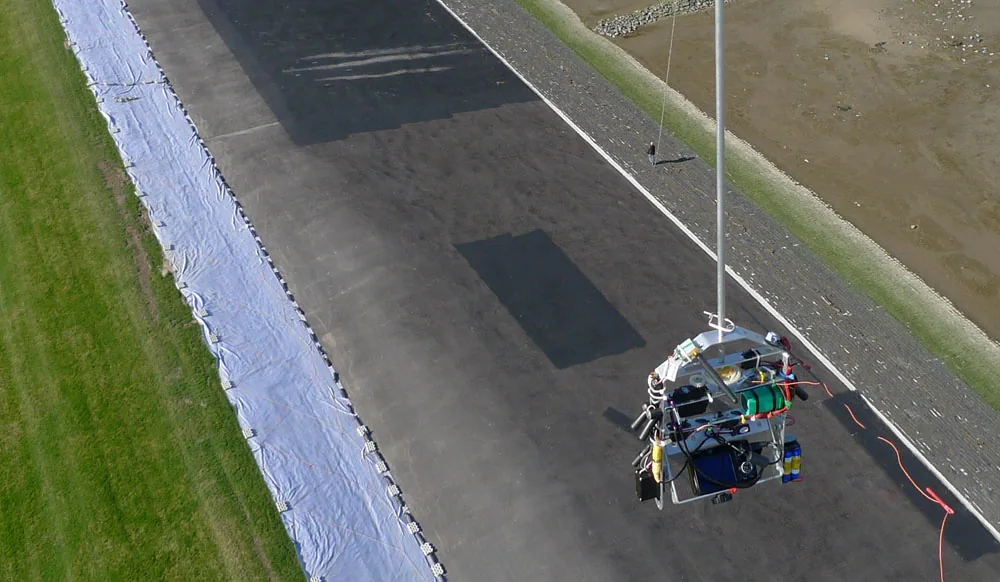
Theo van Houwelingen: “Most designs are similar. I also used thin aluminum profiles, servos, rechargeable batteries, and a video downlink. I chose the Canon S90 for its low-light performance and light weight. I usually place the controller and monitor on a tripod so that my hands remain free to fly the kite.
In the Netherlands, kites may be flown to a maximum height of one hundred meters
Kite aerial photography involves much more than simply launching a kite and pressing a shutter button. Designing, building, and testing kites—and constructing the RIG, the platform that holds the camera—requires considerable tinkering with moving parts and electronics.
The controller—a model-aircraft transmitter—is also modified to make it as suitable as possible for KAP. Wind, the position of the sun, and the amount of light are crucial. The location is usually not simply a meadow or beach, but a place where you expect to make compelling photographs. That is precisely what makes it so interesting, not least because it often sparks enjoyable conversations.”
Expensive Hobby, Right?
Henk: “You can make it as expensive as you like. But if you take commissioned photographs, you have to deliver quality, so a good camera is essential. The rest of the equipment must also work reliably. Even so, a simple camera can still produce respectable results. I currently use a Canon IXUS 980 IS.”
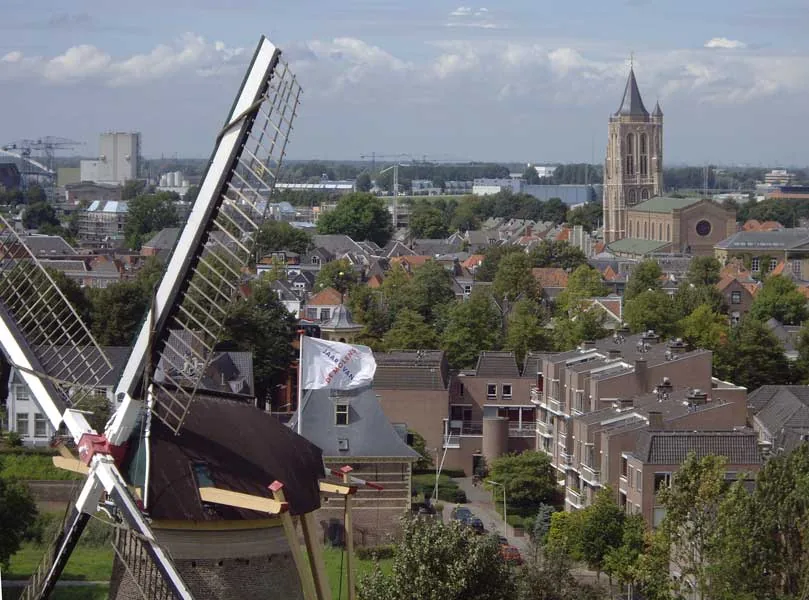
Theo: “I agree: taking aerial photographs with a kite need not cost much. In fact, you can make beautiful photographs by tying a stable kite and a digital camera with an interval timer to the line in a handkerchief with a hole for the lens. Rubber bands and Silly Putty can be used to change its direction. A radio-controlled RIG with pan, tilt, and zoom movements, plus a video downlink for framing, is a more high-tech option.
The shutter can then be triggered—depending on what the camera supports—by a servo pressing the shutter button, by infrared, or electronically via USB.”
At what height do you take photographs?
Henk: “I usually photograph at heights between sixty and ninety meters. This is ideal because details in the surroundings remain clearly recognizable. You can, of course, photograph from higher up as well. A photograph taken from three hundred meters, for example, can also produce surprising results.”
photo: Theo van Houwelingen
Theo: “Bear in mind that kites in the Netherlands may be flown to a maximum height of one hundred meters. The camera is usually attached only after the kite is already some distance into the air, after which more line is let out. As a result, photographs are taken from no more than about eighty meters and often much lower. Kite aerial photographs therefore offer a very different perspective from photographs taken from an airplane, which may not fly below three hundred meters.”
Does anything ever fall from the sky?
Henk: “If you follow a few basic rules, little can go wrong. For example, when the wind is strong, you simply should not take risks. You also have to account for metal fatigue. I know that aluminum can be bent once; the second time, it snaps.
One of my cameras once took a gentle dip in the Merwede River when the wind died completely
That happened to me once over Blauwestad in Groningen. My gondola fell from a height of about 35 meters. Everything was destroyed, including my Canon IXUS 900 Ti, a three-hundred-euro camera. Two servos were also a total loss.”
Theo: “The most important requirement for this hobby is being able to fly a kite well. You must always be alert to strengthening winds, lulls, and thermals so that you can respond in time. And yes, one of my cameras once took a gentle dip in the Merwede River when the wind died completely.”
More info: henklandlust.blogspot.com, www.breedland.deds.nl.