
Image stabilization is designed for situations that require slow shutter speeds, when camera shake can cause motion blur. Also known as VR, IS, and OSS, stabilization extends the range of shutter speeds at which sharp handheld photographs are possible. Its effect can be substantial—up to a factor of sixteen. At very fast shutter speeds, however, stabilization is often unnecessary. Can it actually be harmful?
Recent online publications have created the impression that image stabilization can have highly adverse effects at fast shutter speeds (above 1/500 s). Let me begin with some reassurance: that is generally not true. There are situations in which it may nevertheless be better to turn stabilization off. First, let's look at how these systems work.
Image stabilization compensates for camera movement. The idea is simple: when the camera moves, the image moves during the exposure, and stabilization reduces that movement. If the image moves less than the resolving power of the camera-and-lens combination, there is no visible motion blur.
Camera movement is compensated for by moving either the sensor (used by Sony, Pentax, and Olympus, among others) or a lens element or group inside the lens (used by Nikon, Canon, and others). Both systems have advantages and disadvantages (see the sidebar), but the distinction does not affect the point of this article.
Image stabilization always has a few minor disadvantages
Small sensors in the camera or lens—gyroscopes, in effect—register camera movement. At fixed intervals (typically every 1/1000 s, for a sampling frequency of 1 kHz), they measure that movement and direct a compensating movement. Data from several measurements are compared to extract relevant information about the nature of the camera movement.

What Types of Movement Need to Be Compensated For?
1. Hand movement is the most important factor. Neurological data show that even healthy people make involuntary hand movements. The frequency of those movements is 25 Hz or lower.
2. Upper-body movements caused by the heartbeat are another factor. They are usually quite small but, especially with long telephoto lenses, can certainly produce motion blur as a result.
3. Other movements, such as those caused by the mirror flipping up, are also almost never high-frequency because they are damped by the camera and the photographer's body. Stabilization systems can correct these slow movements effectively even at very fast shutter speeds.
So are people who say that turning off image stabilization can be useful simply wrong? Their reasoning often is, but their practical recommendation is sometimes sound. Image stabilization always has a few minor disadvantages.
The First Disadvantage
One disadvantage is a loss of sharpness. The loss is small, of course—far smaller than the benefit of preventing motion blur.
It can nevertheless matter in landscape photographs, for example, when fine details near the corners or edges of the frame are important. Image quality is always slightly lower in those areas, and image stabilization can make that effect a little stronger.

With cameras that move the image sensor, this happens because the sensor shifts slightly toward the edge of the image circle. With optical stabilization, it results from movement of the stabilizing lens element or group. Stabilization systems try to center everything at the moment of exposure, but never succeed completely.
The Second Disadvantage
A second disadvantage is a slight deterioration in bokeh, the quality or 'softness' of the parts of the image outside the depth of field. For several reasons, both types of stabilization system can produce slightly less attractive bokeh.

The main reason is that the aperture is no longer aligned with the optical center of the lens or sensor. The difference can range from barely visible or invisible to unattractive double lines (although I have never observed those myself).
For various reasons, the bokeh is slightly worse with both types of stabilization systems
The Third Disadvantage
A third disadvantage concerns the nature of image stabilization itself. It does not eliminate the possibility of motion blur; it only reduces it. In other words, it increases the likelihood of a sharp photograph but offers no guarantee.
The real disadvantage is that many people rely on it too heavily. A tripod provides greater certainty, provided it is sturdy enough and you use the self-timer, a cable release, or a remote control with the mirror locked up.
It is also often claimed that image stabilization slows autofocus. Tests have not confirmed that at all; if anything, the opposite appears to be true.
All three disadvantages matter only when you need the very best quality, as in landscape photography or the studio. In those situations, taking several photographs can also help by reducing the impact of the issues described above.
Sometimes, however, it can actually be useful to disable image stabilization. I will outline three situations and then give a rule of thumb for using image stabilization.
Situation 1
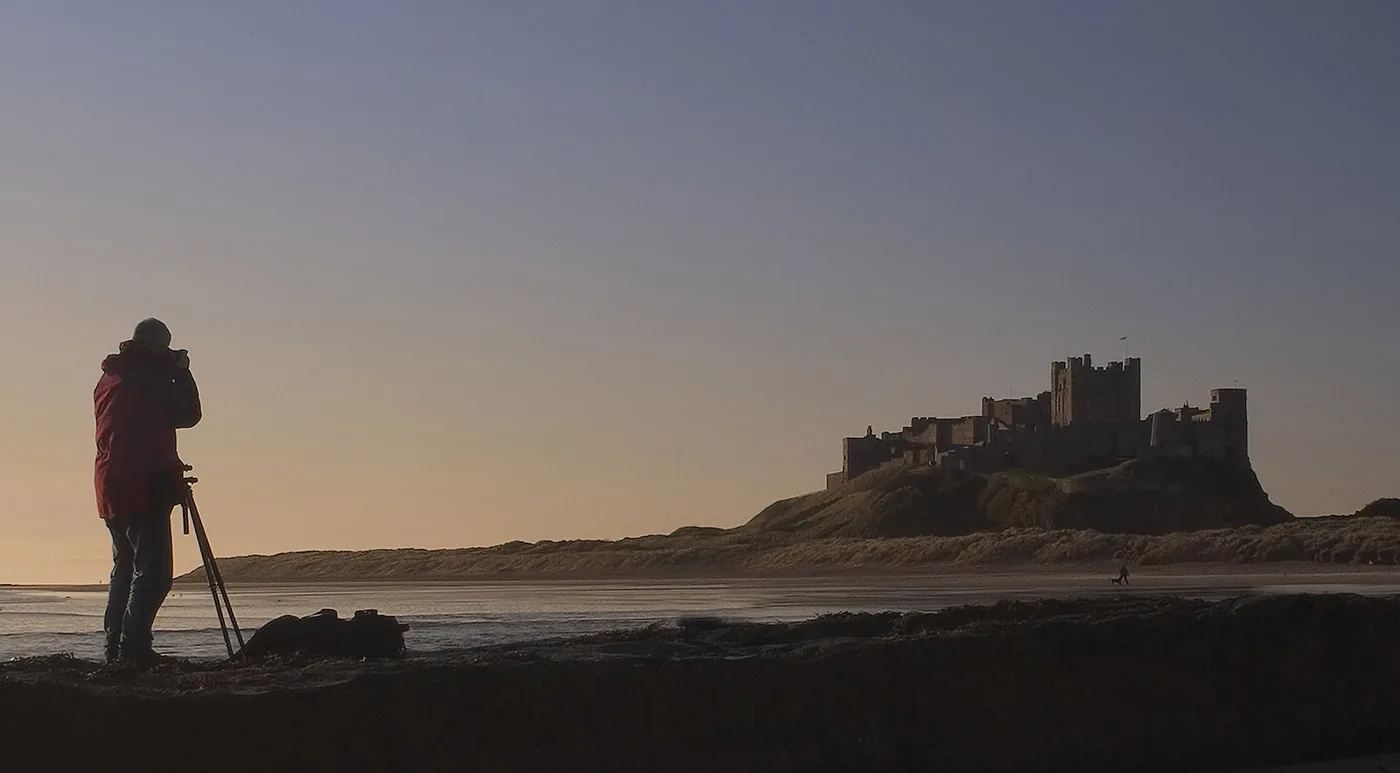
Camera on a tripod. When the camera is mounted on a sturdy tripod, image stabilization is unnecessary. In that situation, the camera may even overcorrect by making tiny but needless adjustments that could reduce sharpness.
Some brands say their newer stabilization systems can detect when a camera is on a tripod, but I would not count on it—especially because turning stabilization off has no disadvantage in this situation.
If you use a less stable tripod or one with a moving head (such as a Wimberley), stabilization is usually advisable again. Taking a few test shots is always worthwhile in such a situation.
However, taking a few test shots never hurts
Situation 2
Moving subjects. Stabilization systems are designed to compensate for camera movement. When you photograph moving subjects, the system cannot correct the subject's movement. In theory, stabilization can even work against you when you pan the camera with a moving subject, as in sports photography.
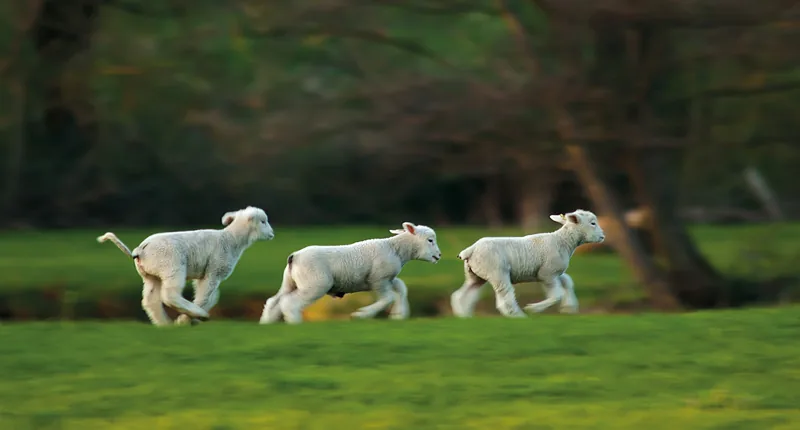
Fortunately, almost all stabilization systems recognize panning—a movement at a constant speed in one direction. Stabilization may even render the background more attractively, with greater blur, than shooting without it. Check your manual, however, to make sure your system recognizes panning.
Tip: Many stabilization systems have an 'active' mode. It is mainly intended for shooting from a moving platform such as a vehicle, but be careful: this mode does not recognize panning.
For sports and other moving subjects, you often use shutter speeds so fast that stabilization is unnecessary. In that case, either choice is available; apply the guidelines above.
Situation 3
Subjects for which bokeh is especially important. As noted above, stabilization can make bokeh slightly less attractive. It can therefore be sensible to turn stabilization off for an image with extensive out-of-focus areas. Its adverse effect on bokeh is not large enough, however, to outweigh the effect of using a higher ISO setting, for example.
Rule of Thumb for Choosing Shutter Speeds
The slowest shutter speed for handheld photography without image stabilization is less than or equal to:
(1/focal length in mm) x (crop factor) x (square root of MP/10) x (emotional or physical factor)
x means multiplication; MP = megapixels. Emotional or physical factor: if you are emotional or tired, have just exerted yourself, or simply do not have especially steady hands, multiply the result by a factor of at least 2.
A Two-System World
Image stabilization can be implemented in several ways: inside the camera by moving the image sensor; inside the lens by moving a lens group; by moving the entire camera; or with a moving filter in front of the lens. The final two systems matter only in exceptional situations.
In practice, digital SLR cameras use only two systems, each with its own advantages and disadvantages:
Sensor-based image stabilization
- Works with any lens
- Lens design is unrestricted
- Lenses can be produced more cheaply (although current prices do not reflect this)
- Less effective at longer focal lengths
- Cannot be optimized for one specific lens
- Viewfinder image is less stable
Lens-based image stabilization (optical)
- Works very well at longer focal lengths
- Autofocus is easier because the viewfinder image moves less
- Can be optimized for one specific lens
- Viewfinder image is more stable
- Only works with special lenses
- Lens design may face restrictions
- Lenses may be more expensive (although current prices do not reflect this)