photo: © Kadir van Lohuizen / NOOR
Kadir van Lohuizen does not make life easy for himself. The Amsterdam-based photographer focuses on subjects that attract little attention and ventures into places that are anything but safe. His work has nevertheless earned him two prestigious World Press Photo Awards, the Zilveren Camera award and, in 2007, the Visa d’Or for a photo essay shot in Chad.
“I have always wanted to explore the world. My camera is my means of communication.”
At the Teylers Museum in Haarlem, Kadir van Lohuizen (1963) discussed work he had produced in the preceding years.
A few yards away, in another room of the Netherlands’ first and oldest museum, Photography Pioneers Travel the World was on display, an exhibition devoted to the earliest travel photographers.
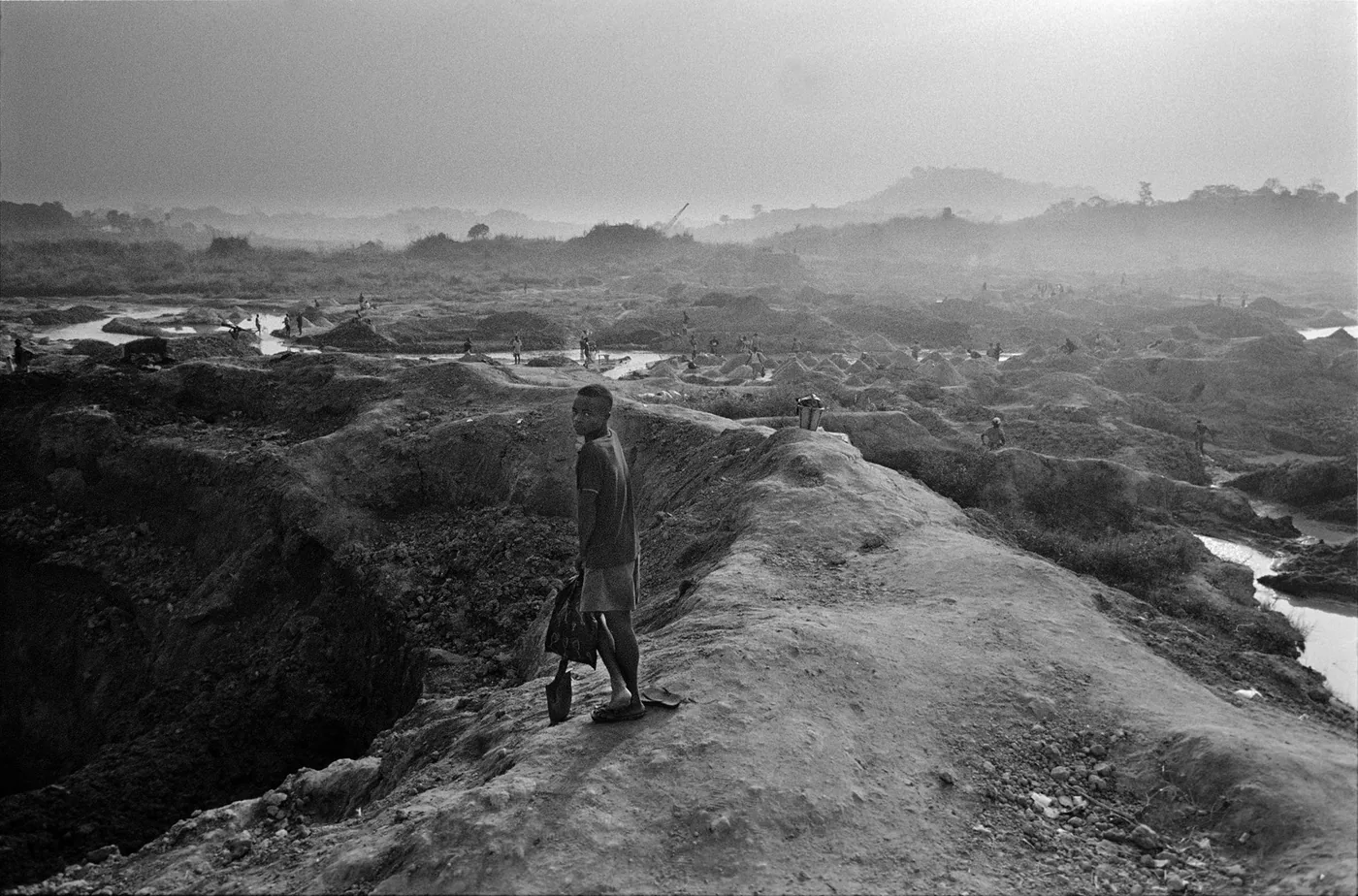
No, Van Lohuizen’s presence was no coincidence. By then, he had been traveling the globe as a professional photographer since 1988, covering hundreds of thousands of miles to follow and document his subjects. One example was the journey of diamonds from mines in African conflict zones such as Congo, Sierra Leone and Angola.
As one harrowing black-and-white photograph after another appears on a screen behind him, Van Lohuizen explains that he photographed inside the mine itself, where workers had become trapped in a disguised system of slavery, as well as in the ghost villages surrounding it.
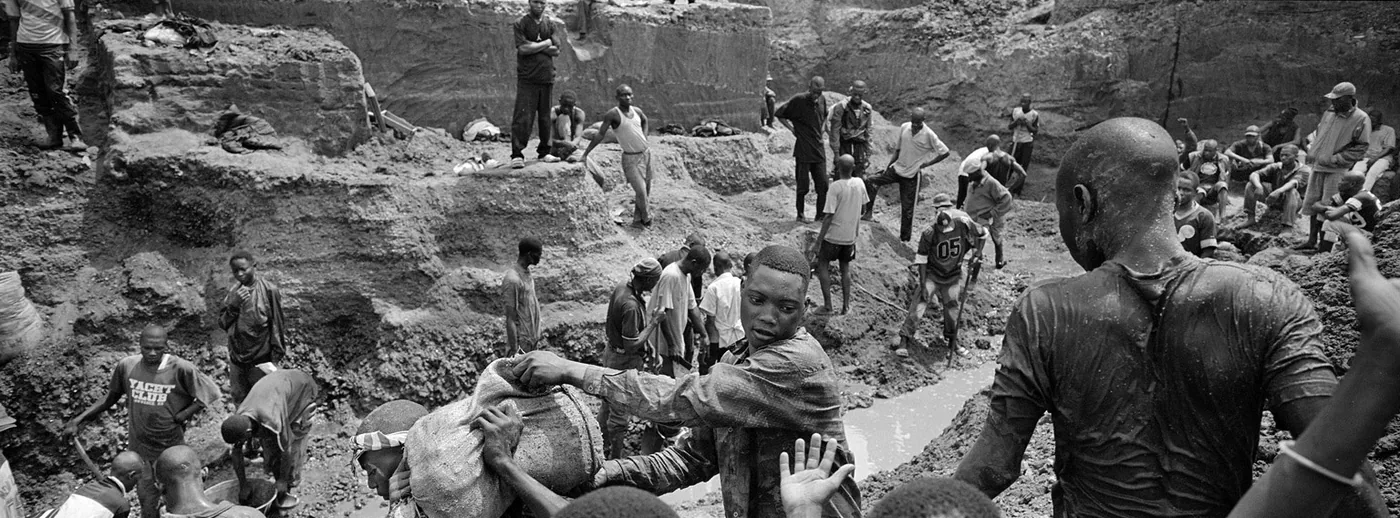
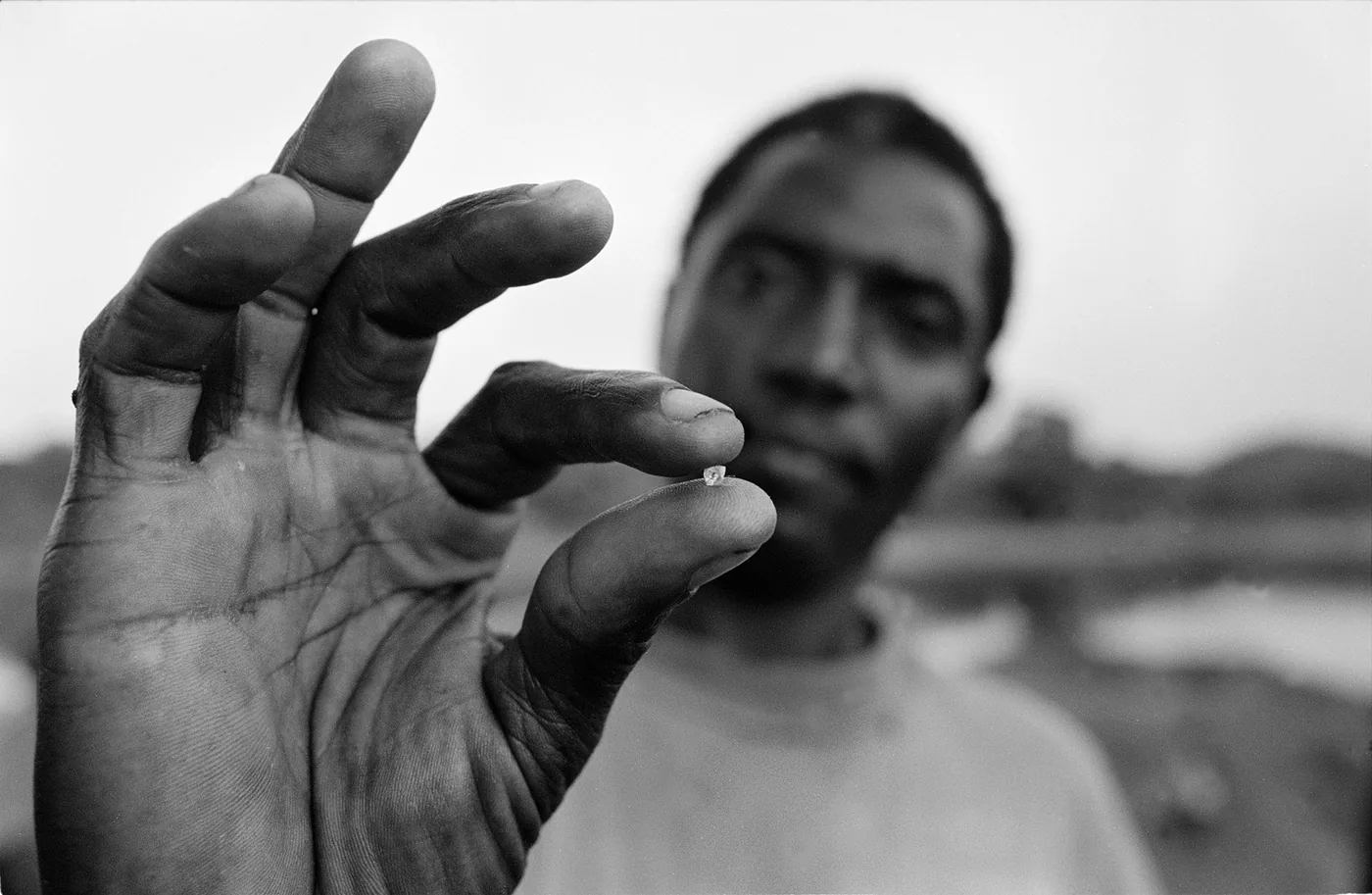
He also accompanied shadowy middlemen, powerless customs officers and couriers in the transit port of Antwerp. He then continued via Surat in India, home to the diamond-cutting industry, and back to Antwerp, eventually arriving at a New York jet-set party where ‘his’ diamonds took center stage.
“I followed the route for a year. That sounds easier than it was. The diamond trade is a closed system. I was an intruder, and my presence was not always appreciated.
He emphasizes that his work is visual photojournalism and that the series was not intended as an accusation
In the mines, I often had only half an hour before it became too dangerous. And wherever diamonds are mined, there are conflicts over who controls the area. These are often local skirmishes in which the West plays no part.”
The dramatic investigation of the international diamond trade, in which eight billion changed hands in the United States alone, resulted in the beautifully designed book Diamond Matters, published in 2005, for which he received the 2007 Foto Kees Scherer Prize.

He stresses that his work is visual photojournalism and that the series was not intended as an accusation. “I also do not believe the conflict will be resolved if the diamond industry shuts down. But the system needs to change, with a fairer distribution.”
That did not prevent the photographs—and the accompanying texts written by Van Lohuizen—from prompting anonymous threats from within the industry. “But I never lied. I always said what I intended to do. The diamond industry says it is transparent, so they had to let me in. It is an industry in which every party points the finger at the others: it is never our fault.”
Van Lohuizen credits his partnership with an Israeli diamond company for enabling him to penetrate so deeply into this grim world. The question is how that company views the controversial result, to say the least, and the fact that the photographs appeared in more than fifty international magazines. “I never heard from them again.”
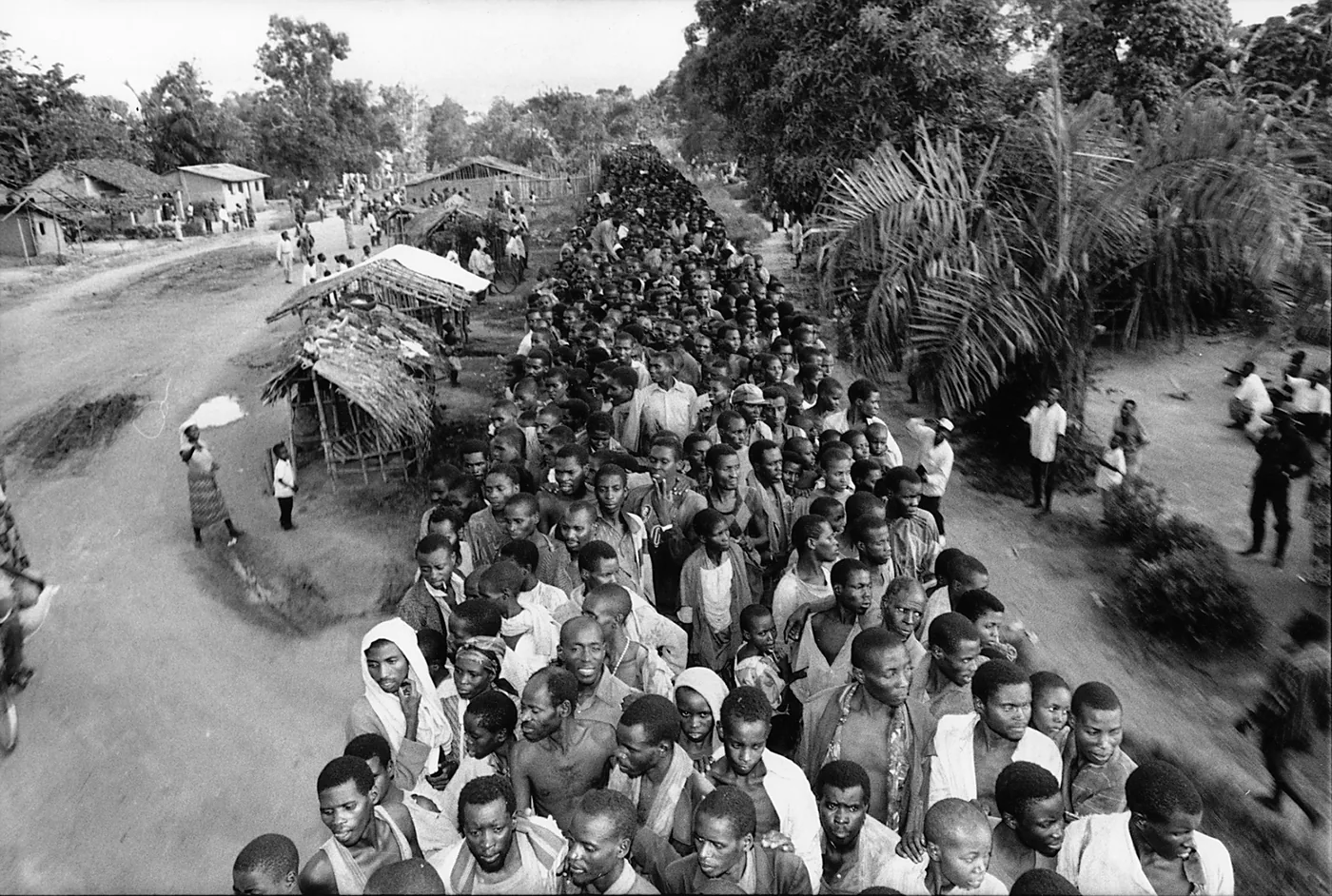
Perhaps even more shocking is his report on a disastrous train journey by Rwandan refugees to a camp near Kisangani in Congo, Central Africa, in 1997. “I work for the media. I pass on the story, the news. But when should I use the camera, and when should I put it down? While making this series, that line was very thin.”
The diamond trade is a closed system. I was an intruder, and my presence was not always appreciated
When the photographs appear, you understand what Van Lohuizen means. The situation was so harrowing that he never wants to experience anything like it again: children clinging to him after losing their parents in the vast flow of refugees; a baby he carried in his arms who was already dead by the time he reached the hospital; and another child for whom he tried to find shelter with UNICEF, only to be told there was no room left.
Dozens of people were crushed to death right under his nose without him seeing it happen, and he had never seen such emptiness in people’s eyes. How does Van Lohuizen himself cope? He sighs deeply. “It is a familiar phenomenon. While you are there, you manage. The impact only hits you after you return.”
Yet it was not all in vain. Van Lohuizen initially thought his photographs would never be seen—“Just another incident in Africa”—but after a Reuters camera crew arrived and the first footage appeared on CNN three hours later, he had captured world news with his camera.
“Sometimes I swim against the current and try to draw attention to a story that no one is interested in. But in the end, you do help determine what matters and what makes it into the newspaper.”
While you are there, you manage. The impact only hits you after you return
The same scenario played out during his diamond series. Once again, he had no guarantee that he would be able to sell it. “We have seen it before; you will not manage it; or it is too big for us. Those are the reasons publishers give for refusing to work with you.
But if I have learned anything in those twenty years, it is that if I keep at it long enough, I will make it happen and get my photographs published.”
Exhibition
Kadir van Lohuizen’s talk was held in connection with the exhibition Pioneers Travel the World at the Teylers Museum in Haarlem in 2008.
More information at www.lohuizen.net and www.noorimages.com.