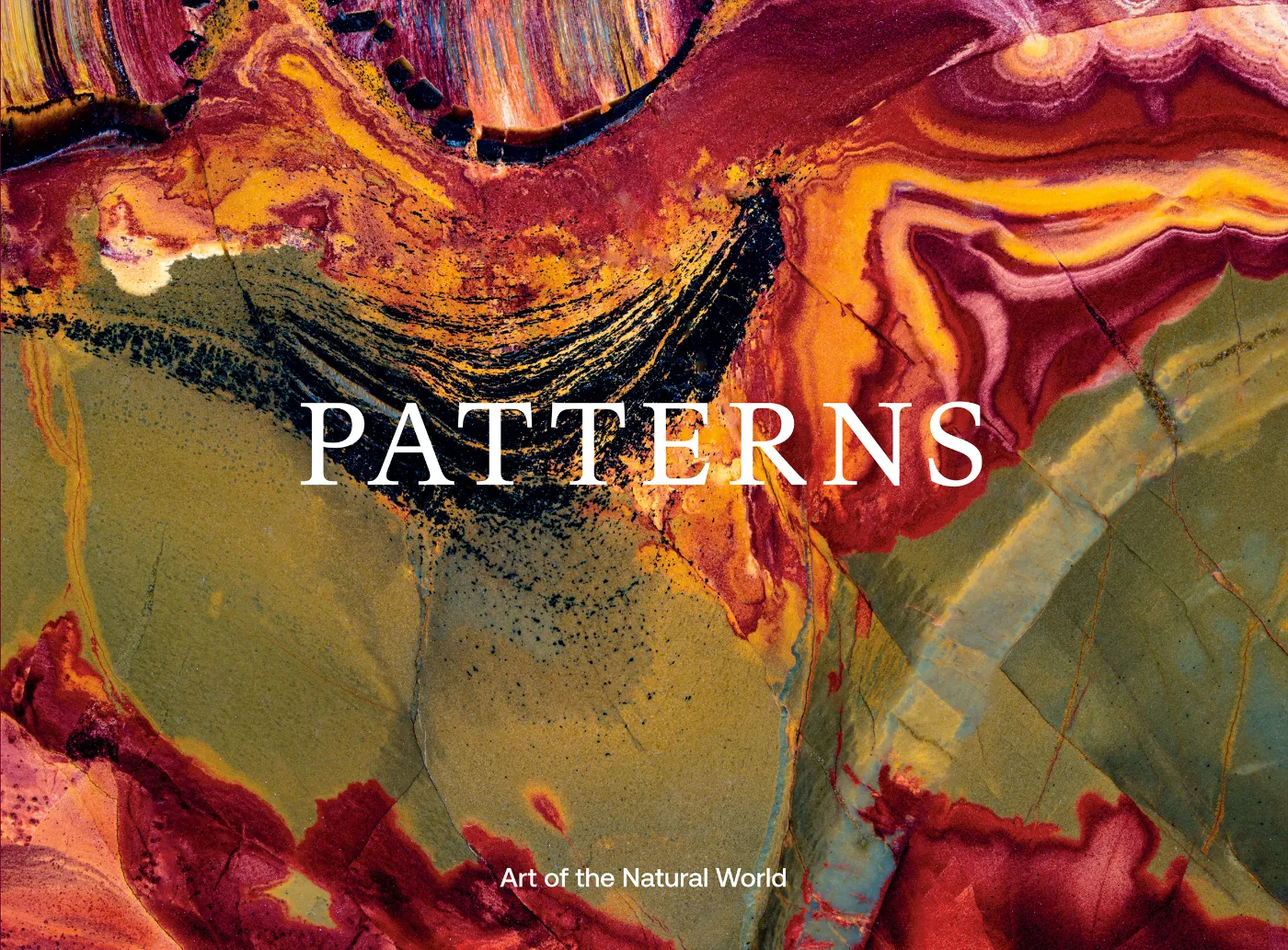
Patterns: Art of the Natural World documents photographer Jon McCormack's fascination with the geometric patterns that characterize our planet's most breathtaking landscapes and ecosystems. In this book, McCormack shows how Earth not only shapes landscapes but also evokes stories. Across continents and scales, from microscopic mineral blooms to immense geometric forms in the sky, the images outline a living grammar of pattern, rhythm, and resonance that connects the intimate with the immense.
The book's publication coincides with Earth Day on April 22, 2026, and all proceeds will benefit Vital Impacts, a women-led nonprofit organization founded by photographer Ami Vitale.
The monograph captures extraordinary compositions in diverse environments, including Iceland's volcanic coasts, the wilderness of Kenya, the icy fjords of Antarctica, and the rainforests of British Columbia.
The subjects range from the quiet trails left by hippos in Botswana to the intricate symmetry of ice in cold underwater worlds, revealing nature's inherent geometry through both sweeping scenes and intimate studies under a microscope.
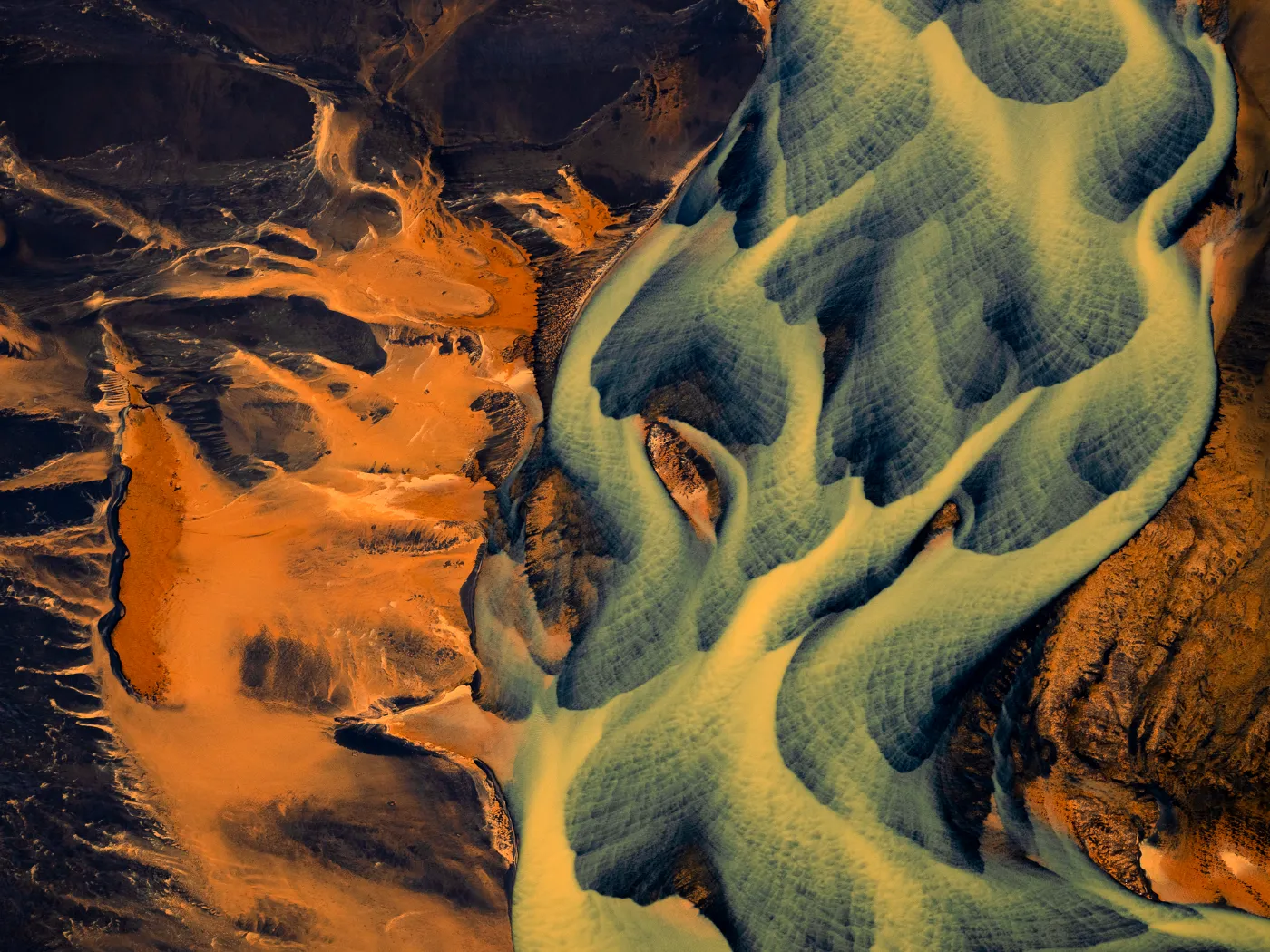
Aerial Photograph, Iceland, 2025
In southern Iceland, braided rivers spread across vast outwash plains, splitting and rejoining in endlessly changing patterns shaped by meltwater from nearby glaciers. As the ice melts, torrents of sediment-rich water flow downstream, depositing sand, silt, and volcanic ash in overlapping channels that are constantly rearranged by currents, floods, and seasonal changes.
The striking red and yellow colors come from the geology beneath the water's surface: iron-rich volcanic sediments oxidize into rust tones, while sulfur compounds and weathered rhyolite contribute warm yellows and ochers. Minerals color the riverbeds as the flow grows shallower and deeper, revealing layers of color that reflect the island's volcanic origins. What looks like an abstract painting from above is actually a precise record of water, ice, and rock interacting in real time.
The shifts between subjects create visual dialogues. Tree rings enlarged under a microscope parallel aerial photographs of elephant migration routes; the structural logic governing crystalline mineral formations echoes the plumage of ancient bird species; fractals in river deltas mirror coral structures; and wave dynamics in tidal pools imitate wind moving through grasslands.
Each image invites the viewer to experience the natural world not as a backdrop, but as a profound system of relationships.
McCormack has collaborated with conservation organizations, Indigenous communities, and field researchers for decades. The collection draws on this experience and documents natural systems across six continents.
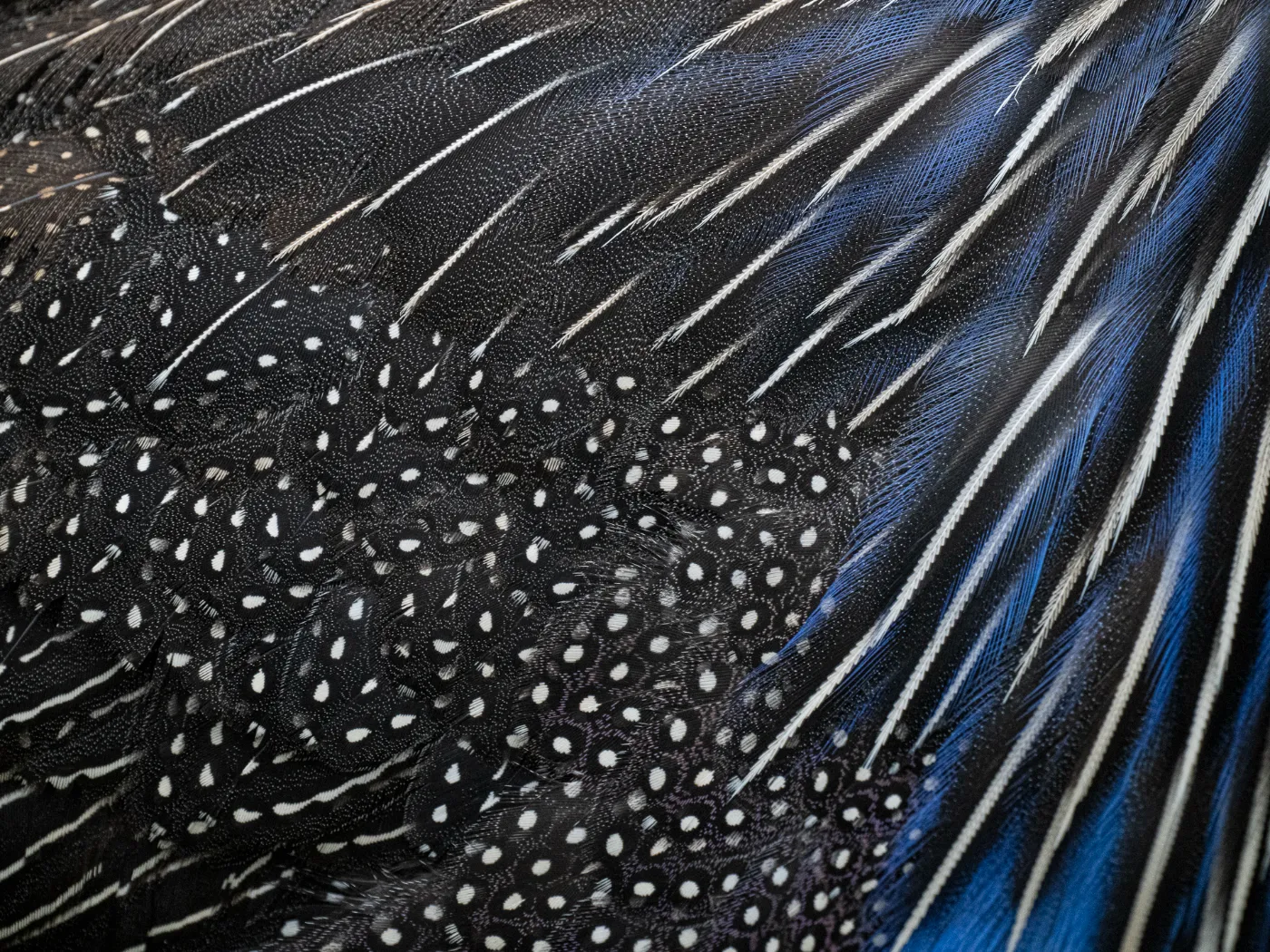
Loisaba, Wildlife Photograph, Kenya, 2024
The guinea fowl is adorned with a remarkable tapestry of feather patterns that feel both decorative and functional. Its plumage is densely covered in fine white dots arranged in rhythmic rows over a deep charcoal or indigo background, creating a surface that almost resembles woven fabric. Up close, the repetition reveals subtle variations—no two markings are exactly alike—giving the bird a vivid, breathing texture rather than a static design. The contrast between the delicate geometry of the feathers and the bird's bare, brightly colored head heightens the sense of visual drama. In motion, as flocks move through grass or across open ground, these patterns flicker and align, transforming individual birds into a shifting, unified design shaped by evolution and light.
The book includes an introduction and essays by National Geographic photographer Ami Vitale, National Geographic Explorer in Residence Wade Davis, author David George Haskell, Rainforest Alliance founder Daniel Katz, and ocean conservationist Sylvia Earle. These contributions explore the interconnectedness of natural systems and the relationship between pattern, form, and ecological function.
Supporting Conservation Through Art
All proceeds from book sales will benefit Vital Impacts, a women-led nonprofit organization founded by photographer Ami Vitale. The organization uses the power of visual storytelling and art to support conservationists, protect threatened habitats, and raise awareness of critical environmental issues.
Vital Impacts funds local organizations, provides mentorship and grants to emerging storytellers, and sells art prints whose proceeds directly support conservationists and photographers worldwide in their efforts to protect wildlife and communities.
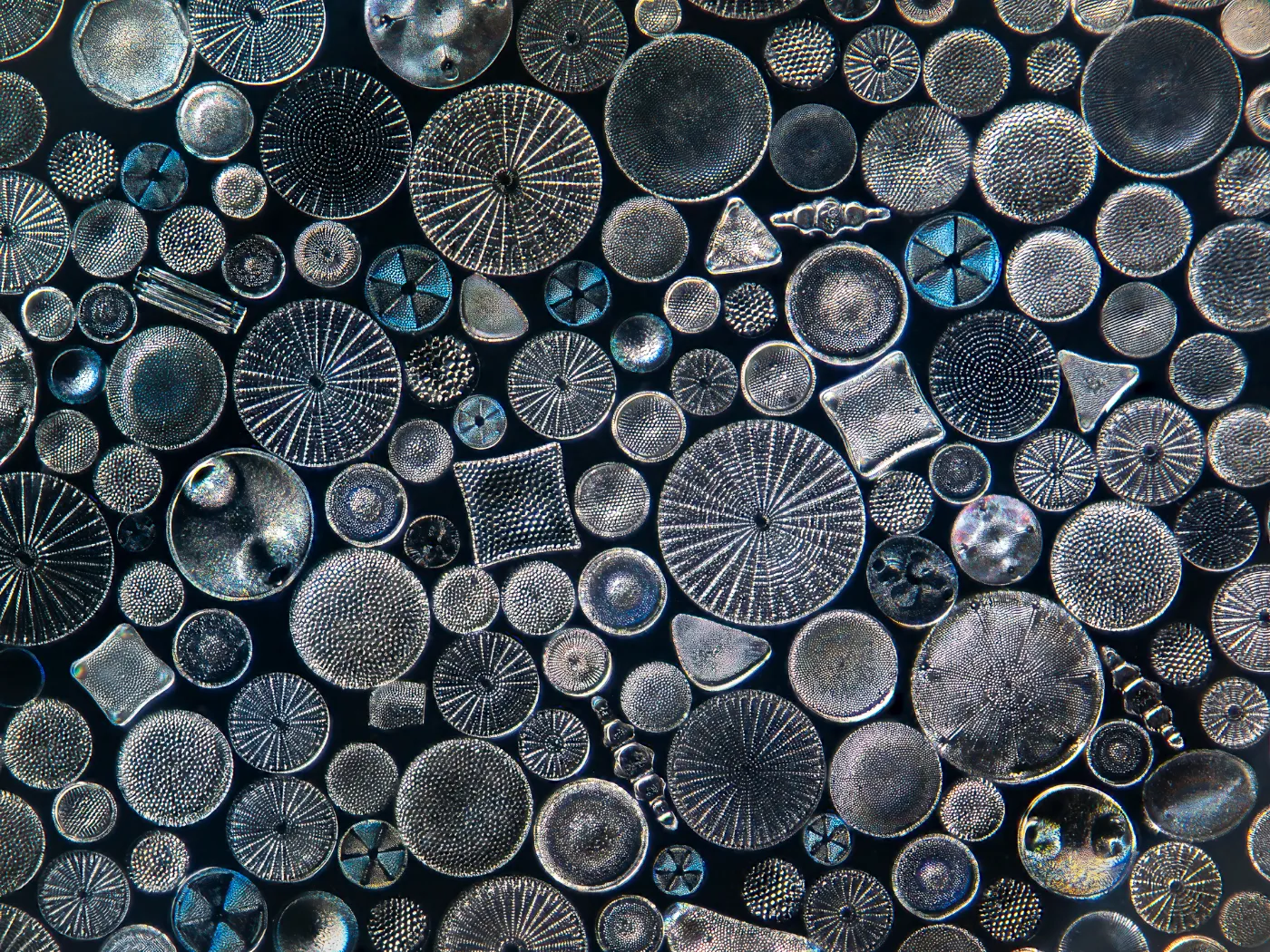
Microscope Photograph, 2024
Photographing diatoms from the North Atlantic Ocean under a microscope reveals a hidden world of astonishing precision and beauty. Each diatom is no larger than the width of a human hair, yet under magnification they resemble tiny luminous buttons scattered across the field of view. Their intricate forms come from silica skeletons—glass-like shells called frustules—that refract and reflect light, giving them a polished, almost metallic sheen. What appears simple at the scale of the ocean becomes extraordinarily complex up close: geometric patterns, radial symmetry, and fine perforations shaped by biology rather than design. These microscopic organisms, drifting invisibly through the cold Atlantic water, quietly build their glass bodies molecule by molecule, transforming chemistry into architecture.
About the Photographer
Jon McCormack is an Australian photographer and conservationist whose work has been published by prestigious media outlets and organizations around the world, including TIME, The New York Times, The Wall Street Journal, UNESCO, The Guardian, CNN, and The Telegraph.
In addition to his photographic work, McCormack is responsible for iPhone software development at Apple—a combination reflected in this monograph, in which several photographs were taken with an iPhone.
Jon McCormack: Patterns. Art of the Natural World
Pages: 168
Price: € 46.99
Publisher: Damiani