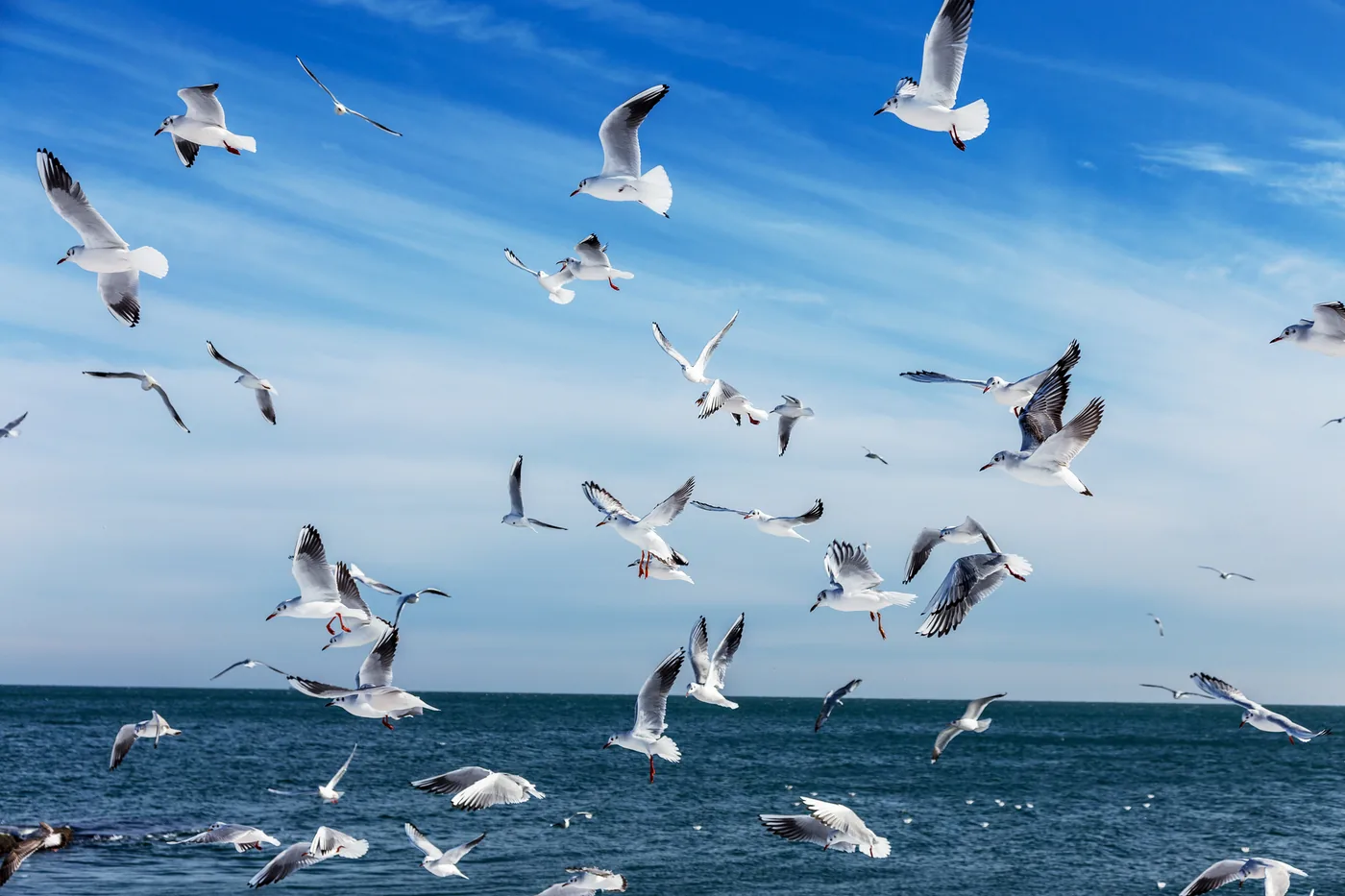
As a photographer, you learn to avoid chaos. “Keep it simple” is one of the many rules we follow. That may make photographing flocks of birds seem difficult. What could be more chaotic than a gaggle of squawking geese or a flock of pigeons? Yet you can create a sense of order within those unruly groups—you just need the right approach. Here are a few tips.
If you have ever spent time photographing birds, you know that even one bird can be challenging. You need a long lens and plenty of patience to make great bird photographs, and the same applies to flocks. But while you can follow a single bird and wait for it to do something interesting, photographing a flock works best when you already have an idea of what you want to capture.
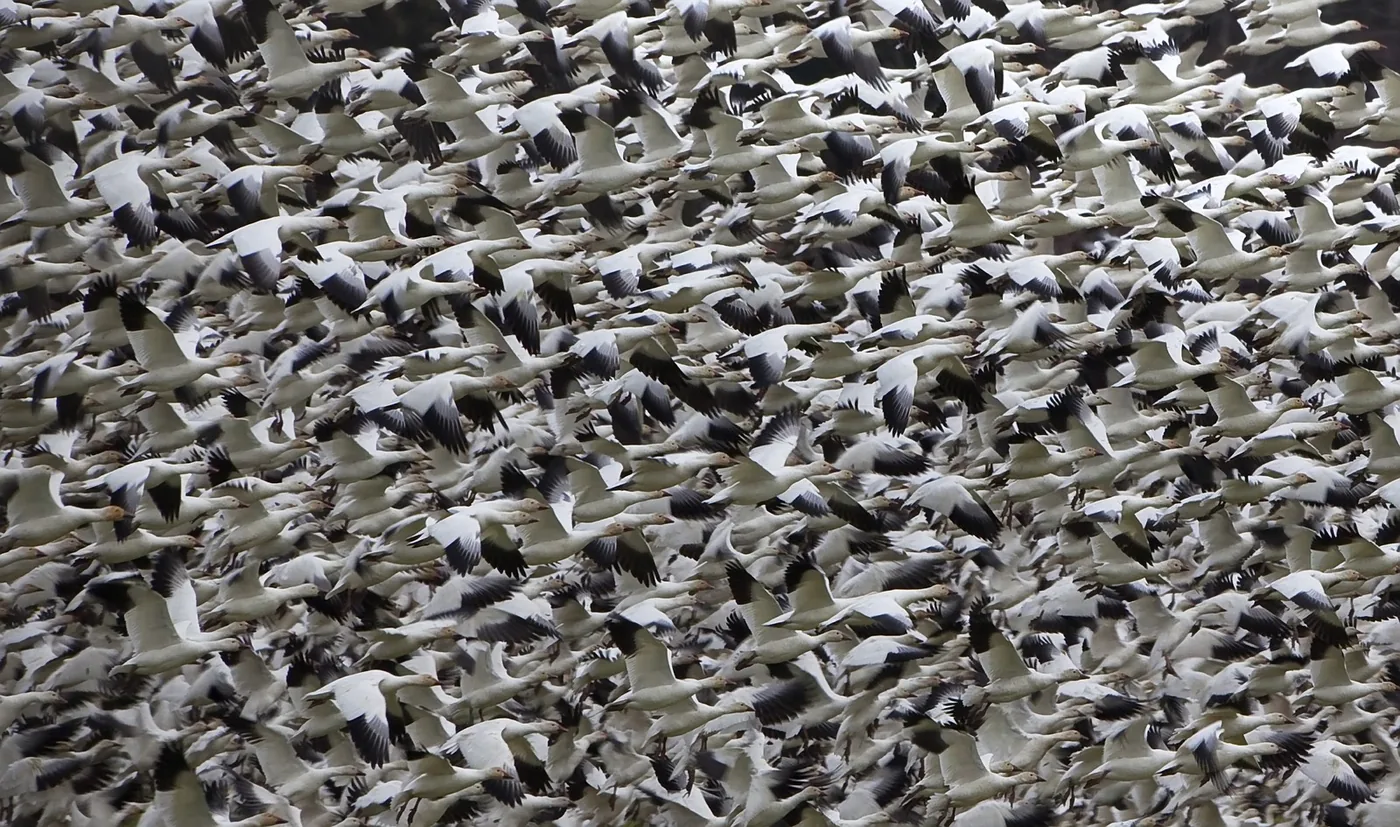
The appeal of flocks is that they create patterns. The pattern may be chaotic, but it is still a pattern. The way birds move together is endlessly interesting and photogenic, so zooming out to capture many birds can work very well.
A flock can also serve as a background for a photograph of one or two birds doing something different. The key is to think ahead. Envision the scene from a distance and ask yourself how best to photograph your idea.
Know the Species
Most importantly, make sure you understand the species you plan to photograph. What behavior might you expect during breeding season? Where do the birds gather? At what times of day do they come and go? What do they hunt or eat?
The 300 mm lens you use for individual birds is therefore still very useful for photographing a flock.
Knowing the answers helps you recognize the behavior to watch for on location. You can study the birds while photographing them, of course, but it will take longer to get into position and make truly compelling photographs of the flock.
What You Need
As with individual birds , you need a telephoto lens for a flock because you cannot get very close without scaring the entire group away. The 300 mm lens you use for individual birds is therefore still very useful for a flock. A wider-angle lens is also recommended.
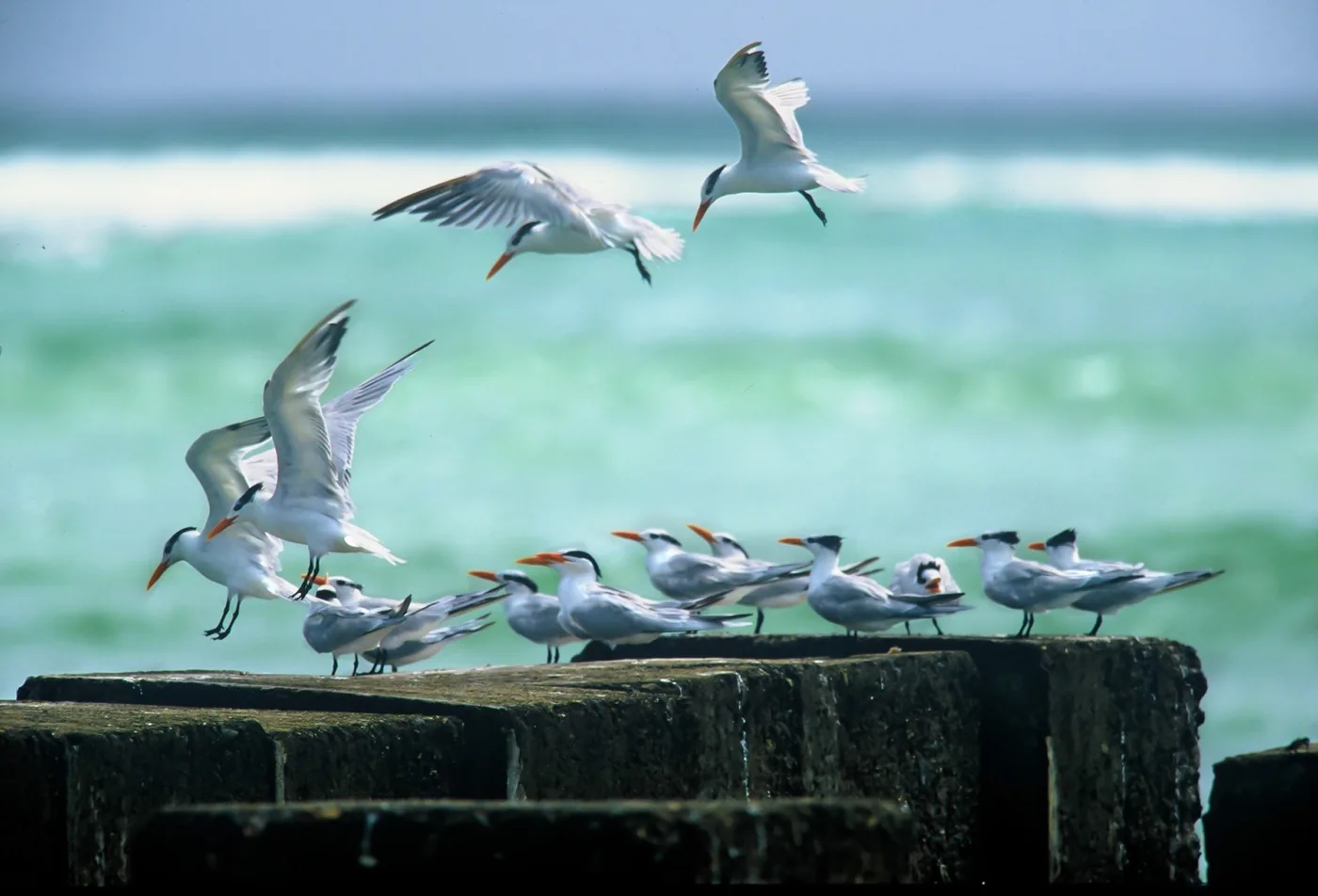
You cannot convey the size of a large flock without going fairly wide. It is therefore a good idea to carry two lenses, allowing you to zoom in or out as the situation requires.
Using a Flock as a Background
Let us begin with that first idea, because it often feels most comfortable when you start photographing flocks. Stay back a little and use your telephoto lens to find one or two birds doing something interesting. Do not fill the frame with those individuals, however. Zoom out enough to include plenty of other birds in the background. A wider aperture creates a shallow depth of field. That matters: otherwise the bird in front blends into the flock behind it, and the viewer cannot tell which bird is the subject.
Remember: to create an effective silhouette, expose for the sky rather than the silhouetted subject.
Also consider the rule of thirds and the “rule of space.” Ideally, place the subject on one of the two vertical thirds, leaving more room in front of the bird than behind it. Once the settings are dialed in and the depth of field looks right, you can keep shooting without changing much. This is an effective way to reduce visual chaos while preserving the sense that your subject belongs to a group rather than standing alone.
Silhouettes
Another effective way to photograph a flock with less visual chaos is to capture silhouettes. Go out around sunrise or sunset and photograph the birds against an orange sky as they take flight. Again, learn about the species beforehand. Some species move only at particular times of day, so adjust your plans if the birds are active in the morning rather than the evening.
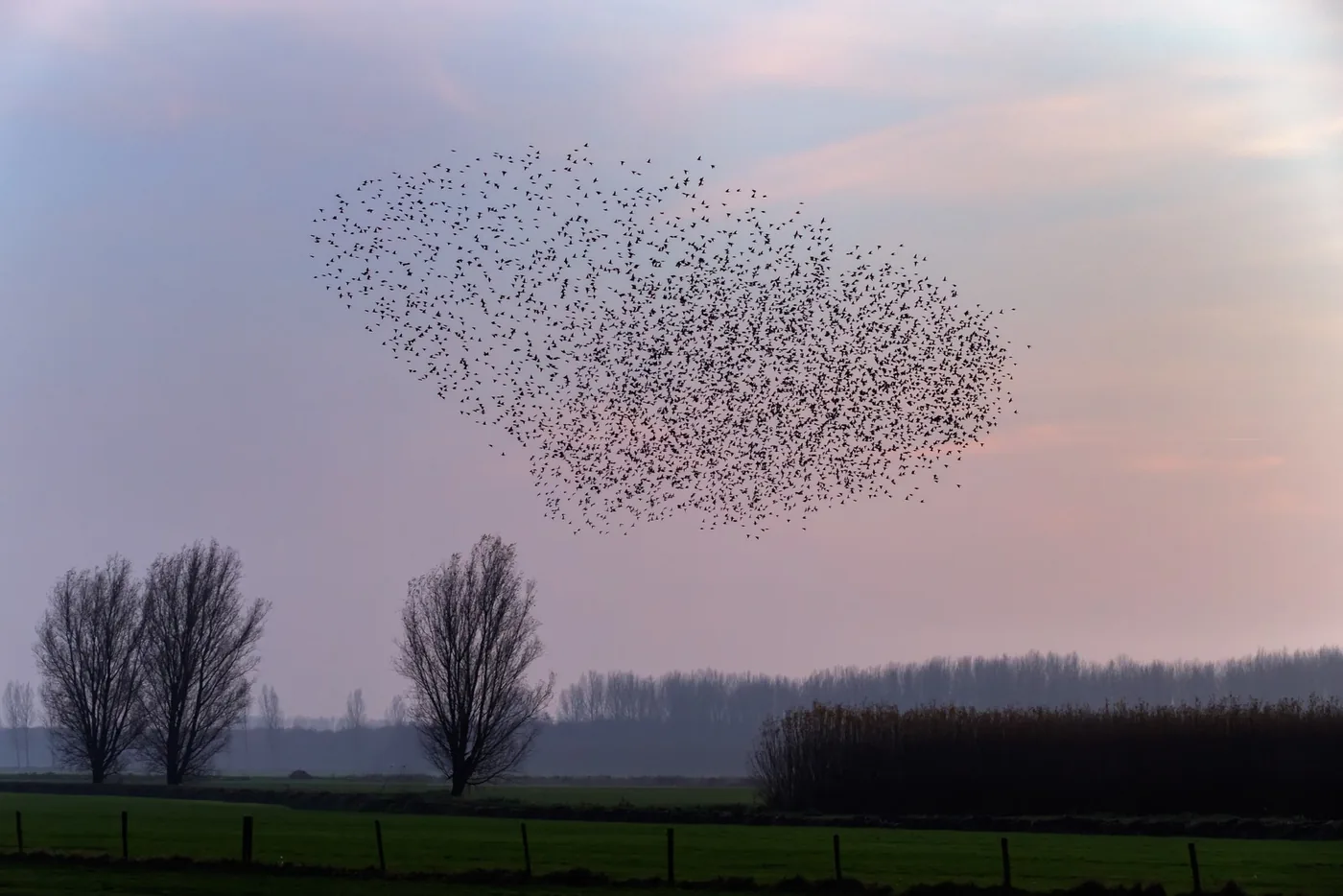
Remember: to create an effective silhouette, expose for the sky rather than the silhouetted subject. Work quickly. Meter the sky before the birds begin to fly, then use that setting for the flock. Look for patterns in their movement. Birds flying together can form remarkable curves or V-shapes. To add tension, look for one or two individuals moving differently from the rest. They can become focal points and make the image more engaging.
Contrast
Flocks look more interesting when the birds contrast clearly with the background. A flock of white geese can look striking against a cloudy sky, while Canada geese may blend into that same background. Position yourself with the sun to your right, left, or even behind you, and compare the background with the colors of the birds.
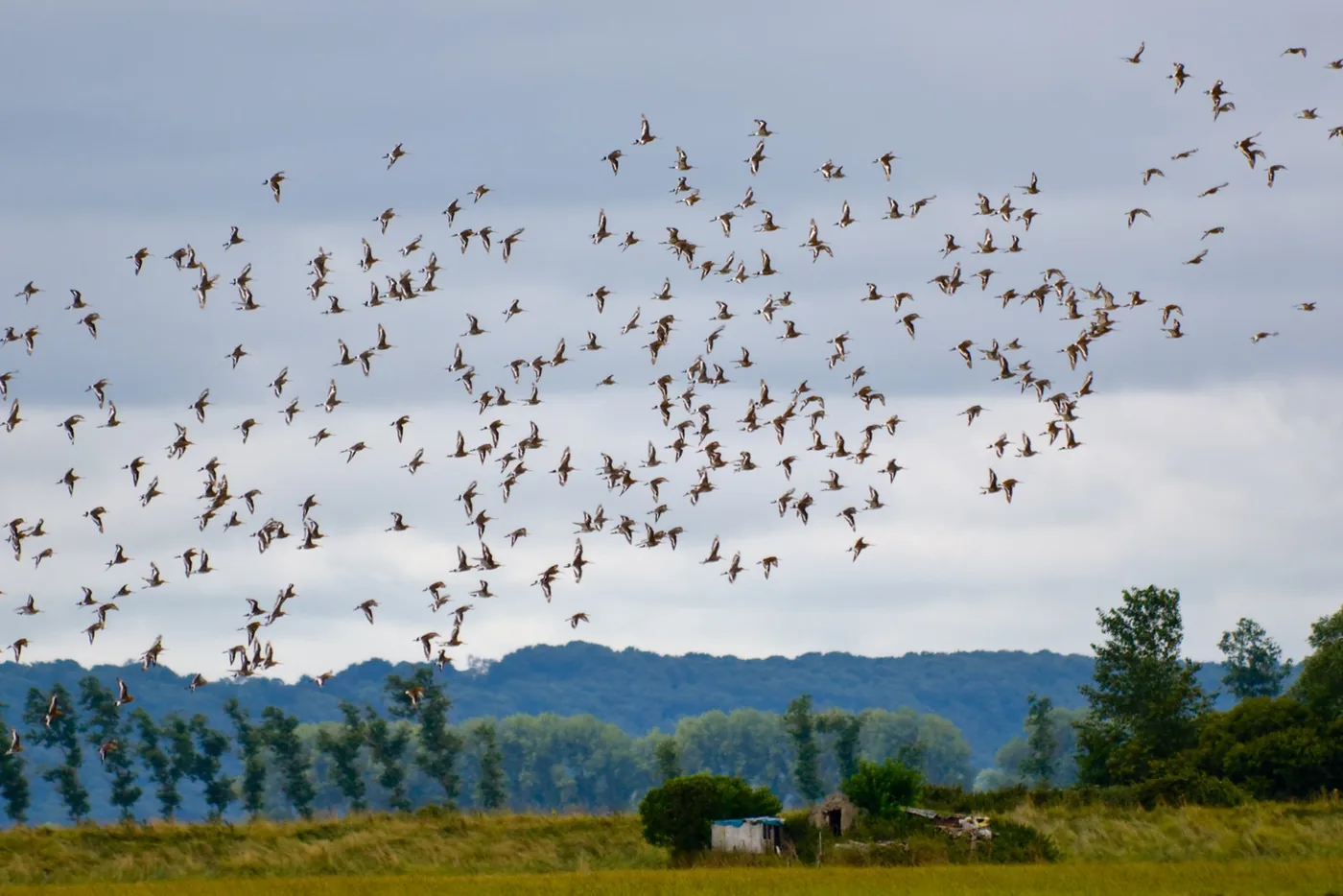
If sunlight illuminates the birds while the background remains dark, the result can be dazzling: the image retains some of the flock’s chaos but becomes much easier to read.
Movement
Another way to separate a few birds from the flock while preserving the energy of flight is to use motion blur or panning. Panning creates a streaked background while keeping the subject sharp. Some animals—especially mammals—are difficult to pan because their moving legs blur along with the background. Birds are different because they often glide. If you photograph a gliding bird while its wings are still, a little practice can produce beautifully streaked backgrounds.
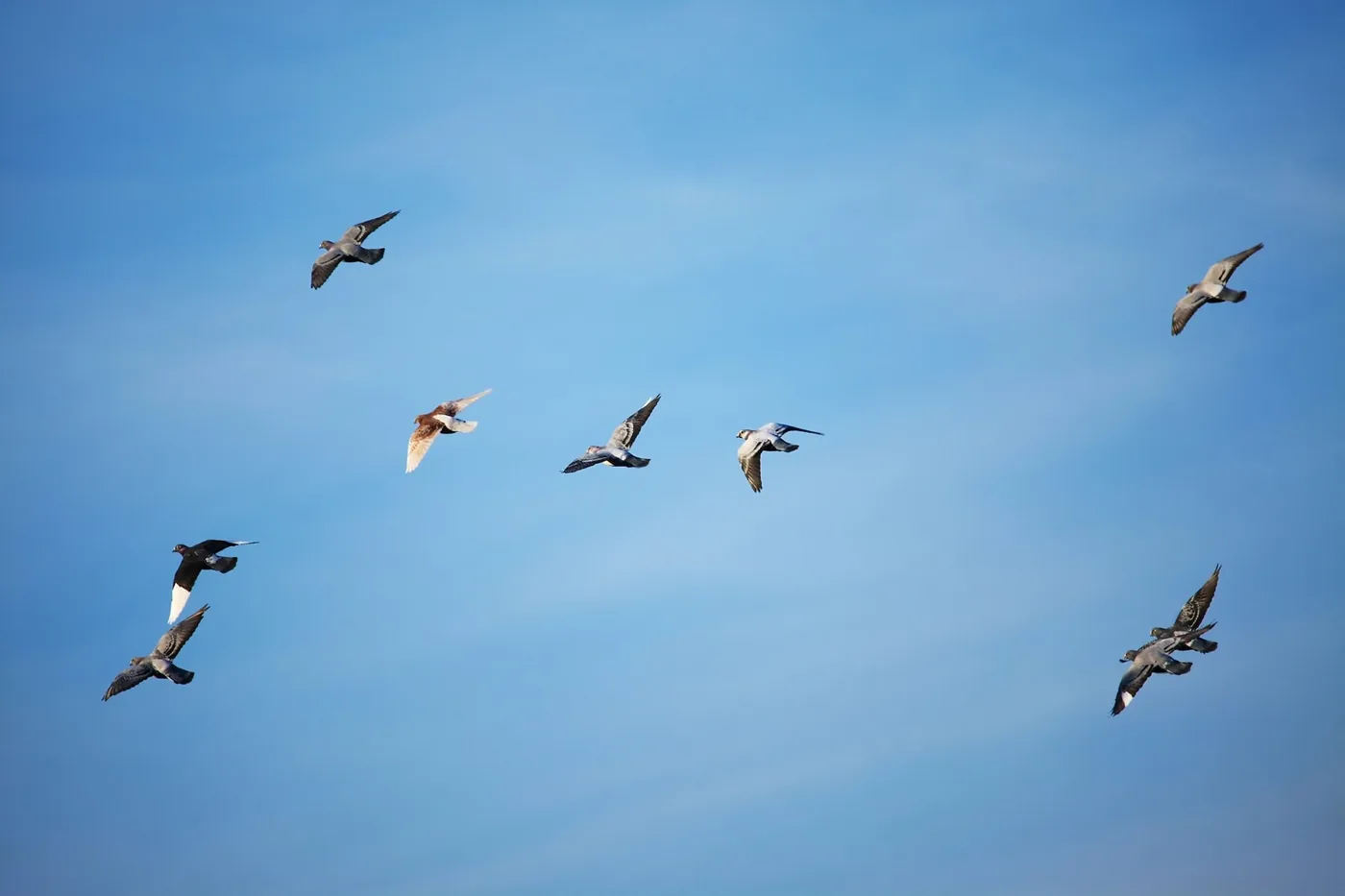
A successful panning image uses a slow shutter speed, around 1/15 to 1/30 second. Begin following the subject before pressing the shutter and continue until you hear it close. Keep the bird in the same part of the frame throughout the exposure. Move as smoothly as possible: keep your feet still and rotate only your torso.
Remember that panning takes practice, and even skilled photographers do not get a great result every time. If you are new to the technique, do not use it for the entire shoot or you may return with too few usable images. Combine it with the other approaches described above so you have a varied selection when you get home. Do not be discouraged if your first attempts produce few—or no—successful motion-blur images. This is a technique you need to practice repeatedly before the results become consistent.
Layering
Layering is another way to reduce the chaos of a flock. Look for patterns in both the landscape and the birds: reeds in the foreground, water in the middle, white birds in the sky, and dark blue or gray clouds behind them, for example.
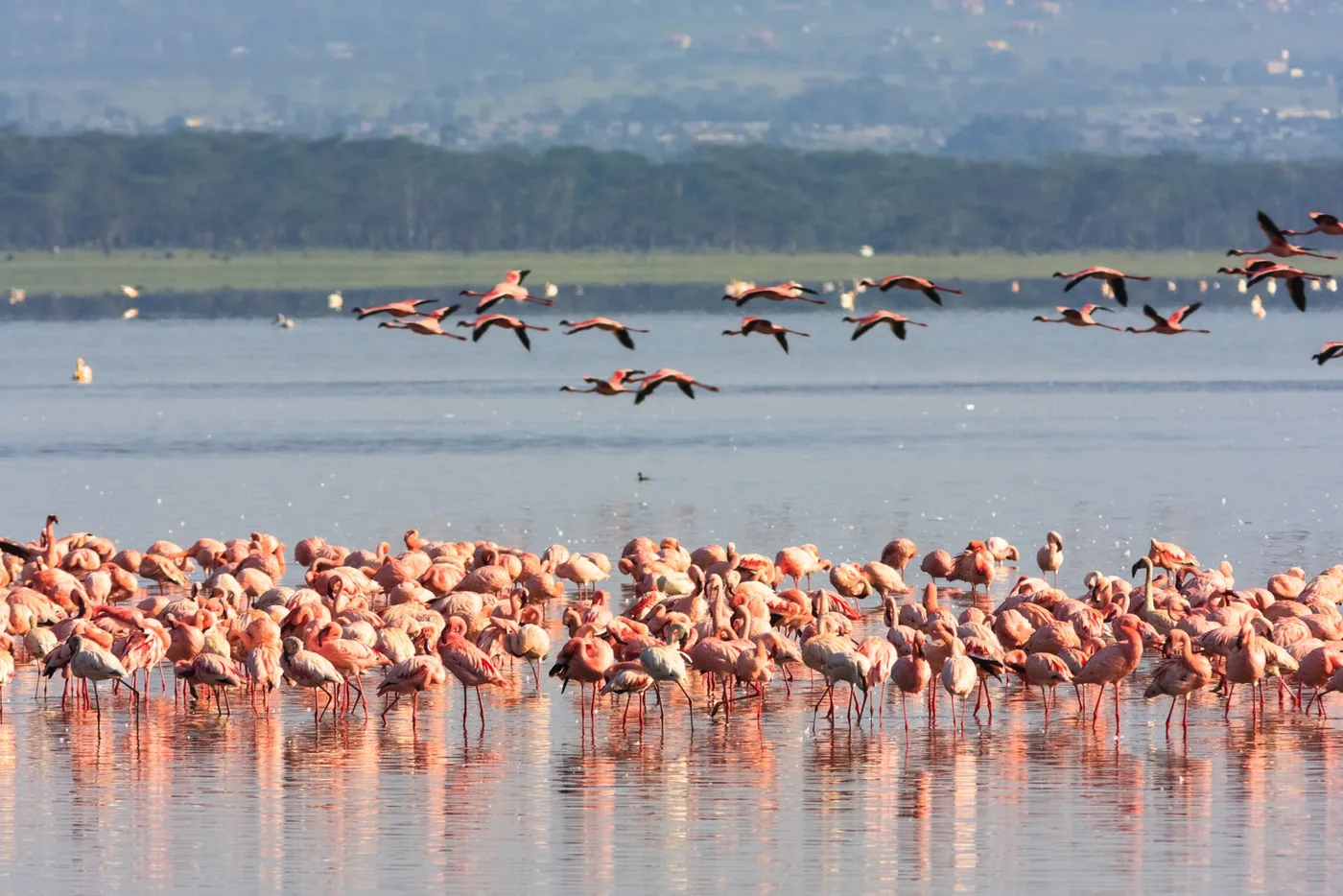
Together, these elements create a pattern of tones in stacked layers, bringing visual order to an otherwise chaotic scene.
Finally
These are a few techniques to consider before deciding how to photograph a flock. Instead of simply picking up your camera and shooting, think about how to use the chaos to your advantage. A flock will always contain some visual disorder; the challenge is to control it and make it work for the image. That takes practice, so do not plan just one afternoon with the geese. Return repeatedly until you begin making photographs you are pleased with. After practicing with white geese, try a flock of starlings or flamingos. Every species presents different challenges, providing an endless supply of lessons and opportunities for distinctive photographs.