photo: Helen Levitt, N.Y., 1978 © Film Documents LLC, courtesy Zander Galerie
This summer, Kunsthal Rotterdam presents a major retrospective of Helen Levitt, one of street photography’s quiet greats. City at Play brings together more than 220 photographs, along with film and color slides, showing how Levitt used the city not as a backdrop, but as a living playground.
A good street photograph rarely begins with spectacle. Often, it begins with someone briefly forgetting they might be watched. A child absorbed in their own world. Two women in a doorway. A couple on the subway. A chalk drawing on a sidewalk that will be gone by tomorrow. Helen Levitt had a keen eye for moments like these. She photographed New York not as a city of high-rises and speed, but as a place where people—especially children—create their own small worlds.
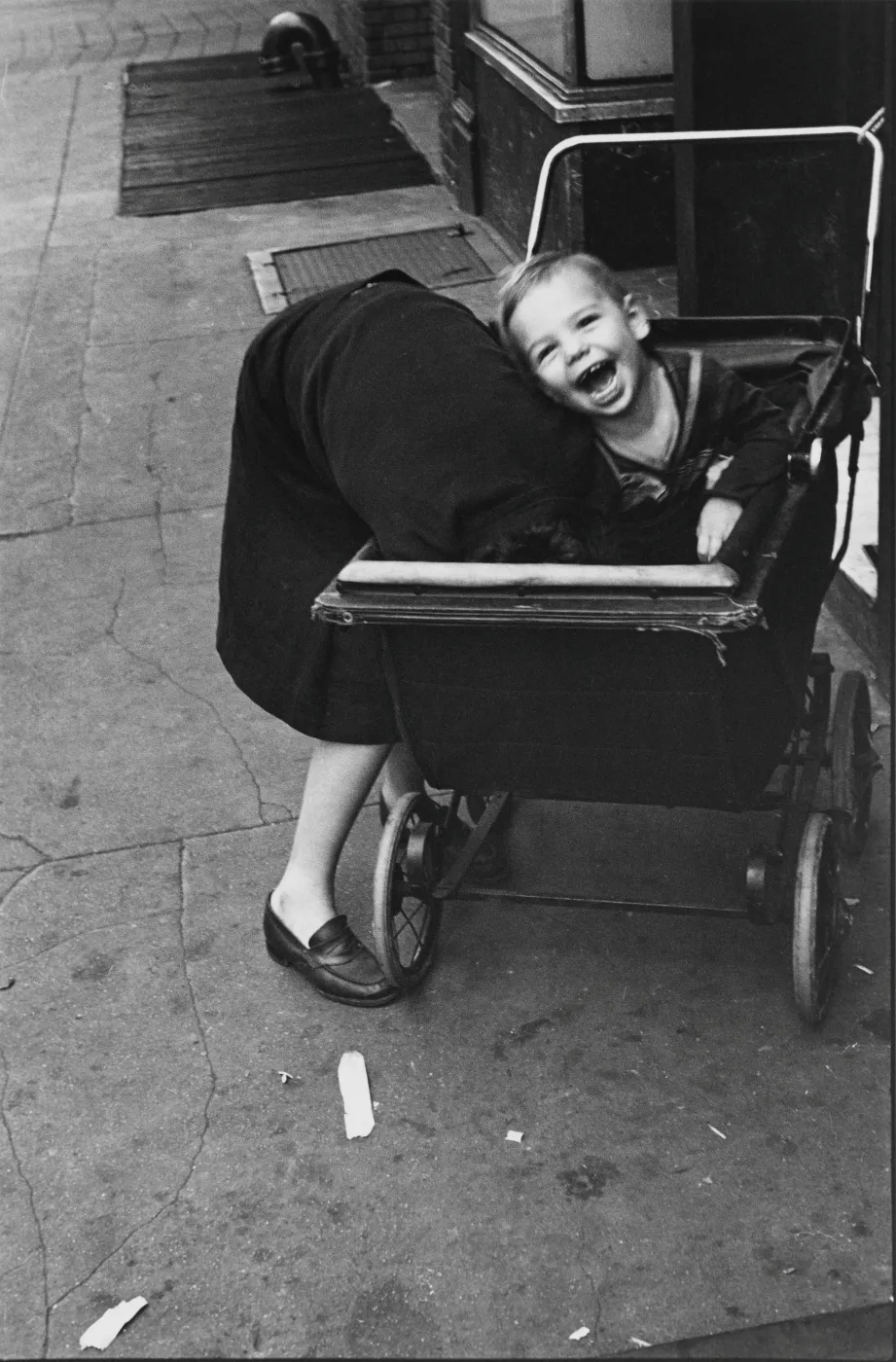
The exhibition Helen Levitt: City at Play at Kunsthal Rotterdam spans more than fifty years of work from her complete archive. Levitt (1913-2009) is considered one of the most important street photographers of the twentieth century. Early in her career, she was given a solo exhibition at the Museum of Modern Art in New York, at a time when photography was not yet widely regarded as an art form in its own right.
Levitt herself preferred to remain in the background. She said little about her work. “Just what you see. If it were easy to put into words, I would have been a writer.”
Just what you see
That phrase suits her photographs. They were not made to prove some grand theory. They observe. In Harlem, the Lower East Side, and Hell’s Kitchen, Levitt photographed everyday street life in the thirties and forties: children playing in the spray of a fire hydrant, people on stoops, passersby momentarily lost in thought. Her images are never sentimental, yet they are tender. Never loud, but often witty. They show how rich the ordinary can be when someone looks long enough.
Her photographs of chalk drawings on walls and sidewalks are especially remarkable. Beginning in 1937, Levitt taught children in East Harlem through the Federal Art Project.
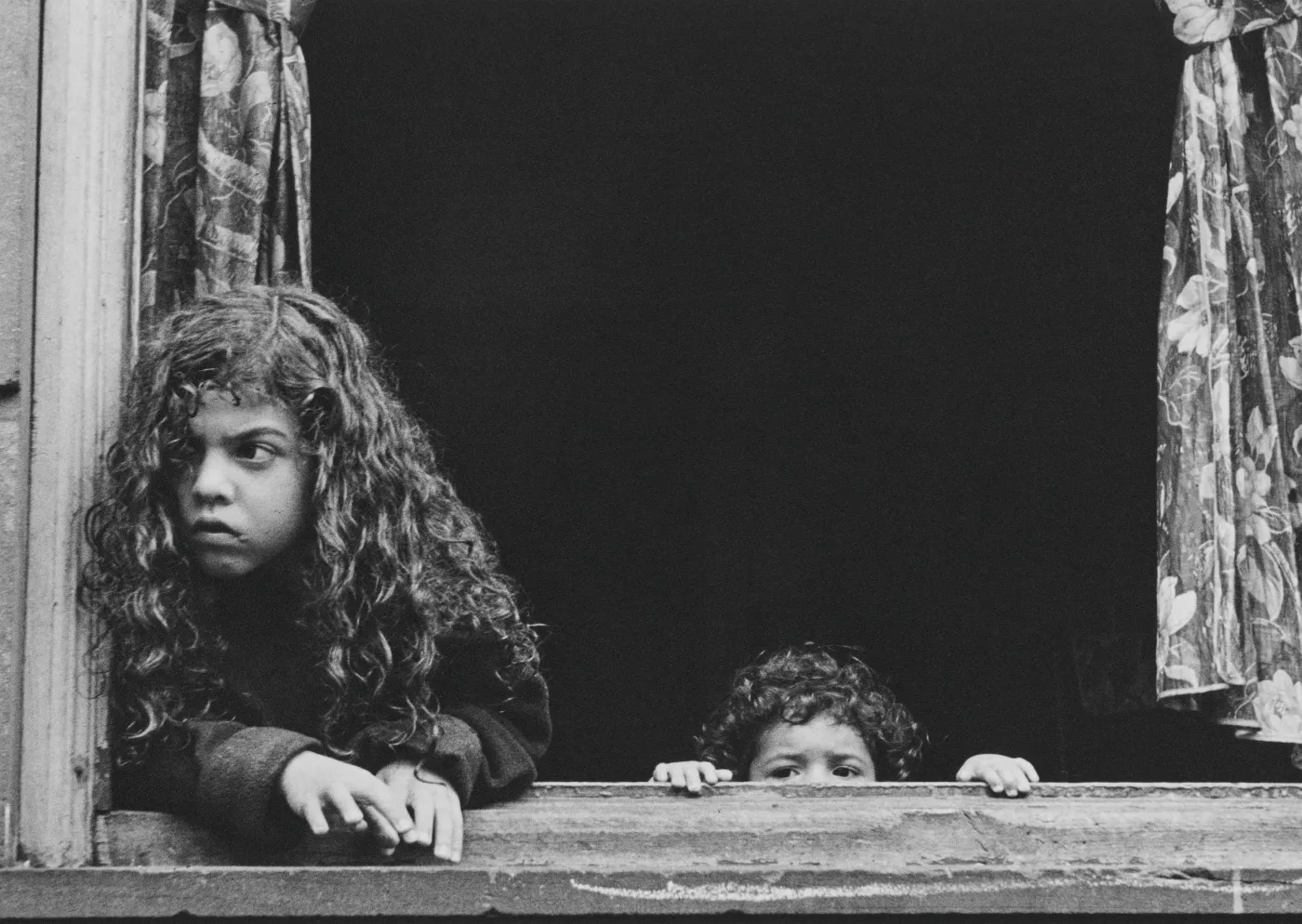
As she made her way through the city, she photographed the traces children left behind: figures, symbols, rules of play, names. Sometimes their creators appear in the frame; sometimes only their lines remain. They are small testaments to imagination in a harsh urban environment.
Invisibly present
Levitt also worked in a way that made her nearly invisible. Among other tools, she used a right-angle viewfinder, which allowed her to look in one direction while the camera pointed in another. As a result, her subjects often remained completely immersed in their own worlds. This gives the photographs their distinctive calm. You do not sense a photographer arriving to take something from the scene, but someone briefly moving along with life.
“Just what you see. If it were easy to put into words, I would have been a writer.”
The exhibition is not limited to New York. In 1941, Levitt traveled to Mexico City, inspired by photographs Henri Cartier-Bresson had taken there earlier. Her Mexican images are rawer and more direct. Poverty and inequality are more prominent than in her New York work, but there, too, Levitt remains attentive to gestures, postures, and subtle relationships between people.
From black and white to color
Film and color also receive attention. In the mid-forties, Levitt made the short film In the Street with Janice Loeb and James Agee, an early precursor to cinéma vérité. At the same time, she worked on A Way of Seeing, a book of her New York photographs that, after numerous setbacks, was not published until 1965 and has since come to be regarded as the most explicit interpretation Levitt ever allowed of her own work.
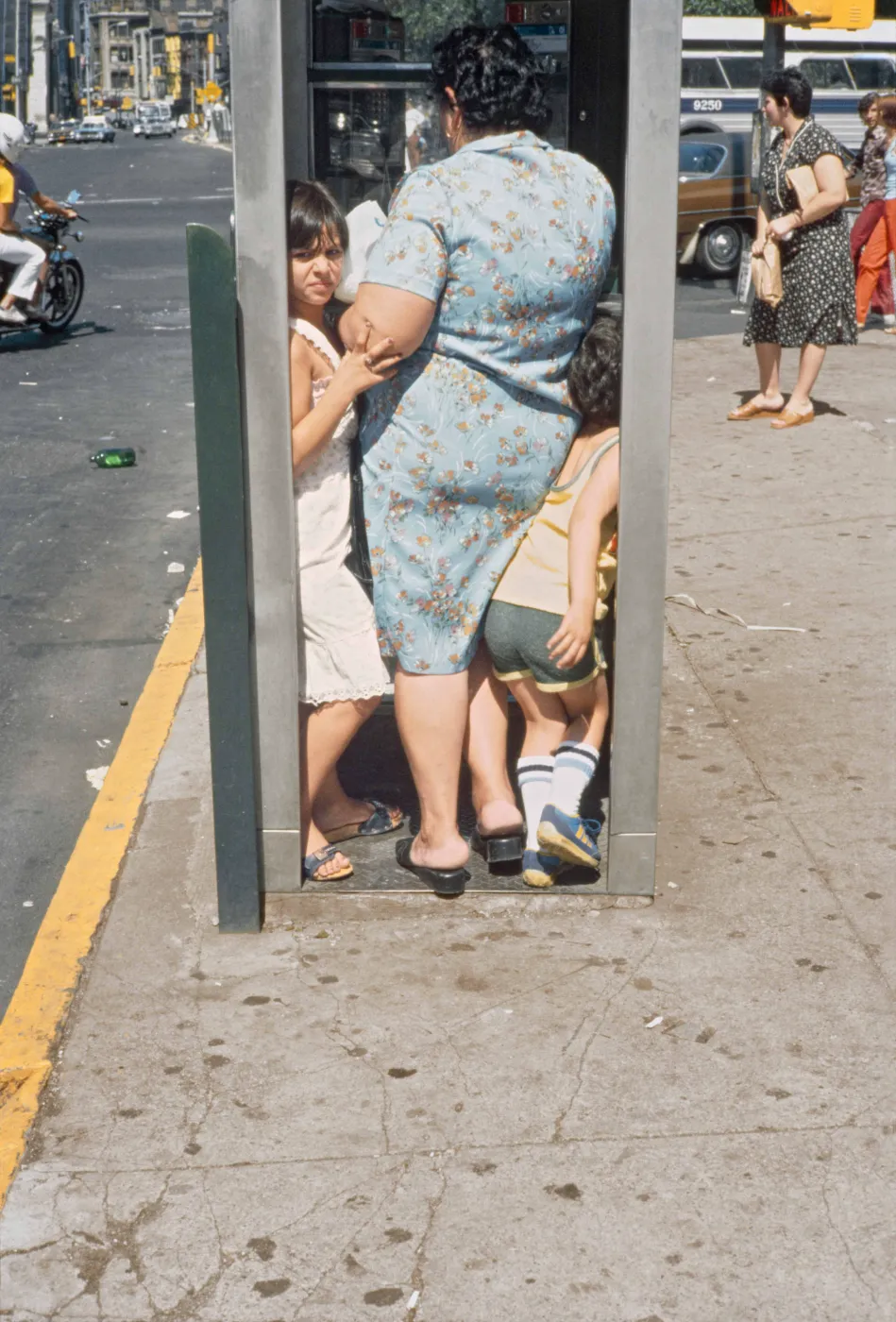
From the late fifties onward, she also made a radical shift to color, at a time when black and white was still the norm in fine-art photography. In her later work, red cars, weathered facades, sidewalks, and stairways are not decoration, but integral parts of the composition.
Helen Levitt: City at Play
May 30, 2026 through October 4, 2026
Kunsthal Rotterdam