The Hähnel Remote Control lets you operate your camera's autofocus and shutter release from a distance. Its 3.5-inch LCD screen allows you to evaluate the shot remotely. This review puts it to a practical test.
The Hähnel Inspire Liveview Remote Control consists of two parts: a receiver with an internal camera that mounts on the camera's hot shoe, and a transmitter with a 3.5-inch LCD screen. The transmitter provides several functions for controlling the camera remotely.
Both the transmitter and receiver use four AA batteries, which are included. Versions are available for various camera brands and models, and cables are supplied to connect the receiver to the camera.
First Impressions
On first use, the manual seems rather brief. It takes several readings to understand how everything should be connected and how the various functions work.
The transmitter's screen has a fairly low resolution, so do not expect the same image quality as your camera's LCD screen. In practice, that is not a problem: you only need to determine whether the subject is properly framed and when to press the shutter release. The screen is certainly adequate for that.
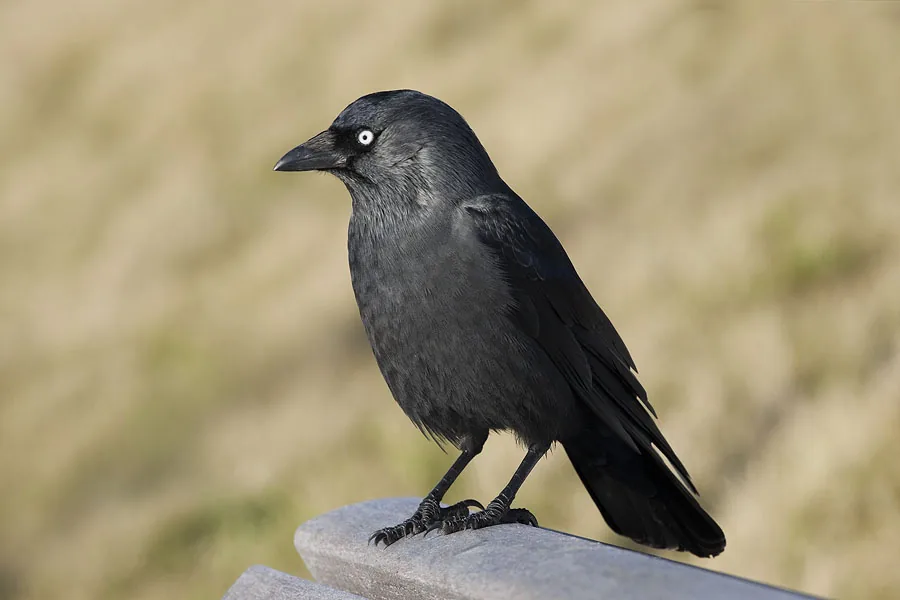
I made the photograph above with the Hähnel Inspire Liveview Remote Control. Jackdaws are not easy to approach. By mounting the camera on a tripod and using the remote control patiently, I was able to capture this image.
Setup
Slide the receiver onto the camera's hot shoe and connect the remote-control cable to the receiver. Connect the other end to the camera's remote-control socket. Switch on the receiver and transmitter; the two devices then synchronize and establish a connection.
Outdoors, the range is about 50 meters without difficulty
The transmitter's screen then displays the view from the receiver's internal camera. That camera has a fixed angle of view comparable to a 35 mm lens on a full-frame camera.
Using Live View
You can also view the image from your camera's LCD screen on the transmitter. Set the camera to live-view mode, then connect the AV video cable supplied with the camera.
Connect the cable to the receiver's yellow socket and to the camera's video output. The receiver then sends the camera's live-view image to the transmitter's screen.
A button on the transmitter switches between the receiver's internal camera and the camera's live-view feed. Lightly pressing the large gray button activates autofocus; pressing it farther releases the shutter and takes the picture.
For the robin photograph, the camera was set up outdoors while I remained inside
The transmitter can also save the image displayed on its screen. Images are stored at low resolution in the transmitter's memory for later viewing. A camera live-view image can be saved only while it remains visible on the camera's screen.
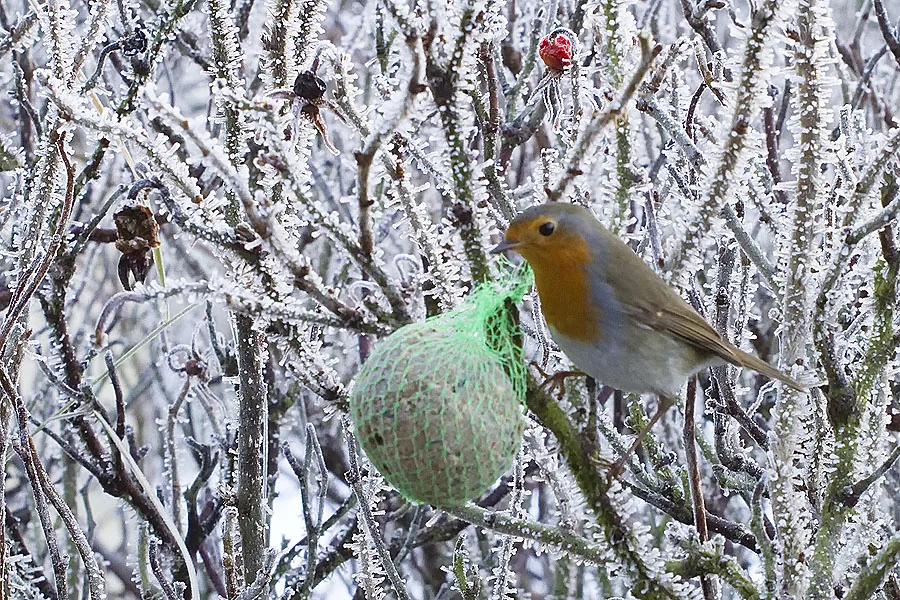
For the robin photograph, the camera was set up outdoors while I remained inside. This allowed me to photograph the birds up close with a short zoom lens without disturbing them.
Range
The remote control's autofocus and shutter controls work well, and the camera responds quickly to signals from the transmitter. Outdoors, the range is about 50 meters without difficulty.
You can safely leave the camera and receiver outdoors while you remain inside. Windows, wooden partitions, and brick walls pose no problem for the transmitter and receiver.
Power Consumption
The batteries supplied with the transmitter were completely drained within a few hours. Its display is probably responsible for the relatively high power consumption. By contrast, I used the receiver for several days without exhausting its batteries.
Use rechargeable batteries and keep enough spares on hand. As an indication, four fully charged 2700 mA batteries powered the transmitter for more than 6 hours. The transmitter also displays battery-level indicators for both itself and the receiver.

Another option is an external power source. Both components have a mini-USB 5V socket, allowing a USB power supply to be connected by cable. Some power supplies have an internal battery, while others can be connected directly to an electrical outlet.
The possibilities for sports and action photography are equally extensive
The Hähnel Captur Pro remote control remote control is suitable for many kinds of photography. For wildlife, place the camera in a strategic location and hide with the transmitter where the animals cannot see you.
The possibilities for sports and action photography are equally extensive. In auto or motorcycle racing, for example, you can position the camera and receiver close to the course while remaining outside the danger zone.
At a soccer match, you could place a camera and receiver behind the goal while operating another camera from elsewhere. One transmitter can even control up to four receivers. And for a self-portrait, you no longer need to ask someone else to take the picture. This remote control puts everything at your fingertips.