Under the Kodak name, the EC35 is a small but noteworthy new development in analog photography: a new reusable 35mm camera that costs barely more than a few rolls of film. That is exactly what makes it interesting. Not because the EC35 is technically spectacular, but because it shows just how accessible film photography is becoming once again.
This trend reflects something that has been simmering among photographers for some time. After years of sharper sensors, smarter phones, and increasingly polished AI images, there is a growing desire for photos that are less perfect. Film slows you down. You do not see your result right away. You have to choose, wait, and ultimately accept what the light, the film, and the small lens have created.
What is the Kodak EC35?
The Kodak EC35 is a new entry-level analog camera: a reusable 35mm camera from Reto, which operates under license from Kodak. For 34,99 dollars, what you mainly get is simplicity: no film in the box, no AA battery, no autofocus, and none of the luxuries of a classic compact camera. So it is not a disposable camera, but a simple point-and-shoot that you buy precisely because there is so little to adjust.
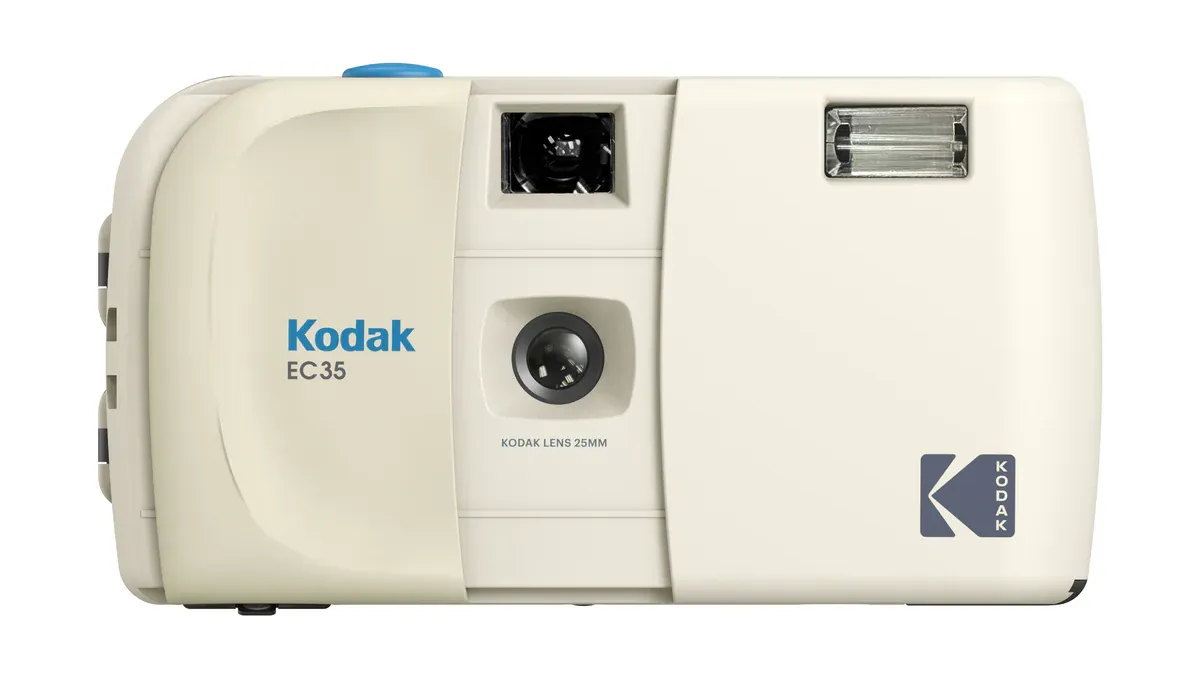
That puts it in the same family as the Kodak M35, but it is not exactly the same little camera. The M35 has a 31mm lens. The EC35 is the new model now attracting attention: it uses a wider 25mm lens and has a sliding cover that both protects the lens and locks the shutter button.
The EC35's specifications are deliberately basic: a 25mm f/10 optical acrylic lens, fixed focus, a single shutter speed of 1/100 second, manual film advance and rewind, a built-in flash, and a weight of 102 grams. The sliding cover makes it practical for a camera that will mostly end up loose in a bag or coat pocket.
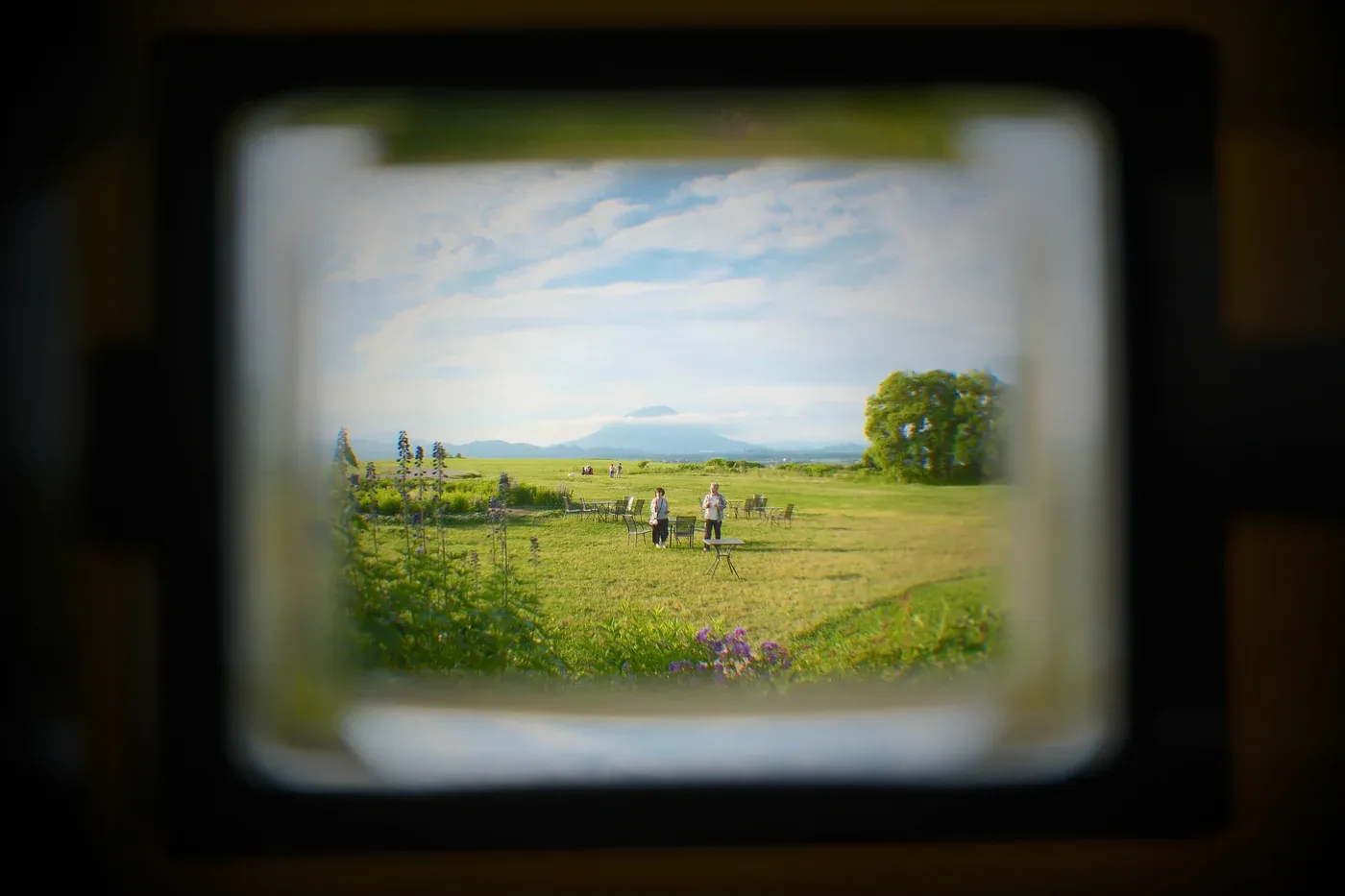
That sounds limited, and it is. But that is exactly what makes the EC35 straightforward to use. You choose your film, look through the viewfinder, press the shutter, and move on. No menus, no raw files, and no screen that immediately makes you second-guess the shot.
The new entry-level wave extends beyond Kodak
The EC35 is the latest news, but it is not an isolated case. Simple 35mm cameras are also attracting sustained interest around Lomography especially in half-frame models that use only half the normal image area for each exposure. A standard 36-exposure roll can produce up to 72 photos in a half-frame camera.
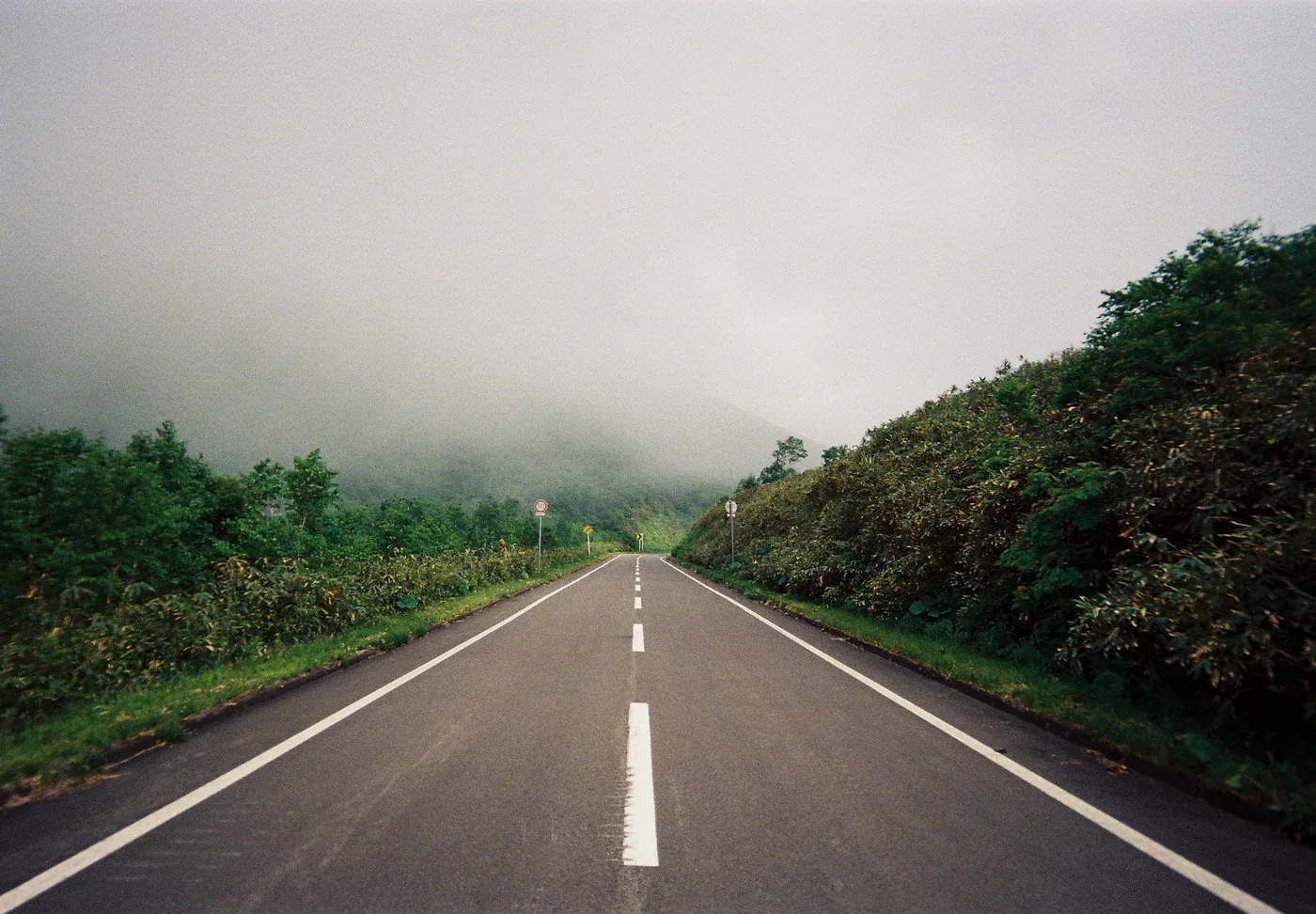
The practical difference from the Kodak EC35 is mainly the negative format. The Kodak takes standard 35mm photos, while half-frame cameras produce smaller vertical images. For beginners, that is not just a technical choice, but primarily a decision about cost and style: more photos per roll, visibly more grain, and often a looser snapshot feel.
Full-frame 35mm gives you more negative area per photo and usually somewhat cleaner scans. Half-frame makes film cheaper per shot, but the scan is smaller and the limitations become visible sooner. That does not have to be a disadvantage. Half-frame is particularly well suited to series, diptychs, street scenes, and casual snapshots.
How much does analog photography really cost?
The camera itself is only the beginning. With film, you pay repeatedly for the roll and for developing or scanning. That is exactly where analog photography differs from digital: every click feels small, but it is not free.
In the Netherlands, you should expect to pay roughly ten to thirteen euros for a 35mm color film roll with 36 exposures, depending on the brand, store, and availability. Kodak Gold 200 and Kodak UltraMax 400 are often among the entry-level options. Then there is the lab. Fotorolletje Ontwikkelen, for example, charges 6,95 euros for C-41 color film development only and 16,95 euros for development plus a standard scan. Black-and-white costs more. If you want half-frame negatives scanned individually, that lab charges an additional 4 euros per roll.
A simple example: a roll of color film costing around 12 euros plus developing and scanning at 16,95 euros brings the total to nearly 29 euros for 36 exposures. That is about 80 cents per photo, excluding any shipping costs or prints. With a half-frame camera, the cost per photo can fall because you get twice as many images from the same roll. But you may sometimes pay extra for neatly cropped half-frame scans.
So a cheap camera does not automatically make this a cheap hobby. It does, however, lower the barrier to entry. You do not need to look for a used Olympus Mju, Yashica T, or Contax-style compact at prices that by now have little to do with entry-level photography.
Why do photographers want such a limited camera again?
A cheap film camera gives you something that much modern equipment is designed to eliminate: chance. The fixed shutter speed pushes you toward daylight or flash. The fixed focus requires distance. The simple lens makes the corners less clinical. And film itself never responds as neutrally as a properly exposed digital raw file.
That is where the charm lies. A photo may be too blue, a little too dark, grainy, or slightly crooked. In digital photography, that is quickly labeled a mistake. On film, it can become atmosphere, or at least a reminder of the moment when you did not have everything under control.

For young photographers, film's tangible nature also plays a role. A roll comes to an end. You have to wait for the scans. Sometimes you get images back that you had forgotten taking. That rhythm fits remarkably well in an age when almost everything is immediate and endlessly correctable.
What can you photograph with it?
A camera like the EC35 is best suited to situations with enough light: vacations, the beach, the city, daytime festivals, family days, bike rides, and street scenes. The 25mm lens is wide enough for surroundings and group photos. The built-in flash helps indoors or in the evening, although you should not expect it to produce subtly beautiful light.
Portraits are possible, but mainly as environmental portraits. Your subject will not be separated from the background as it would be with a fast lens on a digital camera. That is not a problem. The context is often exactly what makes snapshots like these more enjoyable: a table full of glasses, a bus stop, a facade, sunlight on the street.
This is not the right tool for fast-moving subjects, low light without flash, or carefully controlled depth of field. Those situations expose its limits. But those limits are clear and therefore educational.
Full-frame or half-frame?
Anyone who mainly wants to take individual photos and have the best chance of usable scans is more likely to choose a standard 35mm camera such as the Kodak EC35. You get 36 images per roll and a larger negative for each photo.

Anyone who wants to experiment a lot and enjoys thinking in series may have more fun with half-frame. Two images side by side can form a mini-story together: before and after, left and right, detail and overview. It is also convenient on vacation because a single roll lasts much longer.
The downside is that half-frame reveals its limitations sooner in large prints or heavy crops. That matters less for Instagram, a small album, or a series of contact-sheet-like images. For photographers seeking maximum image quality, a good 35mm compact or SLR remains the more logical choice.
Start cheaply, but do not expect miracles
The arrival of the Kodak EC35 is particularly interesting as a signal: manufacturers are continuing to make new, simple film cameras for people who want to try analog photography without searching the used market. A plastic lens on a camera that costs a few dozen euros does not become a Leica just because there is film behind it. The viewfinder is approximate, exposure control is limited, and the results depend heavily on the light, choice of film, and lab scan.
But if you accept that, this is exactly what makes a camera like this interesting. It takes photography out of the realm of specifications and brings it back to looking, experimenting, and preserving. You do not have to pretend that failure is the goal. You only have to accept that failure is part of the process. That makes the Kodak EC35 and the new half-frame entry-level models unsuitable for perfect files, but well suited to photos that sometimes contain more life than technology.
If you would like to see a related camera, the Kodak M35 Yellow is a practical example. The M35 has a 31mm lens, while the EC35 offers a somewhat wider view at 25mm.
Read this article in Dutch: Kodak EC35: nieuwe 35mm-camera.