Photographer Tom van der Leij travels the world. All kinds of subjects appear before his lens. One spring, he ended up in Cyprus.
“Look, this is the extremely rare Tulipa Cypria. It’s endemic, which means it grows only here in Cyprus.” My guide Alekos is ecstatic at the sight of this flower. “There’s another one growing here, and another over there, and many more farther on,” he exclaims.
Alekos bounds up and down the hill like a true professional obsessive, then carefully crawls through the bushes. “I was here last week and counted them. About two hundred grow in this spot. There’s another location on the north side of the island and nowhere else in the world do they grow!”
I curse myself for not bringing a macro lens
Swept up in my guide’s enthusiasm, I carefully kneel beside the dark-red tulip, barely 30 cm tall. The flower is indeed beautiful in all its simplicity. I curse myself for not bringing a macro lens. This entire trip is devoted to the flora and fauna of Cyprus.
I bought that close-up lens precisely for things like this, and it spends the rest of the year gathering dust in my cabinet. Of all times, I didn’t bring it now.
I continue walking, somewhat irritated. Alekos promises me a surprise tomorrow, at the end of a week of hiking, and that cheers me up a little.
This is my first visit to the Mediterranean’s third-largest island, after Sicily and Sardinia. It is an extraordinarily fascinating and diverse island.
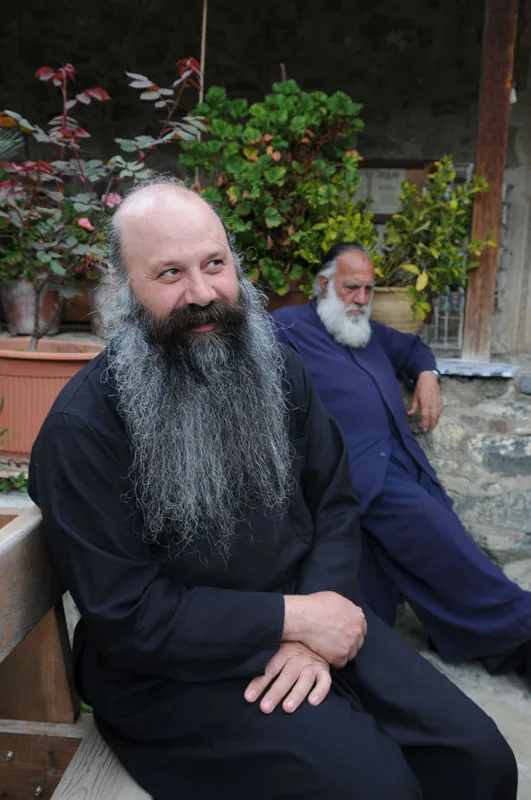
People who have aged beautifully, with expressive, weathered faces, willingly let themselves be photographed. Without any need for staging, they have exactly the right expressions.
Olive bread, fresh oranges, and a glass of wine to wash it down: all the ingredients of the good life come together here. It is no coincidence, they say, that Aphrodite, goddess of love and beauty, was born here.
People who have aged beautifully ...
Since 1974, the island has consisted of a northern Turkish Cypriot part and a southern Greek Cypriot part. Southerners call Northern Cyprus the occupied territory, and it is recognized only by Turkey.
The southern part covers two-thirds of the island. Although it is Cypriot, Greek influence is impossible to miss. Along with the language and religion, the blue-and-white-striped Greek flag often flies proudly beside the national flag.
Olive bread, fresh oranges, and a glass of wine to wash it down: all the ingredients of the good life come together here
Cypriots are a distinctive people and have developed enough of their own identity over the centuries to be rightly proud of their culture. Various powers have ruled the island. Its location between Asia, Europe, and Africa has made many rulers recognize its strategic value.
Besides Egyptians, Persians, Greeks, Arabs, and Byzantines, Crusaders, Venetians, and Ottomans also settled here. Each left its own mark and traces behind. An ancient city wall, forts, mosques, and churches—the island’s history unfolds before you as you walk through the capital, Nicosia.
Nicosia, incidentally, is the only city in Europe divided in two and belonging to two countries. The buffer zone is guarded by UN peacekeepers. Since 2004, it has been possible to visit the occupied territory and cross the border with your passport, although your insurance does not cover you there.
And precisely where signs show a camera crossed out in red, people are still tempted to take a quick picture. Photographing military sites is never a good idea, of course, but the temptation is often strong.
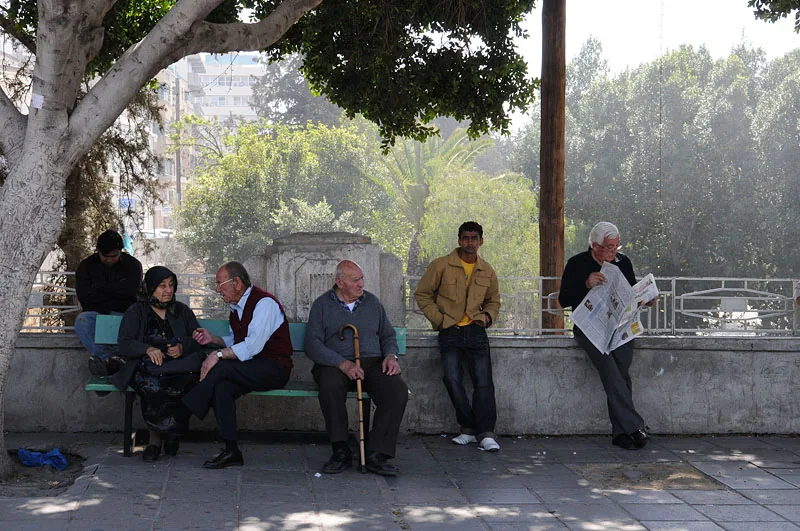
Modern and picturesque scenes come together beautifully in Nicosia. Especially in the early evening, when the light is less harsh than during the day, it is worth taking a seat at a sidewalk café on the corner of an appealing street.
Once I have found the right location to serve as a backdrop, I set up my camera and only have to wait for something to walk into the frame.
I spend my evenings at by far the island’s most distinctive accommodation, the Anassa Hotel. Far from the party crowds, right by the sea and at the foot of the Troodos Mountains, I stay for several days in the island’s far southwest.
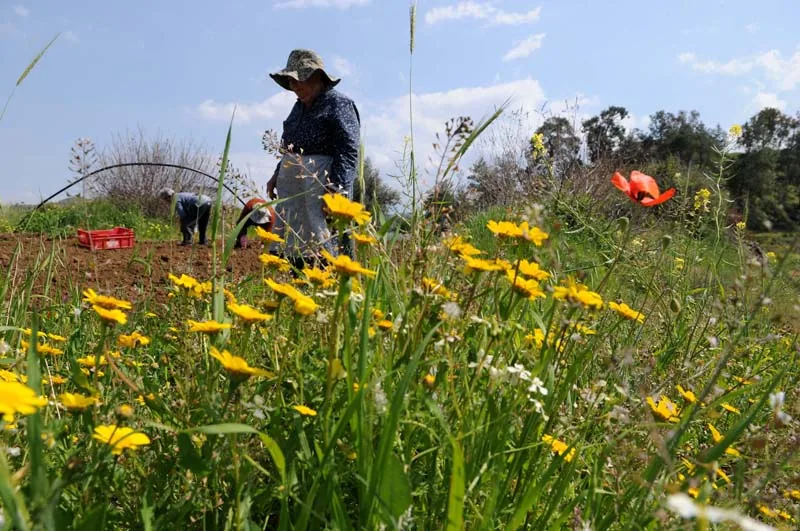
The entire island is filled with scents and colors
Alekos picks me up the next day, and we continue our journey. It is spring, so all of Cyprus is in bloom. Spring is often an ideal time to travel and take photographs anyway. The entire island is filled with scents and colors.
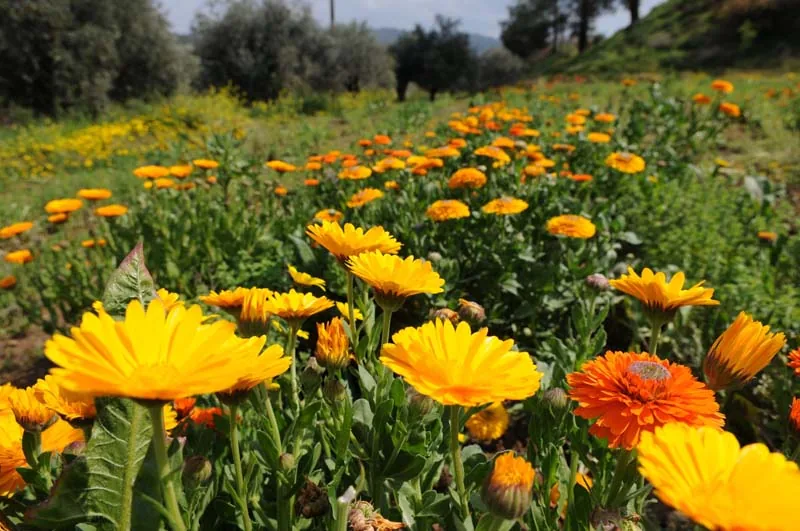
It is not too hot, there is no mass tourism, and everything looks wonderfully fresh. The colors are at their best. “There are 1842 different plants growing here,” Alekos tells me. He is an amateur botanist and knows the corresponding Latin name of every plant. With some effort, I manage to take a reasonably acceptable picture with my fixed Nikkor 50mm 1.4 lens.
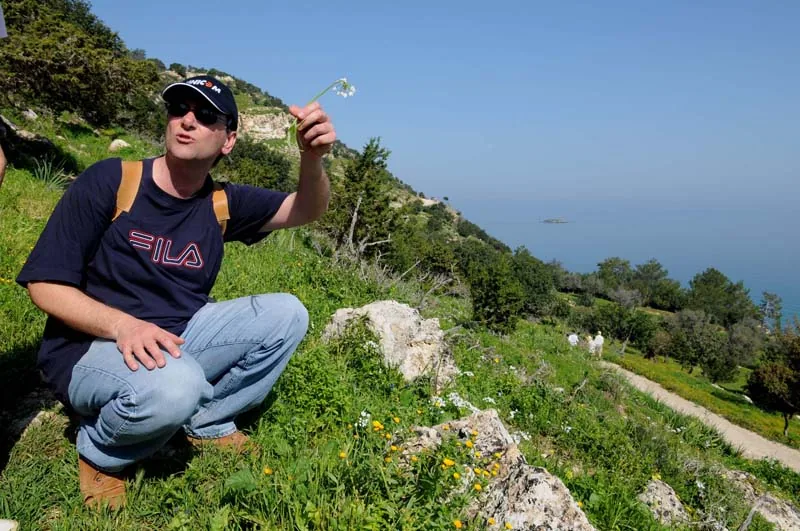
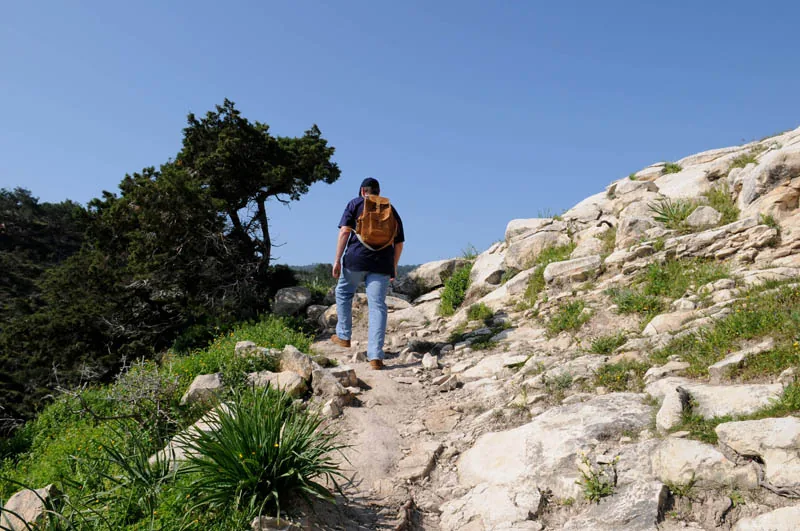
Our hike through the Troodos Mountains takes us through a constantly changing haze of scents. It has become an aromatic journey. Long after I have forgotten all about it, Alekos reminds me of his promise: "I promised you a surprise, didn’t I? Well, here it is." And he points to a tiny plant.
When he catches my somewhat disappointed look, he hurries over to the plant and picks off a leaf. “Here, rub it between your fingers and you’ll experience a sensation,” he assures me. I politely do so, and yes, it really does have an intense fragrance.
Later, sitting on the plane and trying to recall the scent, I have to laugh. Such enthusiasm for such a tiny plant. And I wonder what other people must think of me whenever I contort myself again to find the right perspective for that one photograph.
Want to learn more about this writer and photographer? Visit Tom van der Leij’s page.