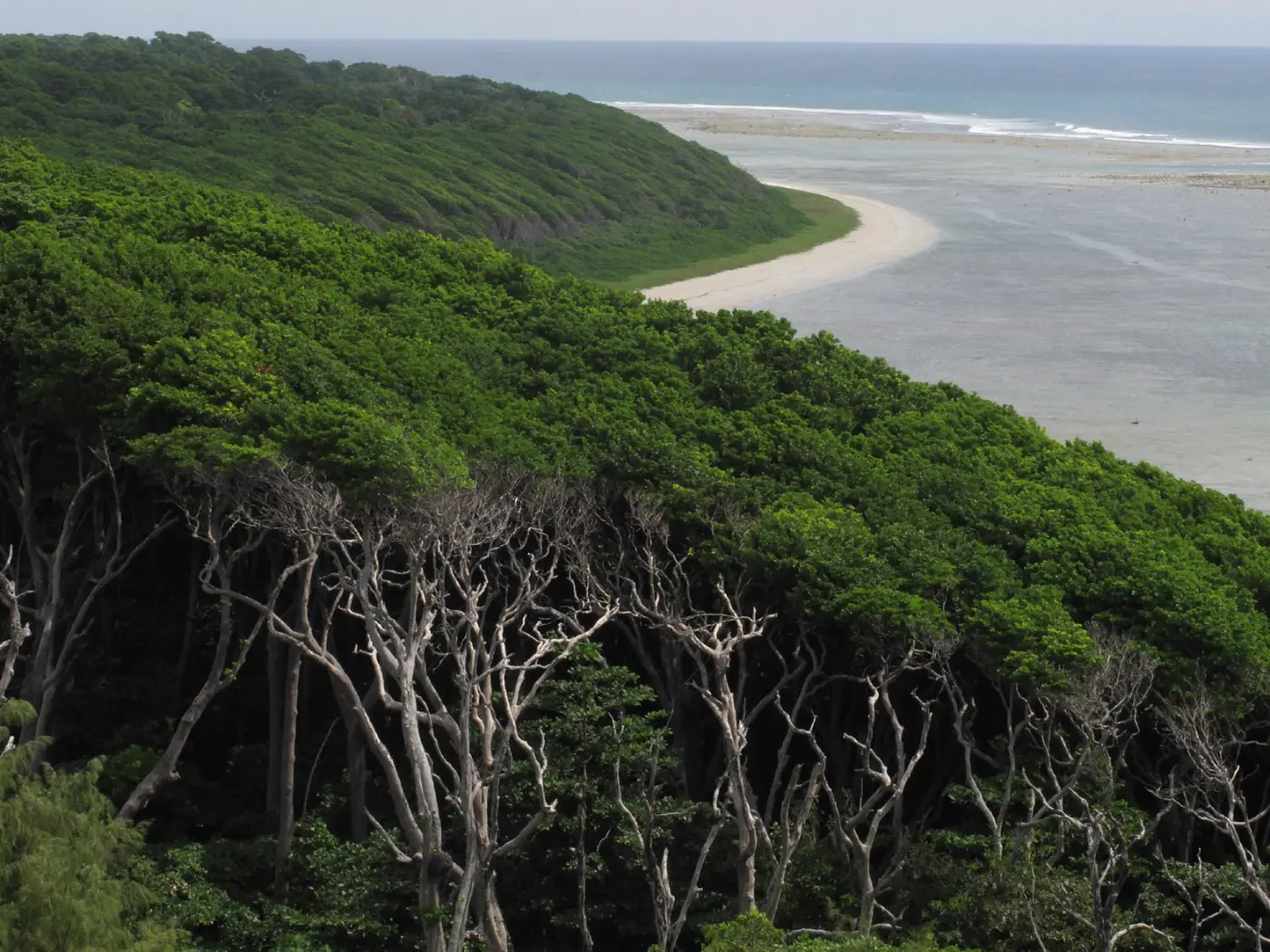
photo: © Tom van der Leij
Photographer Tom van der Leij travels the world. All kinds of subjects pass in front of his lens. In December 2011, he flew to the Andaman Islands, hoping to encounter the sea-swimming elephant.
There are places that rank high on my travel list. The Andaman and Nicobar Islands are among them. They were almost unknown to me: island groups belonging to India, close to Myanmar, with Indigenous communities—including communities described at the time as Negroid—that have little or no contact with the outside world.
What ultimately convinced me was a photograph that almost every photographer has seen at some point: an elephant swimming in the sea, photographed from below. It was made by Steve Blom for National Geographic. An incredible image. I wanted to capture that shot too, and since I had nearly two weeks to spare between my stay in central India and my departure for Southeast Asia, I decided to buy a ticket to Port Blair, the capital of the Andaman Islands and gateway to the hundreds of other islands.
Because you may take only five kilograms of luggage aboard both the helicopter and the seaplane, I only brought a Canon G12
At least, a part of them. If you are not an Indian citizen with specific reasons for visiting—trade, research, or military service—the Nicobar Islands are a no-go area. Large parts of the Andaman Islands are also difficult to reach. In addition, Andaman islands inhabited by Indigenous communities are inaccessible without special permits. In any case, the communities may not be photographed.
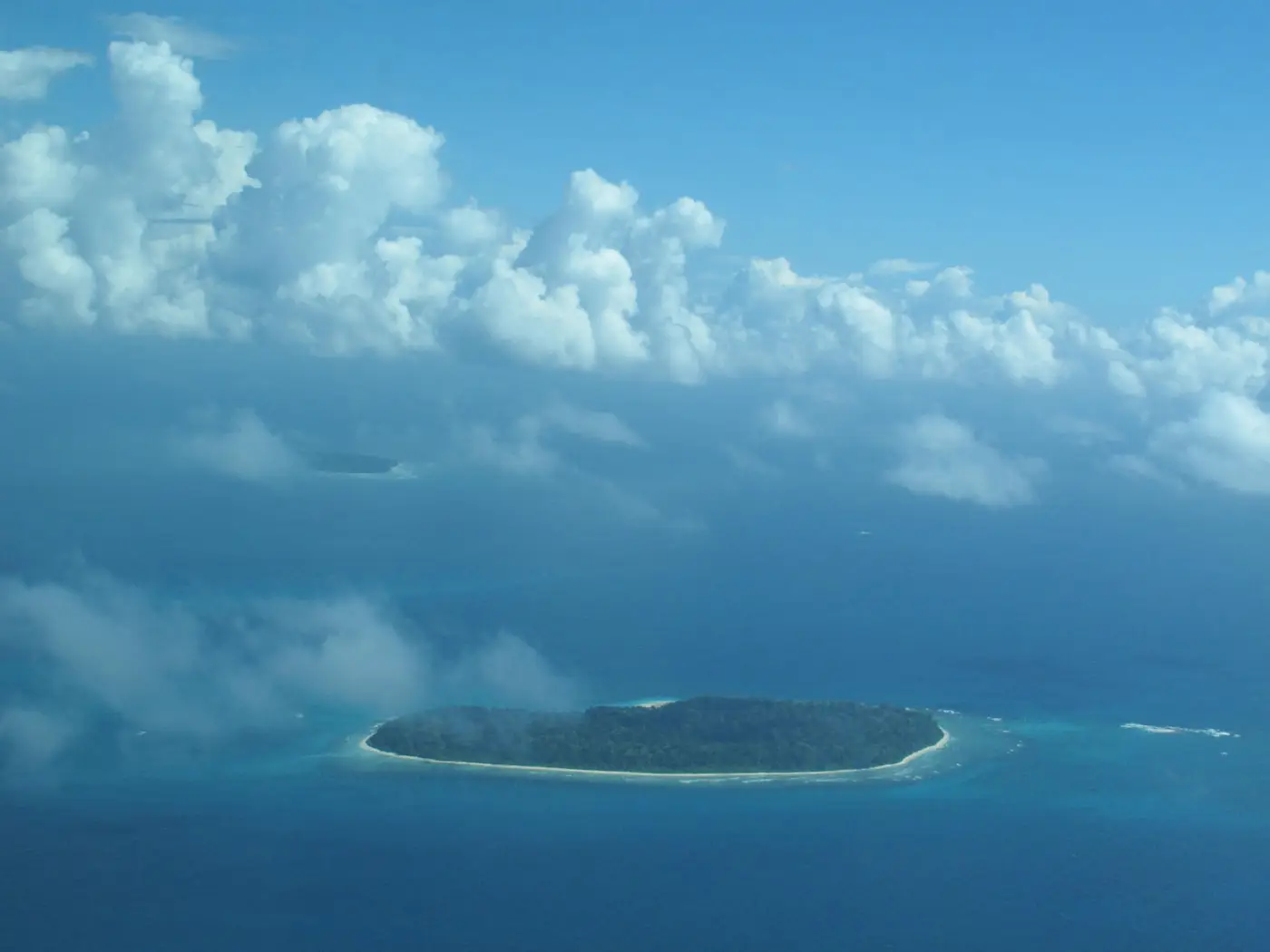
After a little over two hours of flying from Chennai across the Bay of Bengal, the first small islands appear. I spend the night in the capital, Port Blair, and take a helicopter to the southernmost island, Little Andaman, the next day. The flight takes only half an hour, but the view through the window is breathtaking: turquoise water around bright-green islands. I shoot constantly, but few of the images are really usable.
Because you may take only five kilograms of luggage aboard both the helicopter and the seaplane, I only brought a Canon G12; my DSLR and lenses are back at my lodging in Port Blair. I left them there with a heavy heart, knowing I would miss many shots. But there was no alternative: my fully packed camera bag alone weighs twelve kilograms.
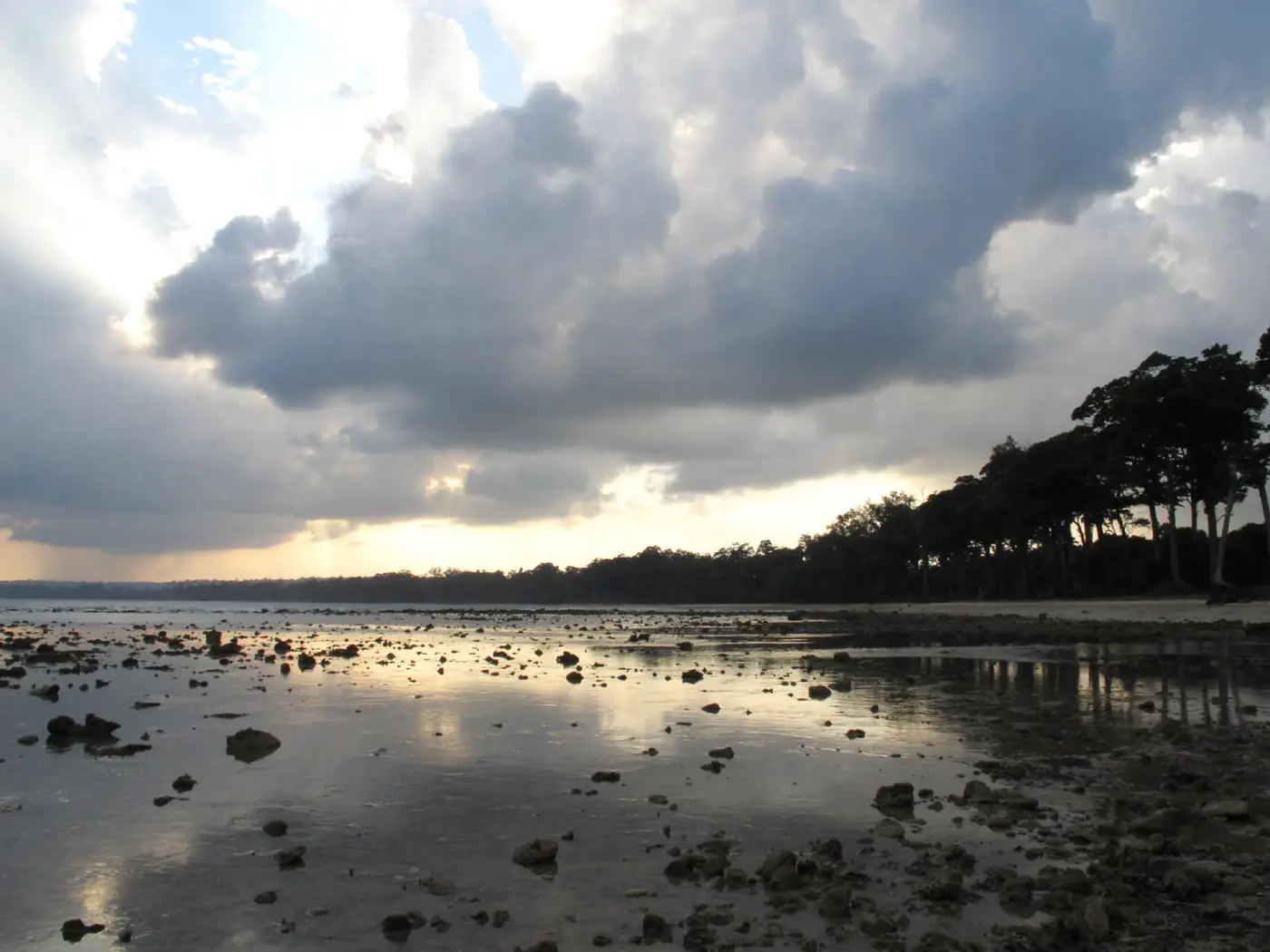
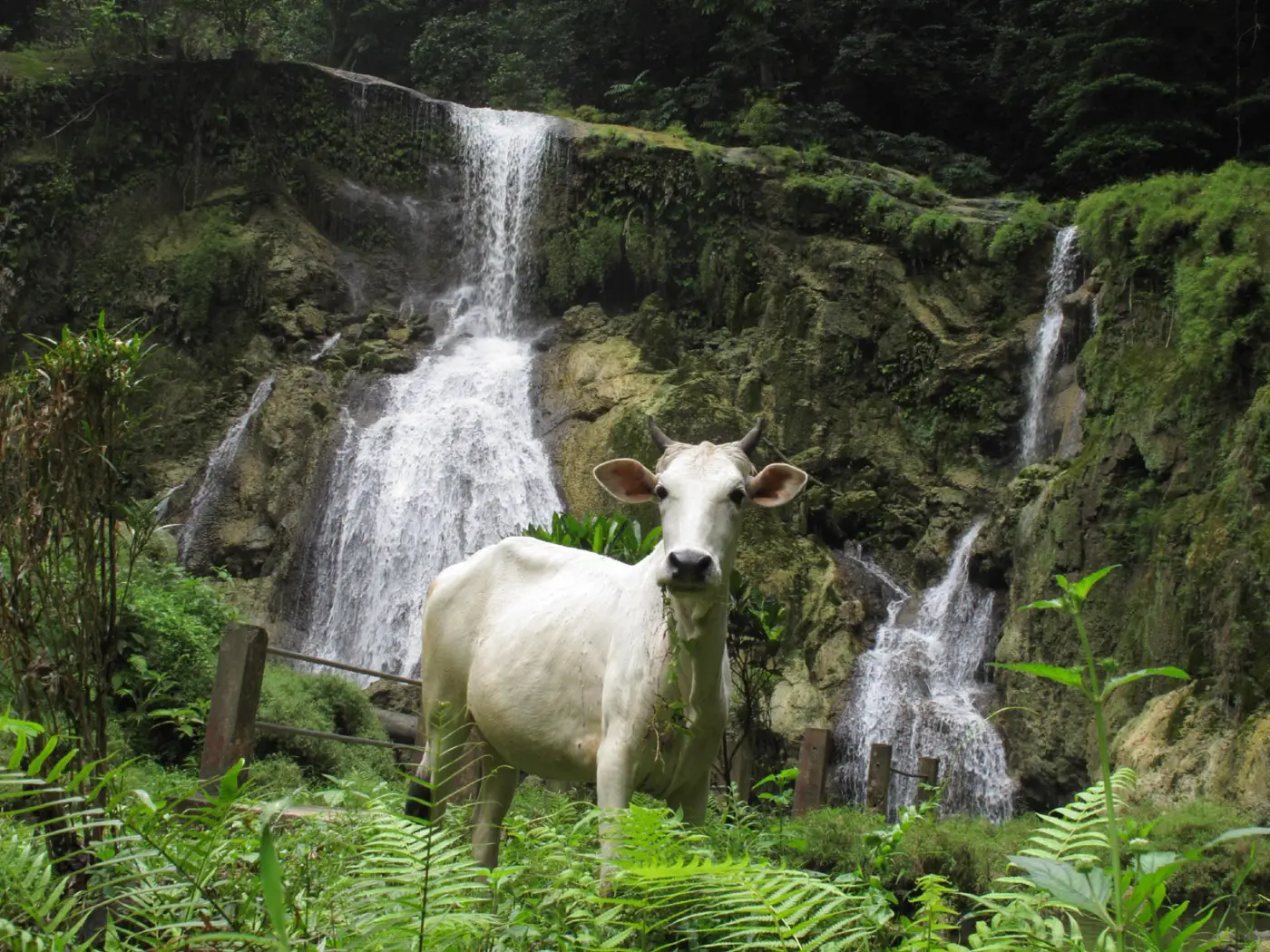
A few thousand people live on Little Andaman, most of them Bengali. After East Pakistan separated in 1967, the Indian government offered them free land—partly to address the refugee problem and partly to discourage other countries from settling on the islands.
Many Nicobarese people also live there and share some physical features with Indonesians. Their fishing communities were badly affected by the 2004 tsunami, and they now live in modern settlements on higher ground. I meet many of them while riding through the jungle to the lighthouse on a motorcycle, with my guide Mutu on the back. They welcome us with great friendliness and give us fresh fish.
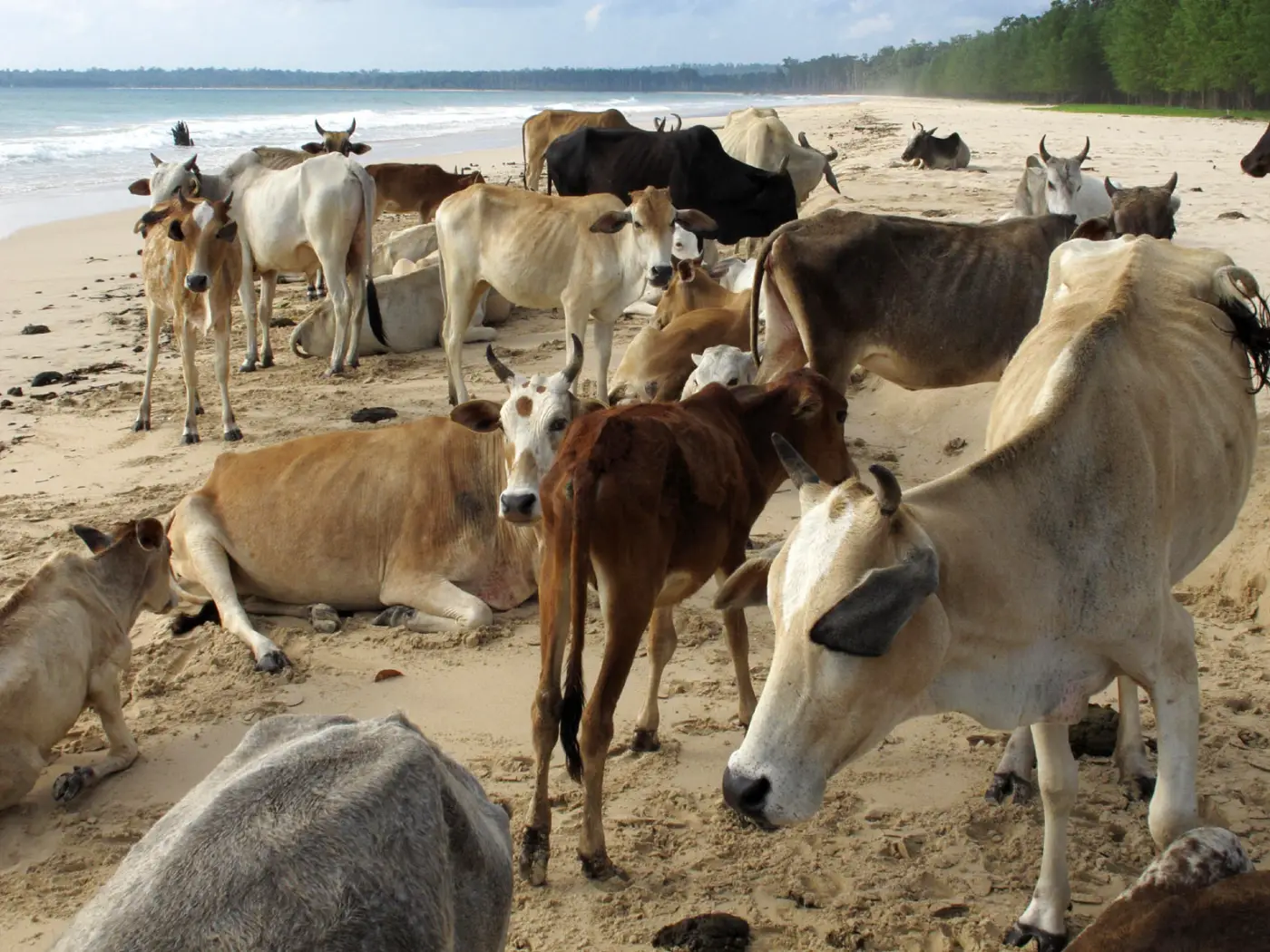
Most Indigenous communities in the Andamans are struggling. Two years earlier, the Bo people became extinct with the death of the last Bo woman. Only 84 Onge people, described at the time as Negroid inhabitants of Little Andaman, remain. They live far away on the northern side of the island.
They were relocated by the Indian government after the devastating tsunami. They now receive a state allowance, but according to insiders, three-quarters of it disappears into the local bureaucratic and corrupt system. Education is discouraged—because what would happen if they suddenly became articulate enough to claim the beautiful land on the basis of their ancestry and their right to it?
People want to be photographed with a swimming elephant and are willing to pay a great deal for it
But I had come to make that elephant photograph. The animals were used in logging and trained to swim between the islands. At the airport, I read an article saying that this was no longer possible. A major setback.
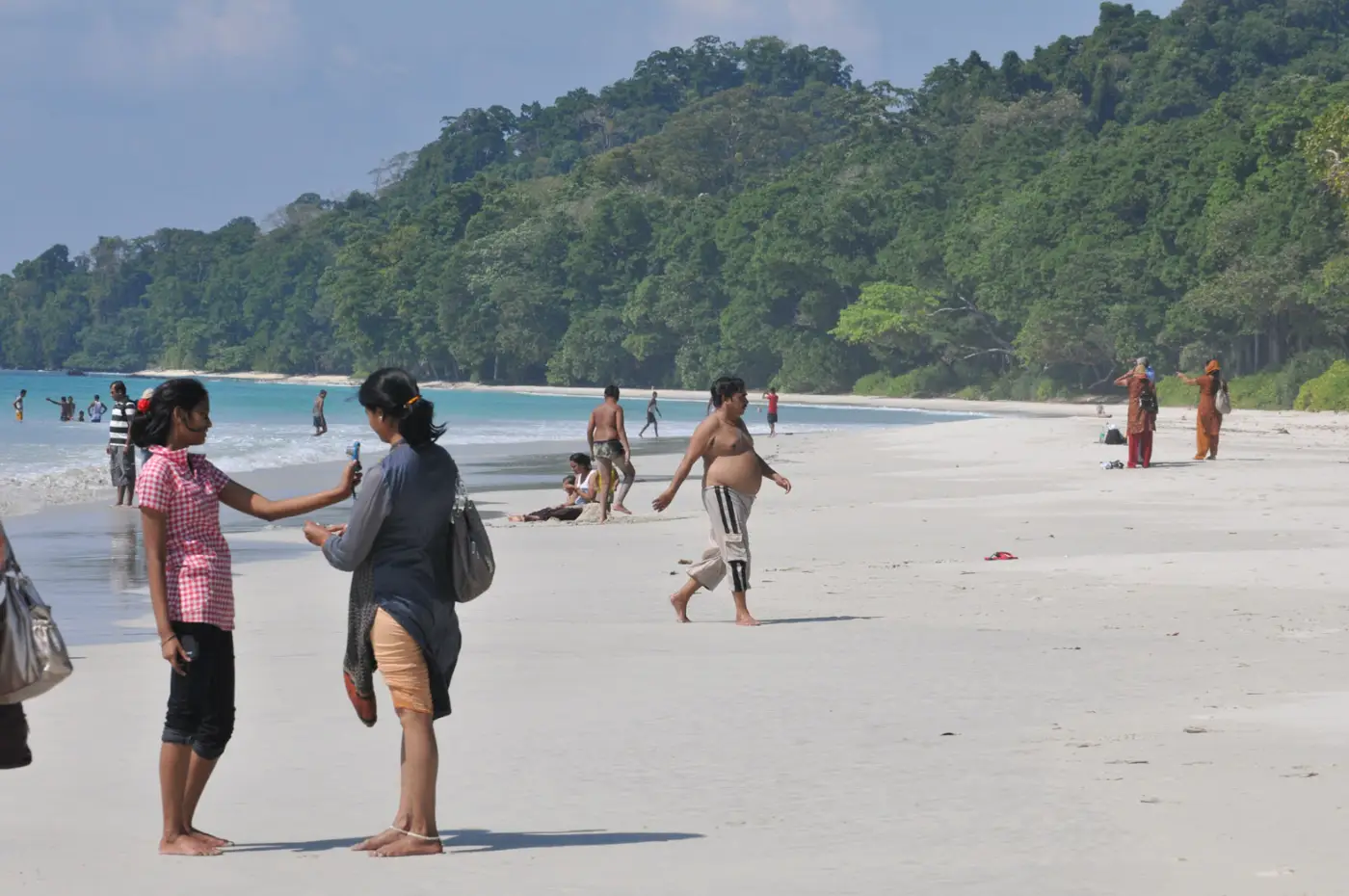
A few days later on Havelock Island, by far the most tourist-oriented island in the Andamans, I hear at the dive school that you can swim with Rajah for ten thousand rupees (€150). People want to be photographed with a swimming elephant and are willing to pay a great deal for it. It is the commercial exploitation of an extraordinary animal. That crosses a line for me and takes all the fun out of it.
Fortunately, Havelock has more to offer than Rajah. Beach No. 7, for example, was named Asia's best beach by Time magazine in 2004 for its broad palm-lined shore bordering a jungle and set in a beautiful bay. The real treasures lie underwater. The Andaman Sea is considered one of the world's most beautiful diving destinations. I bought an underwater housing for my G12 and cannot wait to use it.
Two summers earlier, the temperature suddenly rose so high that the seawater remained two degrees warmer for ten days. It devastated the coral, much of which died. At Aquarium, a dive site ten minutes away by boat where you could once make shallow dives amid an abundance of colorful coral, the seafloor had become an underwater graveyard. Fortunately, signs of coral recovery were visible here and there.
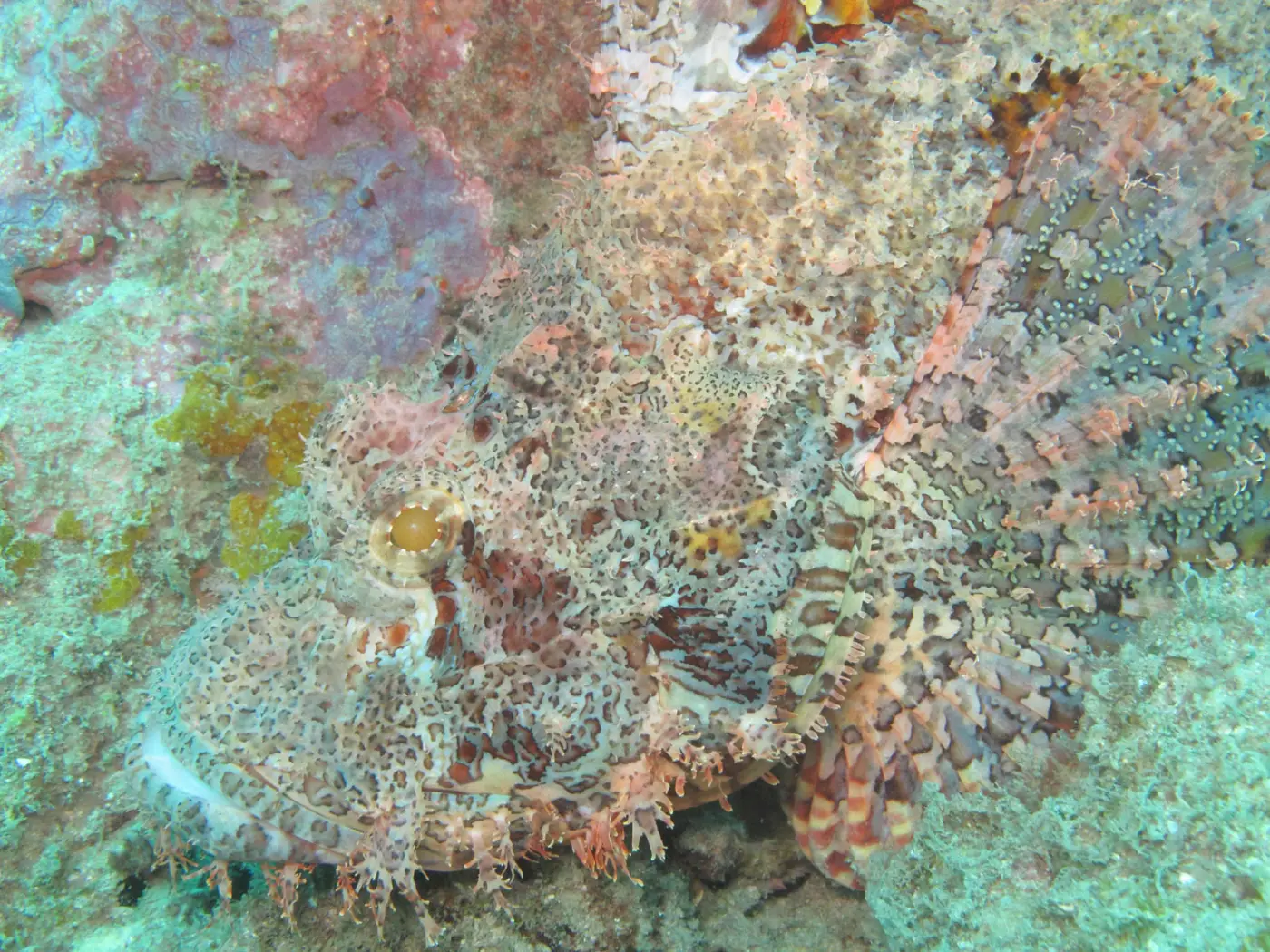
The best dive sites were then an hour and a half offshore. At Dixon and Johnny's, you descend to a depth of twenty-five meters. The number of large fish is enormous. As you descend along the line, you are greeted by hundreds of barracudas, huge groupers, and gigantic schools of fish.
A silver lining is that large parts of the Andamans are difficult to reach
The island group is on the map. For the time being, Havelock is its only true tourist destination. Besides its beautiful beach, the interior is magnificent, with enormous old-growth trees and unusual wildlife. The island was already reaching its limits because of the growing mountain of plastic waste and backpackers overindulging in alcohol and drugs.
As India's population grows wealthier, domestic tourism is expanding rapidly. Honeymooners fly to Port Blair for a long weekend and take a boat, helicopter, or seaplane to Havelock. Alongside the simple palm-leaf huts on the beach, increasing numbers of concrete bungalows are being built.
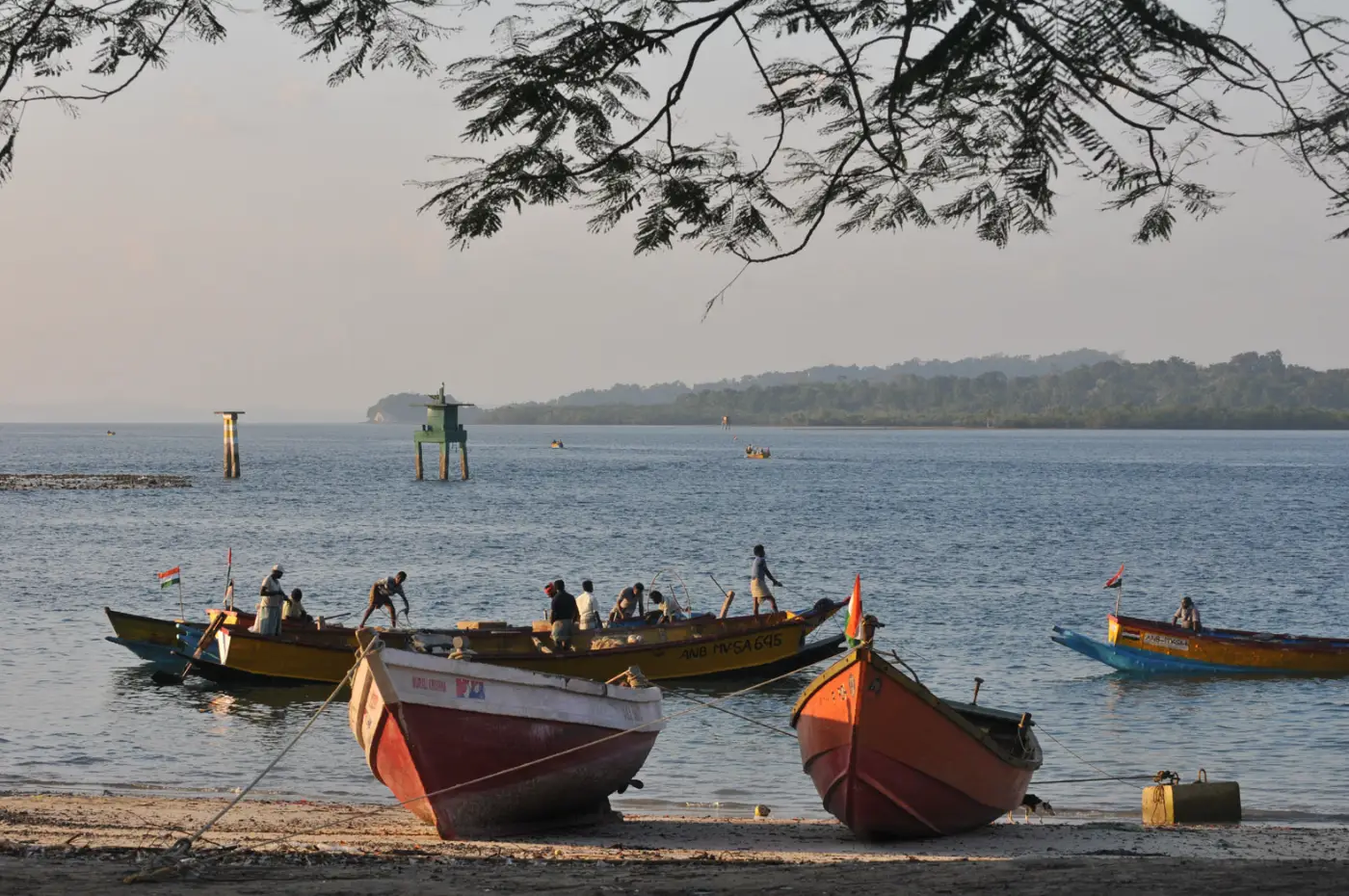
The Indian government encourages tourism. Money is pouring in, but little attention is paid to the consequences for residents and nature. Havelock may be tourist-oriented, but the hundreds of other islands remain almost untouched. A silver lining is that large parts of the Andamans are difficult to reach, which helps keep them relatively unspoiled.
Information
Travel: Buy a round-trip ticket to Port Blair from Delhi, Mumbai, Chennai, Visakhapatnam, or Kolkata with IndiGo, Kingfisher, Jet Airways, or Air India—or travel by boat for 56 hours!
Upon arrival at the airport, you receive a free permit valid for 30 days. Make five copies of your permit and passport; you will need them to buy boat and plane tickets.
This is your chance to travel by seaplane or helicopter. Helicopter: €35; seaplane: € 100. Services ran daily from Port Blair to Hut Bay on Little Andaman; tickets had to be requested at the Secretariat in Port Blair. The return flight was usually full, but you could travel back for € 1 by boat (8 hours). The maximum luggage allowance on the helicopter and seaplane was five kilograms per person.
Daylight: Residents live by the daylight. Because all of India uses the same time zone and the islands lie far to the east, it gets dark early here.
There are ATMs in Port Blair and on Havelock; however, carry enough cash with you
Guide/surf instructor on Little Andaman: Mutu, tel. 9474277980
Best time to visit: mid-January to mid-May.