At the time of publication, March 18 was approaching, marking 100 years since Martien Coppens was born in Lieshout. He was regarded as one of Brabant’s greatest photographers. His centenary prompted the Brabant Collection to launch a major restoration and conservation project aimed at safeguarding Coppens’s photographs, making them accessible to a wider audience, and raising awareness of his name and work.
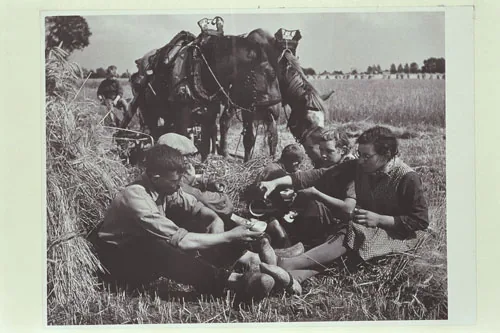
Martien Coppens was born in Lieshout on March 18, 1908. After a life devoted entirely to photography, he left behind an impressive photographic oeuvre when he died in 1986: tens of thousands of exposures and thousands of vintage prints.
Because of the quality of his work and the subjects he chose, Coppens was widely regarded at the time as the most important photographer Brabant had produced and was counted among the leading Dutch photographers of the preceding century.
After his death in 1986, his descendants had placed important parts of his estate with Tilburg University’s Brabant Collection by the time of publication. The estate included 1632 vintage prints that Coppens himself had identified as the core of his work. His private archive had been added later, consisting of notes, correspondence, and a large number of working photographs.
Tens of thousands of exposures and thousands of vintage prints
At the time, a large number of photographs required restoration to prevent the gummed tape Coppens had applied himself in the fifties from eventually damaging the original prints. All photographs were also to be treated to keep them in optimum condition and minimize the risk of damage through use.
To improve digital access to the core collection specifically, high-resolution scans were being made of all vintage prints. The photograph descriptions were also being improved, and an inventory of Coppens’s archive was planned.
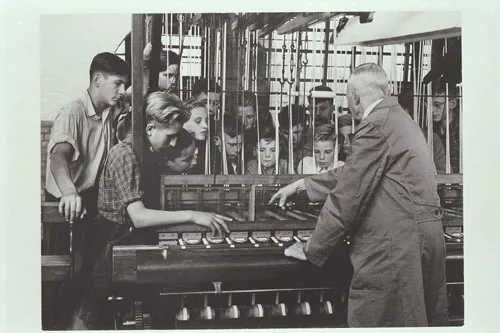
Although the name Coppens still sounded familiar to many older people at the time, Martien Coppens was barely known among younger generations. To change that, the Brabant Collection was organizing various public activities, including a behind-the-scenes look at the restoration and conservation work.
A symposium was also being organized around the theme Why Photograph? Taken from the title of a publication by Coppens from 1983, the theme concerned the enormous contrast between the digital ease with which millions of pictures could then be taken and the meticulous way Martien Coppens made his photographs.
The Brabant Collection consists of books, magazines, prints, maps, manuscripts, early printed works, newspapers, photographs, and films about the history of North Brabant. More information: www.brabantcollectie.nl.